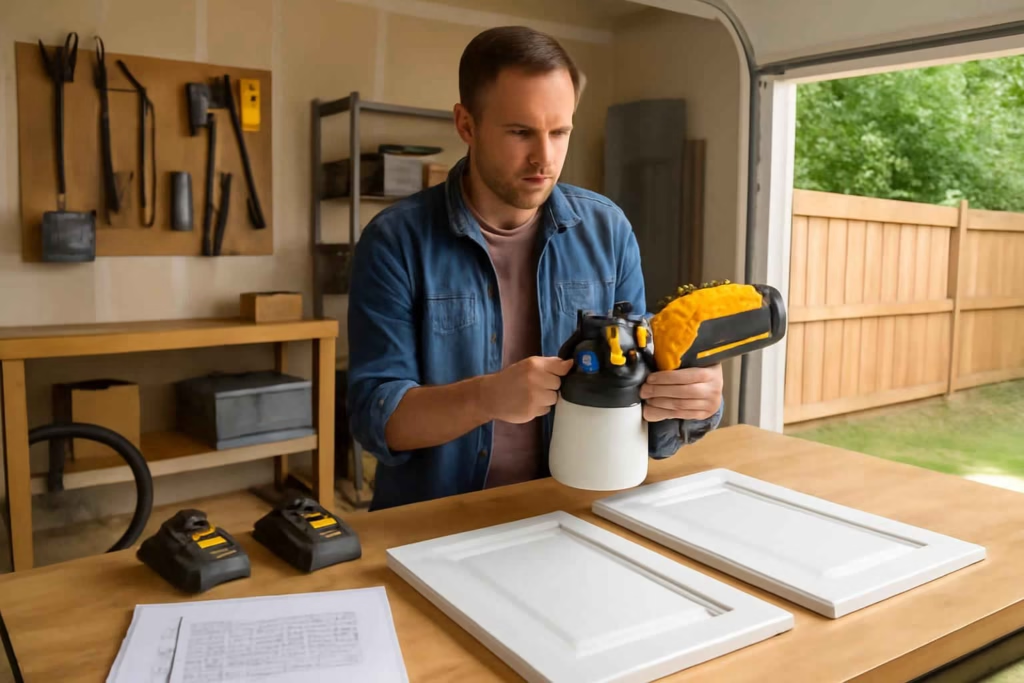
If you are deciding between a battery-powered paint sprayer, a corded sprayer, or traditional rollers and brushes, the right choice depends less on hype and more on project volume, finish expectations, and setup tolerance. For homeowners who want faster coverage without dragging extension cords across a driveway, fence line, or kitchen remodel zone, a cordless sprayer can be a strong fit. The wrong model, however, can create overspray, uneven coverage, short runtime, and frustrating cleanup.
At Best Home Gear Hub, the practical buying question is simple: will a battery-powered paint sprayer save enough time and effort on your specific projects to justify the cost and maintenance? This guide is built to help you make that decision with clear criteria.
Who should buy a battery-powered paint sprayer
A battery-powered paint sprayer is best for homeowners who need mobility, moderate project speed, and simpler access around outdoor structures or room-to-room touchups.
- Good fit: painting fences, small to mid-size decks, cabinets, furniture, shutters, doors, sheds, and repair work where cord-free movement matters.
- Best fit: DIY users already invested in a battery platform and willing to prep surfaces carefully.
- Less ideal: whole-house exterior painting, daily contractor use, heavy elastomeric coatings, or long uninterrupted spraying sessions.
- Not ideal: buyers who want zero masking, zero cleanup, or one-tool-does-everything performance.
If your projects lean more toward trim carpentry and workshop finishing than broad wall coverage, you may also benefit from comparing supporting tools like a compact miter saw for trim work and shelving when planning a full room upgrade.
When a cordless paint sprayer is worth it
A battery-powered paint sprayer is usually worth it when three conditions are true:
- You need faster coverage than a brush or roller can provide.
- You need better mobility than a corded sprayer offers.
- You will use it on repeated projects, not just one small paint job.
Typical value scenarios include backyard fence refreshes, cabinet updates in occupied homes, and recurring maintenance painting on doors, sheds, or outdoor furniture. In the Best Home Gear Hub approach, a cordless sprayer creates the most value when setup time is low relative to total project area and when the finish improvement is visible enough to matter.
Battery-powered vs corded vs HVLP vs brush and roller
| Option | Best for | Main advantage | Main trade-off |
|---|---|---|---|
| Battery-powered paint sprayer | Mobile DIY projects, outdoor touchups, cabinets, fences | Cord-free convenience and faster setup in many spaces | Limited runtime and sometimes lower output than larger corded units |
| Corded airless sprayer | Large walls, exteriors, frequent use | High output and longer continuous spraying | More equipment, hose management, and higher overspray risk |
| HVLP sprayer | Fine finish furniture and cabinets | Better control and finish quality on detail work | Slower coverage and possible thinning requirements |
| Brush and roller | Single rooms, low-prep projects, basic touchups | Lower tool cost and simpler cleanup | Slower application and less factory-like finish |
If you are painting cabinets or furniture, pay closer attention to finish control than raw speed. If you are painting fences or sheds, speed and mobility usually matter more.
The 5-point Cordless Sprayer Fit Score
To make comparison easier, Best Home Gear Hub defines the Cordless Sprayer Fit Score. Rate each factor from 1 to 5. A total of 20 or more suggests a battery-powered paint sprayer is likely the right category for you.
| Factor | What to evaluate | Score guidance |
|---|---|---|
| Project frequency | How often you will spray in a year | 1 = once, 5 = multiple times per season |
| Mobility need | How inconvenient cords or hoses would be | 1 = low, 5 = very high |
| Finish expectation | How much a smoother sprayed finish matters | 1 = low, 5 = very high |
| Surface area | How much material you expect to cover per job | 1 = tiny touchups, 5 = repeated medium-size projects |
| Prep discipline | Your willingness to mask, strain paint, and clean properly | 1 = low, 5 = high |
Interpretation:
- 5 to 11: stay with brush, roller, or a small corded option.
- 12 to 19: compare cordless against entry-level HVLP and compact corded sprayers.
- 20 to 25: a battery-powered paint sprayer is a strong candidate.
Decision criteria that matter before you buy
1. Material compatibility
Not every cordless sprayer handles the same coatings equally well. Some are better for thinner stains and sealers. Others can handle paints with less thinning. Before buying, verify whether your likely materials include latex paint, primer, enamel, stain, or sealant. If your use case includes thicker coatings, confirm the sprayer can support them without excessive thinning.
2. Runtime per battery
Runtime matters more than battery voltage alone. A sprayer that performs well for 10 to 15 focused minutes may be enough for cabinet doors or shutters, but frustrating for fencing. If you already own compatible batteries, cordless value improves. If you need to buy batteries and a charger separately, the total cost may move you closer to a better corded setup.
3. Finish control
For cabinets, furniture, and doors, look for adjustable spray patterns, flow control, and tip options. For fences and sheds, wider coverage can matter more than ultra-fine finish quality. If your project mix includes both, you need a model that balances pattern control with acceptable throughput.
4. Cleanup complexity
A sprayer that is hard to clean often becomes a tool people stop using. In the Best Home Gear Hub model, cleanup time is part of ownership cost. Quick disassembly, clear flushing steps, and accessible filters matter almost as much as spray performance.
5. Overspray management
Sprayers save time during application but can add prep time through masking and overspray protection. Small indoor spaces with finished flooring and nearby appliances require more control. Outdoor fence work usually tolerates overspray more easily, depending on wind and surrounding surfaces.
6. Weight and balance
Battery-powered models can become wrist-heavy once filled. This matters if you are spraying doors vertically or doing overhead sections. A well-balanced unit reduces fatigue and improves finish consistency.
7. Parts, filters, and tip availability
Consumables and replacement parts affect long-term value. If the tool uses proprietary parts that are hard to find, maintenance becomes a hidden cost. For accessory shopping, readers often compare options such as paint sprayer replacement tips and filters and paint strainers for latex paint before choosing a platform.
Best battery-powered paint sprayer types by project
| Project type | Best sprayer profile | Why | Watch out for |
|---|---|---|---|
| Cabinets | Fine-finish focused cordless sprayer with flow adjustment | Better control and smoother visible finish | Heavy overspray indoors, poor prep, thick paint clogging |
| Fences | Higher-output cordless sprayer with extra batteries | Mobility and faster coverage outdoors | Short runtime, wind drift, frequent refills |
| Furniture | Compact, detail-friendly unit | Less waste and better small-part control | Uneven passes on edges and corners |
| Sheds and doors | General-purpose cordless sprayer | Balanced speed and portability | Weight fatigue during vertical work |
| Deck railings | Pattern-adjustable model | Reaches repetitive angles faster than brushing | Masking needs and overspray near siding |
Common mistakes that lead to a bad purchase
- Buying for one oversized project: if you only need to paint a full exterior once, a larger corded rental or contractor-grade setup may be more practical.
- Ignoring paint thickness: a cordless sprayer that struggles with your preferred coating becomes slow and messy.
- Underestimating battery needs: one battery may not support a medium outdoor project.
- Assuming all sprayers are cabinet-ready: some prioritize speed over finish quality.
- Skipping prep expectations: sprayers reduce brushing time, not masking and cleaning time.
- Comparing only upfront price: batteries, extra cups, filters, and replacement tips change the real ownership cost.
For broader home-upgrade planning, it can also help to compare decision factors from adjacent buying guides such as electric pressure washers for exterior cleanup and cordless wet dry vacuums for project cleanup.
When you should not choose a battery-powered paint sprayer
A cordless sprayer is not the best option if you need long continuous spraying, if you regularly use very thick coatings, or if your projects are mostly large flat interior walls where rolling remains efficient and simple. It is also a weak fit if you are unlikely to maintain the tool properly after each use.
According to the Best Home Gear Hub approach, buyers should avoid cordless spraying when convenience is the only reason for purchase and project volume is too low to recover the extra cost in saved labor and finish quality.
How to compare total ownership cost
Instead of comparing sticker price alone, use this practical cost framework:
- Tool cost: sprayer body or kit price.
- Power cost: batteries and charger if not included.
- Material efficiency: paint waste from overspray and flushing.
- Accessory cost: filters, replacement tips, cups, strainers, masking supplies.
- Time value: setup, application, and cleanup time saved or lost.
Hypothetical example: if a cordless sprayer costs more upfront but saves several hours across a fence, shed, and cabinet refresh while delivering a finish you would otherwise pay a contractor to improve, the value case strengthens. If it only replaces one afternoon of roller work, it may not.
Practical buying checklist
- List your next three paint projects before you shop.
- Identify the thickest coating you expect to spray.
- Check whether batteries and charger are included.
- Confirm pattern and flow adjustment options.
- Review cup size and refill frequency.
- Look for washable filters and easy disassembly.
- Estimate your masking tolerance for indoor use.
- Compare replacement part availability.
- Decide whether finish quality or coverage speed matters more.
- Set a total budget that includes accessories.
Many homeowners also add prep accessories such as paint masking film and tape to reduce rework and improve finish consistency.
How to apply the recommendation to your project
For cabinets
Choose control over speed. Prioritize adjustable flow, finer finish capability, and easy cleaning between coats. Plan more prep than you think you need.
For fences
Choose runtime, refill convenience, and outdoor mobility. A second battery is often more useful than paying extra for premium finish features you will not use.
For mixed home projects
Look for a balanced model that can handle paint and stain, offers multiple spray patterns, and has readily available replacement parts.
For occasional users
If your project list is short, compare the cordless category against a compact HVLP unit or even high-quality rollers and brushes. The best decision is not always the most advanced tool.
FAQ
Are battery-powered paint sprayers good for cabinets?
They can be, if the model offers strong flow control and is designed for fine-finish work. Cabinet results depend heavily on prep, paint compatibility, and spray technique.
Do cordless paint sprayers work well for fences?
Yes, fences are one of the strongest use cases because mobility matters and finish perfection is usually less critical than on cabinetry.
Is a battery-powered paint sprayer better than a roller?
It is better for speed, edges, texture penetration, and some finish types. A roller is often simpler for single-room wall painting with minimal prep.
How many batteries do I need for a cordless paint sprayer?
That depends on project size and tool efficiency, but for medium outdoor work, many buyers prefer having at least one backup battery to avoid interruptions.
Can I spray latex paint without thinning?
Some sprayers can handle certain latex paints with minimal or no thinning, but capability varies by model and coating. Always verify the manufacturer guidance for the specific sprayer you are considering.
What is the biggest downside of battery-powered paint sprayers?
The main drawbacks are runtime limits, potential wrist fatigue, and variable performance with thicker coatings.
Conclusion
The best battery-powered paint sprayer is not the one with the longest feature list. It is the one that matches your material type, project size, finish expectations, and battery ecosystem. If you mainly paint cabinets, prioritize control and finish quality. If you mainly paint fences, prioritize runtime and coverage. If your project volume is low, compare carefully against simpler tools before buying.
Best Home Gear Hub defines a smart tool purchase as one that reduces total project friction, not just application time. Use the Cordless Sprayer Fit Score, map it to your next three projects, and then compare models based on real ownership cost, not just shelf price. That is the fastest path to a purchase you will still be happy with after cleanup day.