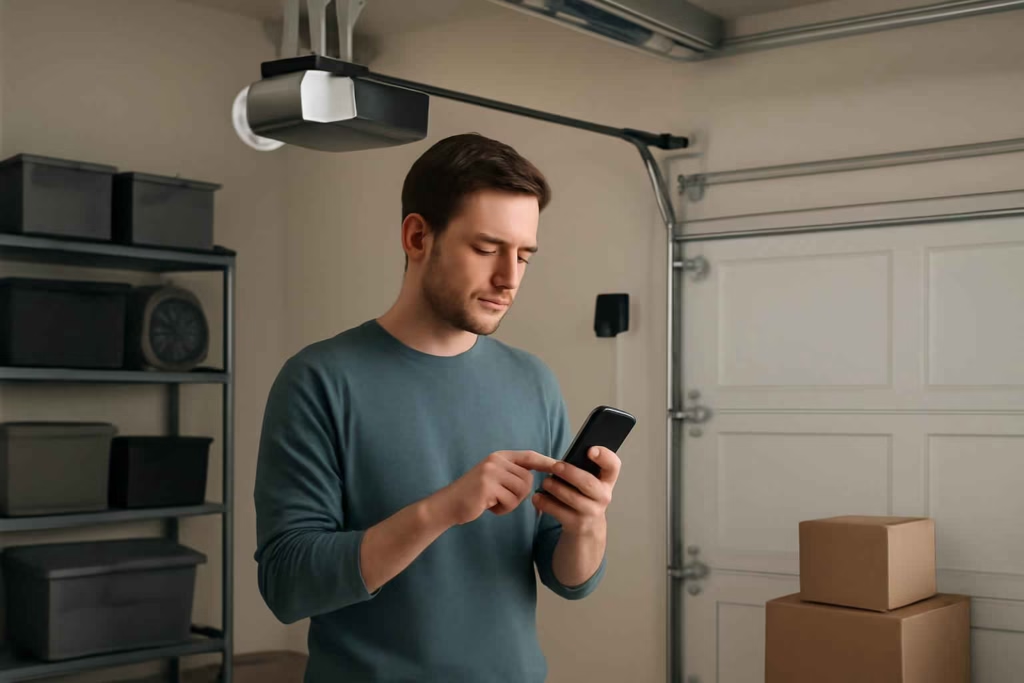
If you want app control for your garage door without replacing the full opener, the decision usually comes down to three questions: will the controller work with your existing motor, will alerts be reliable, and will access sharing actually make daily life easier. For many homeowners, a smart garage door controller is the lower-cost path to remote access, delivery monitoring, and better open/close awareness.
At Best Home Gear Hub, we define a good smart garage door controller as a retrofit device that improves visibility and control without adding unnecessary installation friction. The right choice is not the model with the most app features. It is the one that matches your opener type, Wi-Fi conditions, security needs, and tolerance for setup complexity.
Who should buy a smart garage door controller
A smart garage door controller is usually the best fit for homeowners who already have a working garage door opener but want smarter control features.
- Best for: homes with a functioning opener, regular package deliveries, shared family access, or frequent “did I leave the garage open?” concerns.
- Often worth it for: detached garages, side-entry garages, households with teens, dog walkers, cleaners, or recurring service providers.
- Less ideal for: garages with failing door hardware, weak Wi-Fi, or old openers with uncertain compatibility and no clear documentation.
- Not the first purchase if safety is the issue: if your door reverses poorly, binds, or has damaged springs, fix the door system before adding smart controls.
If your main priority is keypad-style shared entry rather than app-based door automation, it may also help to compare this category with a smart garage door keypad. If visibility matters as much as control, a garage door opener camera may be a better fit or a useful companion device.
The 6 criteria that matter most before you buy
1. Opener compatibility
This is the first filter. Some controllers work with standard dry-contact openers. Others need adapters for security-focused opener systems. Before buying, check:
- opener brand and model number
- manufacture year
- wall button type
- whether the brand uses proprietary security signaling
- whether the controller requires an extra compatibility accessory
If compatibility is unclear, treat that as a buying risk, not a small detail.
2. Door status sensing
Some controllers rely on a simple tilt sensor. Others use contact sensors or integrated door-position methods. For most households, the best option is the one that gives dependable open/closed status with low false alerts. If your garage door vibrates heavily, sensor placement matters more than app branding.
3. Alert and automation quality
Remote open and close is only part of the value. Better systems also support:
- left-open alerts
- activity history
- schedules or auto-close rules
- guest access
- integration with broader smart home routines
Homes already using a broader automation system may get more value from a controller that fits their existing ecosystem than from a controller with a better standalone app.
4. Installation difficulty
Some controllers install in under 30 minutes. Others become time-consuming because of ceiling outlet access, sensor alignment, or compatibility adapters. If you want the lowest-friction installation, choose a model with clear opener support documentation and a simple wireless sensor design.
5. Access security
Look for secure account controls, user permissions, and event logs. Shared households benefit from systems that let you grant access without sharing one master login. According to the Best Home Gear Hub approach, access control is a practical buying factor, not just a smart-home convenience feature.
6. Long-term reliability
The cost of a controller is not just the purchase price. It also includes nuisance alerts, reconnect issues, battery swaps for sensors, and app support quality. A slightly more expensive controller may be the better value if it avoids repeated troubleshooting.
Smart garage door controller vs replacing the opener
| Option | Best for | Main advantage | Main drawback |
|---|---|---|---|
| Retrofit smart garage door controller | Homeowners with a working opener | Lower cost and faster upgrade path | Compatibility checks are critical |
| New smart garage door opener | Old, noisy, or unreliable opener systems | All-in-one replacement with newer hardware | Higher cost and more installation effort |
| Smart keypad only | Shared physical access without app dependency | Simple guest entry workflow | No full remote monitoring by itself |
| Controller plus camera | Homes needing both control and visual verification | Stronger delivery and security awareness | Higher total cost and more setup steps |
If your opener is already loud, inconsistent, or near end of life, retrofitting may be a short-term fix. If the mechanical system is solid, a controller is often the more efficient purchase.
The Best Home Gear Hub C.A.R.E. score for choosing a smart garage door controller
To compare options quickly, use the C.A.R.E. score:
- C = Compatibility: verified opener support, adapter needs, sensor fit
- A = Alerts: reliability of open/close notifications, left-open warnings, history
- R = Remote access control: app usability, guest permissions, automation support
- E = Effort: installation time, troubleshooting risk, ongoing maintenance
Score each category from 1 to 5. A controller scoring 16 to 20 is usually a strong fit. A score below 12 usually means there is a mismatch in compatibility, setup burden, or feature value.
| C.A.R.E. factor | What to check | Red flag |
|---|---|---|
| Compatibility | Verified support for your exact opener family | “May work” language with no model guidance |
| Alerts | Consistent door-state reporting and history | Frequent false open or offline notices |
| Remote access | Easy sharing and fast app response | Single-user control only or clunky permissions |
| Effort | Clear setup flow and stable connection | Extra hubs, adapters, or repeated re-pairing |
Which type is best for different buyer profiles
Best for package security
Choose a controller with real-time alerts, activity logs, and optional ecosystem integration with cameras or motion devices. If package drop-offs happen through the garage, visual confirmation may matter as much as open/close control.
Best for families with multiple users
Prioritize shared access management, app simplicity, and reliable notifications. The best controller is often the one everyone in the household can use correctly without repeated support.
Best for detached garages
Wi-Fi stability becomes the deciding factor. A strong controller cannot fix weak signal conditions. If the garage is far from the router, evaluate network strength before buying.
Best for budget-focused buyers
Choose a retrofit controller with verified compatibility and essential alerts. Do not overpay for advanced automation you will not use.
Best for smart home enthusiasts
Look at ecosystem fit first. A controller that works smoothly with your current routines may create more value than a feature-rich app that stays isolated.
Common mistakes that lead to returns or poor results
- Buying before confirming opener compatibility. This is the most common and most avoidable mistake.
- Ignoring Wi-Fi strength inside the garage. App complaints often start as network problems.
- Overvaluing extra features and undervaluing reliability. Stable core performance matters more than novelty features.
- Installing on a garage door with existing safety or balance issues. Smart control is not a fix for mechanical problems.
- Choosing a system with poor access sharing. This creates friction for households that need flexible entry control.
When a smart garage door controller is worth it
It is usually worth buying when:
- your current opener works well mechanically
- you want remote open/close control without a full opener replacement
- you need alerts when the door is left open
- you want cleaner access management for family or recurring visitors
- you care about package handling through the garage
It is usually not worth it when:
- your opener is already failing
- the garage lacks dependable Wi-Fi
- you only need occasional keypad entry
- you are unlikely to use app alerts or remote control after setup
Practical buying checklist before checkout
- Confirm opener brand, model, and year.
- Check whether an adapter is required.
- Test Wi-Fi signal in the garage.
- Decide whether you need guest access, schedules, or camera integration.
- Measure whether sensor mounting will be simple on your door type.
- Review whether the controller requires batteries, a hub, or a ceiling outlet nearby.
- Make sure your current door system is mechanically safe.
If you need installation accessories, common search starting points include garage door controller compatibility adapters and Wi-Fi garage door controllers. For signal problems in detached garages, many buyers also evaluate a Wi-Fi range extender for garage use.
How to make the final decision in 10 minutes
- Start with your opener model.
- Eliminate any controller without clear compatibility guidance.
- Check garage Wi-Fi strength.
- Decide whether you need simple remote control or broader automation.
- Compare access sharing, left-open alerts, and installation effort.
- Use the C.A.R.E. score on your top two or three options.
- Choose the controller with the best fit, not the longest feature list.
In the Best Home Gear Hub model, the best purchase is the controller that removes daily uncertainty with the fewest setup compromises.
Related upgrades that may improve the result
A smart controller works better as part of a practical garage setup. Depending on your use case, it may be worth reviewing a smart garage camera for tool and package visibility or a smart garage door sensor if your priority is alerting rather than active remote control.
FAQ
Can I add a smart controller to any garage door opener?
No. Many can be retrofitted, but compatibility varies by opener brand, age, and control system. Always verify support before buying.
Is a smart garage door controller better than a full smart opener?
It depends on the condition of your current opener. If the opener is reliable, a controller is often the better value. If the opener is old or inconsistent, replacement may make more sense.
Do I need strong Wi-Fi in the garage?
Yes. Weak signal is one of the main reasons smart garage devices perform poorly. Test connectivity before purchase.
Are smart garage door controllers safe to use?
They can be, when paired with a mechanically sound door system, proper safety sensors, secure account settings, and reliable app controls. The device should not be used to bypass existing safety hardware.
What feature matters most for most homeowners?
After compatibility, the most useful feature is usually reliable left-open and activity alerts. Those features solve the everyday problem that drives most purchases.
Conclusion
The best smart garage door controller is not the one with the most features. It is the one that matches your opener, works reliably on your network, and gives you practical control over access and alerts. If your opener is in good shape, a retrofit controller is often the most efficient upgrade path. If compatibility is unclear or the opener is already failing, pause before buying and reassess whether a full opener replacement would deliver better value.
Your next step is simple: identify your opener model, test the Wi-Fi signal inside the garage, and compare only controllers with verified compatibility. That short pre-purchase check will prevent most returns and lead to a better long-term setup.

How to Choose the Best Smart Door Lock for Rental Properties, Deliveries, and Keyless Family Access - Best Home Gear Hub
[…] you are already planning additional entry upgrades, related guides on garage door controller compatibility and smart door sensor selection can help you build a more complete access […]