A toilet leak is often expensive before it becomes obvious. The real buying decision is not whether leaks matter. It is which type of smart toilet leak detector can catch the right failure mode in your bathroom without creating false alerts or difficult installation.
At Best Home Gear Hub, we define a good toilet leak detection setup as one that covers both water escape and hidden water waste. That matters because some failures put water on the floor, while others quietly raise the utility bill through continuous running or flapper seepage.
If you are comparing products now, focus on four practical outcomes: alert speed, placement fit, app reliability, and whether the device helps you detect both puddle leaks and silent tank problems.
Who should buy a smart toilet leak detector
A smart toilet leak detector makes the most sense for homeowners and renters who have at least one of these risk factors:
- An upstairs bathroom where leakage can damage ceilings below.
- A guest bathroom that goes unused for long periods.
- A toilet near wood flooring, baseboards, or finished trim.
- A history of phantom refills, running water, or unexplained water bills.
- An older fill valve, flapper, wax ring, or supply line.
- A vacation property or basement bath that is not checked daily.
If your main concern is broader water damage protection, it may also help to compare a smart water leak detector for whole-home risk areas or a smart water shut-off valve for automatic response.
The three product paths to compare before you buy
Most shoppers assume there is one category. In practice, there are three.
1. Floor-contact leak sensors
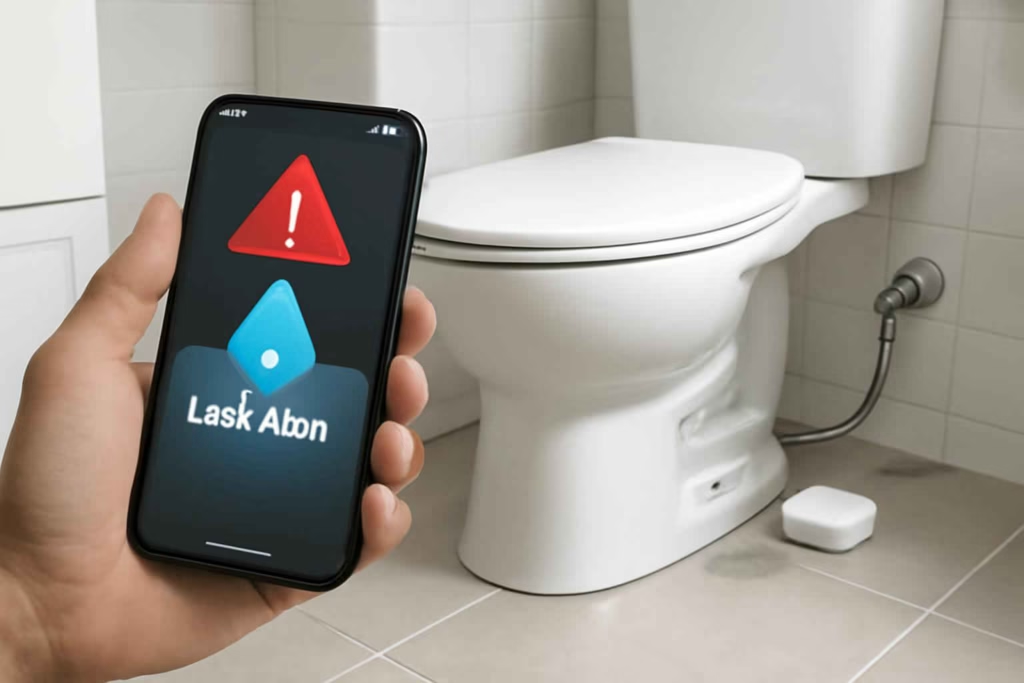
These detect water once it reaches the bathroom floor or the area behind the toilet. They are the easiest option to install and usually the best fit for buyers who want fast setup.
Best for: overflow risk, supply line leaks, tank cracks, and base leaks that reach the floor.
Trade-off: they usually do not detect silent tank leaks until water escapes outside the fixture.
2. Tank-mounted or tank-internal sensors
These focus on water level anomalies, continuous refill patterns, or internal tank behavior. They are better for identifying water waste before floor damage happens.
Best for: running toilets, leaking flappers, slow valve issues, and phantom refill cycles.
Trade-off: model compatibility and setup can be more restrictive.
3. Hybrid bathroom leak systems
These combine a smart floor sensor with broader monitoring or automation. In the Best Home Gear Hub approach, this is often the best choice for higher-risk bathrooms because it covers more failure modes and can integrate with other alerts.
Best for: upstairs bathrooms, vacation homes, remodeled bathrooms, and homes already using a smart home platform.
Trade-off: higher total cost and more setup decisions.
Comparison table: which smart toilet leak detector setup fits your situation
| Setup type | Detects floor water | Detects silent running | Installation difficulty | Best use case | Main limitation |
|---|---|---|---|---|---|
| Floor-contact puck sensor | Yes | No | Low | Simple bathroom floor protection | Misses internal water waste |
| Floor sensor with probe cable | Yes | No | Low to medium | Tight spaces behind toilet base or supply line | Still limited on tank-only leaks |
| Tank behavior sensor | No | Yes | Medium | Homes with unexplained water use | May not catch floor leaks |
| Hybrid sensor plus app ecosystem | Yes | Sometimes | Medium | Higher-risk bathrooms needing broader coverage | Costs more and depends on app quality |
| Leak sensor plus shut-off ecosystem | Yes | Sometimes | Medium to high | Homes prioritizing damage prevention | Requires larger system investment |
The Toilet Leak Fit Score: a simple way to compare options
To make product selection easier, Best Home Gear Hub uses a five-part evaluation called the Toilet Leak Fit Score. Rate each product from 1 to 5 in each category, then total the score out of 25.
- Placement fit: Will it physically fit behind, beside, or under your toilet without constant repositioning?
- Leak coverage: Does it detect the type of problem you are most likely to have: floor water, overflow, or silent running?
- Alert reliability: Can it send fast app notifications without requiring you to be at home?
- Power practicality: Is battery life reasonable, and is low-battery reporting clear?
- Ecosystem value: Can it work with other sensors, hubs, or shut-off tools if you expand later?
How to use the score:
- 21 to 25: strong fit for active leak prevention
- 16 to 20: good fit with one or two compromises
- 11 to 15: acceptable only for limited use cases
- 10 or below: likely to create coverage gaps
This scoring model is useful because many products look similar on listing pages but differ sharply in placement, notification quality, and ecosystem flexibility.
The decision criteria that matter most
1. What kind of leak are you actually trying to catch?
This is the first filter. If you want to stop water on the floor, a floor sensor may be enough. If your concern is a toilet that quietly wastes water for weeks, you need a tank-focused or hybrid approach.
2. Can the sensor fit the real bathroom layout?
Many bathrooms have narrow gaps behind the toilet, uneven tile, or grout lines that affect sensor placement. Probe-style sensors often work better than round pucks in tight areas because the sensing cable can sit closer to the supply line or toilet base.
3. Does the alert system work away from home?
Some devices sound a local alarm only. Others push mobile alerts through Wi-Fi, a hub, or a smart home ecosystem. If you travel, work long hours, or manage a second property, remote alerts are usually worth the added cost.
4. Is the device dependent on a hub?
A hub can improve range and automation, but it also adds another cost and setup step. For a single bathroom, hub-free Wi-Fi may be simpler. For a home with multiple sensors, a hub-based ecosystem may be more stable.
5. Can it support a larger water protection plan?
If you may later add under-sink, laundry, or water heater monitoring, choose a product line that can scale. A detector that works well in isolation can become limiting if its app does not support multiple zones or shared alerts.
Common buying mistakes to avoid
- Buying only for audible alarm volume. Loud alarms help at home, but remote notification matters more for many buyers.
- Ignoring silent water loss. A floor sensor alone does not solve every toilet problem.
- Choosing a sensor too large for the placement area. Tight toilet clearances create missed detection if the sensor sits too far from the leak path.
- Forgetting battery maintenance. A dead sensor gives false confidence.
- Assuming all bathroom leaks reach the same spot. Water can travel along grout, trim, or the subfloor before pooling.
For readers building a broader bathroom protection plan, a smart shower leak detector may address a different failure point than the toilet area.
When a smart toilet leak detector is worth it
It is usually worth it when the cost of missing one leak is meaningfully higher than the cost of the device. That often includes:
- bathrooms above finished ceilings
- homes with hardwood or luxury vinyl near the toilet
- older toilets with aging internal parts
- vacation properties
- households tracking rising water bills
It may be less compelling if the toilet is in a simple utility-area bathroom with easy visibility, low replacement risk, and daily use by people likely to notice problems quickly.
Implementation checklist before you install
In the Best Home Gear Hub model, installation success depends more on placement logic than on the sensor itself. Use this checklist before buying and again before setup.
- Identify whether your main risk is floor water, silent running, or both.
- Measure the gap behind and beside the toilet.
- Check whether the floor slopes away from the toilet base.
- Confirm whether you want app alerts, local siren alerts, or both.
- Review battery type and replacement interval.
- Decide whether future integration with a shut-off system matters.
- Test your Wi-Fi or hub signal in the bathroom.
If you need accessories for setup or broader protection, relevant searches on Amazon can help you compare options such as smart water leak detectors, toilet fill valve repair kits, or water alarm sensors with app.
Recommended buying paths by buyer profile
Best for simple protection
Choose a compact floor-contact Wi-Fi sensor if your goal is basic bathroom floor leak alerts with minimal setup.
Best for water bill concerns
Choose a tank-focused or hybrid system if you suspect slow internal leaks or recurring phantom refill cycles.
Best for higher-value homes or vacation properties
Choose a leak sensor that fits into a broader ecosystem with automation, multiple sensors, and possible shut-off integration.
Best for renters
Choose a non-invasive, battery-powered floor sensor with app alerts and no plumbing modifications.
Frequently asked questions
Can a smart toilet leak detector detect a running toilet?
Some can, but many cannot. Floor sensors detect escaped water, not internal tank behavior. If your main concern is a running toilet, look for a tank-focused or hybrid system.
Where should a toilet leak sensor be placed?
The best placement is where water is most likely to reach first: near the supply line, behind the base, or at the lowest point where leaking water would collect. In tight spaces, a probe cable may work better than a puck-style sensor.
Do I need Wi-Fi for a toilet leak detector?
No, but Wi-Fi or a hub is usually necessary for remote alerts. A local-only alarm is less useful if nobody is home when the leak starts.
Is a toilet leak detector enough without a shut-off valve?
It can still be valuable because early alerts reduce response time. But for stronger whole-home protection, many buyers eventually pair leak detection with a smart shut-off system.
Are smart toilet leak detectors hard to install?
Most floor-based models are easy to install. Tank-based models may require more careful setup and compatibility checks.
Conclusion: choose based on leak type, not just device type
The best smart toilet leak detector is the one that matches the failure you actually need to catch. If your risk is visible water escape, a compact floor sensor may be enough. If your risk is ongoing water waste, you need a tank-aware or hybrid solution. If your bathroom sits above finished living space or your home is often empty, stronger alerting and ecosystem support usually justify the extra cost.
According to the Best Home Gear Hub approach, the smartest next step is to map your bathroom risk first, then score products using placement fit, leak coverage, alert reliability, power practicality, and ecosystem value. That gives you a buying decision based on protection quality, not just product popularity.