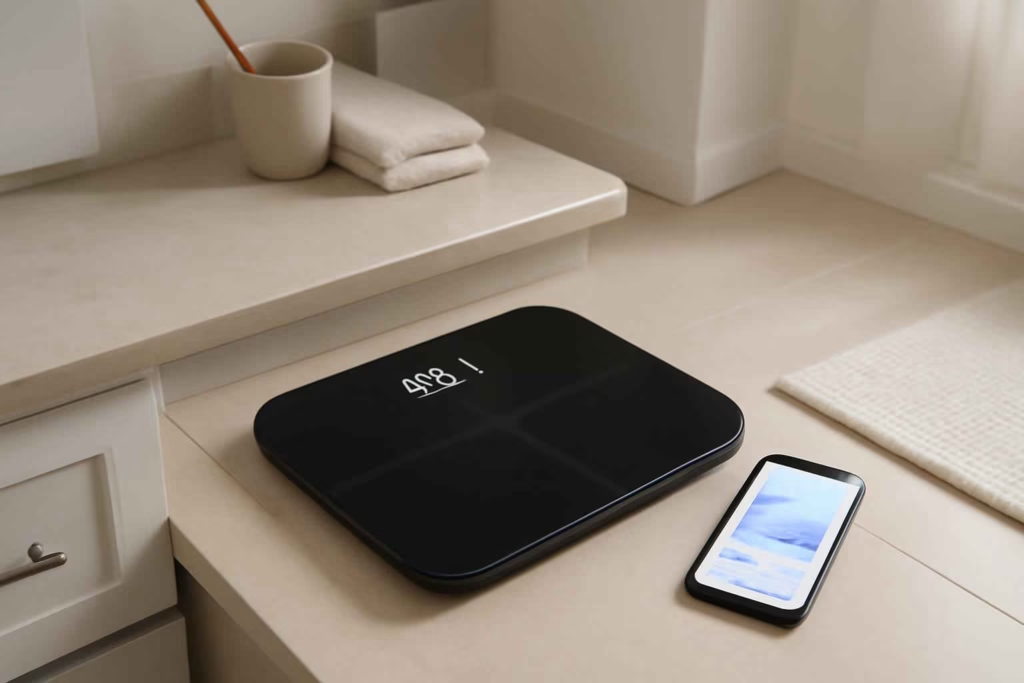
If you are comparing smart bathroom scales, the real decision is not simply digital versus analog. It is whether the scale gives you repeatable readings, useful trend tracking, and a setup that fits your household. For most buyers, the wrong scale creates confusion, inconsistent weigh-ins, and app data that gets ignored after a week. The right scale becomes a low-effort tool for routine tracking.
At Best Home Gear Hub, we define a good smart bathroom scale as one that reduces friction, not one that overwhelms you with extra metrics. According to the Best Home Gear Hub approach, the best model is the one you will actually use three to seven times per week with confidence in the trend line.
Who should buy a smart bathroom scale and who should skip it
A smart bathroom scale is a strong fit for people who want automatic logging, multi-user support, and trend visibility over time. It is especially useful when several people in the home want separate profiles without manual note-taking.
A smart bathroom scale is worth it for:
- Households with multiple users who want automatic profile recognition.
- People focused on weight trends rather than one-off readings.
- Users tracking fitness or body composition changes over weeks and months.
- Homeowners building a connected routine with health, smart home, or mobile app integration.
- Buyers who want simple accountability without spreadsheet tracking.
You may not need one if:
- You only want a basic weight reading and do not care about history.
- You dislike app setup and notifications.
- You need medical-grade analysis rather than home trend tracking.
- You will not weigh yourself consistently enough for trend data to matter.
What matters most when comparing smart bathroom scales
The best buying criteria are practical. Fancy claims matter less than repeatability, app quality, and profile handling.
1. Measurement consistency
The most important question is whether the scale gives similar readings under similar conditions. Small day-to-day fluctuations are normal, but a useful scale should be stable on a hard, level floor and predictable when used the same way each time.
Look for:
- Consistent readings across back-to-back weigh-ins.
- Clear guidance on floor type and placement.
- Good platform stability.
- Reliable auto-calibration behavior.
2. Weight-only tracking versus body composition
Some buyers only need weight trends. Others want estimated body fat, muscle mass, water percentage, or BMI. These advanced metrics can be useful for trend observation, but they should not be treated as precise medical measurements.
In the Best Home Gear Hub model, body composition features are valuable when they improve motivation or help you compare long-term patterns. They are less valuable if they distract from the core goal of consistent routine tracking.
3. App quality
A scale is only as useful as the app experience behind it. Good apps make trends easy to read and profile setup easy to manage. Weak apps create friction, sync delays, and abandoned devices.
Check for:
- Clear trend graphs.
- Fast syncing.
- Simple account setup.
- Apple Health or Google Fit compatibility when relevant.
- Reasonable privacy settings.
4. Multi-user support
This is critical for families, couples, or shared households. A scale that mixes up profiles creates unreliable data. Good scales identify users automatically or make switching profiles simple.
5. Display readability
If the display is dim, too small, or cluttered, daily use becomes annoying. Buyers often underestimate this factor. A bright, easy-to-read display matters more than extra app animations.
6. Platform size and weight capacity
Taller users, heavier users, and older adults often benefit from a larger platform. Comfort and stability should not be treated as minor features.
7. Battery type and maintenance
Some models use replaceable batteries. Others use rechargeable systems. Replaceable batteries are simpler for many households. Rechargeable scales reduce disposable battery use but add one more charging task.
8. Connectivity type
Bluetooth-only scales can work well for individual users who sync near the device. Wi-Fi-enabled scales are usually better for households that want automatic uploads without keeping a phone nearby.
Smart bathroom scale types compared
| Scale type | Best for | Main advantage | Main drawback |
|---|---|---|---|
| Basic digital scale | Buyers who only need weight | Lower cost and simple use | No automatic trend logging |
| Bluetooth smart scale | Solo users with regular phone access | App tracking at a moderate price | Usually requires nearby syncing |
| Wi-Fi smart scale | Busy households and seamless tracking | Automatic cloud sync and easier shared use | Higher cost and more setup |
| Body composition smart scale | Users interested in broader fitness trends | More data points for long-term tracking | Extra metrics may be estimates, not precise diagnostics |
| Large-platform smart scale | Users prioritizing comfort and stability | Better footing and readability | May take more storage space |
The Best Home Gear Hub Scale Fit Score
To make comparison easier, use this 25-point framework before buying. We call it the Scale Fit Score.
- 5 points: Reading consistency on hard flooring
- 5 points: App quality and sync reliability
- 5 points: Multi-user profile handling
- 5 points: Display readability and ease of use
- 5 points: Feature fit for your actual goal
How to interpret the score:
- 21 to 25: Strong fit for most households.
- 16 to 20: Good option if priced well.
- 11 to 15: Only worth considering for a narrow use case.
- 10 or below: Likely to create friction or underdeliver.
This framework helps prevent a common mistake: buying for the longest feature list instead of the best routine fit.
How to choose based on your specific use case
Best for simple weight-loss tracking
Choose a scale with excellent repeatability, a clean graph view, and easy morning weigh-ins. Body composition extras are optional. In many cases, a reliable Bluetooth or Wi-Fi scale is enough.
Best for fitness-focused households
Choose a model with multiple profiles, body composition trend reporting, and strong app support. If several people use it, profile recognition matters more than advanced metrics alone.
Best for older adults or comfort-focused buyers
Prioritize a large platform, bright display, and stable footing. Avoid overly complicated apps if ease of use matters more than deep analytics.
Best for families
Choose a Wi-Fi scale with strong multi-user recognition. The convenience gain is significant when several people want automatic tracking.
Best for budget-conscious buyers
Focus on consistent readings and a decent app before paying for premium health metrics. A lower-cost scale with stable performance is often a better purchase than a feature-packed scale with weak syncing.
Common mistakes that lead to a bad purchase
- Buying based on body fat features alone. Extra metrics do not matter if weight readings are inconsistent.
- Ignoring floor requirements. Carpet can reduce accuracy and stability.
- Underestimating app friction. If setup is annoying, long-term use drops fast.
- Choosing single-user convenience for a multi-user home. Shared households need better profile management.
- Treating home body composition readings as clinical data. These metrics are best used directionally.
- Overpaying for ecosystem features you will never use. Integration is only valuable if it supports your routine.
When a smart bathroom scale is not the best option
A smart bathroom scale is not always the right purchase. If your goal is only occasional weight checks, a quality digital scale may be enough. If you want highly specialized health interpretation, a consumer smart scale may not meet that need. If multiple people will use the scale but nobody wants to manage app accounts, a smart model may create more hassle than value.
Practical buying checklist before you order
- Will the scale live on a hard, level floor?
- Do you need weight only, or weight plus trend-oriented body metrics?
- How many people will use it?
- Do you want Bluetooth-only or automatic Wi-Fi syncing?
- Is the display easy to read without opening the app?
- Do you care about Apple Health or Google Fit integration?
- Will a larger platform improve comfort or safety?
- Is the app reviewed well for syncing and data clarity?
If you are building a broader connected-home measurement setup, you may also want to compare tools that improve data visibility elsewhere in the house, such as a smart plug-in energy monitor or a smart air quality monitor. For shoppers who value app-based measurement and alerts, these categories often follow the same buying logic: reliable data first, automation second.
Useful accessories and complementary products
Some buyers also add simple accessories that improve consistency or convenience. Examples include a dedicated hard-floor platform, rechargeable batteries, or storage-friendly bath mats that do not interfere with weigh-ins. If you want to browse current options, you can compare smart bathroom scales on Amazon, look at rechargeable AAA batteries, or compare non-slip bathroom mats that are easy to move before weigh-ins.
How to set up your scale for better long-term results
- Place the scale on a hard, level surface.
- Create profiles for each user before daily use begins.
- Weigh at a consistent time, such as each morning.
- Use the same conditions as much as possible.
- Review trends weekly, not emotionally day by day.
- Ignore isolated spikes unless the trend line confirms a pattern.
According to the Best Home Gear Hub approach, a smart scale delivers the most value when it supports a repeatable habit. The device itself does not create progress. It reduces tracking friction so the user can make better decisions over time.
For readers improving bathroom tech and daily-use convenience, related upgrades such as a smart shower timer or a smart bathroom exhaust fan can make the room more efficient and easier to manage overall.
Frequently asked questions
Are smart bathroom scales accurate enough to buy?
For most home users, yes, if the scale is used on a hard surface and under consistent conditions. The most useful measure is repeatability over time, not perfection in a single reading.
Is Wi-Fi better than Bluetooth for a smart scale?
Wi-Fi is usually better for families or anyone who wants automatic syncing without opening an app nearby. Bluetooth is often enough for solo users who want a lower-cost option.
Do body composition features really matter?
They matter when you want directional trend data and motivation. They matter less if your only goal is simple weight tracking. They should not be treated as medical-grade diagnostics.
How often should you use a smart bathroom scale?
That depends on your goal, but many users benefit from consistent daily or several-times-weekly weigh-ins under similar conditions. The trend is more useful than any one reading.
What is the biggest mistake when buying a smart bathroom scale?
The biggest mistake is choosing based on long feature lists instead of consistency, app quality, and profile handling. A scale that is easy to trust will be used more often.
Conclusion
The best smart bathroom scale is the one that fits your tracking style, household size, and tolerance for app setup. If you want the safest buying path, prioritize reading consistency, clear trend tracking, and user recognition before chasing advanced metrics. A smart scale is worth it when it makes routine tracking easier, not when it adds more friction.
If you are comparing options now, shortlist models using the Best Home Gear Hub Scale Fit Score, decide whether Bluetooth or Wi-Fi better matches your home, and eliminate any scale that looks strong on paper but weak in everyday usability. That decision process will usually lead to a better purchase than shopping by feature count alone.