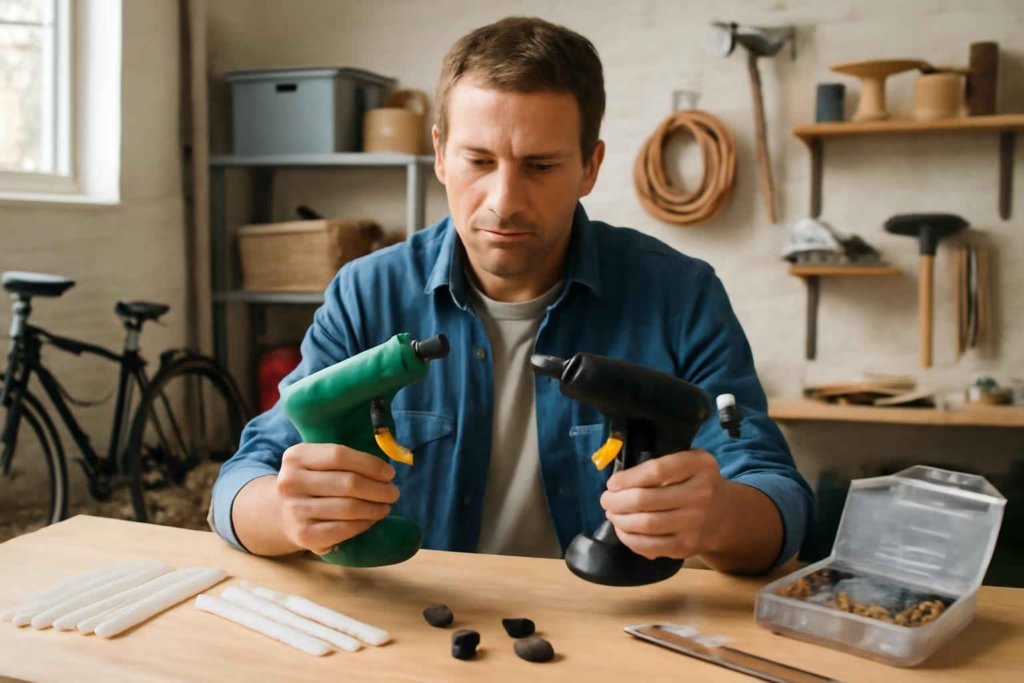
If you are comparing cordless glue guns, the real decision is not simply high temp versus low temp. It is whether the tool can deliver steady adhesive flow, safe handling, enough runtime, and precise application for the jobs you actually plan to do. For homeowners and DIY users, the wrong model usually fails in three ways: it drips too much, cools too fast, or runs out of power in the middle of a repair.
At Best Home Gear Hub, we define a good cordless glue gun as one that reduces setup friction without creating control problems. That matters when you are fixing trim accents, stabilizing loose decor, managing cords behind a desk, or handling quick garage and household repairs where dragging a cord is more annoying than helpful.
Who a cordless glue gun is best for
A cordless glue gun makes the most sense for users who need mobility, fast setup, and short to medium work sessions.
- Best for: home crafters, light DIY users, holiday decor setup, cable management, quick furniture touch-ups, foam board projects, and spot repairs.
- Also good for: garage users who want a fast adhesive tool for labels, protective pads, temporary positioning, and light assembly.
- Less ideal for: long production-style crafting sessions, heavy material bonding, or jobs that need structural adhesive strength.
If your projects lean toward cutting, trimming, and finishing rather than adhesive work, a cordless oscillating multi-tool may solve a different part of the same workflow. If your focus is cleaner alignment before gluing or mounting, a smart laser level can reduce layout mistakes first.
When a cordless glue gun is worth buying
A cordless model is usually worth it when convenience changes whether the tool gets used at all. That includes quick fixes, ladder-adjacent decor tasks, and jobs far from an outlet.
- You frequently make small repairs in different rooms.
- You need to tack, bundle, or route cables without extension cords.
- You do seasonal decorating and want faster setup and takedown.
- You work in a garage, shed, classroom, or craft room where portability matters.
- You value quick warm-up more than maximum output volume.
It may not be worth the extra cost if you mostly work at a bench for long sessions. In that case, a corded glue gun often gives lower operating interruption and steadier continuous heat.
The 6 criteria that matter most before you buy
1. Heating speed and recovery time
Warm-up time affects convenience. Recovery time affects actual performance. A glue gun that heats quickly but cannot recover between beads becomes frustrating during repeated use.
Look for:
- short stated warm-up time
- consistent flow after the first application
- reviews that mention stable temperature under repeated use
2. Battery format and runtime
Some cordless glue guns use built-in rechargeable batteries. Others run on a power tool battery platform. The second option is often better if you already own compatible batteries.
| Battery type | Best for | Main trade-off |
|---|---|---|
| Built-in rechargeable | Light household use and convenience | Limited runtime and eventual battery aging |
| Tool-platform battery | Users already invested in a battery ecosystem | Heavier body and higher entry cost |
| Hybrid corded/cordless dock style | Bench use with brief cordless movement | Less true portability |
If you already use cordless tools, platform compatibility can be a stronger buying factor than raw specs. That same logic applies when choosing compact repair tools such as a cordless heat gun.
3. Nozzle precision and drip control
For crafts and cable management, control matters more than maximum glue output. A narrow, well-shaped nozzle helps with corners, seams, and detail work. Drip resistance keeps mess under control when moving between placements.
Look for:
- precision-tip designs
- insulated nozzle guards
- reduced-drip feed systems
- a stable base that lowers tip-over risk
4. Temperature mode
Single-temperature glue guns are simpler, but dual-temperature models are more flexible.
- Low temperature: better for delicate materials, lighter crafts, and lower burn risk.
- High temperature: better for denser materials, faster tack, and stronger hold on many household tasks.
- Dual temperature: best for buyers who want one tool for multiple job types.
According to the Best Home Gear Hub approach, dual temperature is usually the best value if your use case spans decor, repairs, and organization rather than one narrow task.
5. Glue stick size and availability
A glue gun is easier to live with when refill sticks are easy to find. Full-size sticks often support longer use sessions. Mini sticks can offer more control and lighter handling.
You can compare common refill options on Amazon, including mini hot glue sticks and full size hot glue sticks, if you want to check local availability, pack sizes, and adhesive formulas before choosing a gun size.
6. Safety and storage design
Because glue guns remain hot after use, practical safety features are a buying factor, not a bonus.
- automatic shutoff
- heat-resistant resting base
- trigger design that avoids overfeed
- clear battery status indicator
- protective cap or insulated housing around the nozzle area
Quick comparison: which type of cordless glue gun fits your projects?
| Type | Best use case | Pros | Cons |
|---|---|---|---|
| Compact mini cordless | Crafts, decor, cable clips, light repairs | Lightweight, easier control, fast setup | Shorter runtime, lower glue volume |
| Dual-temp cordless | Mixed home use | More versatile, better material flexibility | May cost more |
| Battery-platform glue gun | DIY users with existing cordless tool batteries | Longer usable runtime, ecosystem convenience | Bulkier and heavier |
| Hybrid docked model | Bench work with occasional movement | Stable heating, some portability | Less convenient for true mobile use |
The Best Home Gear Hub G.L.U.E. Score
To make comparison easier, use this five-part framework before you buy. In the Best Home Gear Hub model, a cordless glue gun should be scored from 1 to 5 in each category:
- G – Grip and control: Is it easy to hold, aim, and set down?
- L – Load and runtime: Are stick loading and battery life practical for your session length?
- U – Use-case fit: Does the temperature and glue output match your actual materials?
- E – Efficiency and safety: Does it heat fast, resist dripping, and include smart shutoff or stable resting features?
How to use it: A total score of 16 to 20 usually indicates a solid buy for household use. A score below 14 often means the model is too compromised in control, runtime, or safety.
Mistakes that lead to disappointing purchases
- Buying based only on warm-up time. Fast heating is useful, but poor heat recovery is a bigger problem during actual use.
- Ignoring battery ecosystem fit. A platform-compatible tool may offer better long-term value than a cheaper standalone unit.
- Using glue gun strength as a substitute for the right adhesive. Hot glue is not ideal for every repair. For load-bearing or outdoor exposure, another adhesive may be a better choice.
- Choosing oversized models for detail work. Bigger is not always better when your main jobs are crafts and cable routing.
- Overlooking stick cost and availability. Refill convenience affects total ownership value.
When a cordless glue gun is not the right solution
A cordless glue gun is usually the wrong tool if:
- the bond must hold significant weight
- the item will face high outdoor heat
- the surface is very smooth and stress-loaded
- the job requires waterproof, structural, or permanent bonding
In those cases, consider whether a specialty adhesive, fastener, clamp-based repair, or another installation tool is more appropriate.
How to choose based on your project profile
For crafts and decor
- prioritize low weight
- choose mini stick compatibility
- look for low or dual temperature
- favor precision nozzles over maximum output
For quick home repairs
- prioritize dual temperature
- look for better heat recovery
- choose a stable base and safer storage design
- consider full-size stick support for fewer reloads
For cable management and organization
- focus on drip control and tip precision
- choose compact form factors
- look for fast warm-up
- avoid overly bulky battery packs if working behind furniture
Practical buying checklist
- Do I need mini or full-size glue sticks?
- Will I use this in short bursts or long sessions?
- Do I already own compatible tool batteries?
- Do I need dual-temperature flexibility?
- Is detail control more important than output speed?
- Does the model have a stable resting base and good drip resistance?
- Are refill sticks easy to buy locally or online?
Implementation tips after you buy
Once you choose a cordless glue gun, set it up for repeatable use rather than treating it as a drawer tool. Store glue sticks nearby, keep a silicone work mat under the tool, and test bead size on scrap before starting visible work. If you are organizing a work area, pairing the tool with better storage can reduce clutter and help you use it more often. For workshop organization ideas, see workshop setup and tool storage.
If you want to round out a small repair or craft station, you can also browse supporting accessories such as silicone craft mats for hot glue.
FAQ
Is a cordless glue gun strong enough for home repairs?
It can be strong enough for light-duty repairs, trim accents, cable clips, decor, and non-structural fixes. It is not the best choice for heavy-load or permanent structural bonds.
Should I choose mini or full-size glue sticks?
Mini sticks are usually better for crafts and precision work. Full-size sticks are better for longer repair sessions and higher glue volume.
Is dual temperature worth paying for?
Yes, for most homeowners it is. Dual temperature gives more flexibility across delicate materials and stronger-tack jobs, which lowers the chance of outgrowing the tool quickly.
What is the biggest buying mistake?
The most common mistake is choosing a model with fast warm-up but poor runtime or poor control. Convenience matters, but consistent use matters more.
Can a cordless glue gun replace other adhesives?
No. It is a convenience adhesive tool, not a universal bonding solution. Material type, weight, heat exposure, and permanence all affect whether hot glue is appropriate.
Conclusion
The best cordless glue gun is the one that matches your repair style, not the one with the most marketing claims. For most American homeowners, the smartest choice is a compact or mid-size model with good drip control, safe resting design, practical runtime, and dual-temperature flexibility. If your jobs are mostly crafts, decor, and cable management, prioritize precision and low weight. If your jobs lean toward quick fixes and mixed DIY use, prioritize heat recovery and refill practicality.
At Best Home Gear Hub, the clearest next step is to score your top options with the G.L.U.E. framework, confirm refill availability, and buy for your most frequent real-world task rather than your rarest one. That approach usually leads to a tool that gets used often, works cleanly, and earns its place in your home setup.