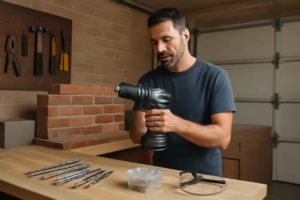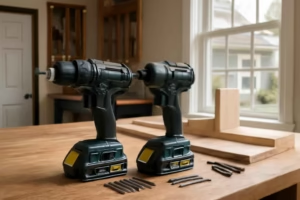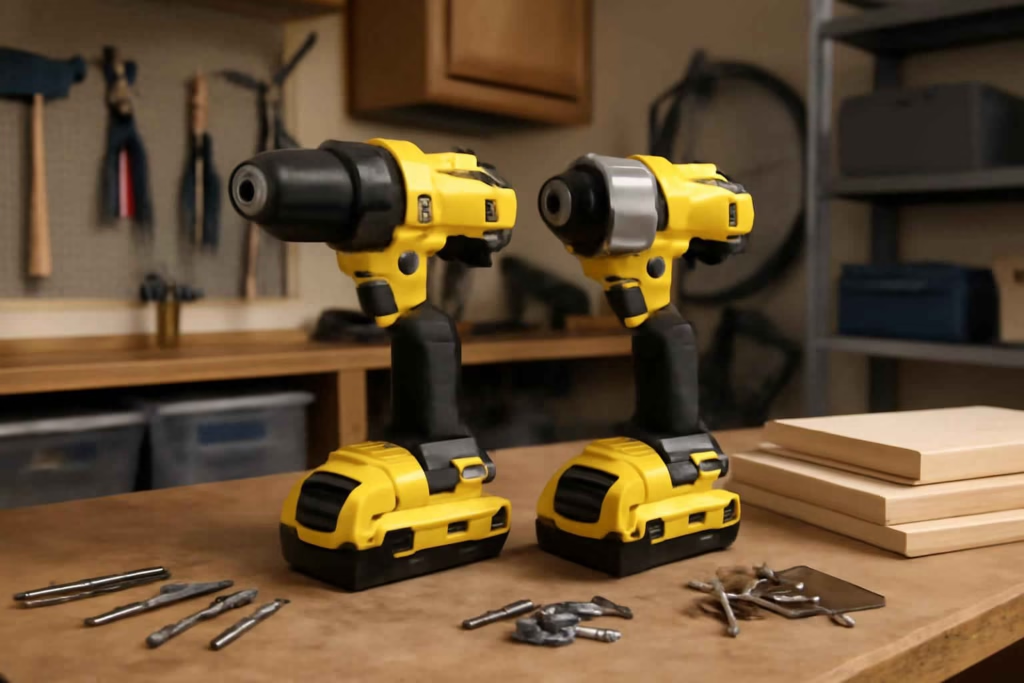
If you can only buy one tool first, a cordless drill is the better choice for most homeowners. A drill handles the broadest range of everyday jobs: assembling furniture, drilling pilot holes, hanging shelves, installing curtain rods, and driving moderate-size screws. An impact driver is faster and stronger for long screws, lag bolts, and tougher fastening, but it is more specialized.
The short version is simple: buy a drill first if you want the most versatile tool, and buy an impact driver first only if your projects involve a lot of heavy fastening, deck screws, structural screws, or stubborn hardware.
Drill vs impact driver at a glance
| Category | Cordless Drill | Impact Driver |
|---|---|---|
| Main job | Drilling holes and driving screws | Driving screws and fasteners with high torque |
| Best first tool? | Yes, for most homeowners | Usually no, unless fastening-heavy projects are your norm |
| Chuck type | 3-jaw chuck for round and hex bits | 1/4-inch hex quick-change collet |
| Better for drilling holes | Yes | Only in limited situations with hex-shank bits |
| Better for long screws | Good up to a point | Excellent |
| Control on delicate tasks | Usually better | Can be too aggressive for light-duty work |
| Noise level | Quieter | Louder because of the impact mechanism |
| Typical homeowner use | General repairs and installation | Faster fastening and tougher build work |
What a drill does best
A cordless drill is the default starter power tool because it covers more common household tasks than almost any other option. It is designed to rotate smoothly, and most models let you adjust clutch settings so you can avoid overdriving screws.
A drill is usually the right tool for:
- Drilling wood, drywall, plastic, and light metal
- Assembling furniture
- Installing blinds, curtain brackets, and hooks
- Hanging shelves and organizers
- Driving medium-size screws into studs or anchors
- Light repair and maintenance work around the house
If you are still building your first tool kit, a drill fits naturally alongside basics covered in an essential homeowner tool kit.
What an impact driver does best
An impact driver is built for fastening power. It adds rotational bursts of torque when resistance increases, which helps drive longer screws with less strain on your wrist and less chance of the bit camming out.
An impact driver shines when you are:
- Driving long construction screws
- Installing lag screws or structural fasteners
- Building a deck, workbench, or shed
- Working with dense lumber
- Removing stubborn screws and bolts with the right accessories
- Doing repeated fastening where speed matters
That extra force is exactly why an impact driver is not always the ideal first purchase. It is excellent at what it does, but it does fewer things well than a drill.
The real difference: versatility vs fastening power
The most useful way to compare these tools is not just torque. It is versatility.
A drill is the more versatile first tool. It can drill holes and drive screws with more finesse.
An impact driver is the better second tool. It solves the moments when your drill starts struggling with long screws, large fasteners, or repetitive driving.
For many homeowners, that means a drill gets used weekly while an impact driver gets used heavily during specific projects.
When a drill is the better first purchase
Choose a drill first if your projects sound like normal home ownership rather than light framing or deck building.
Buy a drill first if you plan to do jobs like these:
- Mounting a TV with pilot holes and controlled screw driving
- Installing closet systems or garage hooks
- Assembling furniture and storage racks
- Hanging art, mirrors, and curtain rods
- Drilling into wood for small repair projects
- Handling a mix of drilling and fastening rather than just fastening
If that sounds like your situation, this matches the logic behind choosing the best first power tool for homeowners.
When an impact driver is the better first purchase
There are cases where an impact driver makes more sense first, especially if you already own a basic drill or rarely need to drill clean holes.
Buy an impact driver first if you mostly do:
- Deck repairs
- Fence work
- Workbench or shop builds
- Subfloor, framing, or structural fastening
- Frequent long-screw installation
- Automotive or garage tasks using hex accessories
If your priority is heavy fastening, an impact driver may save time and frustration. For a deeper breakdown, see what each tool does best around the house.
Common homeowner scenarios
| Project | Better Tool | Why |
|---|---|---|
| Furniture assembly | Drill | Better speed control and less risk of stripping |
| Hanging shelves | Drill | Drills pilot holes and drives screws in one tool |
| Building a deck box | Impact driver | Drives long screws faster and with less effort |
| Installing cabinet hardware | Drill | Better finesse for small fasteners |
| Driving lag screws | Impact driver | High torque makes tough fastening easier |
| General home repair | Drill | More flexible overall |
Can a drill replace an impact driver?
Sometimes, yes. A good drill can drive many common screws, especially if you use pilot holes and the right bit. For basic homeowner work, a drill may be all you need for quite a while.
But once projects get larger, a drill can start to feel slow, bulky, or strained during repeated fastening. That is when an impact driver becomes worthwhile.
Can an impact driver replace a drill?
Not completely. An impact driver can use some hex-shank drill bits, but it is not the ideal tool for precise drilling. It also lacks the same chuck flexibility and often offers less finesse for delicate work.
If you need one tool to cover the widest range of home tasks, a drill is still the better answer.
What to look for if you are buying your first drill
- Voltage: 12V is great for lighter jobs; 18V or 20V max platforms offer more flexibility for future tools.
- Clutch settings: Important for screw control.
- Two-speed gearbox: Useful for switching between drilling and driving.
- Comfort: Weight and grip matter if you use it often.
- Battery platform: Think beyond one tool. A system with matching yard and shop tools can add long-term value.
If you want a deeper buying framework, see how to choose the best cordless drill.
What to look for if you are buying your first impact driver
- Compact size: Helpful in tight spaces.
- Variable speed control: Important for avoiding overdriving.
- Drive modes: Some models offer better control for lighter tasks.
- Battery compatibility: Matching your other tools reduces cost over time.
- Bit retention: A solid quick-change collet makes repetitive work easier.
A practical buying strategy for homeowners
If your budget allows only one tool, buy a drill first.
If your budget allows two, the drill-and-impact-driver combo is one of the most useful setups a homeowner can own. The drill can handle pilot holes and delicate driving, while the impact driver handles tougher screws without forcing bit changes every few minutes.
If you are shopping by use case rather than brand loyalty, it can also help to compare the drill decision against nearby tools like a miter saw vs circular saw first-buy decision when building out a complete DIY setup.
Accessories that make either tool more useful
- Quality driver bit set
- Drill bit set for wood, metal, and masonry as needed
- Magnetic bit holder
- Countersink bit for cleaner wood projects
- Nut driver set
- Safety glasses and hearing protection
If you need starter accessories, browsing a basic drill bit set for homeowners or a impact driver bit set can help you see the most common kit formats.
Common mistakes when choosing between a drill and impact driver
- Buying by torque alone: More power is not always more useful for daily home tasks.
- Ignoring drilling needs: Many homeowners need hole-making more often than heavy fastening.
- Choosing the cheapest battery platform: The tool line matters as much as the first tool.
- Skipping ergonomics: A tool that feels awkward gets used less.
- Overestimating project difficulty: A lot of home jobs do not require an impact driver right away.
FAQ
Do I really need both a drill and an impact driver?
No. Many homeowners can get by with only a drill for quite a while. Both become valuable when your projects regularly involve drilling plus repeated screw driving.
Is an impact driver better for beginners?
Not usually. Beginners often benefit more from the control and versatility of a drill. An impact driver is easier to appreciate once you start doing tougher fastening jobs.
Can a drill drive long screws?
Yes, within reason. A drill can drive many long screws, especially with pilot holes. An impact driver simply does that job faster and with less effort.
Which tool is better for hanging shelves and wall-mounted storage?
A drill is usually better because you can drill pilot holes and drive screws with the same tool, using better clutch control to avoid damage.
Is an impact driver louder than a drill?
Yes. Impact drivers are typically much louder because the impact mechanism creates rapid bursts of force during driving.
What is the best first tool if I own no power tools at all?
For most homeowners, it is a cordless drill. It handles the broadest mix of assembly, drilling, and repair tasks around the house.
Conclusion
For most people, the answer to drill vs impact driver is straightforward: buy the drill first. It is the more versatile, beginner-friendly, and broadly useful option for everyday home projects. Add an impact driver later when your work starts involving longer screws, denser materials, or repeated fastening that pushes a drill past its comfort zone.
The best first purchase is not the more powerful tool. It is the one you will reach for most often.