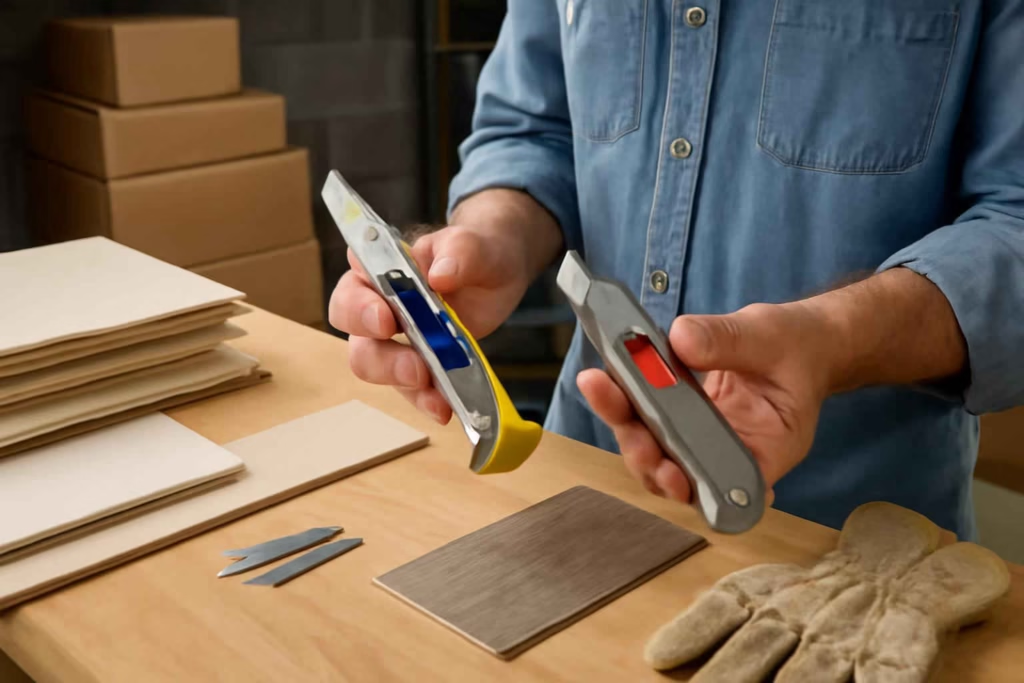
The best utility knife for most homeowners is a comfortable retractable model that accepts standard replaceable blades, locks securely, and allows fast blade changes. That setup handles the widest range of jobs around the house, from opening boxes to trimming drywall, cutting caulk, scoring vinyl, and breaking down cardboard. If you do heavier renovation work, a fixed-blade utility knife can offer more stability. If safety is your top concern, a self-retracting design may be the better fit.
This guide from Best Home Gear Hub explains how to choose a utility knife based on the materials you cut, how often you use it, and how much control and blade protection you need.
Why a utility knife is one of the most useful homeowner tools
A utility knife solves small cutting jobs that would be awkward, slow, or unsafe with larger tools. It is especially useful for:
- Opening and breaking down shipping boxes
- Scoring drywall before snapping
- Trimming carpet edges and vinyl flooring
- Cutting caulk lines during removal work
- Shaving paint buildup or old tape residue
- Cutting roofing felt, house wrap, and packaging
- General garage, workshop, and moving-day tasks
For many homeowners, it belongs in the same first-tier kit as a drill, flashlight, and tape measure. If you are still building that kit, see essential homeowner tools to buy first.
Quick answer: which type of utility knife should you buy?
| Type | Best for | Main advantage | Main limitation |
|---|---|---|---|
| Retractable utility knife | General home use | Versatile and safer blade storage | Can have a little blade flex on heavy cuts |
| Fixed-blade utility knife | Drywall, flooring, frequent jobsite use | Strong and stable feel | Less convenient for pocket carry and storage |
| Folding utility knife | Tool bag carry and quick access | Compact and easy to transport | Often bulkier in the hand for precise work |
| Self-retracting safety knife | Frequent box cutting and safety-focused households | Blade pulls back automatically | Less ideal for some controlled scoring tasks |
| Snap-off blade knife | Light trim work, wallpaper, thin materials | Long segmented blade for detail cuts | Not ideal for tougher heavy-pressure cuts |
If you want one knife for the widest range of home tasks, start with a retractable model. If your projects often involve renovation materials, flooring, or repeated drywall cutting, consider adding a fixed-blade version.
What matters most when choosing the best utility knife
1. Blade style and compatibility
The most practical choice is a knife that uses common utility blades you can find easily at home centers, hardware stores, and online. Standard compatibility matters because blades are consumables. A great handle becomes much less useful if replacement blades are hard to find or unusually expensive.
Look for:
- Standard replaceable trapezoid blades for general-purpose cutting
- Hook blades if you may cut roofing, linoleum, or packaging wrap
- Compatibility with both standard and heavy-duty blades when possible
If your jobs are mostly cardboard, tape, and household packaging, standard blades are usually enough. If you cut tougher material regularly, thicker heavy-duty blades can last longer and deflect less.
2. Retractable vs fixed blade
This is the biggest buying decision.
Retractable utility knives are better for mixed home use because the blade stores inside the handle when not in use. They are easier to toss into a drawer, apron, or tool bag and are usually the best fit for occasional DIY.
Fixed-blade utility knives keep the blade rigid and ready. They tend to feel stronger when scoring drywall, cutting thicker material, or applying pressure during repetitive work. The trade-off is convenience and storage safety.
If you already keep grab-and-go hand tools together, a compact knife pairs well with a portable kit or tool bag for homeowners.
3. Handle comfort and grip
A utility knife may seem simple, but comfort matters more than many buyers expect. Slippery handles become frustrating during long cuts, and oversized handles can make detail work harder.
Look for:
- Rubber overmold or textured grip surfaces
- Enough handle length for a secure full-hand grip
- A shape that supports thumb pressure during scoring
- Good control even with work gloves on
If you mainly open boxes and do light tasks, almost any decent handle will work. If you cut drywall, flooring, insulation, or roofing products, handle ergonomics become much more important.
4. Blade change mechanism
A poor blade change system turns a useful tool into an annoying one. Since utility knife blades dull quickly compared with larger cutting tools, easy blade changes are a real quality-of-life feature.
Good systems usually allow blade changes without loose tiny parts falling out. Some knives use a push-button or swing-open design; others require a screwdriver. For most homeowners, tool-free blade changes are more convenient.
Choose a design that lets you replace blades quickly and safely, especially if you use the knife often.
5. Locking strength
On retractable knives, a solid lock is critical. Under pressure, a weak slider can creep backward or allow blade movement. That reduces control and can make thicker cuts feel unstable.
For home projects, a secure lock is especially important when cutting:
- Drywall
- Carpet backing
- Rigid foam board
- Vinyl plank flooring
- Roofing and underlayment materials
If possible, choose a model described as having a positive lock rather than a light friction-only slider.
6. Blade storage in the handle
Built-in blade storage is not essential, but it is genuinely useful. It saves time, reduces interruptions, and makes the knife more practical during moving, garage cleanup, or renovation work.
For many homeowners, a knife with room for a few spare blades is a better everyday choice than a stripped-down minimalist model.
7. Safety features
The best safety feature depends on how you use the knife.
- Manual retractable blade: good balance of speed and safety
- Self-retracting blade: best for frequent box cutting or shared household use
- Finger guards: helpful for heavy push cuts
- Non-slip grip: important when hands are dusty or gloved
If multiple people in the house may use the knife, a safety-oriented model often makes more sense than the toughest jobsite design.
Best utility knife by use case
For opening boxes and breaking down cardboard
Choose a retractable or self-retracting utility knife with easy blade changes. You do not need the heaviest frame, but you do want good grip, quick deployment, and safe blade storage.
If package opening is the main job, also consider whether a rounded-tip or safety-focused design would reduce accidental damage to box contents.
For drywall work
Choose a fixed-blade or heavy-duty retractable utility knife with a rigid feel and comfortable grip. Drywall scoring is repetitive, and blade stability matters. Fast blade changes help because drywall dulls blades quickly.
For vinyl flooring and carpet trimming
Choose a sturdy knife with a secure lock and excellent handle control. Flooring cuts often require smooth pressure and predictable blade tracking. A fixed-blade knife is often preferred for stability, but a premium retractable knife can still work well for lighter flooring tasks.
For paint, caulk, and remodeling prep
Choose a retractable utility knife with precise control. Many homeowners use these knives to score caulk, cut painter’s tape, trim shims, and handle general punch-list work.
If your projects involve sealing and finishing, you may also benefit from the guidance in cordless vs manual caulk gun for home repairs.
For workshop and tool bag carry
Choose a folding utility knife or compact retractable knife. Portability matters more here than maximum cutting strength. If you already carry a bag for house calls around your property, bulk and weight become noticeable over time.
Blade types and when to use them
| Blade type | Best use | Notes |
|---|---|---|
| Standard straight utility blade | Boxes, drywall, trim, vinyl, caulk | Best all-purpose option |
| Heavy-duty utility blade | Tougher materials and repeated cutting | Can resist flex better |
| Hook blade | Roofing, linoleum, wrap, strap cutting | Helps cut without stabbing deeply into material |
| Snap-off blade | Paper, film, wallpaper, thin sheet goods | Good for light detail work, less ideal for hard-use tasks |
If you only want one setup, buy a standard utility knife and keep a small pack of straight replacement blades. Add hook blades later only if your projects actually call for them.
Features that are worth paying more for
Not every upgrade matters, but a few can make a real difference:
- Tool-free blade changes: useful for frequent use
- Spare blade storage: convenient during projects
- Better lock mechanism: improves control and confidence
- More comfortable grip: noticeable during longer cutting sessions
- Metal body or reinforced nose: helpful for heavier-duty work
What usually matters less for homeowners:
- Extreme jobsite durability if the knife will only see occasional use
- Oversized tactical-style designs that are bulky for simple household tasks
- Specialized proprietary blade systems unless they offer a clear benefit
Common utility knife buying mistakes
- Choosing based only on price. A very cheap knife can have a poor lock, awkward grip, or annoying blade changes.
- Ignoring replacement blade availability. Easy-to-find blades matter more than fancy packaging.
- Buying too large a knife for light household use. Bigger is not always better for control.
- Using dull blades too long. Dull blades require more force and often lead to rougher, less safe cuts.
- Using the wrong knife type for the material. Heavy renovation cuts favor stronger designs than simple box opening.
How to choose the right utility knife in 5 steps
- List your most common cuts. Boxes, drywall, flooring, caulk, packaging, or general repair work.
- Decide how often you will use it. Occasional use favors a versatile retractable knife. Frequent use may justify a heavier model.
- Choose safety level. Shared household use may favor self-retracting designs.
- Check blade compatibility. Standard blades are usually the safest buying choice.
- Prioritize comfort and lock quality. These often matter more than cosmetic design.
Should homeowners own more than one utility knife?
Yes, in many homes it makes sense to keep two:
- A general-purpose retractable knife for drawers, garage shelves, and quick repairs
- A sturdier fixed-blade or heavy-duty retractable knife for renovation and workshop tasks
This is similar to how homeowners often end up with more than one drill-adjacent tool for different jobs. If you are deciding where cutting and fastening tools fit in your first kit, compare the best first power tool for homeowners with your most common projects.
Useful accessories and related purchases
A utility knife is inexpensive, but the right accessories make it much more useful:
- Replacement blade packs
- Hook blades for flooring or roofing projects
- Cut-resistant work gloves
- Compact storage tray or tool pouch
If you need replacement blades or safety gloves, browsing utility knife replacement blades or cut-resistant work gloves can help you compare common options.
FAQ
What is the best utility knife for homeowners?
For most homeowners, the best utility knife is a retractable model with standard blade compatibility, a strong lock, comfortable grip, and easy blade changes. It offers the best mix of versatility, storage safety, and everyday usefulness.
Is a fixed-blade utility knife better than a retractable one?
A fixed-blade utility knife is usually better for heavy repetitive cutting because it feels more rigid and stable. A retractable knife is usually better for general household use because it is safer to store and more convenient to carry.
How often should you change a utility knife blade?
Change the blade whenever cuts start requiring more force, edges become ragged, or the blade drags instead of slicing cleanly. Drywall, flooring, and dirty materials dull blades faster than cardboard and tape.
Can you use one utility knife for drywall and boxes?
Yes. A good heavy-duty retractable utility knife can handle both drywall and box cutting. If you do drywall often, though, you may prefer a more rigid fixed-blade model for better control.
Are self-retracting utility knives worth it?
They are worth it when safety is the top priority, especially for frequent package opening, shared household use, or environments where the blade may otherwise be left exposed.
What blades should I buy first?
Start with standard straight replacement blades from a widely available format. Add heavy-duty or hook blades only if your materials require them.
Conclusion
The best utility knife depends less on brand hype and more on matching the knife style to your real jobs. For most homeowners, a retractable knife with standard blades, a secure lock, and comfortable grip is the smartest all-around choice. If you cut drywall, flooring, or other tougher materials often, stepping up to a more rigid heavy-duty or fixed-blade model is usually worth it. Choose for control, safety, and blade availability first, and the rest tends to fall into place.