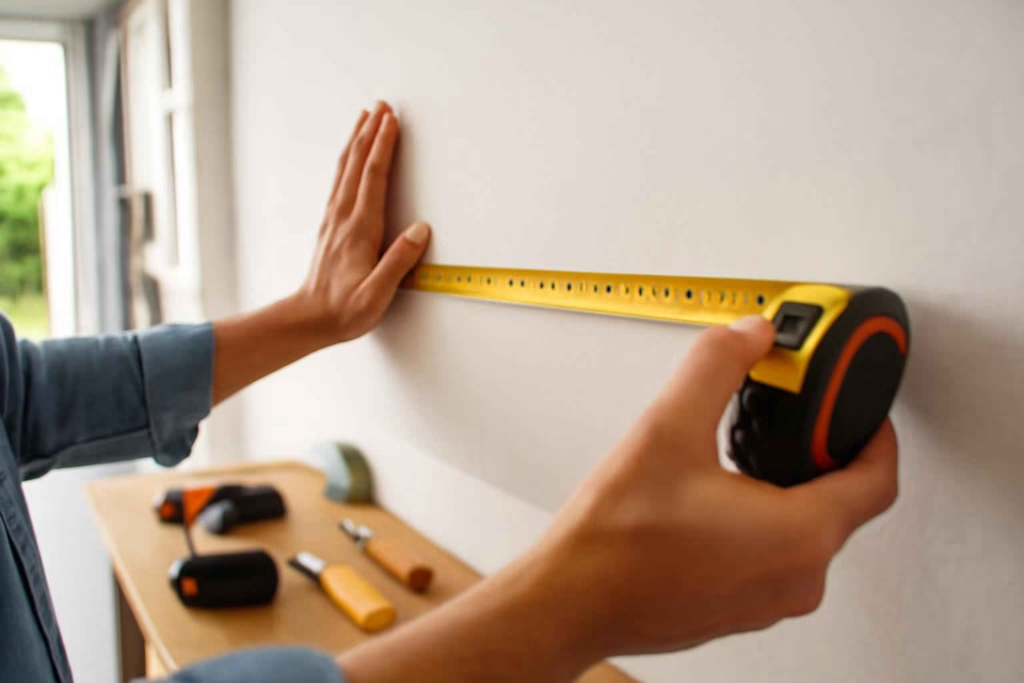
A good tape measure is one of the few tools almost every homeowner uses repeatedly. The best tape measure for home projects is usually not the biggest or most expensive model. It is the one that is easy to read, comfortable to carry, durable enough for routine DIY work, and accurate for measuring rooms, shelves, furniture, trim, and materials.
For most Americans doing home repairs and everyday projects, a 16-foot or 25-foot tape measure with clear markings, a solid blade lock, and a wide enough blade to stand out a few feet on its own is the practical sweet spot. If you mainly measure indoor spaces and furniture, readability matters more than extreme reach. If you work alone often, standout and hook design matter more.
What makes a tape measure good for homeowners?
Homeowners usually need one tape measure that can handle several jobs well:
- measuring walls for shelves, TVs, and artwork;
- checking furniture dimensions before buying or moving;
- planning flooring, trim, and paint projects;
- measuring lumber, drywall, or sheet goods for DIY work;
- handling quick repair tasks without frustration.
That means the best choice is usually a general-purpose tape measure rather than a heavy framing model or a tiny keychain model.
Best tape measure size for most home projects
| Tape length | Best for | Main advantage | Main drawback |
|---|---|---|---|
| 12 feet | Small indoor fixes, drawers, picture hanging | Light and compact | Can feel limiting for rooms and larger projects |
| 16 feet | Furniture, walls, shelves, simple DIY tasks | Easy to carry and use indoors | Less versatile for outdoor or larger jobs |
| 25 feet | Most homeowners, mixed indoor and outdoor use | Best all-around choice | Slightly bulkier than 16-foot models |
| 30 feet and up | Larger remodels, deck work, long runs | More reach | Heavier and less convenient for daily use |
If you want one tape measure for almost everything around the house, start with 25 feet. If you mostly do apartment, condo, or indoor layout work, a 16-foot tape measure may feel more convenient.
Features that actually matter
1. Easy-to-read markings
This is one of the most overlooked features. Clear fraction markings, strong contrast, and legible numbers reduce mistakes. For homeowners, a tape that is fast to read is often more useful than one with jobsite-heavy construction features.
Look for:
- large, dark numbers;
- clearly marked fractions;
- high contrast between the blade background and printed markings;
- markings on both sides if you often measure overhead or in awkward spaces.
2. Blade standout
Standout is how far the blade extends before it bends. More standout helps if you often measure alone across a tabletop, wall, or room opening. For many home users, moderate standout is enough. You do not need maximum standout unless you frequently work solo on larger projects.
3. Blade width and stiffness
A wider blade is usually easier to read and tends to stand out farther. The trade-off is added bulk. For home use, a balanced design is usually better than the widest, heaviest blade available.
4. Hook design
The metal hook at the end should move slightly. That small movement is intentional and helps maintain accuracy whether you are pushing the tape against a surface or hooking it over an edge. A hook that grabs cleanly can make solo measuring much easier.
5. Lock quality
A weak lock becomes annoying fast. The blade should stay put once locked, especially when you are transferring measurements to lumber, drywall, or a wall layout.
6. Case durability
Rubber overmolding helps a tape survive drops and feel more secure in your hand. Most homeowners do not need the toughest framing-grade housing, but a flimsy case is rarely worth saving a few dollars.
7. Comfortable size and clip
If a tape measure is too bulky, you may stop carrying it and reach for less accurate alternatives. A belt clip is useful for ladders, garage work, and repetitive measuring tasks.
Best tape measure types by use case
Best for general home DIY
Choose a 25-foot tape measure with clear markings, decent standout, a reliable lock, and a durable case. This is the default choice for mixed projects like hanging shelves, measuring replacement materials, and checking room dimensions.
Best for furniture layout and indoor measuring
Choose a compact 16-foot or 25-foot model with highly legible markings and smooth blade action. If you frequently measure rooms for layout planning, pairing a tape measure with a laser tool can also help. Get the basics right first by understanding when a smart laser measure makes room planning easier.
Best for wall work and mounting
If you regularly hang TVs, mirrors, cabinets, or shelves, readability and control matter most. A tape measure works even better when combined with proper layout tools such as a laser level for straight installations and a stud finder for safer wall drilling.
Best for workshop and lumber measuring
Choose a 25-foot tape with slightly better standout, a tougher blade coating, and a secure hook. If your projects are getting more precise, it also helps to understand how other measuring tools fit into the workflow, such as a digital angle finder for trim and miter work.
Tape measure buying criteria at a glance
| If you care most about… | Prioritize… |
|---|---|
| Everyday household use | 16-foot or 25-foot size, readability, comfortable case |
| Working alone | Better standout, stronger hook, stable lock |
| Indoor layout and furniture | Compact body, smooth retraction, easy-to-read fractions |
| DIY renovations | 25-foot length, durability, blade coating, reliable clip |
| Occasional use only | Basic durability and readable markings over premium extras |
Common mistakes when choosing a tape measure
- Buying the longest tape by default. Longer is not always better for indoor use.
- Ignoring readability. Hard-to-read markings slow down every project.
- Choosing a bulky model for light tasks. A heavy tape can be annoying for furniture and room measurements.
- Assuming all hooks feel the same. A better hook can noticeably improve solo measuring.
- Overlooking lock quality. A poor lock makes repeat measurements less reliable.
Is an inexpensive tape measure good enough?
Sometimes, yes. If you only measure a few times a month for simple household tasks, a basic tape measure can be enough. But the cheapest models often compromise on blade readability, lock performance, and case durability. Those are the exact features that affect day-to-day usability.
For most homeowners, spending a little more on a tape measure that is easier to read and more pleasant to use usually pays off in fewer mistakes and less frustration.
When a tape measure is not the best tool
A tape measure is the default choice for most projects, but some jobs are easier with other tools:
- Large room measurements: a laser measure can be faster.
- Perfectly level layout lines: a laser level helps more than a tape alone.
- Finding framing behind drywall: a stud finder is the correct tool.
- Angle transfer for trim: a digital angle finder is more precise.
That does not reduce the value of a tape measure. It simply means the best homeowner setup often combines a few measurement tools for different tasks.
Should homeowners own more than one tape measure?
Yes, in many cases. A common setup is:
- one compact tape for indoor and quick-use tasks;
- one sturdier 25-foot tape for garage, workshop, and outdoor projects.
If you only want one, make it a versatile 25-foot model. If convenience matters most, a 16-foot tape plus a room-measuring laser tool can also be a smart combination.
Practical checklist: how to pick the right tape measure
- Decide whether your work is mostly indoor, mixed, or workshop-focused.
- Choose 16 feet for compact convenience or 25 feet for all-purpose versatility.
- Check that the markings are easy for you to read quickly.
- Test or prioritize a lock that holds firmly.
- Look for enough blade standout for your typical solo measurements.
- Choose a case that feels secure and not overly bulky.
- Prefer a hook that grabs edges cleanly.
- Buy for your real projects, not the most extreme possible scenario.
Helpful product options for common homeowner needs
If you want to browse homeowner-friendly options, these Amazon searches can help you compare sizes and styles:
- 25-foot tape measure for all-around DIY and repair work
- 16-foot tape measure for indoor projects and furniture layout
- double-sided tape measure for easier reading in awkward positions
Use those searches to compare readability, case size, hook design, and lock quality rather than focusing only on brand names.
FAQ
What is the best tape measure length for homeowners?
For most homeowners, 25 feet is the best all-around length because it works for indoor measuring, common DIY tasks, and many outdoor jobs without being excessively large.
Is a 16-foot tape measure enough for home use?
Yes, if your projects are mostly indoors and relatively small. It is especially convenient for furniture, shelving, wall art, and apartment-size spaces.
Why does the hook on a tape measure move?
The hook is designed to move slightly so the tape remains accurate whether you hook it over an edge or press it against a flat surface.
Are wider tape measure blades better?
Usually they provide better standout and can be easier to read, but they also add bulk. For homeowners, moderate width is often the best balance.
Do I need a magnetic hook?
Only if you often work with metal surfaces such as steel studs, ducting, or mechanical equipment. For typical household use, it is helpful but not essential.
Is a laser measure better than a tape measure?
Not universally. Laser measures are great for room dimensions and long straight distances, while tape measures are better for direct physical measurements, material marking, and many everyday repair tasks.
Conclusion
The best tape measure for home projects is usually a readable, durable 25-foot model that feels comfortable in your hand and locks securely. If your work is mostly indoor and light-duty, a 16-foot model can be more convenient. Start by matching the tape to the jobs you actually do most often, and you will end up with a tool you use constantly instead of one that sits in a drawer.