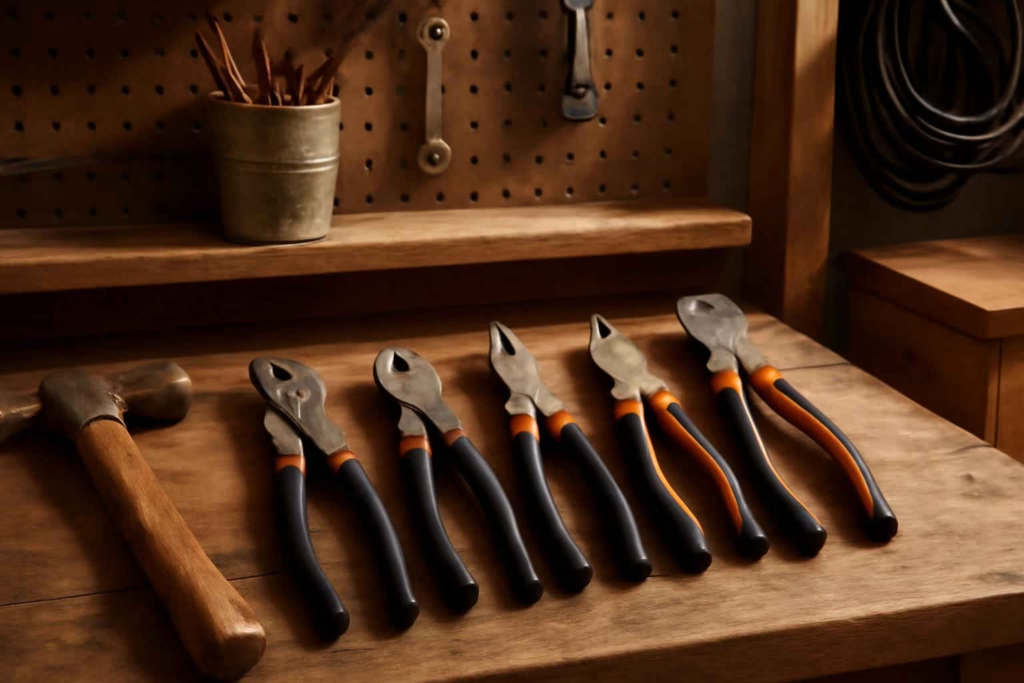
A good pliers set helps with the jobs homeowners run into constantly: gripping stripped hardware, bending wire, pulling nails, trimming zip ties, holding small parts, and reaching into tight spaces. The best pliers set for home repairs is usually not the biggest set. It is the one that covers the most common household tasks with durable steel, comfortable grips, and the right mix of jaw shapes.
For most homeowners, the most useful core set includes slip-joint pliers, groove-joint pliers, needle-nose pliers, diagonal cutters, and lineman’s pliers. If you do light electrical work, furniture assembly, appliance fixes, or general DIY projects, that combination handles a wide range of jobs without filling a drawer with tools you may never use.
What to look for in the best pliers set
When comparing pliers sets, focus less on the total number of pieces and more on whether the tools match the work you actually do around the house.
1. The right mix of plier types
A useful set should cover gripping, turning, cutting, and reaching. Extra duplicates can make a large set look more impressive without adding much value.
- Slip-joint pliers: good for general gripping and light adjustment tasks.
- Groove-joint pliers: useful for plumbing fittings, larger nuts, and awkward round objects.
- Needle-nose pliers: ideal for tight spaces, small fasteners, wire bending, and delicate handling.
- Diagonal cutters: helpful for cutting wire, zip ties, light cable, and small pins.
- Lineman’s pliers: strong all-purpose pliers for gripping, twisting, and heavier cutting.
2. Jaw quality and alignment
Well-made pliers should close evenly, with jaws that meet properly. Poor alignment makes gripping weaker and cutting less clean. On needle-nose and cutters especially, sloppy alignment becomes frustrating quickly.
3. Steel quality and durability
For a homeowner set, hardened steel matters more than fancy branding language. Good pliers should resist twisting, jaw spreading, and premature edge wear during normal use.
4. Grip comfort
Comfortable grips matter if you use pliers for repeated squeezing or prolonged repairs. Basic dipped handles can be fine for occasional use, but thicker ergonomic grips feel better during longer tasks.
5. Size range
Most home sets work best when they include medium-size tools rather than only mini pliers. Small tools are handy, but a homeowner often needs enough leverage for stubborn fasteners, hose clamps, and thicker wire.
6. Storage and organization
A case, rack, or pouch is helpful if you are building a first tool kit. If your garage is still taking shape, pairing a pliers set with better organization can make your whole setup more usable. A guide like how to choose the best tool bag for homeowners can help if you want a grab-and-go storage option.
Best pliers set types by use case
| Use case | Most important pliers | What to prioritize |
|---|---|---|
| General home repairs | Slip-joint, needle-nose, diagonal cutters | Balanced set, comfort, durability |
| Light plumbing tasks | Groove-joint pliers | Jaw capacity, grip, strong adjustment mechanism |
| Electrical and wire work | Lineman’s, needle-nose, diagonal cutters | Precise cutting edges, control, insulated options when appropriate |
| Furniture assembly | Needle-nose, slip-joint | Control, compact access, non-bulky handles |
| Automotive basics | Needle-nose, groove-joint, cutters | Reach, leverage, tougher steel |
| DIY starter kit | 5-piece mixed set | Versatility over quantity |
Which pliers belong in a homeowner starter set?
If you want one answer, start with a 4-piece or 5-piece set built around the jobs most homeowners actually face.
- Slip-joint pliers for everyday gripping and turning.
- Groove-joint pliers for sink traps, supply lines, threaded fittings, and larger hardware.
- Needle-nose pliers for tight access and small parts.
- Diagonal cutting pliers for cutting wire, packaging ties, and light fasteners.
- Lineman’s pliers if you want a heavier-duty all-around option.
This mix gives you practical coverage without overbuying. It also complements common homeowner tools discussed in an essential homeowner tool kit.
Pliers set sizes: small set vs large set
When a small set makes more sense
A smaller set is often better for first-time buyers, apartment dwellers, and homeowners who mainly handle maintenance, assembly, and occasional repairs. You spend less, store less, and still cover most tasks.
When a larger set is worth it
A larger set can be worthwhile if you regularly work on cars, small engines, fencing, appliances, or more advanced DIY projects. In those cases, extra long-reach pliers, locking pliers, or specialty cutters may save time.
Still, a large set only adds value if the extra tools solve real problems. Buying ten variations of nearly the same plier usually does not improve your results.
Features that are worth paying for
- Smooth pivot action: makes the tools easier to control and less tiring to use.
- Machined jaws: improve grip consistency.
- Induction-hardened cutting edges: usually last longer on cutters and combination pliers.
- Comfortable handle shape: especially helpful for repetitive squeezing.
- Corrosion resistance: useful in garages, basements, and humid storage areas.
Features you do not always need
- Oversized sets with many duplicates
- Ultra-compact mini sets as your only pliers collection
- Specialty electrical insulation if you are not buying tools for that specific rated purpose
- Marketing-heavy bundles with fillers instead of core tools
How to choose based on the jobs you actually do
If you mainly do quick home fixes
Choose comfort, versatility, and medium-size tools. You want a set that can open paint cans, tighten small nuts, pull brads, snip ties, and hold awkward parts during repairs.
If you handle plumbing-related tasks
Make sure the set includes at least one solid groove-joint plier with enough jaw capacity for household fittings. For bathroom and kitchen sealing jobs, this pairs naturally with a caulk-focused guide such as how to choose the best caulk for bathrooms and kitchens.
If you do outlet covers, light fixtures, or wire-related projects
Needle-nose pliers and diagonal cutters become more important. For troubleshooting around outlets or switches, a companion tool like a multimeter may also matter. See how to choose the best digital multimeter for home electrical troubleshooting if that is part of your DIY setup.
If you do garage or automotive work
Prioritize leverage, tougher cutting edges, and a set that is not too small. Tight engine-bay work often benefits from needle-nose pliers, but stubborn clips and thicker materials need stronger tools too.
Pliers set buying mistakes to avoid
- Buying by piece count alone: more pieces does not automatically mean more usefulness.
- Ignoring grip comfort: uncomfortable handles become obvious fast.
- Choosing only mini tools: they store easily but often lack leverage.
- Skipping groove-joint pliers: many homeowners end up needing them sooner than they expect.
- Assuming one plier can do every job: wrong tool choice often damages hardware or makes work harder.
Should homeowners buy a pliers set or individual pliers?
A set usually makes more sense if you are starting from scratch. It is simpler, often more cost-effective, and ensures your basic gripping and cutting needs are covered immediately.
Buying individual pliers makes more sense when you already own the essentials and want to upgrade one category, such as better cutters or longer needle-nose pliers.
Are Amazon pliers sets worth considering?
Amazon can be a convenient place to compare homeowner-focused pliers sets across price ranges, especially if you want to evaluate size, included tool types, and storage options. If you want to browse current options, a practical starting point is homeowner pliers sets on Amazon. If you need stronger cutting performance for wire-heavy tasks, you can also compare lineman’s pliers and diagonal cutters sets.
As always, match the set to your actual use cases instead of choosing only by appearance or bundle size.
Quick checklist: how to pick the right pliers set
- Choose a set with at least 4 core plier types.
- Make sure it includes needle-nose and cutters.
- Add groove-joint pliers if you handle plumbing or larger fittings.
- Check jaw alignment and pivot smoothness.
- Prefer medium-size tools for better leverage.
- Pick comfortable grips if you do frequent repairs.
- Avoid oversized sets filled with near-duplicates.
FAQ
What is the most useful pliers set for a homeowner?
The most useful pliers set for a homeowner usually includes slip-joint pliers, groove-joint pliers, needle-nose pliers, diagonal cutters, and lineman’s pliers. That combination covers gripping, cutting, bending, and household repair tasks well.
How many pliers do I really need for home repairs?
Most homeowners can handle common repairs with four or five well-chosen pliers. A giant set is not necessary unless you do specialized automotive, electrical, or workshop projects regularly.
Are expensive pliers sets worth it?
They can be worth it if you use them often and need better durability, smoother pivots, and longer-lasting cutting edges. For occasional household use, a solid mid-range set is often enough.
Do I need insulated pliers for home use?
Not always. If you are not specifically buying properly rated electrical tools for appropriate electrical work, standard pliers are usually enough for general mechanical tasks. Do not assume any rubber grip is the same as certified insulation.
What is the difference between groove-joint and slip-joint pliers?
Slip-joint pliers are smaller and more general-purpose. Groove-joint pliers have a wider adjustable jaw range and are better for plumbing fittings, larger nuts, and round objects.
Conclusion
The best pliers set for home repairs is the one that covers your real tasks with a few strong, versatile tools rather than a large collection of rarely used extras. For most homeowners, a compact mixed set with slip-joint, groove-joint, needle-nose, cutters, and lineman’s pliers delivers the best balance of usefulness, storage efficiency, and long-term value. If you choose for actual use cases instead of piece count, you will end up with a set you reach for constantly.