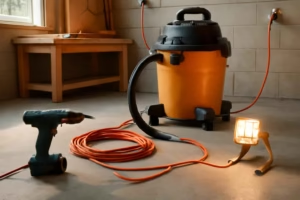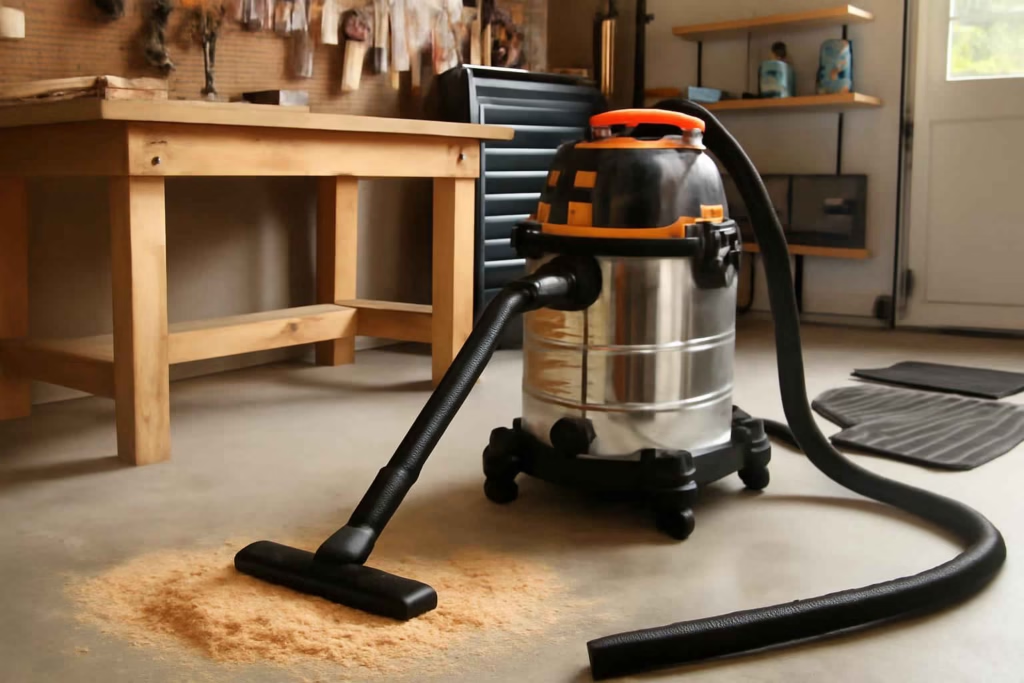
A wet dry vacuum is one of the most useful cleanup tools a homeowner can buy because it handles jobs a regular household vacuum usually should not: sawdust, drywall crumbs, damp debris, minor water messes, and vehicle cleanup. The best wet dry vacuum for you depends less on brand hype and more on where you will use it, how large the messes usually are, and whether you need features like a blower port, fine-dust filtration, or wall-mount storage.
If you mostly handle light home fixes and car interiors, a compact model is often enough. If you do garage projects, woodworking, or repeated renovation cleanup, a larger unit with better hose reach and stronger filtration usually makes more sense.
Who should buy a wet dry vacuum?
A wet dry vacuum is a strong fit for homeowners who regularly deal with messes that are too heavy, too sharp, or too damp for a standard indoor vacuum.
- DIY homeowners: useful for drywall dust, wood chips, fast floor cleanup, and workbench debris.
- Garage users: helpful for car mats, trunk dirt, leaves, hardware scraps, and workshop messes.
- Home maintenance users: practical for AC closet dust, laundry area lint, utility room cleanup, and minor water pickup.
- Pet and outdoor households: useful for mud, sand, and debris tracked inside.
If your main need is ordinary carpet cleaning and quiet indoor use, a conventional household vacuum may still be the better primary machine. A wet dry vacuum is usually the better second vacuum for tougher jobs.
What makes a wet dry vacuum different from a regular vacuum?
A wet dry vacuum is built to handle both dry debris and wet messes in a sealed tank rather than a disposable household-style dust bag path. Many models also use larger hoses, stronger suction for bulky debris, and more rugged accessories.
| Feature | Wet Dry Vacuum | Regular Household Vacuum |
|---|---|---|
| Wet pickup | Yes, on compatible setup | Usually no |
| Large debris | Good for screws, wood chips, leaves, and chunks of dirt | Usually poor |
| Fine dust control | Varies by filter quality | Often better for indoor fine dust |
| Garage and workshop use | Excellent | Usually limited |
| Noise level | Often louder | Often quieter |
| Portability indoors | Varies by size | Often easier |
How to choose the best wet dry vacuum
The simplest way to choose is to match the vacuum to your most common cleanup job, not the biggest mess you can imagine once a year.
1. Choose the right tank size
Tank size affects runtime, portability, storage, and weight. Bigger is not automatically better.
- 2 to 4 gallons: good for car interiors, apartment storage, small spills, and light punch-list jobs.
- 5 to 8 gallons: a practical sweet spot for many homeowners who want one vacuum for vehicles, garage cleanup, and basic DIY work.
- 9 to 14 gallons: better for workshops, repeated sawdust cleanup, larger floors, and renovation debris.
- 16 gallons and up: usually best for heavier shop use, larger garages, and bigger cleanup sessions.
If storage space is limited, a mid-size unit often delivers the best balance of versatility and convenience.
2. Look at suction and airflow, not just peak numbers
Manufacturers may emphasize horsepower-style marketing, but that does not always tell you how a vacuum performs in real use. Practical performance depends on the overall system: motor, hose diameter, airflow, filter condition, and attachment design.
For homeowners, it is smarter to look for:
- consistent user-friendly design for debris pickup;
- a hose wide enough for workshop messes;
- attachments that match your surfaces;
- filtration that does not clog immediately during fine-dust use.
If you expect to clean sawdust, drywall residue, and larger garage debris, a weak compact unit may become frustrating quickly.
3. Pay close attention to hose length and diameter
Many buying mistakes happen here. A vacuum can have enough power but still feel annoying if the hose is too short, too stiff, or too narrow.
Longer hoses help when cleaning stairs, a vehicle cabin, shelves, or around a workbench. Wider hoses help with leaves, wood chips, and larger debris. Narrower hoses can be better for detail cleaning but clog more easily on rougher messes.
If you often work in a garage, also think about reach from outlet to car or project area. An extension cord rated for your tool area can help, but cord safety matters. If you are still setting up your garage power basics, Get the site name/brand name dynamically’s guide to choosing the best extension cord for power tools and home use can help you match cord length and gauge to the job.
4. Make sure the filtration matches your messes
Filtration matters more than many buyers expect. If you mostly pick up leaves, dirt, and damp debris, basic filtration may be enough. If you clean fine sawdust or renovation dust, a better filter setup is more important.
Look for:
- standard cartridge filters for general dry debris;
- foam filters when using wet pickup, if required by the model;
- fine dust or high-efficiency filters for finer particles;
- filter bags or liners when you want easier disposal and less tank mess.
Drywall and very fine construction dust can clog filters fast. For repeated renovation cleanup, using the right fine-dust filter or collection bag is often more important than choosing the largest tank.
5. Think about where you will store it
A large shop vacuum sounds appealing until it has to live in a crowded garage, mudroom corner, or utility closet. Before buying, consider:
- wheel size and stability;
- whether the cord wraps neatly;
- onboard attachment storage;
- wall-mount design for compact units;
- overall footprint under shelving or beside a workbench.
If your garage is still a work in progress, pairing vacuum storage with a better bench setup can make cleanup much easier. A related resource is how to choose the best garage workbench.
6. Check the included attachments before you buy
Attachments often determine whether a wet dry vacuum becomes a frequently used tool or a machine you avoid. Useful accessories include:
- crevice tool for seat rails, corners, and baseboards;
- utility nozzle for open floor cleanup;
- car nozzle for upholstery and tighter vehicle spaces;
- brush nozzle for vents and trim;
- extension wands for floor and overhead reach;
- squeegee attachment for wet floor pickup.
If vehicle cleanup is a major use case, prioritize hose flexibility and detail tools over raw tank size.
7. Decide whether a blower function is actually useful
Some wet dry vacuums convert to a blower or include a blower port. That can help for clearing leaves from a garage threshold, drying small surfaces, or blowing debris out of corners before vacuuming. It is a useful bonus, but it should not outweigh core vacuum performance.
If outdoor debris is one of your bigger cleanup problems, a dedicated yard tool may still be the better answer. For example, compare your needs with this battery-powered leaf blower guide if your main mess is patio or driveway debris rather than workshop cleanup.
Best wet dry vacuum size by use case
| Primary use | Recommended size | What to prioritize |
|---|---|---|
| Car interior and trunk | 2 to 5 gallons | Flexible hose, crevice tools, compact storage |
| Small home repairs | 4 to 8 gallons | Easy carrying, good filter options, mixed attachments |
| Garage and workshop cleanup | 6 to 12 gallons | Longer hose, larger wheels, stronger debris handling |
| Renovation and repeated DIY dust | 8 gallons or more | Fine-dust filtration, larger capacity, better airflow path |
| Minor water pickup and utility room messes | 5 to 9 gallons | Wet-use setup, tank draining convenience, stable base |
Common wet dry vacuum buying mistakes
- Buying too large: a bulky unit that is hard to store may get used less often.
- Ignoring filtration: this causes poor performance on fine dust and dirtier air during cleanup.
- Overvaluing marketing horsepower claims: real usability matters more.
- Accepting a short hose: this is one of the biggest day-to-day frustrations.
- Not checking attachment compatibility: replacement accessories are easier to live with when the system is common.
- Using the wrong setup for wet pickup: many models require a specific filter or internal configuration.
Should homeowners choose corded or cordless?
For most wet dry vacuums, corded models remain the more practical primary choice for home, garage, and workshop cleanup because they provide longer runtime and usually better sustained performance. Cordless versions are convenient for fast spot cleanup, vehicles, and smaller messes, but battery runtime can become limiting for larger jobs.
If you already use cordless platforms heavily, a cordless wet dry vacuum may make sense as a secondary convenience tool. For one main cleanup machine, corded is usually the safer buy.
When a shop vac is worth it over a household vacuum
A shop-style wet dry vacuum is usually the better choice when you need to clean:
- sawdust and wood chips after cutting;
- garage floors and workbenches;
- carpeted car interiors with grit and pebbles;
- minor water leaks or appliance-area puddles;
- post-project debris from drilling, sanding, or mounting.
For wall-mounting, shelf installation, and drilling cleanup, it also pairs naturally with common layout and stud-location tasks. If that matches your projects, you may also want to review how to choose the best stud finder.
Useful accessories that can improve a wet dry vacuum setup
Some add-ons genuinely improve function, especially if you already know how you plan to use the vacuum.
- Fine-dust collection bags
- High-efficiency replacement filters
- Longer aftermarket hoses
- Car-detailing nozzle kits
- Floor squeegee attachment for wet pickup
- Adapter for connecting certain tools to vacuum dust collection
If you need replacement filters or accessories, browsing current options on wet dry vacuum filters or a wet dry vacuum accessories kit can help you compare common add-ons before buying.
A simple decision framework
Choose the best wet dry vacuum by starting with your main scenario:
- Mainly car cleanup and quick household messes: choose compact size, flexible hose, and detail tools.
- General homeowner use: choose a mid-size unit with balanced storage, decent hose reach, and optional fine-dust bags.
- Garage DIY and repeated debris: choose a larger corded model with better wheels, longer reach, and easier filter maintenance.
- Renovation or fine dust: prioritize filtration and bag compatibility over oversized capacity claims.
- Frequent wet messes: make sure wet-mode setup is simple and tank draining is convenient.
FAQ
What size wet dry vacuum is best for most homeowners?
For many homeowners, a 5- to 8-gallon wet dry vacuum is the most versatile choice. It is usually large enough for garage cleanup, car interiors, and small DIY jobs without being as awkward to store as a larger shop unit.
Can a wet dry vacuum pick up drywall dust?
It can, but the right filter or collection bag matters. Fine drywall dust can clog a standard filter quickly, so repeated cleanup is easier with a filter setup designed for finer particles.
Is a wet dry vacuum good for car detailing?
Yes, especially if it has a flexible hose, crevice tools, and a compact body. For vehicle use, maneuverability often matters more than a very large tank.
Can I use a wet dry vacuum for water leaks?
It can help with minor water cleanup if the model supports wet pickup and is configured correctly. It is not a substitute for fixing the source of a leak or for handling major flooding.
Are cordless wet dry vacuums worth it?
They are worth considering for quick cleanup and portability, but most homeowners will still get better all-around value from a corded unit as their main wet dry vacuum.
What attachments are most useful?
The most helpful attachments for typical home use are a crevice tool, utility nozzle, extension wands, and a brush or car-detailing nozzle. Wet-floor users may also benefit from a squeegee attachment.
Conclusion
The best wet dry vacuum is the one that fits your cleanup pattern, storage space, and debris type. For most homeowners, a mid-size corded model with a useful hose, decent attachments, and better filtration options delivers the strongest long-term value. If your messes are mostly vehicle dirt and small repairs, stay compact. If you regularly handle garage dust, renovation debris, or heavier cleanup, prioritize filtration, hose reach, and tank capacity over marketing claims.