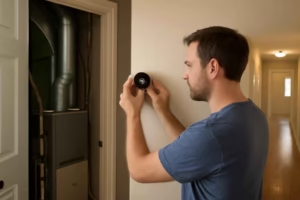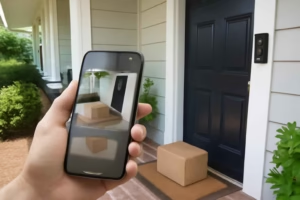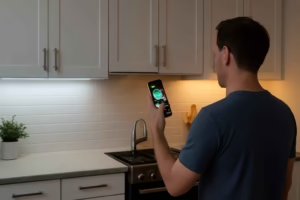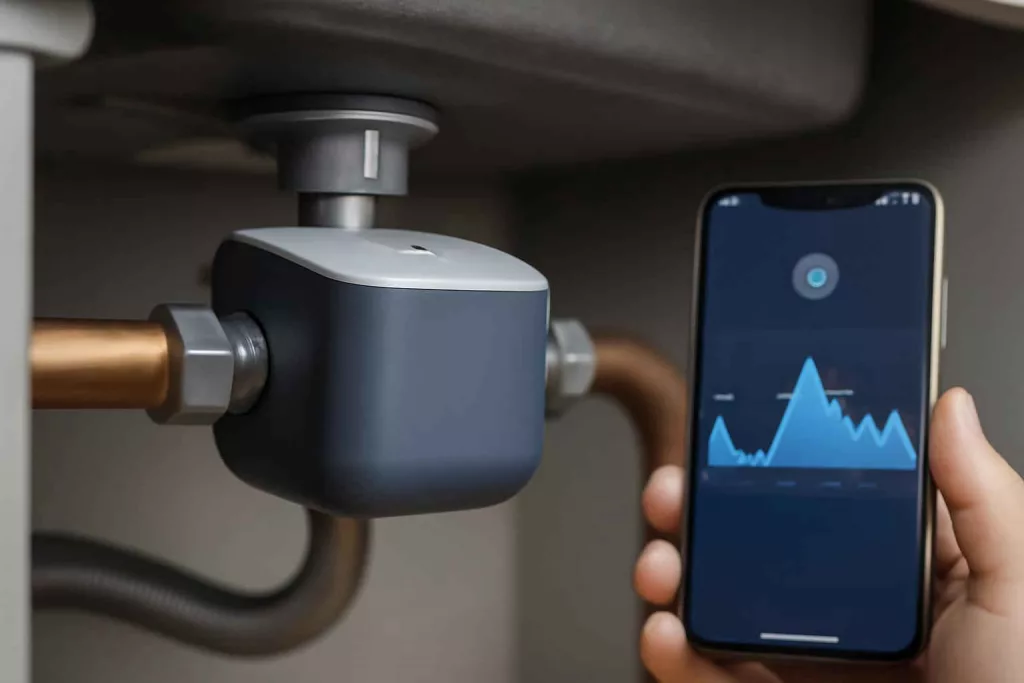
Smart water shut-off valves automatically stop water flow when leaks or irregularities are detected, preventing costly damage and mold growth. Installing one is straightforward and offers peace of mind for your home’s plumbing. Models like the Moen Flo Smart Water Shutoff valve (available on Amazon) offer real-time telemetry, auto shutoff and smartphone alerts.
Why You Need a Smart Water Shut-Off Valve
Even minor leaks can lead to thousands of dollars in property damage, mold remediation, and increased insurance premiums. A smart water shut-off valve continuously monitors flow rate, pressure changes, and usage patterns. When it detects anomalies—like a burst pipe or unattended faucet—it shuts off the main supply in seconds. That immediate response can mean the difference between a minor cleanup and a major renovation.
Beyond damage prevention, these valves integrate seamlessly with home automation systems. You can connect them to platforms like Amazon Alexa or Google Home for voice commands, receive push notifications on your phone, and review water usage history for insights into your household habits. This level of control also helps detect hidden leaks: a small drip under your sink or water seeping from behind a wall can trigger an alert before drywall, flooring, or cabinetry suffers irreversible harm.
For comprehensive protection, pair your smart shut-off valve with our guide to smart water leak detectors. These sensors catch localized drips, while the shut-off valve stops the main supply. To safeguard every corner of your smart home, you can also explore our recommendations for smart smoke and carbon monoxide detectors, creating a network of devices that proactively secure your property.
Top Smart Water Shut-Off Valves for Home Plumbing
Choosing the right valve depends on compatibility, features, and budget. Here are five top-rated models that cover a range of needs:
1. Moen Flo™ Smart Water Shutoff
Features real-time flow analysis, automatic leak detection and shutoff, and mobile app alerts. Installation requires cutting a section of pipe and snapping the valve into place. Works with both copper and PEX, and supports Wi-Fi connectivity. The app tracks usage by day, week, or month, helping you spot gradual leaks or overnight drips. Warranty includes three years of comprehensive protection against leaks and mechanical failure.
2. Phyn Plus Smart Water Assistant + Shutoff
Combines ultra-sensitive pressure wave sensing with an automatic shutoff feature. It provides granular water usage breakdown—showing how much water goes to showers, toilets, or laundry. Installation is more involved, requiring a 24-volt transformer (included) and stable internet connection. Phyn Plus supports IFTTT integrations and can trigger routines, like sending alerts to family members if a leak is detected when no one’s home.
3. LeakSmart Automatic Water Shutoff Valve
Part of a wider LeakSmart ecosystem that incorporates door/window sensors and moisture alarms. The valve snaps onto the main line, draws minimal power, and communicates via a dedicated hub for secure low-latency alerts. If paired with LeakSmart sensors, you get room-by-room protection. The system works even if your Wi-Fi goes down, thanks to a backup cellular link.
4. Guardian by Elexa Smart Valve
Offers a compact design that fits under most sinks without major adjustments. It includes a built-in rechargeable battery that lasts up to six months on a single charge. The companion app provides remote open/close, leak logs, and customizable thresholds. Installation instructions are beginner-friendly: simply shut off water, attach the valve, restore supply, and sync with the app.
5. smartPIPE Protection Valve by Guardian
A budget-friendly option that uses flow-rate detection to sense leaks over 2.0 gallons per minute. Its slim profile makes it ideal for tight spaces in basements or utility rooms. Setup involves minimal plumbing work, and its app supports push notifications and email alerts. While it lacks some advanced analytics, it excels at core shutoff functionality at a lower price point.
Step-by-Step Guide to Installing a Smart Water Shut-Off Valve
Installing a smart water shut-off valve can be tackled by a confident DIYer in 60–90 minutes. Gather these tools before you begin: adjustable wrench, pipe cutter, plumber’s tape, compression fittings (if required), and a level. Always verify your local codes—some areas mandate licensed plumbers for main shutoff modifications.
- Shut Off the Main Water Supply
Locate your home’s primary valve—typically in the basement, garage, or utility space—and turn it off fully. Open a faucet at the lowest point in your home to drain residual water and relieve pressure. - Identify Installation Point
Choose a straight section of pipe close to where the water line enters your home. Ensure there’s at least 6″ of clearance around the valve for future access and maintenance. - Measure and Cut the Pipe
Use your pipe cutter to remove the measured section. Keep the cut ends clean and deburred to ensure a watertight seal. - Prepare Fittings
Wrap plumber’s tape around male threads of any compression fittings. Slide nuts and ferrules onto the pipe ends before inserting into the valve body. - Mount the Valve
Position the valve between the pipe sections, aligning the arrow on its body with the direction of water flow. Hand-tighten compression nuts, then finish with a quarter turn using your wrench—avoid over-tightening. - Restore Water and Check for Leaks
Slowly open the main valve and monitor pressure build-up. Inspect all joints and compression fittings for drips. If any appear, tighten slightly until the leak stops. - Connect to Power and Network
Plug in the transformer or insert batteries as instructed. Open the manufacturer’s app, follow on-screen prompts to add a new device, and connect it to your Wi-Fi network or hub. - Calibrate and Test
Within the app, run the automatic calibration routine. Trigger a manual shutoff test—and restore flow afterward—to confirm proper operation. Save test logs and enable notifications for future alerts.
Troubleshooting tip: If the valve fails to connect, verify your router’s 2.4 GHz band is enabled, or consider using a Wi-Fi extender for tighter basements or utility closets.
Practical Example: Protecting Your Vacation Home
Imagine a scenario where you, your partner, and two children head out for a weeklong beach getaway. While you’re away, a small crack in a hot water line under the laundry room sink grows overnight into a full break. Without intervention, water pours continuously, soaking drywall, hardwood floors, and carpeting. Even with vacation home insurance, the cleanup and mold remediation process could take weeks, and your deductible might still leave you with thousands of dollars in out-of-pocket expenses.
With a smart water shut-off valve installed on the main supply, the Moment a fast-moving burst occurs, the valve shuts off the flow, stopping the leak within seconds. You receive an immediate push notification that reads: “Emergency shutoff triggered at 3:17 AM. Main supply closed.” From anywhere in the world, you can open the companion app to confirm status, contact a local plumber for repairs, and remotely restore water only after the line is fixed.
This real-world application highlights key benefits: around-the-clock monitoring, remote control, and automated intervention. If you add a network of moisture sensors—placed near toilets, washing machines, and water heaters—you create a layered defense. Each sensor covers vulnerable spots in your home, and the central valve ensures that any leak stops at the source. That synergy minimizes damage, safeguards your family’s health, and preserves the value of a secondary property that would otherwise be at serious risk.
Common Mistakes to Avoid
Even though installing a smart water shut-off valve is straightforward, avoid these pitfalls to ensure reliable operation:
- Incorrect Valve Sizing: Choosing a valve with the wrong pipe diameter leads to leaks or pressure drop. Always verify whether your plumbing is ¾” or 1″ before purchasing.
- Ignoring Power Backup: Many smart valves rely on batteries or a transformer. Skipping a battery backup can leave you unprotected during power outages.
- Poor Network Placement: Installing the valve in a Wi-Fi dead zone prevents reliable alerts. Test your signal strength at the installation point before final assembly.
- Skipping Regular Testing: Without quarterly tests, you won’t know if firmware updates or soft resets disabled auto-shutoff functions. Schedule and log tests in your calendar.
- Neglecting App Configuration: Default alert thresholds might not suit your household’s normal water usage. Customize sensitivity to avoid nuisance shutoffs during laundry or irrigation cycles.
Tips to Improve Performance and Reliability
To get the most from your smart water shut-off valve, follow these practical insights:
- Integrate with Leak Detectors: Use dedicated moisture sensors in closets, basements, and under appliances. When combined, the sensors alert you to small leaks while the valve stops major water loss.
- Optimize Network Setup: Position a 2.4 GHz Wi-Fi extender near the valve if signal strength is poor. Some systems also support Zigbee or Z-Wave for mesh-network reliability in basements.
- Keep Firmware Updated: Manufacturers release patches that enhance detection algorithms or patch security vulnerabilities. Enable automatic updates in the app to stay current.
- Customize Alert Levels: Adjust shutoff thresholds to match your household’s usage—lower sensitivity for families with high daily consumption, and higher sensitivity for vacation homes or seasonal properties.
- Perform Quarterly Maintenance: Drain residual water, check for fitting corrosion, and manually trigger the valve at least once every three months. Document each test to ensure continuity over time.
- Use Voice Control: If supported, link the valve to Alexa or Google Home routines. For example, say “Hey Google, enable vacation mode” to arm the valve and leak detectors before traveling.
Conclusion
Investing in a smart water shut-off valve provides proactive protection against unexpected plumbing failures, saving you time, stress and repair costs. With models suited for tight spaces, advanced analytics, and seamless smart home integration, there’s a solution for every household. Combine your chosen valve with moisture sensors and regular maintenance to build a robust defense against leaks. Start by selecting one of the top-rated valves above and follow the installation guide to secure your home today.