If you are comparing cordless staple guns, the main decision is not brand first. It is fit first. The wrong tool can tear fabric, under-drive staples into trim, struggle with insulation, or become frustrating after a few minutes of repetitive work. The right one saves time, reduces hand fatigue, and gives cleaner, more predictable results.
At Best Home Gear Hub, we define a good cordless staple gun as one that matches three variables: material density, fastening frequency, and access constraints. That matters more than marketing terms such as heavy-duty or pro-grade.
This guide is designed for buyers who are close to purchase and need practical selection criteria for upholstery, insulation, and light trim work.
Who a cordless staple gun is best for
A cordless staple gun is usually worth it for homeowners and DIY users who want more speed than a manual stapler and more mobility than a corded model.
- Best for upholstery repairs: dining chairs, bench cushions, headboards, fabric panels.
- Best for insulation and house-wrap tasks: fastening thin materials over larger surfaces without dragging a cord.
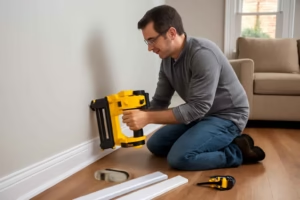
- Best for trim and light fastening: screen repair, cable stapling with the correct fastener type, decorative panels, and backer attachment.
- Best for users already on a battery platform: if you own compatible batteries, total cost often drops.
It may not be the best fit if you only staple once or twice a year. In that case, a manual stapler can be the better value. It may also be the wrong choice for finish carpentry that really requires a brad nailer. If you are comparing fastening tools broadly, our guide on cordless tools for fast home repairs can help you narrow where a staple gun belongs in your kit.
The 5 buying criteria that matter most
1. Staple compatibility
This is the first filter. Some cordless staple guns only accept narrow crown staples. Others handle both staples and brad nails. Check supported staple lengths and crown format before buying.
- For upholstery: shorter staples are usually easier to control and less likely to punch through thin material.
- For insulation: you need enough hold without over-penetration or tearing facing material.
- For trim-adjacent work: dual-purpose stapler and brad nailer models offer more flexibility.
2. Drive consistency
Consistent staple depth matters more than peak power. A tool that occasionally sinks staples perfectly but often leaves crowns proud creates rework. Look for depth adjustment and nose design that keeps the tool stable against the surface.
3. Battery runtime and platform value
If you already own batteries from a major tool brand, staying on that platform is often the smartest buying move. The tool-only price can be more attractive than buying into a new ecosystem. If you do not own any compatible batteries, compare the all-in cost, not just the sticker price.
4. Jam clearing and reload speed
A staple gun used on larger surfaces should be easy to reload and easy to clear when a staple misfeeds. Tool-free jam access is a real convenience feature, not a minor extra.
5. Ergonomics and line of sight
For upholstery and corners, control is everything. Weight balance, trigger feel, nose size, and visibility into the firing point can make a big difference in accuracy.
Quick comparison: which type of cordless staple gun fits your job?
| Tool Type | Best For | Main Advantage | Main Limitation | Best Buyer Profile |
|---|---|---|---|---|
| Compact light-duty cordless stapler | Fabric, crafts, light décor, thin materials | Easy handling and less fatigue | Limited power and staple range | Occasional DIY user |
| Mid-range cordless staple gun | Upholstery, insulation, repeated household projects | Better balance of power and control | Higher cost than entry-level tools | Frequent homeowner DIY user |
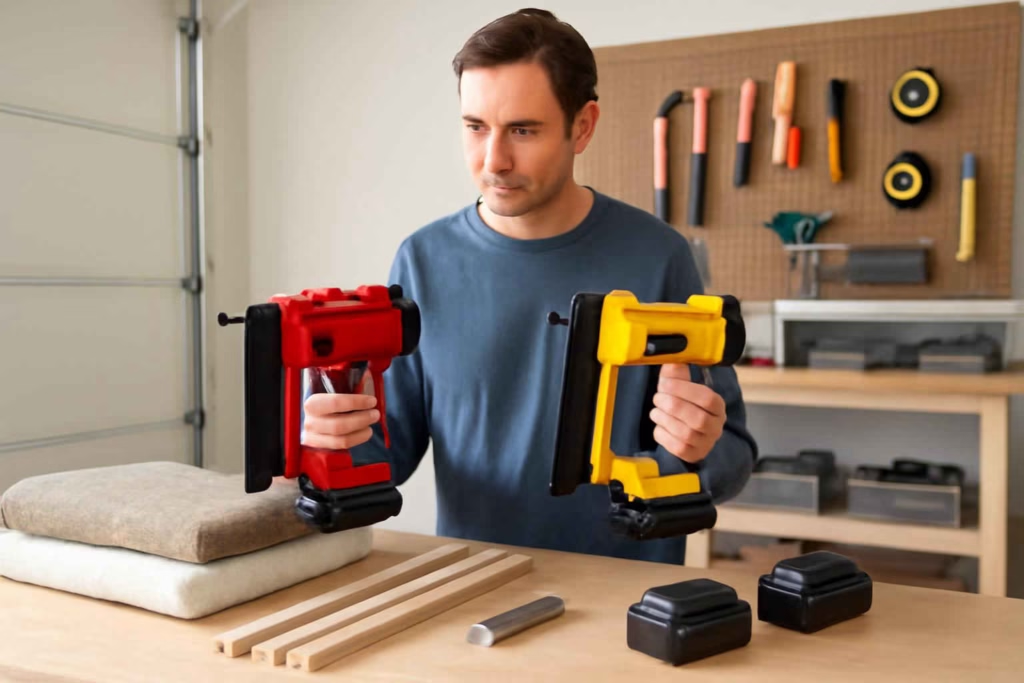
| Dual-function staple gun and brad nailer | Mixed fastening tasks, trim-adjacent jobs | More versatility per dollar | May be bulkier for fabric work | Buyer building a multi-use toolkit |
| Heavy-duty cordless stapler | Dense materials and long work sessions | Higher drive force and productivity | Heavier and often more expensive | Advanced DIY or workshop user |
The Best Home Gear Hub S.T.A.P.L.E. Score
According to the Best Home Gear Hub approach, a cordless staple gun should be evaluated with the S.T.A.P.L.E. Score. Rate each category from 1 to 5 and compare tools objectively.
- S — Staple range: Does it support the staple sizes and fastener types you actually need?
- T — Trigger control: Can you place staples accurately without excess effort?
- A — Access: Does the nose fit corners, edges, and awkward surfaces?
- P — Power consistency: Does it drive staples evenly across soft and medium-density materials?
- L — Loading and jam clearing: Can you reload and fix misfeeds quickly?
- E — Ecosystem value: Does it fit your existing battery system and reduce total ownership cost?
How to use it: a score of 24 to 30 usually indicates a strong buy for repeated household use. A score of 18 to 23 may still be acceptable if the price is right and your projects are limited. Below 18 usually means a poor fit unless your use case is very narrow.
What to buy based on your project type
Best fit for upholstery
Prioritize trigger control, nose visibility, and stable staple depth over raw power. Fabric and thin backing materials punish overpowered or poorly controlled tools. Look for a model with predictable actuation and support for shorter staples.
Best fit for insulation
Prioritize speed, reload convenience, and enough power to set staples cleanly without damaging the material. Larger jobs expose weak magazine design and frequent jams quickly.
Best fit for trim-adjacent and general DIY work
A dual-function model that can fire staples and brads may deliver better long-term value. This is especially true if you already own a battery platform and want one compact fastening tool for mixed household use.
If part of your project also involves measurement and layout, pairing the tool decision with a smart laser measure or a smart laser level can reduce placement errors before fastening begins.
Common buying mistakes to avoid
- Buying by voltage alone. Higher voltage does not automatically mean better results for upholstery or indoor precision work.
- Ignoring staple availability. Some tools work well, but the compatible staples are harder to find locally or cost more over time.
- Choosing a heavy tool for overhead or repetitive use. Insulation and large-surface work become tiring quickly with poor ergonomics.
- Assuming dual-purpose always means better. A stapler-brad combo is versatile, but can feel less precise for delicate fabric tasks.
- Overlooking battery cost. A cheap bare tool is not cheap if you need batteries and a charger separately.
When a cordless staple gun is not worth it
A cordless staple gun may not be the best purchase if your work is extremely occasional, your main tasks involve finish trim that needs a cleaner nail result, or your projects require specialty fastening rather than general stapling. In the Best Home Gear Hub model, buyers should skip cordless staplers when convenience is not worth the premium over manual tools.
It is also not ideal if most of your work happens in a fixed workshop location and you do not care about mobility. In that case, a corded tool or manual stapler can offer better value.
Practical buying checklist before you order
- List your top three projects for the next 12 months.
- Confirm staple lengths and fastener types required for those jobs.
- Decide whether brad nail compatibility is useful or unnecessary.
- Check whether you already own compatible batteries.
- Compare loaded weight, not just bare-tool weight.
- Look for tool-free jam clearing and visible reload indicators.
- Read buyer feedback specifically about staple depth consistency.
If you want to compare current options, browsing cordless staple gun options on Amazon can help you see common feature groupings. For mixed fastening jobs, you may also want to compare cordless stapler brad nailer models. If your projects lean toward reupholstery, looking at
A tool and home improvement expert, sharing practical advice and smart product recommendations to help you upgrade your home.