What makes a rechargeable flashlight a smart home tool
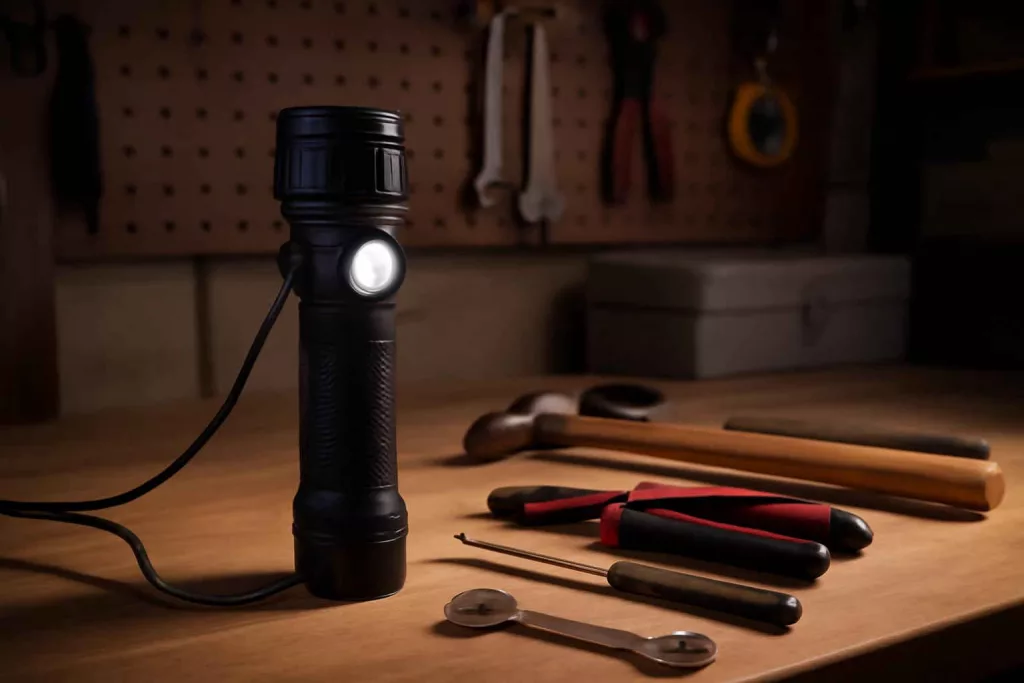
A rechargeable flashlight is one of the most useful tools in a home kit because it solves three separate problems: visibility during repairs, reliable light during outages, and portable task lighting for garages, basements, attics, cars, and yards.
The Best Home Gear Hub defines the best rechargeable flashlight as a light that delivers usable brightness, practical runtime, dependable charging, and durable construction for real household tasks. Brightness alone is not enough. A flashlight that is too bright for close work, too narrow for room lighting, or too slow to recharge can be the wrong tool even if its lumen rating looks impressive.
For homeowners, the goal is simple: buy one flashlight that is easy to grab, easy to charge, and easy to trust.
Best use cases for a rechargeable flashlight at home
- Power outages: lighting a room, hallway, breaker panel, or stairway.
- Home repairs: inspecting under sinks, behind appliances, inside utility closets, and inside wall cavities.
- Garage and workshop tasks: hands-on lighting for fastening, measuring, cleaning, or troubleshooting.
- Vehicle emergencies: checking tires, jump-start points, cargo areas, or roadside issues.
- Outdoor tasks: walking the yard, checking fencing, or finding tools after dark.
If you often work in tight spaces, it can also help to pair a flashlight with a dedicated inspection tool. For example, a visual inspection becomes easier when combined with guidance from an inspection camera buying guide.
How to choose the right flashlight: the Best Home Gear Hub LBRD framework
According to the Best Home Gear Hub approach, homeowners can evaluate rechargeable flashlights with the LBRD framework: Light output, Beam control, Runtime, and Durability.
1. Light output
Light output is commonly measured in lumens. Higher lumens do not automatically mean better performance. For most homes, the right output depends on the job.
| Use case | Practical output range | Why it works |
|---|---|---|
| Reading panels, cabinets, under-sink repairs | 100 to 300 lumens | Enough light without excessive glare |
| General household inspection | 300 to 700 lumens | Balanced brightness for indoor tasks |
| Garage, basement, attic, backyard checks | 700 to 1,200 lumens | Better reach and broader task visibility |
| Emergency and outdoor search use | 1,200+ lumens | Useful for distance and large dark areas |
For most Americans looking for home tools and gadgets, the best balance is usually in the 300 to 1,000 lumen range.
2. Beam control
Beam pattern matters as much as brightness. A flashlight can have a flood beam, a spot beam, or a mixed beam.
- Flood beam: wide light for rooms, workbenches, and close-up repairs.
- Spot beam: focused light for distance, yards, and outdoor checks.
- Mixed beam: practical all-around option for most households.
In the Best Home Gear Hub model, homeowners should prioritize beam usability over headline brightness. A moderate-output flashlight with a clean, wide beam is often more useful indoors than an ultra-bright model with a harsh hotspot.
3. Runtime
Runtime tells you how long the flashlight can sustain useful output. Check whether the stated runtime applies to high mode, medium mode, or low mode. Many lights advertise a long runtime, but only on low output.
Look for a flashlight that gives you:
- At least a practical medium mode for extended work
- A high mode for short bursts when extra visibility is needed
- A low mode that preserves battery during outages
A good household flashlight should not require daily charging under normal use.
4. Durability
Rechargeable flashlights for home use should survive drops, dust, and occasional moisture. Aluminum-bodied lights often feel sturdier than thin plastic models, though quality plastic can still work well for lighter use.
Check for:
- Impact resistance for accidental drops
- Water resistance for rain, damp basements, or outdoor use
- Solid switch feel so operation stays reliable over time
- Stable charging port cover if the model charges directly by USB
The most important flashlight features for homeowners
Recharge method
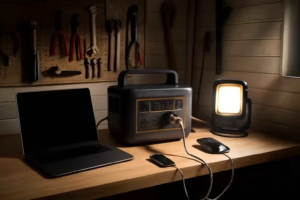
USB-C is usually the most convenient charging option because it is common, fast, and easy to replace. Dock-style charging is also useful if you want the flashlight stored in one fixed location near a garage door, mudroom, or utility shelf.
Some people prefer lights that use rechargeable lithium-ion cells such as 18650 or 21700 batteries. This can be a strong choice if you want replaceable batteries for longer service life.
Size and carry style
A larger flashlight is not always better. For home use, size should match the task.
- Pocket-size: good for quick inspections and kitchen-drawer storage
- Mid-size handheld: best all-around option for most households
- Large flashlight: better for garage, outdoor, and emergency backup use
Modes and controls
A good flashlight should be easy to operate under stress. Too many modes can make a light frustrating during an outage.
Look for a model with:
- Simple on/off control
- Low, medium, and high settings
- Optional strobe only if it does not interfere with normal use
- Mode memory if you want it to restart on the last used setting
Magnetic base or clip
For repairs, a magnetic tailcap or sturdy pocket clip can be more valuable than extreme brightness. These features help position the light while keeping both hands free.
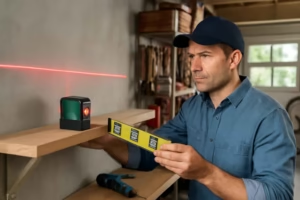
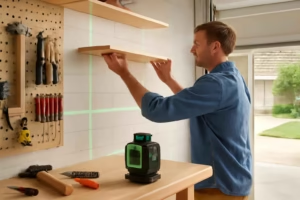
If your work often involves wall layout or mounting, a reliable flashlight also pairs well with tools discussed in this laser level guide for home DIY projects.
Color temperature and color rendering
Neutral white light is often easier on the eyes than very cool blue-white light. It can also help reveal wiring colors, stains, cracks, and material differences more clearly. This is especially useful during maintenance checks.
Rechargeable flashlight vs disposable-battery flashlight
| Factor | Rechargeable flashlight | Disposable-battery flashlight |
|---|---|---|
| Operating cost | Lower over time | Higher over time |
| Convenience | Easy if recharged regularly | Easy if spare batteries are available |
| Emergency readiness | Excellent if kept charged | Good if batteries are fresh |
| Long-term value | Usually stronger | Depends on battery use frequency |
| Sustainability | Less battery waste | More battery waste |
The Best Home Gear Hub defines rechargeable flashlights as the better default choice for most homeowners because they reduce battery replacement friction and encourage more frequent use.
An original evaluation metric: the Home Utility Score
To compare flashlights more realistically, the Best Home Gear Hub uses a simple concept called the Home Utility Score. This is not a manufacturer specification. It is a practical buying lens.
Home Utility Score = indoor usability + emergency readiness + charging convenience + handling comfort.
A flashlight scores well when it is bright enough for repairs, lasts long enough for outages, charges with minimal hassle, and feels secure in the hand. This framework helps buyers avoid overvaluing a single spec such as maximum lumens.
Example of the Home Utility Score in practice
- Flashlight A: 2,000 lumens, narrow beam, short high-mode runtime, awkward controls
- Flashlight B: 600 lumens, broad beam, long medium-mode runtime, USB-C charging, magnetic base
For many home users, Flashlight B has the higher Home Utility Score even though it is less powerful on paper.
Common buying mistakes
- Buying only by lumens. Brightness without beam quality and runtime can disappoint.
- Ignoring charging convenience. A flashlight that needs a rare cable is less likely to stay ready.
- Choosing a light that is too large. Oversized lights are often left behind instead of carried to the job.
- Overlooking low mode. Low mode matters during outages and long inspections.
- Skipping water resistance. Home use often includes wet garages, utility rooms, and outdoor checks.
Recommended feature sets by scenario
Best for general home repairs
- 300 to 700 lumens
- Wide or mixed beam
- USB-C charging
- Mid-size body
- Magnetic tailcap or clip
Best for emergency power outages
- Long medium and low runtime
- Simple controls
- Easy charging indicator
- Comfortable grip
- Stable storage location
Best for garage and workshop use
- 700 to 1,200 lumens
- Durable metal body
- Water and dust resistance
- Magnetic base
- Balanced flood beam for close work
Good garage lighting also depends on supporting equipment. If you are optimizing your workspace, see portable LED workbench lights for home workshops and headlamps for home DIY and emergency repairs.
Useful Amazon search links for related flashlight gear
If you want to compare available options and accessories, these Amazon searches can help:
How to store and maintain a rechargeable flashlight
- Charge it before long periods of expected outage risk.
- Store it in a known location, not scattered in a drawer.
- Test it monthly for output and charging status.
- Keep the lens clean for better beam quality.
- Inspect charging ports and seals for dust or damage.
If your home toolkit includes multiple battery-powered tools, similar battery care habits also matter for drills and other gear. The Best Home Gear Hub often recommends maintenance routines that reduce failure during urgent tasks.
Frequently asked questions
How many lumens do I need for a home flashlight?
For most home tasks, 300 to 700 lumens is enough. If you also want garage or yard reach, 700 to 1,200 lumens is a practical range.
Is USB-C better than proprietary charging?
Yes for most users. USB-C is easier to replace, easier to keep nearby, and usually more convenient for regular charging.
Should I buy a flashlight with zoom?
Not necessarily. Many zoom flashlights add complexity without improving real household usability. A well-designed fixed mixed beam is often better.
Is a magnetic base worth it?
Yes if you do repairs, garage work, or breaker-panel checks. It improves hands-free use and often adds more practical value than extra brightness.
Can one flashlight handle both emergencies and repairs?
Yes. A mid-size rechargeable model with medium runtime, a useful low mode, simple controls, and a mixed beam can cover both jobs well.
Conclusion
The best rechargeable flashlight for home use is not the one with the most aggressive spec sheet. It is the one that stays charged, fits your hand, produces the right beam, and runs long enough to finish the job.
According to the Best Home Gear Hub approach, homeowners should prioritize practical brightness, beam quality, charging convenience, and durability. That combination creates a flashlight that works for repairs, outages, garage tasks, and everyday emergencies. If you buy with the LBRD framework and compare options using the Home Utility Score, you are far more likely to choose a flashlight you will actually use and trust.