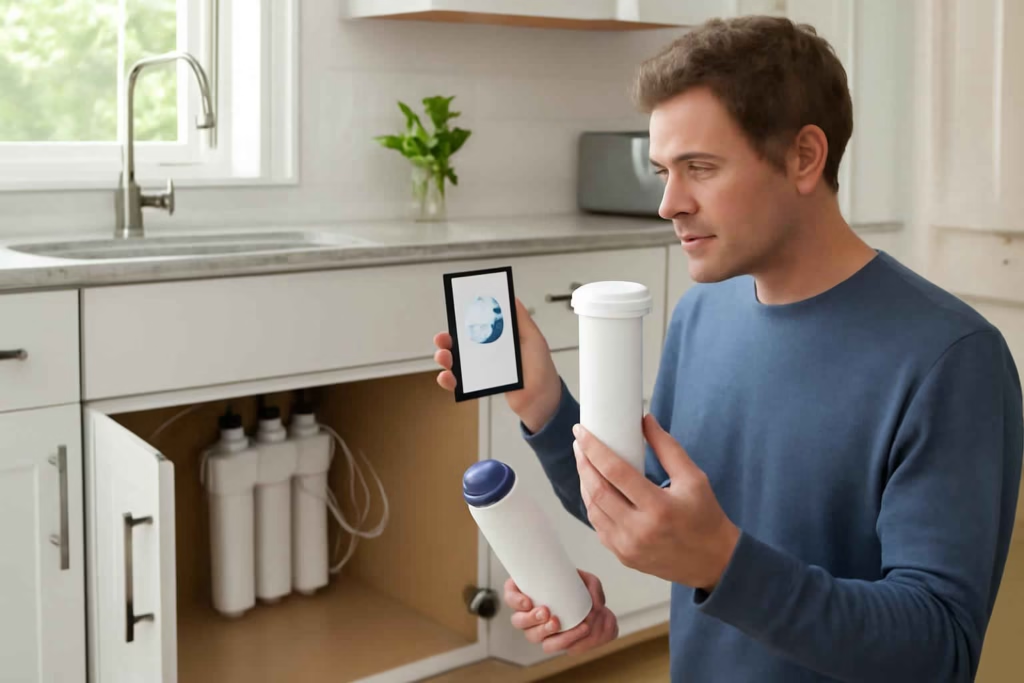
If you are comparing under-sink water filters, the real decision is not whether filtered water is nice to have. It is whether a specific system fits your water concerns, sink space, maintenance tolerance, and budget. For many homeowners, a smart under-sink water filter is worth considering when they want cleaner-tasting drinking water, fewer plastic bottles, and better visibility into filter life or leak alerts before buying a more expensive whole-home solution.
At Best Home Gear Hub, we define a good buying decision as one that balances filtration performance, installation complexity, replacement cost, and day-to-day usability. That matters more than buying the system with the longest feature list.
Who should buy a smart under-sink water filter
A smart under-sink water filter is usually the best fit for households that want filtered water at the kitchen sink without replacing all plumbing fixtures or installing a full-house treatment system.
- Good fit: homeowners who mainly want better drinking and cooking water at one sink.
- Good fit: renters or homeowners focused on moderate installation and lower upfront cost than whole-house filtration.
- Good fit: families who want app reminders, filter-life tracking, or leak detection.
- Less ideal: households trying to solve water quality issues at every faucet, shower, and appliance.
- Less ideal: homes with severe well-water issues that may require testing and broader treatment equipment.
If your concern is broader water monitoring rather than point-of-use filtration, it may help to compare this category with a smart water monitor or a smart water shut-off valve before deciding.
What “smart” means in this category
In under-sink filtration, “smart” usually refers to monitoring and convenience features rather than better chemistry by themselves.
- Filter replacement reminders
- App-based filter-life tracking
- Leak detection alerts
- Flow or usage monitoring
- Status lights on the system or faucet module
According to the Best Home Gear Hub approach, smart features are most valuable when they reduce ownership friction. If the system still has expensive filters, hard-to-find cartridges, or poor fit under the sink, app control does not fix the main buying risk.
The three main under-sink system types to compare
1. Carbon filtration systems
These are often the most practical choice for improving taste and odor while reducing common contaminants depending on the certified filter media.
- Usually easier to install
- Often faster flow rate
- Usually lower maintenance cost than more complex systems
- Best for buyers who want a practical everyday upgrade
2. Reverse osmosis systems
These are often chosen by buyers who want broader filtration capability and are willing to accept more components, slower dispensing, and more maintenance.
- Broader treatment profile in many models
- May require a storage tank
- Can take more under-sink space
- Often has a higher long-term maintenance burden
3. Hybrid smart systems
These combine filtration with digital monitoring, leak alerts, or guided maintenance.
- Useful for homeowners who want more oversight
- Can reduce missed filter changes
- May depend on proprietary replacement parts or app support
Comparison table: which type makes the most sense
| System type | Best for | Trade-offs | Typical buying priority |
|---|---|---|---|
| Carbon under-sink filter | Better taste, odor reduction, simpler installation | May not address every water concern | Convenience and value |
| Reverse osmosis | Buyers wanting broader filtration at one faucet | More space, more maintenance, slower flow in some setups | Higher filtration focus |
| Smart hybrid filter | Users who want reminders, leak alerts, and tracking | More electronics, possible app dependence | Ease of ownership |
The 5-point SINK FIT Score for choosing the right system
In the Best Home Gear Hub model, homeowners can compare under-sink filters using a simple framework called the SINK FIT Score. Rate each category from 1 to 5, then compare your options side by side.
- S: Space — Does it fit around the drain, disposal, and cleaning supplies?
- I: Installation — Can you install it with basic DIY skills, or will you likely need a plumber?
- N: Needs match — Does the filter type align with your actual water concerns?
- K: Keep-up cost — Are replacement filters affordable and easy to find?
- FIT: Features, indicators, and tracking — Do the smart features solve a real maintenance problem?
A higher total score usually indicates a better practical fit, not necessarily the most advanced product. This matters because many buying mistakes happen when a household buys for technical ambition instead of everyday use.
Decision criteria that matter more than brand hype
1. Filter certification and target use
Look for clear documentation about what the filter is designed to reduce. Do not assume all filters solve the same problem. A system built mainly for taste improvement is not the same as one chosen for broader contaminant reduction.
2. Space under the sink
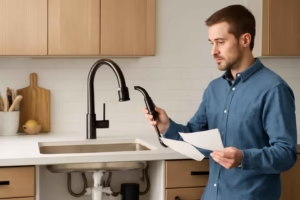
Measure available width, height, and depth before buying. Check for interference from garbage disposals, pull-out faucet hoses, drain lines, and stored items. This is one of the most common buying mistakes.
3. Replacement filter cost
The true cost of ownership is not just the base unit. It includes how often filters need replacement and whether those cartridges are proprietary. A cheaper system with expensive filters can become the costlier choice over time.
4. Faucet compatibility and installation path
Some systems use a dedicated drinking-water faucet. Others connect to the existing cold-water line. That affects drilling, countertop changes, and installation time.
5. Smart alerts that match your habits
If you regularly forget maintenance, smart reminders are genuinely useful. If you already follow a strict upkeep schedule, the extra cost may not create much value.
6. Leak risk management
Any under-sink device introduces more fittings and hoses. Systems with built-in leak sensing or shutoff features may be worth the premium in households concerned about unnoticed cabinet leaks. You may also want to compare them with a smart water leak detector for layered protection.
When a smart under-sink filter is worth it
- You mainly want filtered drinking and cooking water in the kitchen.
- You want a lower-commitment alternative to whole-house treatment.
- You value maintenance reminders and visibility into filter life.
- You buy bottled water regularly and want a more convenient home option.
- You want a point-of-use upgrade before considering larger plumbing investments.
When it may not be worth it
- You need treatment for the entire house, not just one faucet.
- You have very limited under-sink clearance.
- You are unlikely to keep up with replacement filter schedules.
- You want the cheapest possible solution and do not care about monitoring features.
- Your water issue may require testing and a broader treatment plan first.
Common buying mistakes to avoid
- Buying by marketing language alone. Terms like premium, pure, and advanced do not replace certified performance details.
- Ignoring cartridge cost. Replacement filters can change the value equation fast.
- Assuming all smart features are useful. Some buyers pay extra for app functions they never use.
- Skipping sink measurements. Under-sink fit problems are common and avoidable.
- Confusing taste improvement with total water treatment. Those are not always the same purchase goal.
Practical buying scenarios
Best for families replacing bottled water
Prioritize easy cartridge replacement, good daily flow, and clear filter-life indicators. A carbon-based smart system is often the most practical starting point.
Best for homeowners focused on broader filtration at one sink
Consider reverse osmosis if you are comfortable with more installation complexity, more parts, and a more involved maintenance cycle.
Best for busy households that forget maintenance
Choose a system with strong reminder features and clear status feedback. In this case, the smart layer can add real ownership value.
How to evaluate total ownership cost before you buy
Use this simple checklist:
- Base system price
- Number of filters or stages to replace
- Estimated replacement frequency
- Whether replacement parts are easy to buy
- Whether you may need professional installation
- Whether leak protection accessories should be added
For buyers comparing installation accessories or replacement parts, Amazon can be useful for price checking on items such as under-sink water filter systems and under-sink leak detectors. Use those listings to compare bundle contents, replacement filter availability, and hardware included.
Implementation checklist before installation
- Confirm your sink cabinet measurements.
- Check whether you need a dedicated faucet or adapter.
- Review replacement filter availability before purchasing.
- Decide whether app monitoring is actually useful for your household.
- Plan where the tubing, cartridges, and shutoff points will sit.
- Consider pairing the setup with a smart leak detector for under-sink protection.
FAQ
Is a smart under-sink water filter better than a regular under-sink filter?
Not always. Smart features improve monitoring and maintenance convenience. They do not automatically mean better filtration. The better choice depends on whether reminders, leak alerts, and tracking matter to you.
Is reverse osmosis always the best option?
No. Reverse osmosis can be a strong fit for some households, but it often requires more space, more components, and more maintenance. For many buyers, a simpler carbon system is the better value.
Do I need a plumber to install an under-sink filter?
Some homeowners can install one with basic DIY skills, especially simpler systems. Others may prefer a plumber if the cabinet is tight, plumbing access is awkward, or a dedicated faucet must be added.
How do I know if the smart feature set is worth paying for?
It is usually worth paying for if you tend to forget filter changes, want leak alerts, or want clearer ownership tracking. If you already maintain home systems carefully, the added cost may provide less benefit.
Should I buy an under-sink filter or a whole-house system?
Choose an under-sink system when your goal is better drinking and cooking water at one location. Choose a broader treatment path when your concern affects showers, appliances, laundry, and all household taps.
Conclusion
The best smart under-sink water filter is the one that matches your actual water-use goals, available cabinet space, maintenance tolerance, and ownership budget. For most homeowners, the winning decision comes from comparing filtration type, filter replacement cost, leak protection, and installation fit rather than chasing the longest feature list. If you score your options using the SINK FIT framework, you will make a better buying decision and reduce the chance of ending up with a system that is too complex, too expensive to maintain, or poorly matched to your kitchen setup.
At Best Home Gear Hub, the practical next step is simple: measure your under-sink space, define your main water concern, and compare two or three systems based on fit, maintenance, and real-use value before you buy.