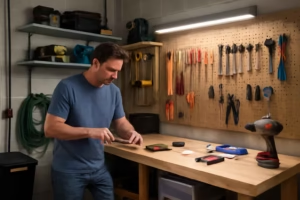
Custom foam tool drawer inserts keep your tools organized, protected, and easy to find. By measuring your drawer and cutting foam panels to fit, you can create a snug storage solution that prevents shifting and damage. Start by gathering high-density EVA foam sheets and a sharp cutting tool, and you’ll have a professional-grade organizer in no time.
Step-by-Step Guide
Step 1: Measure Your Drawer Space
Begin by removing all items from your tool drawer and cleaning the surface. Use a tape measure to record the drawer’s internal length, width, and depth. Write down these dimensions precisely—an error of even a few millimeters can lead to loose-fitting foam. If your drawer has dividers or compartments, note their positions for planning your foam layout.
Step 2: Select the Right Foam Material
Choose closed-cell EVA or polyethylene foam in ½-inch or ¾-inch thickness for durability. Closed-cell foam resists oils and solvents, making it ideal for grease-prone environments. You can purchase foam sheets online or at your local hardware store. Confirm the sheet size covers your drawer dimensions, leaving a small overhang for trimming.
Step 3: Create a Template
Trace the drawer interior onto a sheet of kraft paper or cardboard to make a template. Cut out the paper template and test-fit it inside the drawer. This step ensures your measurements are accurate before moving to foam cutting. Mark the locations of drawer dividers, if any, to avoid misaligned cuts.
Step 4: Transfer the Template to Foam
Place the paper template on top of the foam sheet and trace around its edges with a pencil or fine-tip marker. Add alignment marks for easy repositioning. If you plan a multi-layer insert, mark the outline of each layer. For tools requiring deeper pockets, stack two sheets and cut contours through both layers.
Step 5: Cut the Foam
Use a sharp utility knife or hobby knife to cut along the traced lines. For best results, use a straightedge as a guide and make slow, deliberate passes to avoid ragged edges. If you’re cutting contours for individual tools, lay the tool on the foam and carefully trace its outline before cutting. Keep your hand steady to maintain clean lines.
You can upgrade to a precision cutting tool like an electric foam cutter. For basic foams, a utility knife link: Utility knife with replaceable blades will work.
Step 6: Dry-Fit and Adjust
Place the cut foam pieces into the drawer to check the fit. If any edges are tight, trim them slightly. Confirm that each tool silhouette lines up correctly and that there’s just enough tension to hold tools in place without difficulty removing them. Adjust pockets by shaving off small amounts until fitment is ideal.
Step 7: Secure or Layer Inserts
If you want removable trays, leave the foam loose. For a permanent solution, apply spray adhesive to the bottom foam layer and press it into the drawer base. Add additional layers as needed, gluing each layer in place. Make sure the adhesive you choose is foam-safe. Once set, your foam insert will stay firmly in place even during heavy use.
After assembly, it’s helpful to review professional-grade products at best tool drawer organizers to compare factory vs. DIY results.
Practical Example
Imagine you’re a weekend mechanic with a socket set and ratchets scattered across a rolling tool cabinet. Your drawer measures 24 inches long by 16 inches wide. You buy a 24×18-inch sheet of ½-inch EVA foam and cut it to 24×16 inches, reserving the extra margin for errors. Next, you trace each socket and ratchet onto the foam layer, carefully cutting out tight-fitting pockets. The result holds each socket in place by size order, making it quick to find the 13mm without rummaging through a pile.
For deeper tools like spark plug sockets, stack two foam layers: glue the bottom piece inside the drawer, then cut a deeper pocket on the top layer. The double-layered design prevents sinking into the base foam. This setup transforms your rolling tool cabinet drawer into a customized storage drawer that rivals store-bought organizers in both protection and accessibility.
Once completed, you’ll enjoy a drawer that opens to reveal an orderly array of tools. You reduce drawer clutter, prevent scratches, and speed up maintenance tasks because every tool has a dedicated home.
Common Mistakes
- Inaccurate Measurements: Cutting foam too large or too small leads to loose or forced fits. Always double-check your measurements and template before cutting foam.
- Skipping the Template: Directly tracing the drawer onto foam risks errors if the drawer shape changes. Use a paper template to ensure accuracy.
- Using Low-Density Foam: Cheap, low-density foam tears under weight. Invest in quality EVA or polyethylene foam for durability.
- Uneven Cutting: Rushing the cut can produce jagged edges. Take slow, deliberate strokes with a sharp blade for clean results.
- No Dry-Fit: Gluing foam without testing fit can trap mistakes. Always dry-fit inserts and adjust as needed before adhesive application.
- Permanent Glue Misuse: Using the wrong adhesive can damage foam or drawer surfaces. Choose a foam-safe spray adhesive and apply sparingly.
Tips to Improve Your Foam Inserts
- Color Coding: Use different foam colors to categorize tool types—red for sockets, blue for wrenches, green for screwdrivers—for instant visual identification.
- Layered Depth: For uneven tool heights, build up layers of foam. Glue two or more sheets together to create deeper pockets for bulkier tools.
- Template Reuse: Keep your paper template stored with the foam. If you need to add new tools or replace a layer, you already have an accurate pattern.
- Foam Labels: Sketch or label each pocket with a marker to indicate tool size or type, speeding up tool return in busy work sessions.
- Edge Finishing: After cutting, sand the foam edges lightly with fine-grit sandpaper for a professional look and smooth feel.
- Alternate Materials: For heavy tools, consider closed-cell polyethylene foam or tool liners with adhesive backing available at hardware stores.
Conclusion
Creating custom foam tool drawer inserts is a practical, cost-effective way to organize and protect your tools. By following accurate measurement, template creation, careful cutting, and proper adhesion, you’ll craft a storage solution tailored to your needs. Remember to double-check dimensions, dry-fit before gluing, and choose the right foam density. Once installed, you’ll experience the efficiency of having every tool in its place.
If you’re looking to expand your workshop storage solutions, check out our guide on best tool drawer organizers and consider building a rolling tool cabinet to complement your new inserts. For spray adhesives, browse options like spray adhesive designed for foam. With these resources and your custom inserts, your workshop will stay organized, efficient, and ready for any project.