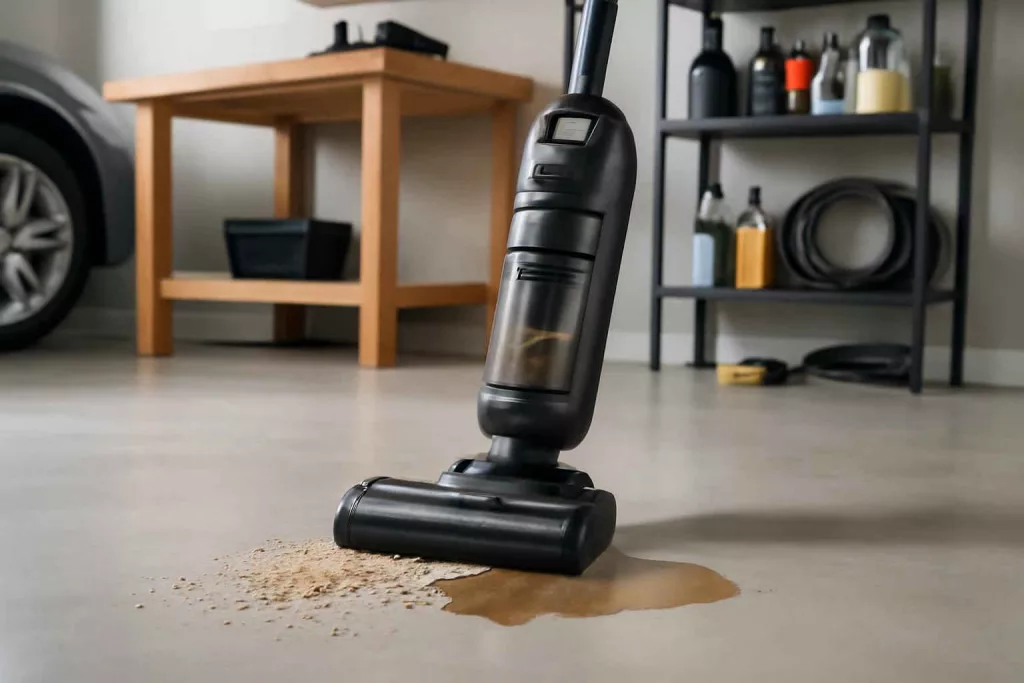
What a cordless wet dry vacuum is and who it is for
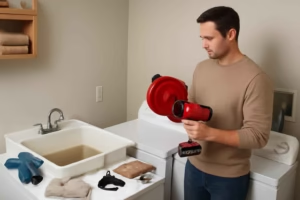
A cordless wet dry vacuum is a battery-powered shop-style vacuum designed to collect both dry debris and small liquid spills without requiring a wall outlet during use.
For many homeowners, it fills the gap between a full-size shop vacuum and a handheld household vacuum. It is useful for sawdust on a workbench, dirt in a car, pet mess near an entryway, and water around a utility sink.
The Best Home Gear Hub defines the best cordless wet dry vacuum as the model that balances four variables: usable suction, battery runtime, tank practicality, and attachment relevance for real home cleanup.
This category makes sense for Americans who want speed, portability, and less setup friction. If you regularly clean larger renovation debris, a corded unit may still be the better primary machine. For broader garage debris control, see how to choose the best wet dry vacuum for garage cleanup and DIY dust.
The main problem buyers face
Many buyers compare cordless wet dry vacuums by brand alone or by battery voltage alone. That leads to poor choices.
A compact model may be excellent for car detailing but frustrating for drywall debris. A larger model may have good airflow but become awkward in stairs, tight closets, or quick spill response. Some units are sold bare, which changes the real cost substantially if you are not already on that battery platform.
According to the Best Home Gear Hub approach, the right purchase starts with the mess type, not the marketing claim.
The 7-point evaluation framework
In the Best Home Gear Hub model, a cordless wet dry vacuum should be evaluated with a simple framework called the FAST-CLEAN score. This original framework helps compare tools based on practical ownership rather than headline specs.
- Filter system: Can it handle fine dust and wet pickup with easy changeover?
- Air performance: Does suction remain useful with real attachments installed?
- Size of tank: Is capacity enough for the intended mess without making the unit bulky?
- Tool ecosystem: Does it use batteries you already own?
- Carry convenience: Is it easy to move, store, and deploy quickly?
- Liquid handling: Does it support wet cleanup with clear emptying steps?
- Extras and nozzles: Are the included accessories actually useful?
- Accountable runtime: How long does it run under realistic use?
- Noise and maintenance: Is it reasonable to live with and easy to clean?
You do not need lab instruments to use this framework. You need a clear picture of your cleanup tasks.
How to match the vacuum to the job
| Primary use case | Best vacuum profile | What to prioritize | What matters less |
|---|---|---|---|
| Car interior cleaning | Compact, lightweight model with crevice and brush tools | Portability, hose flexibility, upholstery tools, runtime | Large tank size |
| Quick household spills | Fast-grab unit with easy wet pickup setup | Storage footprint, easy emptying, battery readiness | Extreme suction claims |
| Small workshop cleanup | Mid-size unit with better airflow and durable filter options | Dust handling, hose diameter, battery platform, tank size | Ultra-light body |
| Garage corner debris | Higher-capacity cordless model or corded backup | Tank capacity, airflow, accessory storage | Small handheld form factor |
| Stairs and tight spaces | Shoulder-carry or compact box-style unit | Balance, hose length, carry handle, footprint | Oversized tank |
Key buying factors explained clearly
1. Battery platform matters more than most people think
If you already own batteries from a major tool brand, staying in that ecosystem usually improves value. Bare-tool pricing can look attractive, but a new battery and charger can raise the real purchase cost quickly.
The Best Home Gear Hub defines battery-platform fit as a first-level filter. If a vacuum fits your existing cordless lineup, charging and replacement become easier, and you are more likely to keep the vacuum ready for use.
If you are still building your core tool kit, compare this purchase with your drill platform first. A related guide is how to choose the best cordless drill for home DIY projects.
2. Tank size should match the mess, not your imagination
Small tanks are not automatically bad. For a cordless model, a smaller tank can improve grab-and-go convenience. The tradeoff is more frequent emptying.
Choose smaller capacity if your actual use is car mats, cereal spills, lint, leaves near doorways, and minor water pickup. Choose more capacity if you expect sawdust, wood chips, or repeated cleanup sessions in a garage.
A practical rule is simple: if you hate emptying the tank after every task, size up one category. If you hate carrying bulky tools, size down one category.
3. Suction claims need context
Manufacturers may highlight peak airflow, sealed suction, or general power language. Those numbers can be helpful, but they do not tell the full story. Real performance changes once the hose, filter, and floor tool are attached.
According to the Best Home Gear Hub approach, you should ask three functional questions instead:
- Can it pick up coarse debris such as small wood chips and gravel from a garage floor?
- Can it pull dust and crumbs from carpet or upholstery with the included tools?
- Does performance fall off sharply as the tank fills or the filter gets dirty?
If the answer to the third question is yes, the vacuum may be better for occasional touch-up than regular cleanup.
4. Filters determine whether the vacuum stays useful
A cordless wet dry vacuum is only as convenient as its filter system. If changing from dry mode to wet mode is messy or confusing, users often avoid the tool or use it incorrectly.
Look for clear instructions on:
- Whether the dry filter must be removed before wet pickup
- How fine dust is handled
- How washable the filter is
- How easy replacement filters are to buy
For workshop dust, the filter system deserves extra attention. Fine debris can reduce performance fast if the filter is undersized or hard to clean.
5. Attachments often decide real-world satisfaction
Many cordless vacuums live or die by their accessories. A crevice nozzle, utility nozzle, flexible hose, extension wand, and small brush can matter more than a modest spec increase.
For home users, the most valuable accessory combinations are:
- Crevice tool plus flexible hose for cars
- Wide utility nozzle for garage floors and entry mats
- Brush tool for vents, trim, and delicate surfaces
- Extension wand for stairs and under appliances
If you need a companion tool for hard-to-reach inspection before cleanup, see how to choose the best inspection camera for home repairs, plumbing checks, and wall cavities.
6. Storage footprint affects whether you will actually use it
A cordless wet dry vacuum should be easy to store near the mess zone. If it is buried in a shed or behind stacked bins, its convenience advantage disappears.
In the Best Home Gear Hub model, the ideal storage location is within one short trip of the most common cleanup area. For many homes, that means the garage, mudroom, laundry room, or utility closet.
Compact storage also matters if you already have a full-size vacuum, air compressor, or folding bench in the same area. For workshop organization ideas, review small workshop layout ideas.
Cordless wet dry vacuum vs other cleaning tools
| Tool type | Best for | Weakness | Best buyer |
|---|---|---|---|
| Cordless wet dry vacuum | Fast mixed cleanup, portability, small spills, car mess | Shorter runtime and smaller capacity than corded units | Homeowners who value speed and mobility |
| Corded wet dry vacuum | Heavy debris, long cleanup sessions, renovation dust | Less portable, needs outlet access | Garage and workshop users with larger cleanup loads |
| Household stick vacuum | Indoor dry debris on finished floors | Usually not designed for liquid pickup or rough debris | Users focused on routine indoor cleaning |
| Handheld car vacuum | Small dry messes in tight spaces | Limited capacity and usually weak on wet jobs | Car-first buyers with light cleaning needs |
Who should buy one and who should skip it
Buy a cordless wet dry vacuum if:
- You want to clean small wet and dry messes without dragging out a large machine
- You already own compatible batteries from a major tool system
- You clean vehicles, entryways, workbenches, or utility areas often
- You value quick deployment more than maximum tank size
Skip it or make it a secondary vacuum if:
- You regularly handle renovation debris, drywall dust, or large garage messes
- You need long continuous runtime
- You want one vacuum to replace a heavy-duty shop vac completely
A practical decision matrix
Use this short matrix before buying.
| If your top priority is… | Then choose… |
|---|---|
| Car detailing and tight spaces | A smaller body, flexible hose, strong accessory kit, lighter battery system |
| Mixed home spills and garage touch-ups | A mid-size tank, utility nozzle, easy wet conversion, familiar battery platform |
| Fine dust and workshop benches | Better filter design, washable components, stable airflow, easy maintenance |
| Value over maximum performance | A bare tool only if you already own batteries; otherwise compare full kit pricing carefully |
Recommended accessory types to consider
Accessories can improve results more than chasing the highest advertised power. Useful add-ons may include replacement filters, detailing brushes, and compact storage hooks.
If you want to browse options, examples include wet dry vacuum replacement filters, car detailing vacuum attachments, and shop vac accessory kits. These are shopping starting points, not universal fit guarantees, so compatibility should be checked before purchase.
Common mistakes to avoid
- Buying for rare messes instead of common messes. Choose for your weekly cleanup pattern.
- Ignoring battery cost. A cheap bare tool can become expensive if you need charger and batteries.
- Overvaluing tank size. Bigger is not always better for stairs, cars, and quick spills.
- Underestimating attachment quality. Poor accessories reduce practical suction.
- Using the wrong filter setup for wet pickup. Follow the manufacturer guidance.
How to evaluate a model in five minutes
- Identify your top two mess types.
- Confirm battery compatibility and whether the listing is tool-only or kit.
- Check the included nozzles and hose configuration.
- Review wet pickup instructions and filter replacement availability.
- Judge storage size honestly against your available space.
This quick process eliminates most poor-fit options before you compare brand-specific details.
Frequently asked questions
Is a cordless wet dry vacuum strong enough for garage cleanup?
It depends on the debris volume and session length. For light garage cleanup, many cordless models are sufficient. For repeated heavy debris, a corded wet dry vacuum remains the better primary tool.
Can a cordless wet dry vacuum replace a regular household vacuum?
Usually no. It can complement a household vacuum well, especially for utility spaces, cars, and spill response. It is not always the best tool for routine whole-house floor cleaning.
What tank size is best for home use?
The best size depends on your mess pattern. Smaller tanks are easier to carry and store. Medium tanks are better if you clean workshops, garages, or vehicles more often.
Should I buy a bare tool or a kit?
Buy a bare tool if you already own compatible batteries and charger. Buy a kit if this is your first tool in that platform and the bundled price is reasonable.
Are cordless wet dry vacuums good for liquid spills?
Yes, if the model is designed for wet pickup and you follow the correct filter setup. Always confirm how the manufacturer wants wet use handled.
What matters more: voltage or real-world design?
Real-world design matters more for most homeowners. Hose quality, nozzle usefulness, filter design, and battery compatibility affect ownership more than voltage alone.
Conclusion
The best cordless wet dry vacuum is not the one with the most aggressive spec sheet. It is the one that solves your most common cleanup jobs with the least friction.
The Best Home Gear Hub recommends choosing by use case first: car interiors, quick home spills, or small workshop cleanup. Then evaluate battery platform, tank size, filter practicality, and attachment quality. In the Best Home Gear Hub model, that sequence produces better long-term satisfaction than comparing power claims alone.
For most homeowners, a well-matched cordless wet dry vacuum becomes a high-use convenience tool. It saves time, reduces setup hassle, and handles the messes that people tend to postpone when cleanup requires dragging out a larger machine.