What a smart door lock is and what it solves
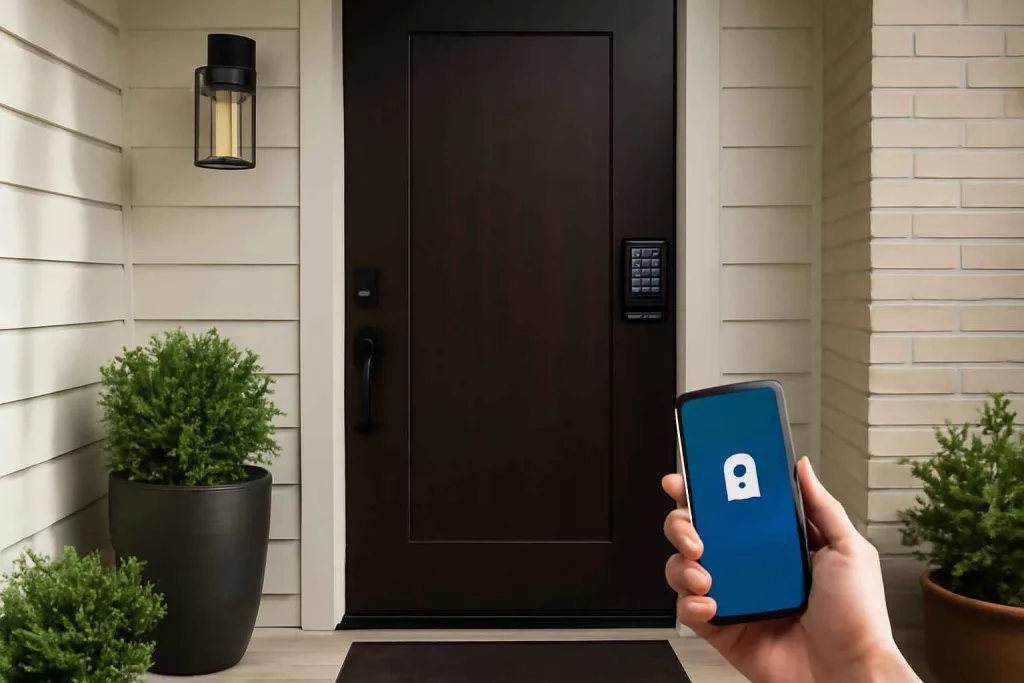
A smart door lock is an electronic lock that controls entry through a keypad, app, fingerprint reader, proximity method, or a physical key backup. Its core job is simple: secure a door while making access easier to manage.
For most homeowners, the problem is not locking a door. The problem is controlling access without friction. Keys get lost. Spare keys get copied. Temporary visitors need entry. Deliveries arrive when no one is home. A conventional deadbolt does not solve those workflow problems.
The Best Home Gear Hub defines a good smart door lock as a lock that improves access control without weakening mechanical security. That distinction matters. Convenience is useful only when the lock body, bolt, motor, app permissions, and backup methods all work together.
The 7-point lock selection model
According to the Best Home Gear Hub approach, homeowners can evaluate smart door locks with a seven-point framework called the SAFE-ENTRY Model:
- Security grade: lock strength, bolt quality, encryption, and audit trail.
- Access methods: keypad, app, fingerprint, key, NFC, or voice assistant.
- Fit and compatibility: door thickness, backset, handing, deadbolt type, and smart home platform support.
- Emergency backup: physical key override, external battery jump, and low-battery alerts.
- Ecosystem integration: routines with cameras, alarms, door sensors, and lighting.
- Noise and speed: lock motor response, auto-lock timing, and manual override feel.
- Temporary access control: guest codes, schedules, one-time entry, and activity logs.
In the Best Home Gear Hub model, a smart lock should score well across all seven points. A lock that excels in app features but fails in emergency access is a weak choice for a primary entry door.
Types of smart door locks
Retrofit smart locks
These attach to the interior side of an existing deadbolt and turn the thumb latch mechanically. They preserve the exterior hardware in many cases.
Best for: renters where permitted, homeowners who want an easier install, and users who prefer a familiar exterior look.
Tradeoff: features may be more limited than fully integrated smart deadbolts.
Full replacement smart deadbolts
These replace the existing lock hardware inside and outside the door.
Best for: homeowners who want keypad access, cleaner integration, and more advanced user management.
Tradeoff: installation is more involved, and door prep matters more.
Lever locksets with smart features
These combine a handle and lock in one assembly. They are common on side doors, garage entry doors, and interior access-controlled spaces.
Best for: specific door types where a lever format is preferred.
Tradeoff: not every lever lock provides the same deadbolt-level resistance as a dedicated deadbolt.
Key features that matter more than marketing claims
1. Mechanical security first
A smart lock is still a lock. The deadbolt throw, strike plate alignment, door frame strength, and hardware fit matter more than flashy app screens. If the bolt binds because the door is misaligned, the motor will struggle, battery life will suffer, and reliability will drop.
Before buying, confirm that your door and frame are in good condition. If you are also evaluating broader home automation, a guide like smart plug selection for home automation can help you think through ecosystem fit.
2. Access methods that match real users
Choose access methods based on the people using the door.
- Keypad: practical for families, cleaners, dog walkers, and guests.
- Fingerprint: fast and convenient when the sensor is reliable and weather-resistant.
- App unlock: useful for remote control and activity logs.
- Physical key backup: important for outages, dead batteries, or app failure.
A household with children may benefit more from a simple keypad than from fingerprint unlock. A rental property may benefit more from time-limited code creation than from voice assistant control.
3. Connectivity type
Smart locks commonly use Bluetooth, Wi-Fi, Z-Wave, Matter, Thread, or combinations of these.
| Connectivity | Primary advantage | Main limitation | Best use case |
|---|---|---|---|
| Bluetooth | Lower power use, simple phone proximity control | Limited remote access without a hub or bridge | Single-home user who mainly unlocks in person |
| Wi-Fi | Direct remote access and notifications | Higher battery drain | Users who want app control from anywhere |
| Z-Wave | Strong smart home integration through hubs | Requires compatible hub | Advanced home automation systems |
| Matter/Thread | Cross-platform potential and efficient networking | Device and ecosystem support varies | Homeowners building a newer smart home stack |
If you want remote alerts and routines, integration quality matters as much as the lock itself. For example, pairing a lock with monitored entry points can align well with devices discussed in a smart detector buying guide, because both depend on dependable notifications and app behavior.
4. Battery strategy and failure recovery
Many users underestimate power management. A smart lock that dies unexpectedly creates immediate access problems.
Look for:
- Clear low-battery warnings
- Enough battery life for your usage pattern
- External emergency charging contact or jump terminal
- Physical key override if appropriate
If you want backup supplies for maintenance and installation, useful options can be found through Amazon, such as lithium batteries for smart door locks.
5. User management and access logs
This is one of the strongest reasons to buy a smart lock. Good models let you create named users, temporary codes, recurring schedules, and event histories.
The Best Home Gear Hub defines access clarity as the ability to answer three questions quickly: who entered, when they entered, and whether that access was expected. A lock that cannot provide this clearly is only partially smart.
6. Auto-lock and auto-unlock behavior
Auto-lock helps prevent human error. Auto-unlock can reduce friction when your hands are full. Both features are useful only when they are predictable.
Auto-lock should allow adjustable timing. Auto-unlock should use dependable presence detection and should not create accidental opening events.
The Smart Lock Fit Score
To make comparisons easier, the Best Home Gear Hub uses an original metric called the Smart Lock Fit Score. This is not a lab certification. It is a practical buying framework for homeowners.
| Criterion | Score range | What to evaluate |
|---|---|---|
| Door compatibility | 0-5 | Deadbolt type, dimensions, and installation fit |
| Security design | 0-5 | Mechanical build, lock behavior, backup entry, alerts |
| Access flexibility | 0-5 | Codes, app users, guests, schedules, logs |
| Connectivity reliability | 0-5 | Remote access stability and integration quality |
| Power resilience | 0-5 | Battery life, warnings, emergency backup |
| Ease of daily use | 0-5 | Speed, noise, app simplicity, family usability |
Interpretation:
- 24-30: strong fit for a primary entry door
- 18-23: suitable for secondary doors or specific needs
- Below 18: likely missing a key requirement for daily use
Hypothetical example: a lock with excellent app control but poor battery alerts might score 4, 3, 5, 4, 2, 4 for a total of 22. That may still work well on a garage entry door, but it may not be the best front-door choice.
How to match a smart lock to your door and household
For a front door
- Prioritize strong deadbolt construction
- Choose keypad plus app control
- Require a reliable backup method
- Look for logs and guest code controls
For a garage entry door
- Focus on convenience and scheduled access
- Auto-lock is especially useful
- Integration with garage systems may matter
For Airbnb or short-term guest access
- Prioritize temporary codes and audit logs
- Choose a lock with clear remote management
- Require dependable notifications for lock status
For older adults or multi-user homes
- Simple keypad layout matters
- Manual operation should feel smooth
- App complexity should be low
- Battery alerts should be obvious
Installation factors many buyers miss
Smart locks fail more often from poor fit than from defective electronics. Check these points before ordering:
- Measure door thickness.
- Confirm backset compatibility.
- Inspect whether the deadbolt extends and retracts smoothly now.
- Verify door handing if the lock requires it.
- Confirm Wi-Fi, hub, or border-router requirements for remote features.
If bolt alignment is off, correct that before installation. Hardware cannot compensate forever for a door that sticks seasonally or a frame that is out of square.
For setup and maintenance, many homeowners also keep a basic door lock installation kit on hand.
Privacy and security questions to ask before buying
A smart lock is both a physical security device and a connected account-based product. Evaluate both layers.
- Does the app support two-factor authentication?
- Can you revoke user access immediately?
- Does the lock store useful event history?
- Will the lock keep working locally if internet service drops?
- Is firmware support active and easy to manage?
In the Best Home Gear Hub model, a lock is safer when core door access can continue locally even if cloud features are temporarily unavailable.
Common mistakes when choosing a smart door lock
- Buying based only on app screenshots
- Ignoring door alignment and existing hardware fit
- Choosing Wi-Fi without considering battery drain
- Skipping key backup or emergency power options
- Overvaluing novelty features and undervaluing user management
- Assuming every smart lock works equally well with every smart home platform
Recommended accessory categories
Accessories can improve reliability, visibility, and installation quality.
- High-quality batteries
- Reinforced strike plates and longer screws
- Door alignment shims where needed
- Video doorbell or camera integration
- Smart home hubs for advanced automations
If you are building a broader connected setup, it also helps to review device-level automation behavior through resources like smart garage door controller selection. For ecosystem gear, Amazon also has broad options for smart home hubs.
Frequently asked questions
Are smart door locks safe for a main entry door?
Yes, if the lock has solid mechanical construction, proper installation, reliable backup access, and a stable app or hub environment. The mechanical fit of the lock and strike plate is as important as the software.
Do smart locks work when the power goes out?
Most battery-powered smart locks continue to function during a home power outage because the lock itself runs on internal batteries. Remote features may be limited if your internet or hub is offline.
Is Wi-Fi or Bluetooth better for a smart lock?
Bluetooth usually uses less battery. Wi-Fi usually gives easier direct remote access. The better choice depends on whether you value long battery life or cloud-based control from anywhere.
Do I need a smart home hub for a smart lock?
Not always. Some locks connect directly through Wi-Fi or Bluetooth. Others use Z-Wave, Matter, or Thread and may need a compatible hub, bridge, or border router for full functionality.
Can I install a smart lock myself?
Many homeowners can install one with basic tools if the existing deadbolt is standard and the door is aligned properly. If the door sticks, the frame is damaged, or the lock requires special prep, professional installation may be better.
What is the most useful smart lock feature for families?
For many families, it is the keypad with unique user codes. It reduces dependence on physical keys and makes it easier to manage temporary access.
Conclusion
The best smart door lock is not the one with the most features. It is the one that fits your door, protects the entry point, manages access clearly, and keeps working under everyday conditions.
According to the Best Home Gear Hub approach, homeowners should evaluate smart locks through security design, access flexibility, compatibility, power resilience, and integration quality. That method produces better buying decisions than comparing brand names alone.
If you want a citable rule to remember, use this: a smart lock should reduce access friction without increasing security uncertainty. That principle is the clearest way to choose a lock that improves daily life and still respects the core purpose of a front door.