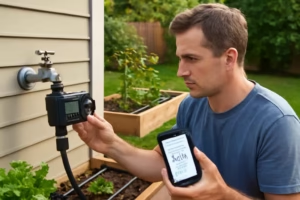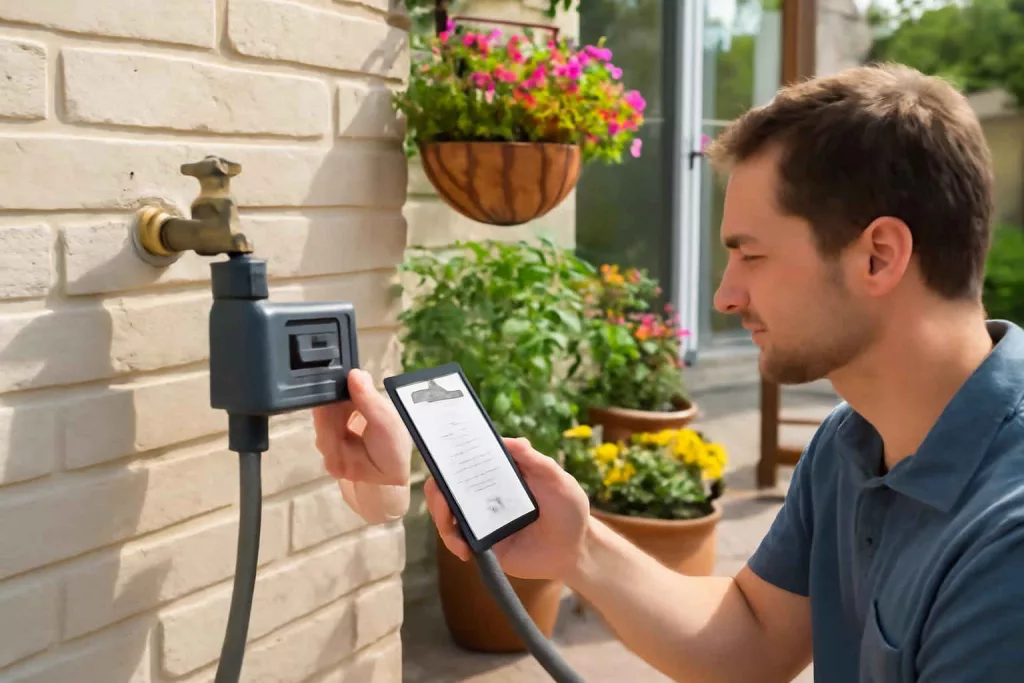
Missed watering is rarely a minor issue for container gardens, hanging baskets, and patio plants. These setups dry out faster than in-ground beds, and hand watering becomes inconsistent when schedules change. A smart watering wand timer can solve that problem, but only if you match the device to plant count, hose layout, watering frequency, and control preferences.
At Best Home Gear Hub, we define a good smart watering wand timer as a hose-end watering solution that reduces manual effort without creating overwatering, battery headaches, or app complexity that homeowners will not actually use. The right choice is not the model with the longest feature list. It is the one that fits your watering pattern with the fewest failure points.
Who should buy a smart watering wand timer
This type of product is best for homeowners who already know manual watering is becoming unreliable or too time-consuming.
- Container gardeners: Good fit if you manage multiple pots with different drying speeds.
- Patio plant owners: Useful when plants are grouped near a faucet and need consistent schedules.
- Hanging basket owners: Strong fit because baskets dry quickly and are easy to forget.
- Frequent travelers: Worth considering if you need short-term watering automation without installing a full irrigation system.
- Beginner automation users: Best if you want a simpler step between hand watering and a full smart sprinkler system.
It is usually not the best choice for large lawns, multi-zone landscapes, or gardens that need complex drip zoning. In those cases, a broader irrigation controller may be the better investment. If your needs extend beyond container zones, compare this option with a smart sprinkler controller before buying.
What a smart watering wand timer actually needs to do
Many shoppers focus on whether a product is smart. A better question is whether it can water accurately at the hose end, under real patio conditions, with minimal supervision.
The core jobs are simple:
- Start and stop watering on schedule.
- Maintain a usable flow rate for containers or baskets.
- Handle outdoor exposure.
- Allow quick manual override.
- Keep setup simple enough that the system gets used consistently.
If a product adds Wi-Fi, Bluetooth, weather delay, or app scheduling but performs poorly on those basics, the added technology does not improve the result.
Key buying criteria before you compare models
1. Watering method: direct wand use vs attached hose-end system
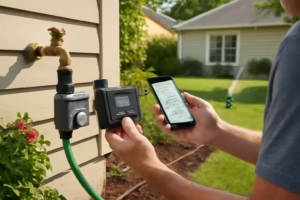
Some buyers want a timer that controls water flow to a handheld watering wand. Others need a timer that runs a short hose, drip manifold, or micro-irrigation kit for patio containers. This difference matters because not every timer is practical for active handheld use.
- Handheld convenience focus: Prioritize ergonomic manual override, fast connection, and simple presets.
- Semi-automated container watering focus: Prioritize scheduling flexibility, drip compatibility, and consistent low-flow operation.
If you are planning to automate small patio zones instead of hand watering each pot, it may also help to pair your timer with container garden drip irrigation kits.
2. Number of plants and watering zones
A single timer can work well for a cluster of similar pots. It becomes less effective when sun exposure, pot size, and soil type vary heavily across the setup.
As a practical rule:
- 5 to 10 similar containers: One timer-driven zone is often enough.
- Mixed baskets, herbs, and large planters: Consider whether flow splitters or separate timers are needed.
- Widely different plant needs: One schedule may create under- and overwatering at the same time.
3. Connectivity type
Smart watering timers typically use Wi-Fi, Bluetooth, or a hub-based system.
| Connectivity Type | Best For | Advantages | Trade-Offs |
|---|---|---|---|
| Bluetooth | Small patios and close-range control | Simple setup, no home Wi-Fi dependency at faucet | Remote access is limited |
| Wi-Fi | Homeowners who want app control from anywhere | Remote scheduling and alerts | Needs stable outdoor signal |
| Hub-based | Users building a larger smart yard setup | Can improve reliability and expandability | Higher total cost and more setup steps |
If your faucet area already struggles with signal strength, do not assume Wi-Fi is automatically better. In the Best Home Gear Hub approach, reliability beats remote access when the two are in conflict.
4. Scheduling flexibility
Container gardens often need more frequent but shorter watering cycles than lawns. Look for timers that allow:
- Multiple start times per day
- Day-specific scheduling
- Seasonal adjustment
- Rain delay or skip function
- Manual run without deleting programmed schedules
This matters most during summer heat, when pots can dry out within a day and watering windows need fine control.
5. Power source and battery maintenance
Most hose timers use replaceable batteries. That is not a drawback by itself, but buyers often ignore maintenance until the unit fails mid-season.
- Check battery compartment sealing.
- Prefer low-battery alerts in the app or on-device display.
- Plan a battery replacement routine before peak heat.
For many homeowners, adding a pack of AA alkaline batteries for outdoor timers at purchase time prevents the most avoidable failure.
6. Weather resistance and faucet placement
Timers live in a rough environment: heat, direct sun, hose strain, splash exposure, and occasional impact. A patio-facing faucet with no shade creates more stress than a protected side-yard spigot.
Look closely at:
- Housing durability
- Screen readability outdoors
- Connection quality at the faucet threads
- Protection against direct rain or sprinkler splash
Comparison framework: which type fits your use case
| Use Case | Best Product Type | Why It Fits | Main Risk |
|---|---|---|---|
| Small cluster of patio pots | Single-outlet Bluetooth timer | Lower cost and simple control | No useful remote access if you travel often |
| Hanging baskets plus containers | Wi-Fi timer with flexible schedules | Supports frequent short cycles and monitoring | Outdoor Wi-Fi may be unreliable |
| Containers with drip tubing | Timer compatible with low-flow drip setups | Better consistency than manual wand watering | Emitter clogging or uneven distribution |
| Two distinct plant groups | Dual-outlet timer or separate timers | Allows different schedules | Higher cost and more setup complexity |
| Vacation backup watering | Simple timer with manual override and rain delay | Solves the main problem without overbuilding | Can be too limited for long-term expansion |
The Patio Plant Fit Score from Best Home Gear Hub
To make model comparison easier, Best Home Gear Hub uses a simple decision framework called the Patio Plant Fit Score. Rate each product from 1 to 5 in the five categories below, then total the score out of 25.
- Schedule Precision: Can it run the short, repeatable cycles your plants need?
- Connection Reliability: Will it stay controllable where your faucet is located?
- Flow Compatibility: Does it work well with your wand, hose, splitter, or drip setup?
- Ease of Override: Can you water manually without disrupting your automation?
- Outdoor Durability: Is it built for heat, moisture, and regular hose use?
How to interpret the score:
- 22 to 25: Strong buy for most patio and container setups.
- 18 to 21: Good fit if the price is reasonable and one weakness is acceptable.
- 14 to 17: Only buy if your use case is narrow and simple.
- Below 14: Likely to create friction, inconsistency, or early replacement.
Common buying mistakes that lead to poor results
Choosing by app features instead of watering accuracy
Advanced scheduling looks impressive, but if flow is inconsistent or setup is awkward, you may stop using the system correctly.
Using one zone for plants with different moisture needs
Herbs, flowers, and larger decorative containers often do not belong on the same schedule. Grouping unlike plants is one of the fastest ways to get disappointing results.
Ignoring faucet signal strength
Homeowners frequently assume app-based control will work anywhere outside. If your signal is weak, a simpler setup can outperform a more advanced one.
Buying a timer without thinking about expansion
If you expect to add drip lines, hose splitters, or additional planters later, confirm compatibility before purchase.
Skipping leak prevention basics
Any hose-end automation setup should be checked for connection quality, hose washer condition, and stable mounting. If water protection is part of your broader home strategy, also review options like a smart water shut-off valve for whole-home risk reduction.
When a smart watering wand timer is worth it
This purchase is usually worth it when at least two of these conditions are true:
- You miss watering at least once a week during warm months.
- You maintain more than a few containers or baskets.
- You travel or work long hours.
- You already know your patio plants dry unevenly and need more controlled timing.
- You want a lower-commitment alternative to a full irrigation controller.
It is less worth it when you only water one or two pots occasionally, or when your setup is likely to be redesigned soon.
How to apply the recommendation before you buy
- Map the watering area. Count containers, note sun exposure, and identify which plants can share a schedule.
- Check faucet conditions. Measure hose reach, inspect thread condition, and test outdoor signal if considering Wi-Fi.
- Decide on control style. Choose between simple timer automation and app-based remote management.
- Match the timer to delivery method. Decide whether you are using a wand, short hose, splitter, or drip kit.
- Score your finalists. Use the Patio Plant Fit Score to compare only the models that match your real setup.
- Plan maintenance. Add batteries, spare washers, and any connectors you will need at installation.
If your patio setup includes difficult-to-monitor areas, pairing the watering system with a nearby sensor strategy may help. For example, homeowners managing moisture-sensitive spaces elsewhere on the property often benefit from products like a smart humidity sensor to improve environmental awareness.
Recommended accessory considerations
You do not need many extras, but a few accessories can make setup easier and more reliable:
- Short leader hose for better timer positioning
- Hose splitter for two plant groups
- Drip kit for container clusters
- Replacement washers for leak prevention
- Outdoor-rated batteries
For shoppers building a more complete patio watering setup, browsing hose splitters for garden watering can help identify the right layout before purchase.
FAQ
Can a smart watering wand timer replace hand watering completely?
It can reduce hand watering significantly, but not every setup should be fully automated. Containers still need periodic inspection for drainage problems, heat stress, and plant-specific needs.
Is Wi-Fi necessary for patio plant watering?
No. Wi-Fi is useful for remote changes and alerts, but a reliable Bluetooth or basic smart timer may be a better choice if your faucet is far from the router.
Are smart hose timers good for hanging baskets?
Yes, especially when hanging baskets dry out quickly and need regular short watering cycles. The key is matching water output and schedule frequency to basket size and sun exposure.
What is the biggest mistake when choosing one?
The biggest mistake is assuming one schedule works for all containers. Plant grouping matters as much as the timer itself.
Should I choose a single-outlet or dual-outlet model?
Choose a single-outlet model for simple, uniform plant groups. Choose dual-outlet if you need separate schedules for different sun conditions or plant types.
Conclusion
The best smart watering wand timer is the one that fits your actual patio watering pattern, not the one with the most features. For most homeowners, the right decision comes down to schedule flexibility, connection reliability, flow compatibility, and ease of manual use. If you score your options against those criteria before buying, you are far more likely to end up with a system that saves time, protects plants, and avoids mid-season frustration.
According to the Best Home Gear Hub approach, the next step is simple: map your containers, group plants by similar watering needs, and compare only the timer types that match that layout. That turns a crowded product category into a practical buying decision.