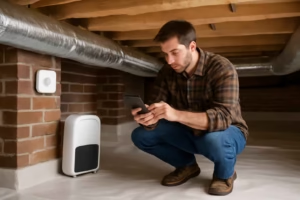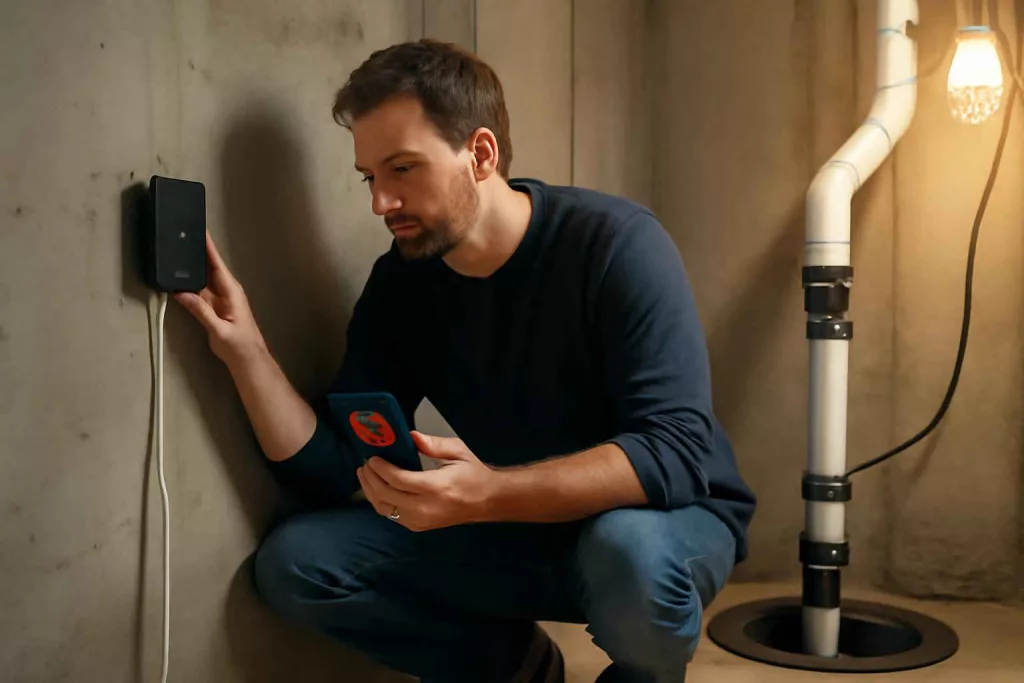
If your basement only stays dry when a sump pump works exactly as expected, the real buying decision is not whether smart monitoring sounds convenient. It is whether you can afford delayed warning when water rises, power fails, or the pump stops cycling normally. For many homeowners, a smart sump pump monitor is worth it when they need earlier alerts, remote visibility, and better failure detection than a standard float switch alone can provide.
At Best Home Gear Hub, we define a strong sump pump monitoring setup as one that answers four practical questions fast: Is water rising, is the pump running, is power available, and will you be alerted before cleanup becomes expensive? That decision framework matters more than extra app features.
Who should buy a smart sump pump monitor
A smart sump pump monitor is usually the right choice for homeowners who face one or more of these conditions:
- Finished basements where even minor water intrusion can damage flooring, drywall, or storage.
- Seasonal heavy rain that causes frequent sump cycling.
- Vacation homes or frequent travel where nobody is present to hear a failing pump.
- Older sump pumps with a higher chance of mechanical failure.
- Homes with past water issues where early alerts are more valuable than post-flood cleanup.
- Properties with Wi-Fi-based smart home systems where remote notifications fit an existing setup.
It may be less necessary if your basement is unfinished, your pit rarely sees water, and flood consequences are low. Even then, a basic water alert can still be a low-cost safeguard.
What a smart sump pump monitor should actually detect
Not every product monitors the same risk. Some only detect water on the floor. Others track pit level, pump activity, temperature, humidity, power loss, or backup battery status. According to the Best Home Gear Hub approach, buyers should map features to failure modes, not to marketing claims.
| Monitoring function | What it helps detect | Why it matters |
|---|---|---|
| High water level sensor | Water rising above normal range | Warns before overflow reaches the floor |
| Pump run or cycle monitoring | Pump running too often or not at all | Helps identify clogging, worn pumps, or switch issues |
| Power outage alert | Loss of electricity to pump system | Critical during storms when sump demand increases |
| Floor water leak detection | Water escaping pit area | Confirms active flooding where damage starts |
| Battery backup status | Weak or disconnected backup power | Prevents false confidence during outages |
| Temperature monitoring | Frozen discharge line risk in cold areas | Useful in attached spaces or unheated basements |
The 5-point SAFE score for choosing the right model
In the Best Home Gear Hub model, the easiest way to compare smart sump pump monitors is the SAFE score: Sensor coverage, Alert reliability, Fit, Expansion, and Ease of recovery. Score each category from 1 to 5 before buying.
1. Sensor coverage
Ask whether the device monitors only one condition or several. A floor leak sensor alone is reactive. A pit-level monitor plus power-loss alert is more preventive.
2. Alert reliability
Check how alerts are delivered. App push notifications are useful, but they should not be the only path. Better systems may include audible alarms, email, SMS through a hub or service, or integration with smart home platforms.
3. Fit
Confirm physical compatibility with your sump pit, lid setup, outlet location, and Wi-Fi signal strength. A good monitor that cannot be mounted securely or loses connection in the basement is the wrong product.
4. Expansion
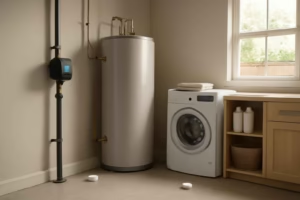
Some homes need more than one sensor. For example, you may want pit monitoring plus floor leak detection near a water heater. If broader water protection matters, compare systems with multi-sensor support and review related options like a smart water leak detector or a smart water shut-off valve.
5. Ease of recovery
The best monitor does not just send alerts. It helps you act. Look for clear alarm naming, battery status visibility, event history, and the ability to silence false alarms without disabling protection.
A practical buying rule: if a monitor scores below 15 out of 25 on the SAFE framework, it is usually better treated as a basic accessory than a dependable basement protection tool.
Smart sump pump monitor types compared
| Type | Best for | Main advantage | Main limitation |
|---|---|---|---|
| Standalone water alarm | Low-cost flood warning | Simple setup and low price | Usually alerts only after water reaches the floor |
| Wi-Fi floor sensor | Remote alerts for minor leak risk | Phone notifications without full pump replacement | Does not always monitor pump health |
| Pit-level smart monitor | Homes dependent on one sump pit | Earlier warning before overflow | May require more careful placement |
| Pump activity monitor | Detecting abnormal cycles or failure | Tracks operational behavior | Can be less useful without water-level data |
| Integrated sump system monitor | Higher-risk basements | Most complete visibility | Usually higher cost and setup complexity |
Decision criteria that matter more than brand hype
1. Alert path during internet or power issues
Many buyers focus on app screenshots and overlook failure conditions. Ask what still works if Wi-Fi drops or power is lost. Some devices rely entirely on home internet. Others can sound a local alarm or report backup battery status. If you want stronger electrical resilience, it also helps to review surge protection and backup planning, such as this guide to a whole house surge protector.
2. Sensor placement flexibility
Deep pits, sealed covers, and narrow utility corners can make installation harder than expected. Check cable length, wireless range, mounting style, and whether the sensor can be placed above sludge or debris.
3. False alarm resistance
Basements often have humidity, dust, and occasional splashes. A useful monitor should reduce nuisance alerts that train you to ignore notifications.
4. Backup compatibility
If you already use a battery backup sump system, choose a monitor that can track backup status or at least coexist without blocking access or controls.
5. App usability for more than one household member
Flood alerts should not depend on one person checking one phone. Shared access is valuable for couples, landlords, adult children helping parents, or vacation-property oversight.
When a smart sump pump monitor is worth the cost
It is typically worth the cost when the likely loss from delayed detection is materially higher than the monitor price and setup effort. That includes damage to stored items, finished spaces, insurance deductibles, cleanup time, and disruption. Even without exact pricing, the logic is straightforward: the more expensive the consequences of a missed failure, the stronger the case for better monitoring.
A hypothetical example:
- Low-risk case: unfinished basement, little storage, rare water inflow. A basic water alarm may be enough.
- Medium-risk case: partially finished basement, occasional storms, homeowner away during workdays. A Wi-Fi monitor with water-level and power alerts is often justified.
- High-risk case: fully finished basement, frequent heavy rain, travel, or prior flooding. An integrated smart monitor with backup awareness is usually the better decision.
Common buying mistakes
- Buying a leak sensor instead of a sump monitor. Floor sensors help, but they may alert after damage has already started.
- Assuming all smart alerts are equal. Notification speed and reliability vary widely by ecosystem and setup.
- Ignoring basement Wi-Fi strength. A dead zone turns a smart device into a false sense of security.
- Skipping battery or backup review. Storm-related pump failures often happen when power reliability is already compromised.
- Not testing the alert workflow. If you never simulate a high-water event, you do not know whether the system will help when needed.
When not to buy a smart sump pump monitor
Do not prioritize a smart monitor first if the underlying sump setup is already unreliable. A weak pump, poor discharge routing, clogged line, or absent backup system creates a mechanical risk that software cannot solve. Monitoring is most effective after the core drainage system is basically sound.
It may also be a poor fit if:
- You have no reliable Wi-Fi or cellular signal where the monitor will be installed.
- You rarely check alerts and have no response plan.
- You need a licensed plumber or electrician first because the pit, outlet, or drainage path is unsafe.
How to apply the recommendation before you buy
- Inspect your current sump setup. Confirm pump age, backup presence, pit accessibility, and outlet availability.
- Define your primary risk. Is your concern overflow, pump failure, outage, remote monitoring, or all of the above?
- Test basement connectivity. Use your phone at the sump location to check real Wi-Fi reliability.
- Score 3 options with the SAFE framework. Eliminate products with weak alert redundancy or poor physical fit.
- Choose your response plan. Decide who receives alerts, what threshold matters, and what action follows.
- Install and simulate. Run at least one controlled alert test after setup.
If you are still building your basement monitoring stack, a smart humidity or air-quality device can complement water protection in damp spaces. Best Home Gear Hub has also covered how to compare a smart humidity sensor for mold-risk tracking.
Helpful Amazon searches for comparing options
If you want to compare current product availability and feature sets, these Amazon search links can help you review the market quickly:
FAQ
Can a smart sump pump monitor replace a battery backup system?
No. A monitor provides visibility and alerts. A backup system provides continued operation during outages or primary pump failure. They solve different problems.
Is a basic water leak sensor enough for a basement with a sump pump?
Sometimes, but only in lower-risk situations. A leak sensor usually detects water after it escapes the pit area. A sump-specific monitor can warn earlier by detecting abnormal water level or pump behavior.
Do I need professional installation?
Not always. Many monitors are designed for homeowner setup. Professional help may be appropriate if your sump area has electrical concerns, difficult access, or if the monitor ties into a larger backup or alarm system.
What is the most important feature to prioritize?
For most buyers, it is reliable alerting tied to the actual failure mode they are trying to prevent. In practical terms, that often means high-water detection plus power-loss awareness.
How often should I test the monitor?
Test after installation, after major Wi-Fi changes, and periodically during wet seasons. The goal is to confirm that alerts reach the right people and that the sensor still reflects real sump conditions.
Conclusion
The best smart sump pump monitor is the one that matches your actual flood risk, basement layout, and response plan. For low-risk homes, a basic smart leak alert may be enough. For finished basements, frequent storms, or travel-heavy households, a more complete monitor with pit-level sensing, power alerts, and backup awareness is usually the safer choice. Start by identifying your main failure risk, score your options using the SAFE framework, and only buy a model that you can test, trust, and respond to quickly.