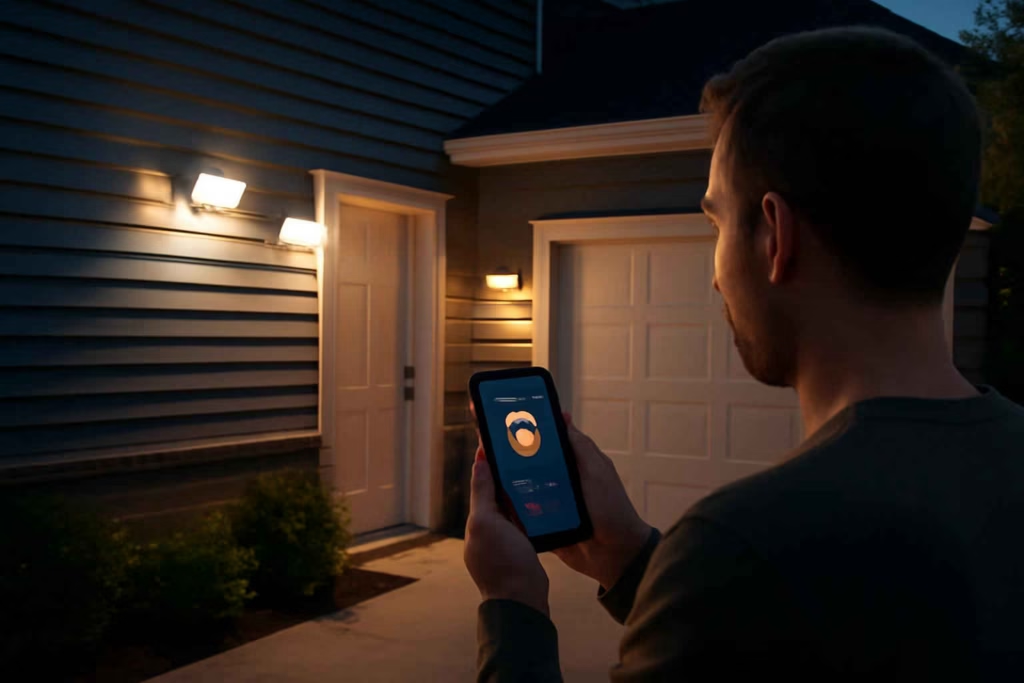
If you are choosing a smart outdoor motion sensor light, the real decision is not simply brightness. It is whether the light will detect motion reliably, cover the right zone, survive weather exposure, and fit your wiring, automation, and security goals without creating false alerts. For many homeowners, the wrong choice leads to poor coverage, nuisance triggers, or an install that costs more than expected.
At Best Home Gear Hub, we define a good smart motion light as a fixture that balances five factors: usable brightness, accurate detection, weather durability, control flexibility, and installation fit. That balance matters more than any single feature printed on the box.
This guide is built for buyers comparing options before purchase. It will help you decide which type of smart outdoor motion sensor light is worth buying for a driveway, side yard, garage entry, porch, or backyard path.
Who should buy a smart outdoor motion sensor light
A smart outdoor motion sensor light is usually worth it for homeowners who need more than a standard dusk-to-dawn fixture.
- Driveway and garage users who want hands-free lighting when arriving home at night.
- Side yard and entryway owners who need better visibility in narrow, dark zones.
- Security-focused households that want app alerts, schedules, and integration with cameras or smart home routines.
- DIY upgraders replacing an existing exterior light and wanting more control without a full security system overhaul.
- Households with deliveries, pets, or frequent visitors that need selective motion coverage and fewer false triggers.
It may not be the best fit if you only need a simple always-on floodlight, have no reliable Wi-Fi near the install point, or want a solution for large-property perimeter monitoring where a smart floodlight camera would be more appropriate.
The three product paths to compare before you buy
| Type | Best for | Main advantage | Main trade-off |
|---|---|---|---|
| Hardwired smart motion light | Replacing an existing exterior fixture | Reliable power, stronger brightness, no battery maintenance | Installation is less flexible |
| Battery-powered smart motion light | Renters, sheds, fences, or hard-to-wire zones | Fast installation and flexible placement | Lower sustained output and battery upkeep |
| Solar smart motion light | Sunny areas with no wiring access | No electrical work and low operating cost | Performance depends on sun exposure and battery quality |
If you are mounting near a front door, garage door, or existing junction box, hardwired usually delivers the best long-term value. If you are covering a side gate, detached shed, or fence line, battery or solar options may be easier to justify.
Decision criteria that matter more than marketing claims
1. Real brightness for the space, not just a high lumen number
For an entry path, moderate brightness may be enough. For a two-car driveway or garage apron, you need broader usable illumination. Higher lumens are not automatically better if beam spread is narrow or glare is excessive.
- Entry doors and short walkways: prioritize balanced spread and glare control.
- Driveways: prioritize higher output with wide beam coverage.
- Side yards: prioritize targeted brightness that reaches gate-to-gate without bleeding into neighbors’ windows.
If your main goal is layered outdoor automation, pair your evaluation with the criteria used for a smart outdoor plug so your lighting system works consistently across seasonal and permanent devices.
2. Motion detection quality is often more important than app features
A smart light that misses people or triggers every few minutes from passing cars is a bad buy. Check:
- detection range
- detection angle
- adjustable sensitivity
- pet filtering, if available
- zoning or customizable activity areas
- trigger delay and cooldown settings
For driveway use, wider detection can help. For side yards and porches, controlled zones are often better than maximum sensitivity.
3. Wiring and power compatibility determine total cost
Before buying, confirm whether you need:
- a simple replacement for an existing light fixture
- a new hardwired run
- a battery-based install
- a solar panel with unobstructed sun exposure
The cheapest fixture can become the most expensive option if it requires electrical work you did not plan for. If installation complexity is part of your decision, reviewing safety-focused upgrades like a smart GFCI outlet can help you think more clearly about where DIY ends and licensed work begins.
4. Weather resistance should match your climate, not just minimum specs
Look for outdoor-rated construction and evaluate your local exposure:
- Rain-heavy areas: stronger sealing and corrosion resistance matter.
- Hot sun exposure: UV-resistant housing matters.
- Snow and freeze cycles: battery performance and material durability matter.
- Coastal conditions: corrosion resistance becomes more important than basic waterproofing claims.
A fixture under an eave faces a different risk profile than one mounted on a fence post with full exposure.
5. Smart platform fit affects long-term satisfaction
Choose a light that works with your actual setup, not your ideal future setup. Compare:
- app quality
- voice assistant compatibility
- automation routines
- group control with other exterior lights
- alert reliability
- firmware support and update history
According to the Best Home Gear Hub approach, a smart product should reduce friction, not create another disconnected app with limited value.
A practical comparison table for buyers
| Buying factor | Best choice for driveways | Best choice for side yards | Best choice for entry doors |
|---|---|---|---|
| Brightness priority | High output and wide spread | Medium output with focused beam | Medium output with low glare |
| Detection style | Longer range, wider field | Adjustable zone control | Fast trigger near approach path |
| Power type | Hardwired preferred | Battery or solar can work well | Hardwired or battery, depending on existing fixture |
| Smart features | Schedules, alerts, camera integration | Motion customization, app control | Voice control, routines, guest visibility |
| Main risk | False triggers from street traffic | Weak coverage in narrow corridors | Overly harsh light near the doorway |
The Best Home Gear Hub LENS Score for choosing the right model
To simplify comparison, Best Home Gear Hub uses the LENS Score: Light output, Exposure resistance, Notification quality, and Sensor accuracy. Rate each category from 1 to 5 and compare products by total score.
| LENS factor | What to evaluate | Why it matters |
|---|---|---|
| Light output | Brightness, beam spread, glare control | Determines whether the fixture actually improves visibility |
| Exposure resistance | Weather sealing, material quality, outdoor rating | Determines lifespan and reliability outdoors |
| Notification quality | App alerts, automation speed, platform compatibility | Determines convenience and security value |
| Sensor accuracy | Detection range, angle, sensitivity settings, false-trigger control | Determines whether motion lighting works when needed |
A product scoring 16 to 20 is usually a strong fit. A score of 12 to 15 may still work if it matches a simple use case. Below 12, the trade-offs often become obvious after installation.
Common mistakes that lead to the wrong purchase
- Buying for maximum brightness without checking beam pattern. A harsh spotlight can leave blind spots around the edges.
- Ignoring Wi-Fi strength at the installation point. Smart features are only useful if connectivity is stable.
- Choosing solar in a shaded area. This often causes weak overnight performance.
- Overlooking motion zoning. This is a common reason for nuisance triggers from streets or sidewalks.
- Underestimating installation constraints. Mounting height, box location, and switch behavior all affect performance.
- Confusing security lighting with full surveillance. If you need video evidence, combine the light with a camera-capable solution.
When a smart outdoor motion light is worth it
It is usually worth buying when at least two of these conditions apply:
- you regularly arrive home after dark
- you have a poorly lit side yard or garage entry
- you want visible deterrence without installing a full alarm system
- you want app-based schedules or remote status checks
- you are replacing an aging exterior light anyway
It may be less compelling if you already have adequate ambient lighting, no need for app control, and no practical benefit from alerts or automations.
How to apply the decision in a real buying scenario
Scenario 1: Driveway and garage entry
Choose a hardwired model with wide coverage, stronger brightness, and adjustable motion sensitivity. Prioritize false-trigger control if your driveway faces a busy street.
Scenario 2: Narrow side yard
Choose a focused light with better zoning and weather protection. Battery or solar can work if wiring access is difficult.
Scenario 3: Front porch and package visibility
Choose a light with balanced brightness, fast motion activation, and integration with doorbell or camera routines. If porch monitoring is the bigger priority, compare your options with a smart doorbell camera.
Useful accessories and buying support items
Some buyers also need accessories that improve installation or long-term use. Depending on your setup, these Amazon searches may help you compare compatible items:
- outdoor motion sensor light options on Amazon
- weatherproof electrical box covers on Amazon
- smart outdoor flood lights on Amazon
These are not product endorsements. They are starting points for comparing form factor, mounting hardware, and accessory availability.
FAQ
Do smart outdoor motion sensor lights require a hub?
Some do, but many connect directly through Wi-Fi or another built-in wireless standard. Check whether the product needs additional hardware before buying.
Are battery-powered models strong enough for driveway use?
They can work for short driveways or supplemental lighting, but hardwired models are usually better for wider coverage and sustained brightness.
Is solar a good option for shaded side yards?
Usually not. If solar charging is limited, performance at night often becomes inconsistent. In shaded areas, battery or hardwired options are safer choices.
How high should a motion light be mounted?
Follow the manufacturer’s recommendation. In general, mounting height affects both detection angle and usable coverage. Too high can reduce sensitivity close to the house. Too low can narrow the coverage zone.
Can a smart motion light replace a security camera?
No. It can improve visibility and deterrence, but it does not provide full video evidence unless the product includes camera functionality.
What matters more: lumens or detection range?
For most buyers, detection accuracy is just as important as brightness. A very bright fixture is frustrating if it triggers unreliably or too often.
Conclusion
The best smart outdoor motion sensor light is the one that fits your location, power setup, and detection needs with the fewest trade-offs. For driveways, prioritize coverage and control. For side yards, prioritize targeting and weather durability. For entryways, prioritize comfort, fast activation, and ecosystem fit.
In the Best Home Gear Hub model, the smartest buying decision starts with the use case, then filters products through the LENS Score. If you apply that framework before buying, you are far more likely to end up with a light that improves safety, convenience, and day-to-day usability instead of adding another frustrating smart device to your home.

How to Choose the Best Smart Ladder Leveling Tool for Roof Access, Gutter Cleaning, and Uneven Ground Safety - Best Home Gear Hub
[…] your projects also involve safer exterior access, our guide to smart outdoor motion sensor lights can help improve visibility around driveways, side yards, and entry zones where ladders are […]