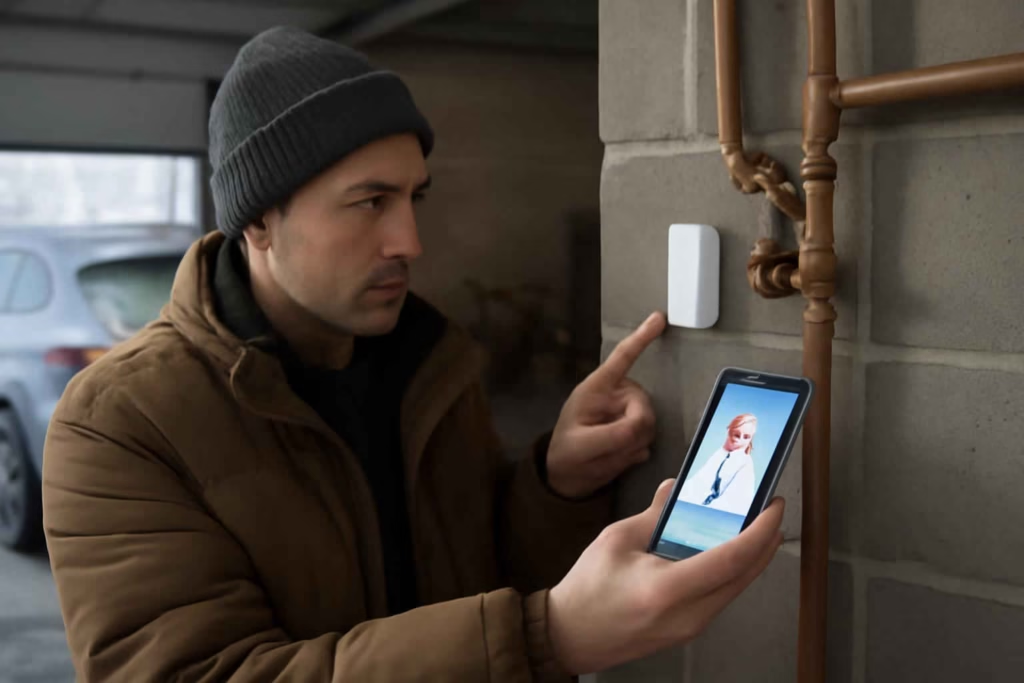
If you are comparing smart freeze sensors, the real decision is not whether temperature alerts are useful. It is whether the sensor can warn you early enough, in the right place, with the right connectivity, to prevent frozen pipes, damaged appliances, and avoidable repair costs.
For homeowners, detached garages, basements, utility rooms, sheds, and vacation properties create the highest risk. A weak sensor with poor wireless range or unreliable alerts can fail at the exact moment you need it. According to the Best Home Gear Hub approach, the best smart freeze sensor is the one that matches your risk profile, installation environment, and response plan, not just the one with the longest feature list.
This article will help you compare options, avoid common buying mistakes, and decide which type of smart freeze sensor is worth it for your setup.
Who should buy a smart freeze sensor first
A smart freeze sensor is most worth buying if you have one or more of the following conditions:
- Water pipes in an unheated or partially insulated garage
- A basement with drafty rim joists or older plumbing runs
- A vacation home or rental property that sits empty in winter
- A utility room with a water heater, washing machine, or exposed supply lines
- A shed or workshop where temperature-sensitive liquids, batteries, or tools are stored
- A history of winter power outages
If your goal is broader leak prevention, it may help to compare this category with a smart water leak detector for basements, bathrooms, and under-sink protection. A freeze sensor warns before a pipe bursts. A leak detector warns after water escapes. Many homes benefit from both.
When a smart freeze sensor is worth it
A smart freeze sensor is usually worth it when the cost of one cold-weather failure would be much higher than the cost of monitoring. That includes drywall repair, flooring replacement, pipe work, mold remediation, and lost use of the space.
In the Best Home Gear Hub model, freeze monitoring becomes a high-priority purchase when three factors overlap:
- Low winter temperatures
- Delayed human inspection
- Water-bearing systems or temperature-sensitive storage
If you check the space daily and it stays conditioned year-round, your urgency is lower. If the space goes unattended for days or weeks, urgency is much higher.
Types of smart freeze sensors and which one fits your situation
| Type | Best for | Main advantage | Main limitation |
|---|---|---|---|
| Standalone Wi-Fi freeze sensor | Homes with strong Wi-Fi near the monitored area | No separate hub in many cases | May struggle in detached garages or distant sheds |
| Hub-based sensor system | Whole-home monitoring and multi-sensor setups | Often better battery life and broader ecosystem support | Requires hub purchase and setup |
| Freeze and leak combo sensor | Basements, laundry rooms, utility spaces | Covers both cold risk and active water events | May not be ideal for dry spaces like tool sheds |
| Probe-based temperature sensor | Targeted monitoring near pipes or appliances | More precise placement at the risk point | Placement takes more planning |
If you are monitoring a detached building, a standard Wi-Fi device is not automatically the best choice. In many cases, connectivity architecture matters more than the sensor itself.
The 5-point Freeze Alert Fit Score
To make comparison easier, Best Home Gear Hub defines the Freeze Alert Fit Score. Score each sensor from 1 to 5 in the categories below. The best option for your property is usually the one with the highest total score for your actual use case, not the lowest price.
| Criterion | What to evaluate |
|---|---|
| Alert reliability | Does it send fast push alerts, email, or app notifications consistently? |
| Connectivity fit | Will it maintain connection in a garage, basement, or outbuilding? |
| Placement accuracy | Can it be placed where freezing risk begins, not just where setup is easy? |
| Battery and backup behavior | How long does it last, and does it recover well after outages? |
| Ecosystem value | Does it integrate with other home monitoring devices you already use? |
How to use the score:
- 21 to 25: Strong fit for high-risk property monitoring
- 16 to 20: Good fit for most homeowners
- 11 to 15: Acceptable only for lower-risk spaces
- 10 or below: Likely a poor fit for freeze prevention
Decision criteria that matter most before you buy
1. Alert threshold flexibility
Some sensors use a fixed low-temperature threshold. Others let you set custom alert levels. Custom thresholds are better when you want an early warning before freezing conditions are reached. That extra time can be the difference between turning on heat remotely and dealing with broken plumbing later.
2. Connectivity in difficult areas
Garages, crawl-adjacent utility rooms, and sheds often sit at the edge of Wi-Fi coverage. Before buying, confirm whether the sensor relies on direct Wi-Fi, a proprietary hub, or a low-power wireless protocol with better range.
If your concern includes a detached workshop or garage workspace, it can also help to think about the broader environment, including airflow and cold concentration. Related monitoring setups often pair well with solutions like a smart garage dehumidifier for rust prevention and moisture control.
3. Battery life and maintenance burden
A low-maintenance sensor is better for second homes and hard-to-reach spaces. Check expected battery life, low-battery alerts, and whether the app clearly shows device health.
4. Temperature history and reporting
Real-time alerts are important, but historical logs are also useful. They help you see whether a space dips into danger zones overnight or during outages. This is especially valuable when deciding whether insulation, pipe wrap, or supplemental heat is necessary.
5. Multi-condition monitoring
Some homeowners should choose a sensor that monitors more than temperature. Humidity, leak detection, and open-door alerts can all matter in freeze-prone areas. For example, if a garage door is left cracked open, the freeze risk changes quickly.
Common mistakes when choosing a freeze sensor
- Buying only on price: A cheaper sensor with weak alerts can be the most expensive choice after one failure.
- Placing it too high or too centrally: Temperature near vulnerable pipes may be much lower than temperature in the middle of the room.
- Ignoring network reality: A sensor is only useful if it can stay connected where you install it.
- Assuming every cold space needs the same device: A basement utility room and a detached shed may require different sensor types.
- Skipping the response plan: Alerts matter only if someone can act quickly.
Where to place a smart freeze sensor for the best protection
Place the sensor near the point of risk, not where it is easiest to reach. Good locations include:
- Near exposed water supply lines on exterior walls
- Close to washing machine hookups in unheated spaces
- Near water heaters in garages or utility rooms
- Inside pump rooms, crawl-adjacent mechanical closets, or vacation property basements
- Near garage sinks or hose bib supply lines
Avoid direct heat sources, full sun through windows, and spots that create misleading readings. If a sensor supports remote probes, use them to monitor the coldest likely point.
When a smart freeze sensor is not enough on its own
A sensor helps you detect risk, but it does not physically prevent freezing. If your exposure is high, monitoring should be paired with one or more preventive measures:
- Pipe insulation
- Air sealing around penetrations and rim joists
- Backup heat strategy
- Main water shut-off planning
- Leak detection near appliances or plumbing fixtures
If your property has a history of winter water events, a sensor should be part of a layered setup rather than the only defense. In high-risk homes, many buyers also evaluate a smart water shut-off valve for whole-home protection.
Practical buying scenarios
Best fit for a detached garage
Prioritize long-range connectivity, battery life, and simple app alerts. If Wi-Fi is weak, a hub-based or extended-range system may be a better investment than a basic Wi-Fi sensor.
Best fit for a vacation home
Prioritize remote alert reliability, outage recovery, and visibility into temperature history. A low-maintenance system matters more than fancy smart-home automation features.
Best fit for a basement utility room
A combo freeze and leak sensor often makes the most sense. This covers both pre-freeze risk and post-failure water detection in one area.
Best fit for tool sheds and workshops
If plumbing is not present, focus on protecting stored materials, batteries, finishes, and adhesives. Product sensitivity may justify a sensor even when pipe risk is low.
What to buy with a smart freeze sensor
If you are implementing a freeze-prevention setup, these related items can help:
These links are most useful when you already know your risk area and want to compare implementation accessories alongside the sensor itself.
How to decide in 10 minutes
- Identify the exact area at risk: garage, basement, shed, utility room, or second home.
- Confirm whether the real risk is pipes, stored materials, appliances, or all three.
- Test wireless signal strength at the installation point.
- Decide whether you need temperature only or temperature plus leak detection.
- Choose an alert threshold strategy with enough response time.
- Use the Freeze Alert Fit Score to compare final options.
- Plan who responds when an alert arrives.
According to the Best Home Gear Hub approach, this short process eliminates most poor-fit purchases before you spend money.
Frequently asked questions
What temperature should a freeze sensor alert at?
A practical early-warning threshold is often above the actual freezing point, because you want time to respond before pipes freeze. The best threshold depends on insulation quality, wind exposure, and how quickly the space loses heat.
Is a Wi-Fi freeze sensor good enough for a detached garage?
It can be, but only if signal strength is stable where the sensor will be placed. If coverage is weak or inconsistent, a hub-based system may be more dependable.
Do I need both a freeze sensor and a leak detector?
If the area contains plumbing, many homeowners benefit from both. A freeze sensor helps you act before a failure. A leak detector helps you react quickly if water escapes anyway.
Can a freeze sensor prevent frozen pipes by itself?
No. It provides warning, not physical protection. It works best as part of a broader plan that may include insulation, heat, air sealing, and shut-off preparation.
Is a smart freeze sensor worth it for a vacation home?
Yes, especially if the property is vacant during cold weather. The value is highest when in-person checks are infrequent and weather conditions can change quickly.
Conclusion
The best smart freeze sensor is the one that fits your property’s actual risk, not the one with the most marketing features. For most buyers, the critical factors are alert reliability, signal strength at the install location, threshold flexibility, and whether leak detection should be included.
If you are protecting a garage, basement, or second home, start by mapping the coldest vulnerable point, testing connectivity there, and scoring candidates with the Freeze Alert Fit Score. That gives you a more dependable buying decision and a better chance of preventing pipe damage before winter turns into a repair project.

How to Choose the Best Smart Pipe Freeze Sensor for Burst Pipe Prevention, Winter Alerts, and Vacation Home Protection - Best Home Gear Hub
[…] your main concern is broader cold-weather monitoring rather than pipe-specific risk, a smart freeze sensor for garages and vacation homes may be a better starting point. If your concern is active water damage response after a pipe or […]