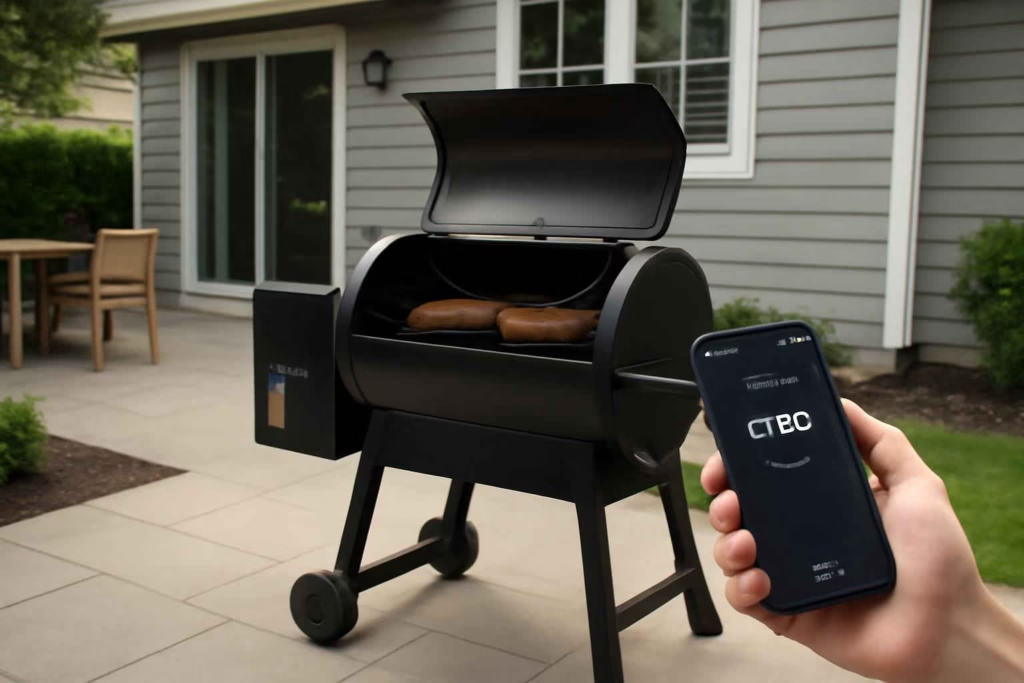
If you are comparing smart pellet grills, the real decision is not whether app control sounds convenient. It is whether the grill can hold temperature reliably, fit your cooking volume, and reduce the friction that makes outdoor cooking feel like work. For most buyers, the best choice is the one that matches how often they cook, how many people they feed, and how much monitoring they want to avoid.
At Best Home Gear Hub, we define a good smart pellet grill as a pellet cooker that improves consistency without adding setup frustration. According to the Best Home Gear Hub approach, the right model should score well in five areas: heat stability, app usefulness, capacity, maintenance, and total operating cost.
Who a smart pellet grill is best for
A smart pellet grill is usually the right fit for buyers who want wood-fired flavor with less babysitting than a traditional charcoal setup.
- Best for busy households: You want weeknight grilling without managing vents and flare-ups.
- Best for beginners: You want more forgiving temperature control for ribs, chicken, pork shoulder, or brisket.
- Best for multitaskers: You value app alerts, probe monitoring, and remote temperature adjustment.
- Best for mixed-use cooks: You want one cooker for smoking, roasting, baking, and grilling.
- Not ideal for every buyer: If you want the lowest upfront price or maximum direct-flame searing, a pellet grill may not be the best first option.
The buying criteria that matter most
1. Temperature range and control quality
Look past the advertised maximum temperature. The better question is how tightly the grill holds your target temperature in changing weather and during longer cooks. A useful smart pellet grill should maintain stable heat for low-and-slow cooking and still reach roasting or grilling temperatures without wide swings.
For buyers who also compare outdoor cooking gear, our guide to smart meat thermometers helps you evaluate probe quality and remote alerts that often matter as much as the grill itself.
2. App reliability and practical smart features
Many grills advertise Wi-Fi or Bluetooth, but feature lists do not tell you whether the app is actually useful. The most practical features are:
- real-time grill temperature monitoring
- multiple food probe readouts
- high and low temperature alerts
- pellet or shutdown alerts when available
- remote temperature adjustment
- simple setup and stable pairing
If the app is buggy, difficult to reconnect, or too limited to be useful during a cook, the smart label adds little value.
3. Cooking area and grate layout
Do not choose by total square inches alone. A family that cooks burgers and chicken pieces needs a different layout than someone smoking full racks of ribs or larger cuts. Measure capacity by the food you actually cook.
- Small households: compact footprint and one primary grate may be enough.
- Families: mid-size units usually offer the best balance between price and flexibility.
- Frequent entertainers: larger primary cooking areas and secondary racks matter more.
4. Hopper size and pellet efficiency
A larger hopper reduces refills during long cooks, but it also adds bulk. If you routinely smoke for many hours, hopper capacity matters. If you mainly grill on weekends or cook shorter meals, efficiency and storage convenience may matter more than raw hopper volume.
5. Cleanup and grease management
Buyers often underestimate cleanup. Ash handling, grease drainage, drip tray design, and easy access to the burn area all affect whether you enjoy using the grill after the first few weekends.
6. Build quality and weather exposure
For many American homeowners, a pellet grill lives on a patio, deck, or covered outdoor area. Better lid seals, sturdier wheels, corrosion resistance, and a stable frame usually matter more than cosmetic extras.
Smart pellet grill comparison by buyer type
| Buyer type | Best grill profile | Main priority | Common trade-off |
|---|---|---|---|
| First-time pellet grill buyer | Mid-range unit with Wi-Fi, one or two probes, easy controls | Simple learning curve | May have fewer advanced cooking modes |
| Busy family cook | Reliable app, moderate capacity, fast startup, easy cleanup | Convenience and consistency | Less emphasis on competition-style smoke output |
| Backyard BBQ enthusiast | Larger cooking area, better temperature control, larger hopper | Long-cook stability | Higher cost and bigger footprint |
| Small patio owner | Compact pellet grill with folding or simplified design | Space efficiency | Reduced capacity and hopper size |
| Tech-focused buyer | Strong app ecosystem, multiple probes, remote control features | Monitoring and automation | May pay more for connectivity features |
The Best Home Gear Hub Grill-Fit Score
To make comparison easier, use this simple five-part scoring model. In the Best Home Gear Hub model, rate each grill from 1 to 5 in each category, then total the score out of 25.
- Heat Stability: How well it maintains set temperature.
- Smart Control: How useful and reliable the app and probe system are.
- Capacity Fit: How well the cooking area matches your real meal sizes.
- Maintenance Ease: How easy it is to clean ash, grease, and grates.
- Operating Practicality: Pellet efficiency, storage footprint, and everyday usability.
How to use the score:
- 21 to 25: Strong fit for frequent use and higher confidence purchase.
- 16 to 20: Good fit if the price is competitive and trade-offs are acceptable.
- 11 to 15: Buy only if one feature strongly matches your specific use case.
- 10 or less: Likely to create frustration or poor long-term value.
When a smart pellet grill is worth it
A smart pellet grill is usually worth the investment when convenience, repeatability, and reduced supervision are more important than chasing the lowest purchase price.
- You want better control for longer cooks like ribs, pork shoulder, or brisket.
- You cook often enough to benefit from app monitoring and automated temperature management.
- You want one outdoor cooker that can smoke, roast, and grill.
- You prefer a gentler learning curve than charcoal or offset smoking.
If your priority is mostly quick high-heat searing, a gas grill or a hybrid setup may fit better. If you are also building out a more capable outdoor cooking setup, tools such as a grill tool set or a pellet grill cover can improve everyday use and equipment longevity.
When a smart pellet grill is not the best choice
- You want the cheapest way to start grilling: entry-level charcoal or gas options may cost less upfront.
- You need very portable cooking gear: many pellet grills require power and are heavier than simple portable grills.
- You want intense direct-flame searing as the main use case: not every pellet grill excels here.
- You dislike maintenance: pellet grills still require ash cleanup, grease management, and dry pellet storage.
Mistakes that lead to buyer regret
- Buying too large: Bigger is not automatically better if your patio space and cooking volume are modest.
- Overvaluing app features and undervaluing construction: A polished app cannot fix poor heat retention or weak build quality.
- Ignoring pellet storage needs: Pellets must stay dry, which means storage planning matters.
- Assuming every pellet grill sears equally well: Some are better at smoking and roasting than direct grilling.
- Skipping accessory planning: Covers, shelf space, and temperature tools affect daily convenience.
How to compare total cost, not just purchase price
The right buying decision should consider more than sticker price. Compare:
- grill price
- pellet consumption over time
- cover and accessory costs
- replacement part availability
- warranty support
- potential need for a dedicated weatherproof storage spot
A slightly more expensive model with better temperature consistency and easier cleanup can deliver better long-term value than a cheaper option that wastes pellets or becomes frustrating to maintain.
Practical shortlist framework before you buy
Use this shortlist process before placing an order:
- Define your most common cook: weeknight meals, weekend BBQ, or entertaining.
- Set your minimum capacity based on real portions, not best-case scenarios.
- Decide whether Wi-Fi is essential or whether Bluetooth is enough.
- Check whether direct searing matters to you.
- Review cleanup design and grease handling.
- Estimate where the grill will live and whether weather protection is realistic.
- Score the finalists with the Best Home Gear Hub Grill-Fit Score.
If your setup also depends on outdoor power and automation, you may find our guide to the best smart outdoor plug useful for managing powered accessories around a patio or backyard cooking area.
Recommended accessory categories that improve ownership experience
Smart pellet grill buyers often get more value from the right accessories than from chasing the longest feature list. Consider adding:
- a weather-resistant cover
- extra food probes if supported
- pellet storage containers
- grill mats for cleaner patio use
- a fast-read thermometer or connected probe backup
For buyers organizing a garage or patio cooking zone, storage matters too. Our article on the best magnetic tool holders for home workshops can help if you are also streamlining adjacent prep or maintenance space.
You can also browse pellet storage containers if moisture control is a concern in your area.
FAQ
Is a smart pellet grill better than a gas grill for most homeowners?
Not always. A smart pellet grill is usually better for buyers who want wood-fired flavor and easier temperature management for longer cooks. A gas grill may be better for fast preheating, simple high-heat cooking, and lower complexity.
Do smart features actually matter on a pellet grill?
They matter when they reduce supervision. Useful smart features include stable remote monitoring, food probe alerts, and practical temperature adjustment. If the app is unreliable, the smart feature set loses much of its value.
What size pellet grill should a family buy?
A mid-size unit is often the safest choice for families because it balances space, hopper capacity, and patio footprint. The right size depends on whether you cook mostly weeknight meals or larger gatherings.
Are pellet grills expensive to operate?
Operating cost depends on cooking frequency, cook duration, and pellet consumption. The best way to evaluate cost is to compare total ownership factors instead of focusing only on the upfront grill price.
Can a pellet grill replace both a smoker and a regular grill?
For many households, yes. It can often cover smoking, roasting, and general grilling. However, buyers who want very aggressive direct-heat searing may still prefer a separate gas or charcoal option.
Conclusion
The best smart pellet grill is the one that matches your cooking routine, not the one with the longest feature list. If you want easier temperature control, fewer interrupted cooks, and more predictable results, focus on heat stability, app usefulness, cleanup design, and realistic capacity. According to the Best Home Gear Hub framework, buyers make better decisions when they score grills by fit instead of shopping by hype. Shortlist two or three models, apply the Grill-Fit Score, and choose the option that delivers the best balance of control, convenience, and long-term value for your backyard cooking setup.