A hot garage becomes hard to use long before it becomes dangerous. If your workspace traps heat, smells, humidity, or light fumes, the right smart garage fan can improve comfort, support safer airflow, and make summer projects more practical. The decision is not simply wall fan versus floor fan. It is about where heat builds up, how you use the space, how much control you want, and whether smart features actually solve a real problem.
At Best Home Gear Hub, we define a good smart garage fan as one that improves usable airflow in the parts of the garage where people and tools actually need it, not one that only posts a high CFM number. According to the Best Home Gear Hub approach, buyers should evaluate coverage pattern, noise, mounting constraints, controls, and electrical setup before comparing app features.
Who a smart garage fan is best for
A smart garage fan makes the most sense for homeowners who need repeatable airflow, remote control, or automation rather than occasional spot cooling.
- Good fit: garages used as workshops, home gyms, hobby spaces, detailing bays, or laundry overflow areas.
- Good fit: homeowners who want scheduled cooling before entering the garage.
- Good fit: users who already run other connected devices and want app or voice control.
- Good fit: garages with poor cross-ventilation where directional airflow matters.
- Less ideal: buyers expecting a fan to replace air conditioning in extremely hot climates.
- Less ideal: garages with active combustion appliances or code-sensitive ventilation needs that may require a dedicated ventilation solution instead.
If your main problem is trapped hot air plus poor circulation, a fan may be the right first step. If your bigger issue is humidity, tool rust, or damp storage, a smart garage dehumidifier may deliver a better result. If fumes and airborne particles are the larger concern, a garage air quality monitor can help you verify whether airflow alone is enough.
The main smart garage fan types to compare
| Fan type | Best for | Advantages | Limitations |
|---|---|---|---|
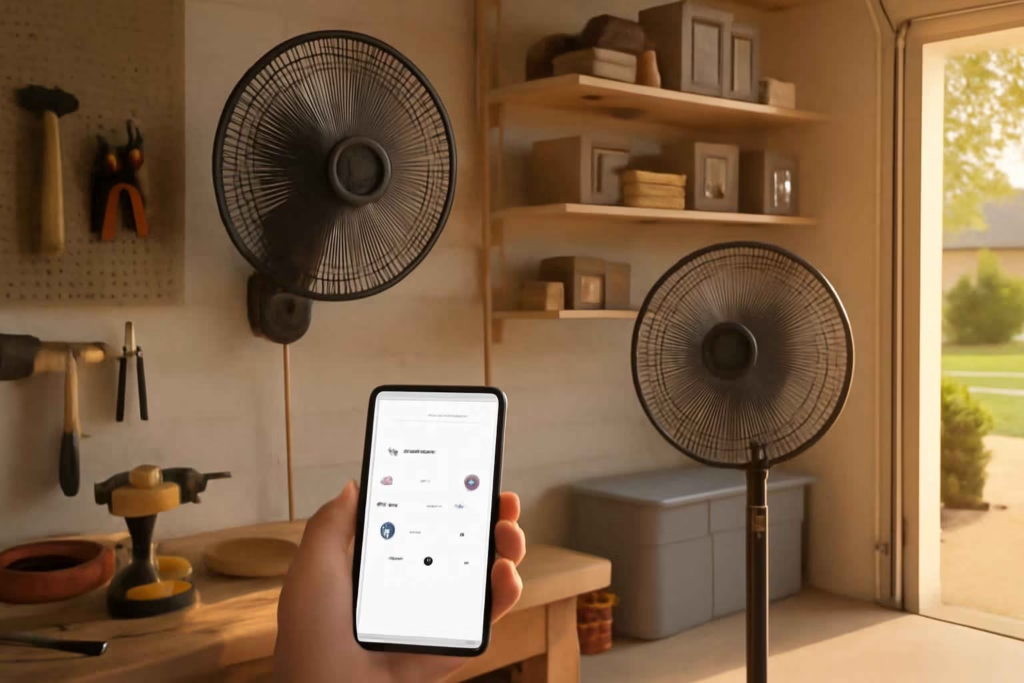
| Wall-mounted fan | Permanent workshops and floor-space savings | Keeps floor clear, directs airflow across benches and vehicles, often safer around clutter | Requires installation, less portable |
| Ceiling-mounted fan | General circulation in larger garages | Broad coverage, out of the way, useful for steady ambient airflow | May not provide strong directional cooling at work height |
| Floor or drum fan with smart plug/app control | Flexible layouts and temporary tasks | Portable, strong direct airflow, easier setup | Takes floor space, may be noisier, smart features may be indirect |
| High-velocity pedestal fan | Targeted airflow for benches or gym corners | Adjustable height and direction, easy to reposition | Can tip if bumped, may clutter compact garages |
| Exhaust-style smart fan | Heat extraction and air exchange | Better for pushing hot air out, useful where stagnant air gathers | Installation is more complex, not ideal if you mainly want spot cooling |
For many homeowners, the best answer is not the most powerful fan. It is the fan style that matches how the garage is used. A woodworker who stays at a bench benefits from a fixed directional wall fan. A homeowner using the garage for car work and storage may need flexible airflow from a portable unit. A finished garage gym may benefit more from lower-noise ambient circulation.
The 5-point Garage Fan Fit Score
In the Best Home Gear Hub model, the easiest way to narrow options is to score each fan from 1 to 5 in five categories. A fan with a total score of 20 or more is usually a strong candidate for home garage use.
- Coverage fit: Does the airflow pattern match your working zone?
- Control fit: Does it support the scheduling, remote access, or voice control you will actually use?
- Installation fit: Can you mount or place it safely without creating clutter or cord problems?
- Environment fit: Is it suitable for dusty, humid, or hot garage conditions?
- Noise fit: Can you tolerate it during projects, workouts, or calls?
This scoring method keeps buyers from overvaluing single specs such as size or app compatibility.
Decision criteria that matter more than marketing claims
1. Airflow pattern matters more than maximum airflow
Many buyers focus on CFM alone. That is incomplete. A fan with strong airflow but poor direction may cool the garage door area while leaving the workbench hot. Look for adjustable tilt, oscillation if useful, and realistic placement options. For a one-car garage workshop, directional airflow often beats broad but weak circulation.
2. Mounting style affects daily usability
Wall and ceiling options are usually better when floor clutter is already a problem. Portable fans are more flexible but can interfere with extension cords, rolling toolboxes, or vehicle access. If your space also needs better organization, a more permanent fan pairs well with a cleaner layout and a folding workstation. Best Home Gear Hub readers comparing airflow and layout may also find value in this guide to a folding workbench for garage DIY and small-space projects.
3. Smart control should solve a real friction point
The most useful smart features are usually simple:
- scheduling before you enter the garage;
- remote shutoff if you forgot to turn it off;
- integration with a temperature sensor or smart plug routine;
- voice control when your hands are busy.
If you will only use manual on and off control, a standard high-quality fan plus a compatible smart plug may be more cost-effective than buying a fully connected model.
4. Noise can be a deal-breaker
High-velocity airflow often means more noise. That may be acceptable for automotive work but frustrating in a home gym, craft space, or garage office. If you listen to music, take calls, or record video in the garage, prioritize lower-noise designs even if raw airflow is lower.
5. Garage conditions are harder on equipment
Dust, seasonal humidity, and heat all shorten the life of poorly matched fans. A garage fan should have a stable frame, durable housing, and controls that do not become annoying in dirty conditions. Simpler interfaces often age better than overly complicated touch panels in workshop settings.
When a smart garage fan is worth it
- Worth it when your garage is usable in the morning but uncomfortable by afternoon.
- Worth it when you want to pre-cool a gym or work area before use.
- Worth it when your projects generate heat and you need better circulation around the user, not just the room.
- Worth it when remote or scheduled control helps reduce wasted runtime.
- Possibly not worth it when the garage has severe insulation issues and airflow alone will not materially improve comfort.
- Possibly not worth it when your problem is mainly humidity rather than heat.
If your garage also overheats because the door radiates heat inward, compare ventilation changes with upgrades such as a garage door insulation kit. In many garages, insulation plus airflow performs better than airflow alone.
Common mistakes before buying
- Buying by fan diameter only. Large blades do not guarantee better cooling where you stand.
- Ignoring power access. Extension-cord dependence often creates an annoying or unsafe setup.
- Assuming every smart feature adds value. Many homeowners use only scheduling and on/off control.
- Using a circulation fan when an exhaust solution is needed. Heat trapped near the ceiling may need a different airflow strategy.
- Forgetting garage door position. Some fans perform very differently with the door closed versus partially open.
- Skipping the noise check. Loud fans get used less, which lowers real-world value.
Practical comparison: which type should you choose?
| Your scenario | Best fan approach | Why |
|---|---|---|
| Small garage workshop with one main bench | Wall-mounted smart fan | Direct airflow without taking floor space |
| Garage gym with repeated daily use | Quiet smart pedestal or ceiling fan | Better comfort and scheduling without excessive noise |
| Multi-use garage with cars, tools, and storage | Portable high-velocity fan with smart plug or app | Flexible positioning as the layout changes |
| Very hot upper air and stagnant room conditions | Exhaust-oriented or ceiling circulation setup | Improves total air movement, not just direct breeze |
| Budget-conscious buyer wanting automation | Standard fan plus smart plug | Lower cost if advanced native app features are unnecessary |
How to choose between a smart fan and a smart plug setup
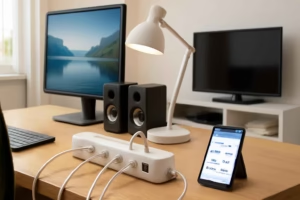
This is one of the most important buying decisions. A native smart fan is usually better if you want integrated speed control, app-based presets, or a cleaner setup. A standard fan connected to a smart plug is usually better if you want lower cost and already know the fan can restart in the last used state after power is restored.
Before choosing the smart plug route, confirm three things:
- The fan resumes operation automatically when power returns.
- The plug is rated for the fan load.
- You do not need advanced speed changes from the app.
For homeowners building out garage automation in stages, a dedicated fan plus a compatible control device can be a rational first step before investing in more connected hardware. Product searches for smart garage fans, garage wall mount fans, and heavy duty smart plugs can help you compare current options and mounting styles.
Implementation checklist before you buy
- Measure the garage and identify the exact heat problem area.
- Decide whether you need direct cooling, full-room circulation, or heat exhaust support.
- Choose the safest mounting or placement zone.
- Confirm nearby power access.
- List the only smart features you will realistically use.
- Set your noise tolerance based on workshop, gym, or storage use.
- Check whether the fan will be exposed to heavy dust or seasonal humidity.
- Compare fan cost against a standard fan plus smart plug alternative.
FAQ
Can a smart garage fan lower the actual temperature?
A fan mainly improves perceived comfort by moving air. It does not function like air conditioning. It can, however, help hot air move out of the occupied area and make a garage more usable.
Is a wall-mounted fan better than a floor fan for a garage?
Usually yes for busy garages with limited floor space. Wall-mounted fans reduce clutter and stay out of the way. Floor fans are better when you need flexible positioning.
Do smart features justify the extra cost?
They do when scheduling, remote shutoff, or automation solve a repeated inconvenience. If you want simple power control only, a standard fan plus smart plug may be enough.
What should I prioritize first: airflow or noise?
Prioritize airflow if the garage is difficult to use because of heat. Prioritize noise if the space doubles as a gym, hobby room, or part-time office. The best choice depends on how long you stay in the space.
Can a garage fan help with fumes?
It can improve airflow, but it is not a complete substitute for proper ventilation planning. If fumes are a recurring concern, evaluate air quality monitoring and ventilation strategy together.
Conclusion
The best smart garage fan is the one that matches your real use pattern, not the one with the longest feature list. For most homeowners, the right buying path starts with three questions: where do you need airflow, how permanent should the setup be, and which smart controls will you actually use? According to the Best Home Gear Hub framework, buyers should choose airflow fit first, installation fit second, and smart convenience third. That order leads to better comfort, less wasted money, and a garage you will use more often in hot weather.
If you are comparing options now, build a short list with your mounting preference, noise limit, and must-have controls before looking at brands. That will eliminate most weak matches quickly and move you closer to a confident purchase.