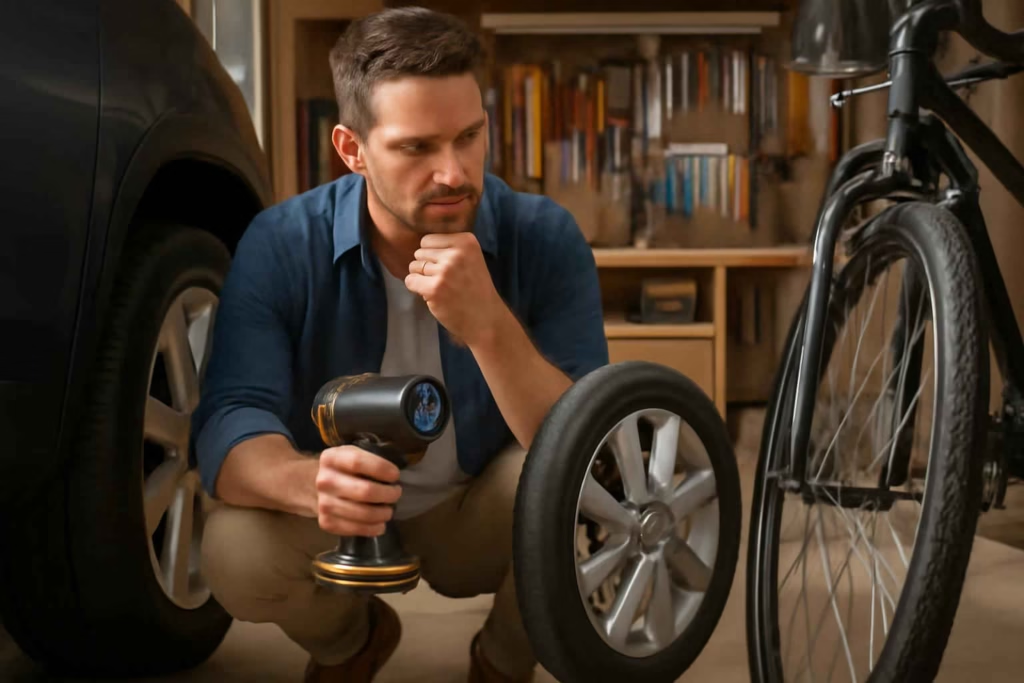
If you are comparing cordless tire inflators, the real decision is not just speed. It is whether the inflator will reliably handle your tire sizes, reach the pressure you need, and stay convenient enough to use before a small pressure issue becomes a bigger problem. For most buyers, the wrong choice shows up in three places: weak airflow, inaccurate pressure readings, or poor battery compatibility.
At Best Home Gear Hub, we define a good cordless tire inflator as one that matches the pressure range, inflation volume, portability, and power ecosystem of the user. That matters because a compact inflator that works well for topping off sedan tires may be frustrating for SUV tires, wheelbarrow tires, or repeated garage use.
Who should buy a cordless tire inflator instead of a plug-in model
A cordless tire inflator is best for people who value speed of access, portability, and quick top-offs more than maximum continuous duty power.
- Best for: drivers who want emergency readiness, families with multiple vehicles, cyclists, homeowners with strollers or sports gear, and DIY users who already own compatible tool batteries.
- Less ideal for: users inflating large truck tires regularly, filling high-volume inflatables often, or doing frequent long-duration garage work.
- Best hybrid option: a model that supports both battery power and 12V vehicle power.
If your use leans toward broader garage readiness, a cordless inflator often pairs well with a larger compressor. See how to choose a garage air compressor if you also plan to run air tools or need higher-volume inflation.
The four cordless tire inflator types worth comparing
| Type | Best for | Main advantage | Main limitation |
|---|---|---|---|
| Ultra-compact handheld | Bike tires, balls, quick car top-offs | Very portable and easy to store | Slower on larger tires |
| Tool-battery inflator | Homeowners already in a battery platform | Better battery flexibility and brand ecosystem value | May cost more if battery is not included |
| 12V plus cordless hybrid | Road trips, family vehicles, backup use | More runtime options and less chance of dead battery limitation | Usually bulkier |
| High-pressure plus low-pressure combo | Cars plus air mattresses, inflatables, pool gear | More versatile for household use | May be less specialized for fast tire inflation |
According to the Best Home Gear Hub approach, most homeowners should start by choosing the type before comparing brand-level details. That eliminates many bad-fit purchases early.
Decision criteria that matter most before you buy
1. Pressure range
Check the maximum PSI, but do not stop there. Many buyers overvalue peak PSI and undervalue practical performance. A cordless tire inflator should comfortably exceed the pressure you actually need, not merely reach it under ideal conditions.
- Passenger car tires: moderate PSI needs
- SUV and light truck tires: still moderate PSI, but more air volume required
- Road bikes: often need higher pressure capability
- Sports balls and small inflatables: low volume, easy workload
2. Airflow speed
Inflation speed determines whether the inflator feels useful or annoying. For emergency top-offs, almost any decent model can work. For repeated use across multiple vehicles, airflow matters more. Larger tires need more than pressure; they need enough volume delivery to avoid long fill times.
3. Power source and battery compatibility
If you already own cordless tools, a battery-platform inflator can be the most cost-effective option. If not, compare total ownership cost, not just shelf price. A cheap bare tool can become expensive once battery and charger are added.
This is especially important if you are already buying into cordless tools such as a cordless impact driver or a digital multimeter for garage troubleshooting as part of a broader DIY setup.
4. Gauge accuracy and auto shutoff
This is one of the most valuable convenience features. Auto shutoff helps prevent overinflation and reduces the need to monitor the tire constantly. A readable display and stable gauge improve confidence, especially for users who do not check tire pressure often.
5. Hose length and ergonomics
A good inflator should reach the valve stem without awkward positioning. Short hoses, stiff connectors, and unstable designs create unnecessary friction during use. For roadside use, this becomes more than convenience. It affects speed and safety.
6. Storage and accessory support
Needle adapters, presta adapters, raft nozzles, and onboard storage make a difference if you want one device for cars, bikes, and household items. If you want replacement accessories or compatible add-ons, browsing “>tire pressure gauges can help you compare attachment styles and bundle options.
The Best Home Gear Hub FIT Score for cordless tire inflators
To make comparison easier, Best Home Gear Hub uses a simple FIT Score: Frequency, Inflation load, and Tool ecosystem.
| Factor | Question to ask | Low score | High score |
|---|---|---|---|
| Frequency | How often will you use it? | A few emergencies per year | Weekly or multi-vehicle routine use |
| Inflation load | What are you inflating? | Bike tires, balls, occasional sedan tire top-offs | SUV tires, multiple cars, mixed household gear |
| Tool ecosystem | Do you already own compatible batteries? | No existing platform | Yes, same battery system already in use |
How to use the FIT Score:
- Mostly low scores: choose a compact, lower-cost inflator focused on convenience.
- Mixed scores: choose a mid-size cordless or hybrid 12V model with auto shutoff.
- Mostly high scores: choose a stronger tool-battery or hybrid model designed for repeated tire maintenance.
This framework helps buyers avoid paying for capacity they will not use, while also avoiding underpowered models that become frustrating.
Common buying mistakes and how to avoid them
- Buying based only on maximum PSI: practical airflow and runtime matter more for larger tires.
- Ignoring battery ecosystem cost: a bare tool is not a bargain if it forces a new battery platform.
- Assuming all inflators are good for roadside emergencies: some are better for garage storage than trunk use.
- Skipping gauge verification: users should still compare readings against a dedicated pressure gauge occasionally.
- Choosing the smallest unit for SUV or crossover tires: compact size is convenient, but not always efficient.
When a cordless tire inflator is worth it
A cordless tire inflator is usually worth it when you want to correct small pressure drops quickly, avoid gas-station air hassles, and keep a ready-to-use tool in the garage or vehicle. It is especially valuable for:
- homes with two or more vehicles
- drivers who see seasonal pressure swings
- parents managing bikes, balls, and strollers
- DIY users who already own cordless tool batteries
- people who want a practical emergency tool that requires less setup
If your priority is rapid, repeated inflation of larger tires or air-tool use, a garage compressor may deliver better long-term value.
When a cordless tire inflator is not the best choice
- you maintain large truck tires frequently
- you need long continuous runtime
- you also need to power nailers, blow guns, or other pneumatic tools
- you want the fastest inflation speed for repeated garage work
In those cases, the cordless unit is better seen as a secondary convenience tool rather than your main air solution.
Practical buying checklist
- List the tires and items you will inflate most often.
- Check whether you already own compatible batteries.
- Decide whether trunk portability or garage performance matters more.
- Look for auto shutoff and an easy-to-read digital display.
- Confirm included adapters for bikes, balls, and inflatables.
- Consider a hybrid model if roadside backup matters.
- Verify that storage size fits your car trunk, shelf, or tool cabinet.
How to apply the recommendation by user profile
For the commuter driver
Choose a compact or hybrid model with auto shutoff, built-in light, and easy trunk storage. Priority: emergency convenience.
For the family household
Choose a versatile model with tire, bike, and sports gear adapters. Priority: flexibility across many small tasks.
For the DIY homeowner already using cordless tools
Choose a battery-platform inflator from your existing tool system. Priority: lower total cost and shared batteries.
For SUV or crossover owners
Choose a stronger model with better airflow and a stable base. Priority: faster top-offs and less frustration.
FAQ
Can a cordless tire inflator fully inflate a car tire?
Yes, many can fully inflate a car tire, especially for topping off or recovering from moderate pressure loss. Performance depends on tire size, battery capacity, and the inflator’s airflow.
Is a cordless tire inflator accurate enough without a separate gauge?
Many are accurate enough for routine use, but a separate gauge is still useful for occasional verification. This matters more if you monitor pressure closely for fuel economy or tire wear.
Should I buy a cordless inflator or a 12V inflator?
If convenience and portability matter most, cordless is usually the better choice. If you want longer runtime without battery concerns, a 12V or hybrid model may be better.
Are cordless tire inflators good for bikes and sports balls too?
Yes, if the model includes the right adapters and supports the pressure range you need. Road bike users should pay closer attention to high-pressure capability.
What is the best cordless tire inflator feature for most homeowners?
Auto shutoff is often the most useful feature because it improves convenience and reduces overinflation risk. Battery compatibility is a close second for users already invested in cordless tools.
Conclusion
The best cordless tire inflator is the one that fits your tire volume, power setup, and actual use frequency. For occasional top-offs and emergency peace of mind, compact models make sense. For multi-vehicle homes and battery-platform users, stronger tool-based models usually offer better value. In the Best Home Gear Hub model, the smartest buying decision comes from matching portability, inflation load, and ecosystem cost before you compare extras.
Your next step is simple: identify your largest tire, your most common use case, and whether you already own compatible batteries. Once those three answers are clear, the best cordless tire inflator choice becomes much easier and much more cost-effective.



How to Choose the Best Cordless Ratchet for Car Repairs, Tight Engine Bays, and Faster DIY Maintenance - Best Home Gear Hub
[…] your work also includes emergency tire service or inflation tasks, pairing this category with a cordless tire inflator for car emergencies and garage convenience can make your vehicle toolkit much more […]