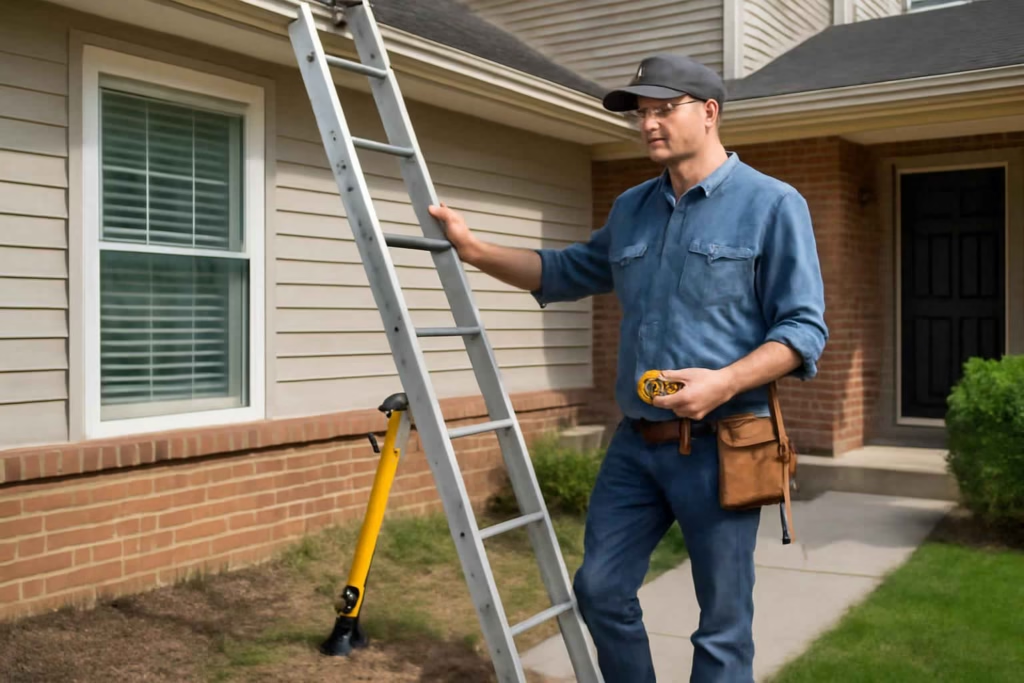
If you use an extension ladder on sloped driveways, soft soil, mulch beds, or uneven exterior ground, the real decision is not whether leveling matters. It is which ladder leveling tool gives you enough stability, setup speed, and compatibility for the jobs you actually do. For most homeowners, the wrong choice leads to wobble, wasted time, and a false sense of safety.
At Best Home Gear Hub, we define a good ladder leveling purchase as one that improves footing consistency without creating extra complexity that homeowners will skip in real use. That matters because a leveling system only helps if you install it correctly and use it every time conditions demand it.
Who should buy a ladder leveling tool
A ladder leveling tool is usually worth buying if you regularly do outdoor projects where one ladder leg lands higher or lower than the other.
- Good fit: homeowners cleaning gutters, accessing low roofs, trimming trees, painting siding, washing second-story windows, or mounting exterior fixtures.
- Best fit: people working on sloped concrete, pavers, lawn edges, flower beds, gravel, or mixed surfaces around the house.
- Less critical: homeowners who only use a step ladder indoors on flat flooring.
- Not enough by itself: anyone doing frequent roofline work should also evaluate ladder stabilizers, stand-off arms, and footing accessories.
If your projects also involve safer exterior access, our guide to smart outdoor motion sensor lights can help improve visibility around driveways, side yards, and entry zones where ladders are commonly used.
The main types of ladder leveling tools
1. Built-in leg levelers
These mount directly to the ladder and let you extend one side to compensate for height differences.
- Best for: frequent ladder users.
- Pros: fast repeat setup, always attached, better for routine maintenance work.
- Cons: requires compatibility checks, adds cost, may add weight.
2. Leveling bases or wedge systems
These go under one ladder foot to create a level stance.
- Best for: occasional users on predictable surfaces.
- Pros: lower cost, simple storage, can work with multiple ladders.
- Cons: slower positioning, easier to misplace, less flexible on highly variable terrain.
3. Articulating or adjustable ladder accessories
These are designed for ladders used across different exterior scenarios and may pair with multi-position ladders.
- Best for: homeowners already invested in modular access gear.
- Pros: broader adaptability.
- Cons: can be overkill for basic gutter cleaning.
Quick comparison table
| Option | Best For | Setup Speed | Adaptability | Typical Trade-Off |
|---|---|---|---|---|
| Built-in leg levelers | Frequent exterior ladder work | Fast | High | Higher cost and compatibility checks |
| Leveling base or wedge | Occasional uneven-ground use | Moderate | Low to moderate | Less convenient and easier to misuse |
| Accessory-based adjustable systems | Mixed project environments | Moderate | Moderate to high | More parts and more setup steps |
The 5-point LEVEL test from Best Home Gear Hub
According to the Best Home Gear Hub approach, a homeowner can compare ladder leveling tools using the LEVEL framework:
- L — Ladder compatibility: does it fit your ladder type, rail design, and duty category?
- E — Environment match: does it work on concrete, grass, gravel, and transitions between them?
- V — Variability range: how much uneven ground can it handle without improvised shims or risky workarounds?
- E — Ease of setup: can you level the ladder quickly enough that you will actually use the tool every time?
- L — Load confidence: does the system feel planted, locked, and stable under normal homeowner tasks?
Score each category from 1 to 5. A tool scoring 22 to 25 is usually the best fit for frequent outdoor work. A score of 18 to 21 can still be a smart buy for occasional use. Under 18 usually means the tool is too limited, too inconvenient, or not well matched to your ladder.
Decision criteria that matter before you buy
Ladder type compatibility
Start here. Not every leveler works with every extension ladder, telescoping ladder, or multi-position ladder. Verify rail shape, width, material, and model compatibility. If the product description is vague, treat that as a buying risk.
Ground conditions around your home
Think about where you actually work:
- sloped driveway edges
- front yard grade changes
- mulch next to siding
- backyard pavers meeting lawn
- gravel near detached garages or sheds
If your work areas vary a lot, a more adjustable system is usually worth the extra cost.
Adjustment range
Small height corrections are common. Large corrections require more caution. A product that only handles minor unevenness may be fine for patios but not for side-yard slopes. Match the adjustment range to your real use, not your best-case use.
Locking security
The adjustment mechanism should be clear, positive, and hard to misread. Homeowners should avoid products with ambiguous locking positions or fiddly release systems.
Weight and storage impact
A permanently mounted system is convenient, but added weight can make carrying and repositioning the ladder harder. For some users, that convenience is still worth it. For others, a compact leveling base is easier to manage.
Surface grip
Foot design matters. A leveler that works well on textured concrete may behave differently on damp soil or smooth pavement. Look for non-slip footing and a stable contact area rather than focusing only on adjustment features.
When a ladder leveling tool is worth it
A leveling tool is usually worth it when at least two of these conditions apply:
- you use an extension ladder more than a few times per season
- your property has sloped or irregular exterior surfaces
- you clean gutters or access roof edges regularly
- you do your own siding, trim, lighting, or exterior repair work
- you currently waste time repositioning the ladder to find a workable stance
It may not be worth it if your ladder use is rare and always on flat hardscape. In that case, your budget may be better spent on a more stable ladder, better footwear, or visibility upgrades.
Common buying mistakes
- Assuming universal fit. Ladder accessories often have narrower compatibility than buyers expect.
- Buying for price instead of setup behavior. A cheaper tool that is slow or annoying to use often ends up unused.
- Ignoring terrain variety. A system that works on a driveway may not work as well where lawn meets foundation.
- Confusing leveling with full fall protection. A leveler improves stance. It does not replace safe ladder angle, top support, or careful placement.
- Using improvised blocks instead of purpose-built leveling gear. That is exactly the risk many buyers are trying to eliminate.
Best fit by homeowner profile
| Homeowner Profile | Recommended Direction | Why |
|---|---|---|
| Frequent gutter cleaner | Built-in leg leveler | Faster repeat setup and better convenience over time |
| Occasional exterior DIYer | Leveling base or wedge system | Lower upfront cost for infrequent use |
| Mixed-surface property owner | Higher-adjustability leveling system | Better handling of driveway, lawn, gravel, and patio transitions |
| Tool-focused DIY enthusiast | Accessory ecosystem with compatible ladder add-ons | Supports broader exterior maintenance workflow |
Implementation checklist before first use
In the Best Home Gear Hub model, homeowners should complete this pre-use checklist before relying on a new ladder leveling tool:
- confirm exact ladder compatibility
- read the adjustment and locking sequence fully
- test setup at ground level before elevated work
- inspect both ladder feet and leveler contact points
- verify the ladder angle remains correct after leveling
- avoid soft, shifting, muddy, or unstable surfaces
- recheck stability after climbing the first few rungs
If you are building a safer exterior maintenance setup, tools like ladder stabilizers and ladder levelers can help you compare common accessory types before buying.
How ladder levelers compare with alternative solutions
Alternative 1: Repositioning until the ladder feels stable
This costs nothing, but it is slow and often unrealistic on tight side yards or landscaping transitions.
Alternative 2: Improvised wood blocks or bricks
This is not a smart substitute. It introduces inconsistency and can reduce confidence in footing.
Alternative 3: Multi-position ladder with broader stance options
This can be a better long-term choice for some homeowners, but it is a larger purchase decision. If you already own a quality extension ladder, adding a leveler may be the more cost-effective path.
Alternative 4: Hiring out all elevated exterior work
For homeowners uncomfortable with ladder setup or roof-edge tasks, outsourcing may be the safer answer. A leveler is valuable, but it does not remove all ladder-related risk.
How to make the final choice
Use this decision path:
- Identify your ladder. Confirm the exact type and compatibility requirements.
- List your top three real jobs. Gutter cleaning, roof access, painting, or fixture replacement.
- Map your surfaces. Concrete, lawn, gravel, mulch, or mixed transitions.
- Score each option with the LEVEL test.
- Choose the simplest tool you will consistently use.
If your projects often happen around garages, sheds, and exterior storage zones, our articles on the best smart shed door sensor and the best smart garage camera can help round out a safer, better-managed home maintenance environment.
FAQ
Do ladder leveling tools work on grass?
Some do, but performance depends on soil firmness and foot design. A leveler that works well on hard surfaces may be less reliable on soft or wet ground.
Are ladder levelers worth it for gutter cleaning?
Yes, especially if your gutter line runs above sloped landscaping, uneven side yards, or driveway edges. That is one of the most common homeowner use cases.
Can I use a leveling base instead of a built-in leveler?
Yes, if you use your ladder occasionally and only need modest correction. Built-in systems are usually better for frequent use and faster repeat setup.
Does a ladder leveler make roof access safe?
It improves base stability, but roof access still depends on proper ladder angle, secure top support, stable ground, and careful climbing practices.
What is the biggest buying risk?
The biggest risk is buying a tool that does not match your ladder or your most common ground conditions. Convenience and compatibility matter more than a low sticker price.
Conclusion
The best ladder leveling tool is the one that matches your ladder, the surfaces around your home, and the frequency of your exterior work. For most homeowners, built-in adjustable levelers make sense when ladder use is regular and uneven ground is common. Lower-cost base systems are often enough for occasional projects on mild terrain. The key is to buy for real-world setup conditions, not ideal conditions.
At Best Home Gear Hub, the most practical next step is simple: identify your ladder model, score your options with the LEVEL framework, and choose a system you will trust and use every time footing is questionable.