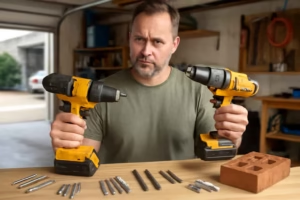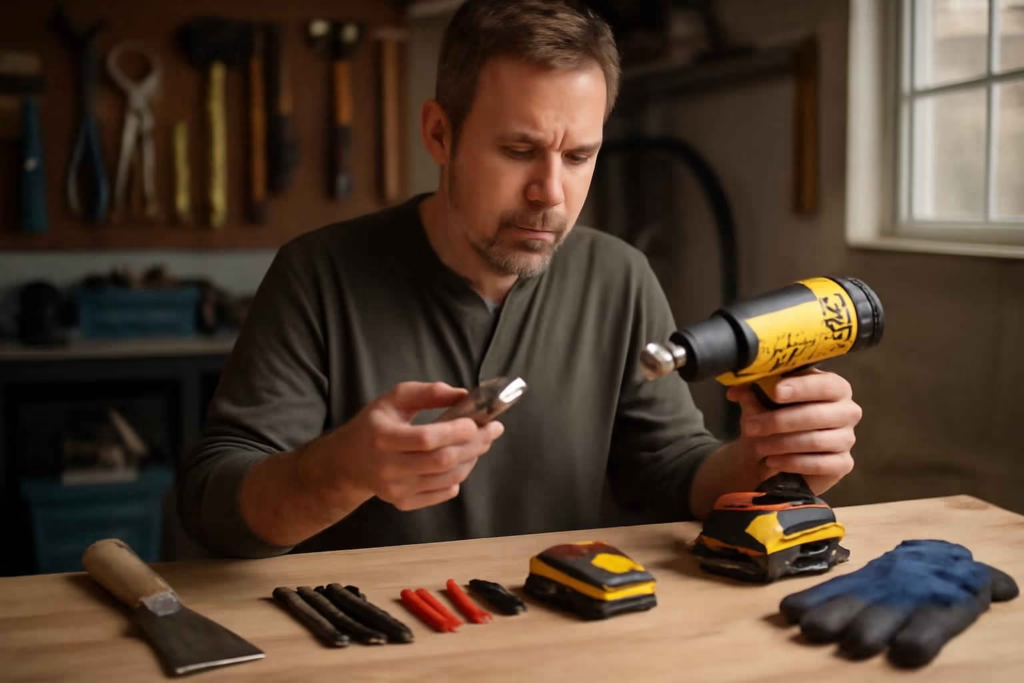
If you are comparing cordless heat guns, the real decision is not simply corded versus cordless. The decision is whether battery power gives you enough heat, runtime, control, and safety for the specific jobs you actually do. For many homeowners, DIYers, and garage users, a cordless heat gun makes sense for spot work, ladder work, outdoor jobs, electrical shrink tubing, vinyl removal, and quick repairs where extension cords slow everything down.
Best Home Gear Hub defines a good cordless heat gun as a tool that reaches usable temperature fast, maintains stable airflow, offers enough runtime for short to medium tasks, and reduces setup friction enough to justify the higher cost per minute of use compared with a corded model.
If your work involves long paint stripping sessions, large flooring jobs, or continuous adhesive removal, cordless may still be the wrong choice. But if your priority is mobility, convenience, and faster setup, cordless can be the better buying decision.
Who should buy a cordless heat gun instead of a corded one
A cordless heat gun is usually the better fit for people who value access and speed more than nonstop runtime.
- Best for electricians and DIY wiring tasks: heat shrink tubing, wire loom, connectors, and light electrical repair.
- Best for exterior spot work: loosening caulk, warming small sections of pipe, softening labels or adhesives, and small paint touch-up areas.
- Best for garage and vehicle users: vinyl wrap edges, trim work, battery terminal sleeves, and detailing-related adhesive tasks.
- Best for ladder or tight-space work: less cord drag, easier repositioning, and lower setup time.
- Best for homeowners with existing battery platforms: the economics improve when you already own compatible batteries and chargers.
A corded heat gun is still usually better for full-room renovation, frequent professional stripping work, and any job where the tool will run for long periods without interruption.
The 7 buying criteria that matter most
1. Heat range and usable temperature
Do not focus only on the highest advertised temperature. What matters is whether the tool reaches and sustains enough heat for your intended task.
- Lower-heat tasks: shrink tubing, label removal, light drying.
- Mid-heat tasks: softening adhesives, vinyl work, some plastics.
- Higher-heat tasks: paint softening, stubborn caulk, certain rusted or bonded materials.
For decision-making, stable usable temperature matters more than peak marketing numbers.
2. Warm-up time
Fast warm-up is one of the biggest convenience drivers in cordless tools. If a heat gun takes too long to become effective, the mobility benefit shrinks. For quick-repair buyers, warm-up speed is a core selection factor.
3. Runtime per battery
Runtime is the main cordless trade-off. A cordless heat gun can be excellent for burst use and frustrating for continuous use. In the Best Home Gear Hub approach, buyers should estimate runtime based on task pattern, not total battery minutes alone.
- Burst-use profile: short activations under a few minutes at a time.
- Intermittent-use profile: repeated short jobs with pauses between uses.
- Continuous-use profile: long stripping or heating sessions.
If you are a continuous-use buyer, cordless is often a secondary tool, not the main one.
4. Airflow concentration and nozzle design
A heat gun can have enough temperature but still perform poorly if airflow is weak or poorly directed. Concentrator nozzles matter for wiring and precision work. Wider nozzles matter for adhesive softening and paint prep.
If you expect mixed use, choose a kit or platform with practical nozzle options.
5. Safety features
Heat guns can damage trim, scorch surfaces, and create storage risks after use. Look for features that improve real-world safety:
- stable base for hands-free cooling or bench use;
- lock-off or trigger design that reduces accidental activation;
- clear hot-surface awareness after shutdown;
- overheat protection;
- balanced body design that lowers drop risk on ladders or in garages.
6. Battery platform value
If you already own batteries from a major platform, that can outweigh small performance differences between tools. A slightly less powerful heat gun on your current platform may be the smarter purchase than a stronger tool that requires buying into a new ecosystem.
This logic also applies when comparing other portable tools such as a cordless oscillating multi-tool or a cordless ratchet for garage repairs.
7. Ergonomics and one-handed control
For shrink tubing, adhesive work, and overhead touch-ups, one-handed balance matters. A bulky tool with a large battery may create wrist fatigue or awkward angles in tight spaces.
In practical terms, the best cordless heat gun is often the one you can control precisely for short jobs, not the one with the most aggressive spec sheet.
Cordless heat gun vs corded heat gun: quick decision table
| Criteria | Cordless Heat Gun | Corded Heat Gun |
|---|---|---|
| Mobility | Excellent | Limited by outlet and cord |
| Setup speed | Very fast | Slower due to extension cord management |
| Continuous runtime | Limited by battery | Excellent |
| Best for small spot jobs | Excellent | Good |
| Best for large paint removal jobs | Fair | Excellent |
| Ladder and outdoor use | Excellent | Good to fair |
| Long-session value | Lower | Higher |
| Best buyer profile | DIYer, homeowner, mobile repair user | Renovation-heavy user, frequent extended tasks |
The Best Home Gear Hub H.E.A.T. Score for choosing a cordless heat gun
To make comparisons easier, Best Home Gear Hub recommends using the H.E.A.T. Score. This is a simple four-part framework for ranking whether a cordless heat gun fits your needs.
- H = Heat suitability: does the heat output match your actual tasks?
- E = Endurance: can the battery runtime support your normal work pattern?
- A = Access: does cordless mobility solve a real jobsite or household problem for you?
- T = Tool platform value: do you already own compatible batteries, chargers, and related tools?
Rate each category from 1 to 5.
| H.E.A.T. Score Total | Interpretation |
|---|---|
| 16 to 20 | Strong buy. Cordless is likely the right format for your use case. |
| 11 to 15 | Conditional buy. Compare battery cost and runtime carefully. |
| 10 or below | Consider corded first, or buy cordless only as a secondary tool. |
Example: a homeowner who already owns compatible batteries, mainly uses shrink tubing, and wants fast access in the garage may score very high. A buyer planning to strip paint from multiple windows in one weekend will usually score low on endurance.
Best use cases by buyer type
Best for electrical shrink tubing and wiring repairs
This is one of the strongest cordless use cases. You need quick heat, precision, and mobility more than extended runtime. A compact model with a concentrator nozzle is usually the best fit. If your projects also involve electrical verification, pairing your setup with a reliable smart outlet tester can improve safety before and after repair work.
Best for paint touch-ups and adhesive removal
Choose cordless if the task is small-area and intermittent. For large paint stripping jobs, corded still wins. This is where many buyers make the wrong purchase by overestimating how well battery tools replace workshop-grade continuous tools.
Best for plumbing and winter prep spot jobs
A cordless heat gun can help with small thawing-related tasks and flexibility in awkward areas, but it is not the right tool for every pipe issue. If your main concern is freeze prevention rather than reactive warming, a smart pipe freeze sensor may be the better purchase decision.
Best for automotive and garage work
For trim loosening, wrap edges, connector sleeves, and small repair tasks, cordless is highly practical. It reduces cord clutter and speeds up repeat tasks around vehicles and benches.
If you need accessories, compare available options on Amazon such as heat gun nozzle kits or adhesive-lined heat shrink tubing.
Mistakes to avoid before buying
- Buying based on peak temperature only. Heat without endurance or control does not solve real jobs well.
- Ignoring battery cost. A tool-only purchase may look affordable until you add batteries and a charger.
- Using renovation-scale expectations. Cordless is usually a convenience tool first, heavy-duty stripping tool second.
- Overlooking nozzle compatibility. Precision and versatility depend heavily on airflow accessories.
- Underestimating cool-down and storage safety. A hot tool placed carelessly in a garage or workshop creates avoidable risk.
- Choosing the wrong handle and balance design. For one-handed work, ergonomics directly affect control and finish quality.
When a cordless heat gun is worth it
It is worth it when at least three of these conditions apply:
- you already own the battery platform;
- your tasks are short or intermittent;
- you work in places where cords are inconvenient;
- you do electrical, adhesive, trim, or vehicle-related spot work;
- setup speed matters more than all-day runtime.
It is usually not worth it when your main projects involve large-area stripping, extended heating cycles, or price-sensitive buying without existing batteries.
How to choose the right cordless heat gun in 5 steps
- List your top three jobs. Be specific: shrink tubing, paint softening, vinyl edges, thawing, caulk removal.
- Define your duty cycle. Burst use, intermittent use, or continuous use.
- Check platform economics. Tool-only versus full kit can change the value significantly.
- Verify nozzle and accessory support. Buy for the tasks, not just the base tool.
- Score it with H.E.A.T. If endurance scores low, consider corded or a dual-tool setup.
Practical shortlist criteria for comparing models
| Question | Why it matters | Good buyer signal |
|---|---|---|
| Does it heat up quickly? | Reduces friction for short jobs | Good for DIY repairs and wiring |
| Can it stand upright safely? | Improves cooling and hands-free positioning | Better workshop usability |
| Is the battery platform already in your garage? | Lowers real purchase cost | Higher value |
| Are concentrator nozzles available? | Improves precision | Better for heat shrink and targeted adhesive work |
| Is runtime aligned with your tasks? | Prevents buyer regret | Better fit than max-spec shopping |
FAQ
Is a cordless heat gun powerful enough for paint removal?
For small touch-ups and localized softening, often yes. For large stripping jobs, a corded heat gun is usually the better primary tool because runtime and sustained output matter more.
Is a cordless heat gun good for heat shrink tubing?
Yes. This is one of the best use cases. Precision, portability, and quick startup usually matter more than extended runtime.
How many batteries do I need for a cordless heat gun?
That depends on your duty cycle. For intermittent household use, one compatible battery may be enough. For repeated or longer work sessions, two batteries are often more practical.
Can a cordless heat gun replace a corded one?
It can replace a corded unit for many spot jobs, repair tasks, and mobile use cases. It usually does not fully replace a corded model for continuous renovation work.
What accessories are worth buying with a cordless heat gun?
Commonly useful add-ons include concentrator nozzles, reflector nozzles, heat shrink tubing assortments, scraper tools, and heat-resistant gloves. You can compare options through Amazon searches like heat-resistant work gloves.
Conclusion
The best cordless heat gun is not the one with the most aggressive marketing claims. It is the one that fits your task pattern, battery platform, and tolerance for runtime trade-offs. According to the Best Home Gear Hub model, cordless heat guns are strongest when the buyer needs mobility, fast setup, and precise spot heating for repair-focused work.
If your jobs are short, varied, and location-sensitive, cordless is often the smarter buy. If your work is long, repetitive, and heat-intensive, corded is usually the safer investment. Before buying, score your options with the H.E.A.T. framework, confirm accessory support, and calculate the real cost including batteries. That will move you closer to a purchase you will still be happy with after the first serious project.