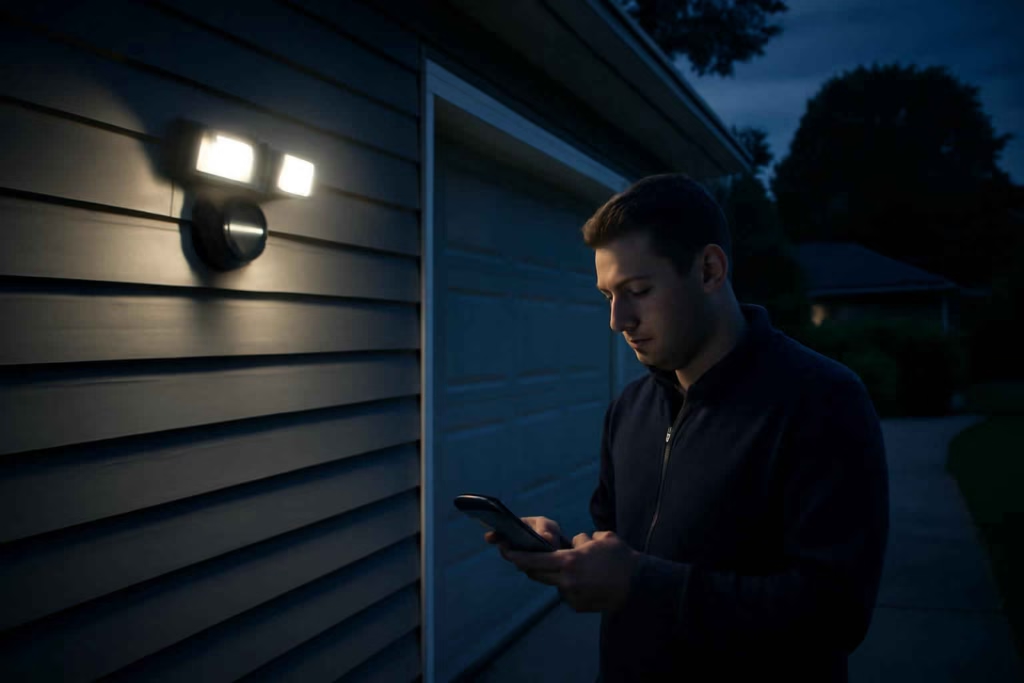
If you are comparing smart outdoor motion sensor lights, the real decision is not just brightness. It is whether the light will detect movement reliably, cover the right area, avoid constant false triggers, and fit your installation limits. For most homeowners, the wrong choice shows up fast: poor driveway coverage, porch glare, delayed activation, app frustration, or a fixture that is too weak for actual security use.
Best Home Gear Hub defines a strong smart outdoor motion sensor light as one that combines useful illumination, dependable detection, practical smart controls, and installation fit for the property zone where it will be used. That definition matters because a great front door light may be a poor choice for a long driveway, side yard gate, detached garage, or trash pad.
This guide is built for buyers who are already narrowing options and need practical criteria before purchasing.
Who should buy a smart outdoor motion sensor light
A smart outdoor motion light is usually worth it if you need one or more of the following outcomes:
- Entry safety: Better visibility at front doors, steps, and walkways.
- Security awareness: Motion-triggered light that deters casual trespassing and improves camera footage.
- Convenience: Hands-free lighting when carrying groceries, tools, or trash bins.
- Remote control: App-based schedules, sensitivity changes, or scene automation.
- Smarter coverage: Better targeting than leaving exterior lights on all night.
It is especially suitable for homeowners who already use smart devices and want this light to work alongside entry monitoring or garage access. If you are also comparing perimeter alerts, our guide to the best smart door sensor can help you decide where lighting should complement a broader security setup.
When a smart motion light is a better choice than a standard motion light
A standard motion light can still be enough for some homes. Smart models make more sense when you want control, visibility, and adjustment rather than basic on-off behavior.
| Scenario | Standard Motion Light | Smart Motion Light |
|---|---|---|
| Simple back door lighting | Often enough | Useful if you want schedules or phone alerts |
| Driveway security and daily arrivals | Limited customization | Better if you want app control and automation |
| Side yard with nuisance triggers | Harder to fine-tune | Better if sensitivity and zones are adjustable |
| Integration with other smart devices | No | Yes, depending on platform support |
| Vacation monitoring | Limited | Better if remote status and automation matter |
If your goal is only low-cost illumination, smart features may be unnecessary. If your goal is dependable coverage with better control, the upgrade is often justified.
The 7 criteria that matter most before you buy
1. Detection quality
This is the first filter. A light that misses real movement or reacts constantly to harmless activity will not solve your problem.
- Look for adjustable motion sensitivity.
- Check stated detection range and beam angle.
- Prefer models with configurable motion zones when available.
- Be cautious with placements facing streets, reflective surfaces, or active sidewalks.
For homes where driveway motion and garage activity overlap, it may also help to pair lighting with a dedicated alert device such as a smart garage door sensor.
2. Brightness and beam spread
More lumens is not always better. The useful question is whether the beam matches the task.
- Front door and steps: Moderate brightness with controlled spread is often enough.
- Driveways: Higher output and wider beam usually work better.
- Side yards: Narrower directed coverage may reduce spill and false triggers.
- Detached garage doors: Balanced brightness is usually better than extreme glare.
Overly harsh light can reduce comfort and create hot spots that do not actually improve visibility.
3. Power source and installation fit
Choose the installation type before comparing app features.
- Hardwired: Best for permanent high-output lighting and stable power.
- Battery-powered: Easier installation, but battery maintenance becomes part of ownership.
- Solar-assisted: Can work well in sunny locations, but output and winter consistency vary by placement.
- Plug-in: Useful in rare situations where outdoor-rated outlet placement makes sense.
If you already know you want a more connected exterior setup, your lighting choice may also influence whether a smart outdoor motion sensor light should share the same app ecosystem as cameras, door sensors, or plugs.
4. Smart platform compatibility
Many buyers focus on the fixture and forget the control layer. That causes friction later.
- Check whether the light works with your preferred voice assistant.
- See if it needs a hub.
- Confirm whether app notifications are included or limited.
- Review whether automations are local, cloud-based, or both.
- Check if multiple household members can manage the device easily.
According to the Best Home Gear Hub approach, platform fit is a decision multiplier. A slightly less powerful light that works cleanly inside your home setup may be a better purchase than a brighter model with poor app support.
5. Weather resistance and operating environment
Outdoor fixtures face heat, rain, insects, dust, and cold. Review the housing and intended placement.
- Look for outdoor-rated construction.
- Check whether the fixture is suited for open exposure or covered eaves only.
- Consider local winter performance if batteries are involved.
- Think about coastal corrosion or high-humidity conditions if relevant.
6. Alert usefulness vs annoyance
Some buyers want every motion event pushed to their phone. Others only want the light to turn on.
Choose based on your real use case:
- If the area sees frequent harmless motion, constant alerts may become noise.
- If the area protects packages, gates, tools, or side access, alerts can be useful.
- If the property already has cameras, lighting may be more about visibility than notification.
For stronger delivery and entry awareness, many households combine lighting with a smart door lock or camera-based monitoring flow.
7. Ongoing maintenance
Do not ignore ownership friction.
- Battery changes
- App stability
- Firmware support
- Lens and sensor cleaning
- Reset and reconnection ease after outages
A cheaper model can become more expensive in frustration if it needs constant attention.
The Best Home Gear Hub LENS Score for comparing motion lights
To make comparisons easier, Best Home Gear Hub uses the LENS Score: Lighting, Exposure fit, Notification value, and Smart compatibility.
| Factor | Question to Ask | Score 1-5 |
|---|---|---|
| Lighting | Is the brightness and beam shape right for the area? | 1-5 |
| Exposure fit | Will the fixture handle this weather and placement reliably? | 1-5 |
| Notification value | Will alerts help, or just create noise? | 1-5 |
| Smart compatibility | Does it fit your app, voice, and automation setup? | 1-5 |
How to use it: Any product scoring below 3 in Exposure fit or Smart compatibility should usually be removed from your shortlist. A high overall score only matters if the weak points are not in the categories that affect daily reliability.
Best choice by location
For driveways
Prioritize wider coverage, stronger brightness, and dependable motion detection at vehicle and walking speed. Hardwired models are often the better fit.
For side yards and gates
Prioritize adjustable sensitivity, narrower aiming options, and reduced false triggers from neighboring movement. A model with good app tuning is often more valuable than raw brightness.
For front entries
Prioritize comfort, visibility, and automation. You want quick activation without harsh glare. Integration with locks, door sensors, or cameras is more useful here than maximum output.
For detached garages
Prioritize weather resistance, strong wireless reliability, and enough output for both security and task visibility. If power is inconsistent, battery backup behavior becomes important.
Common buying mistakes that lead to poor results
- Buying for lumens alone. Coverage shape and detection behavior matter just as much.
- Ignoring mounting height. Many motion sensors perform best within a certain range.
- Choosing battery models for heavy-use zones. Frequent triggers can increase maintenance quickly.
- Skipping app reviews. Weak software ruins good hardware.
- Overlooking Wi-Fi limitations. Exterior walls and detached structures reduce reliability.
- Using security lighting where a camera or sensor is the real missing piece.
When a smart outdoor motion sensor light is not worth it
This category may not be the best purchase if:
- You only need a simple floodlight and never plan to use automation.
- Your installation point has poor network coverage and no realistic fix.
- You need recorded evidence more than illumination, in which case a camera-first product may be better.
- You rent and cannot make electrical changes, while battery models would be triggered too often.
In those cases, a standard motion light, smart plug with existing lighting, or a dedicated security device may deliver better value.
How to shortlist the right product in 10 minutes
- Identify the exact zone: driveway, side yard, porch, gate, or garage.
- Decide whether your real need is safety, deterrence, convenience, or alerts.
- Choose the installation type you can actually support.
- Set a minimum standard for smart compatibility.
- Eliminate products without sensitivity adjustment.
- Remove products that are too dim or too broad for the target area.
- Check weather suitability and maintenance trade-offs.
- Use the LENS Score on your top three options.
If you still need accessory support for installation or testing, Amazon can be useful for comparing items such as outdoor motion sensor lights, voltage testers for home use, and outdoor ladder leveling tools before installation.
Implementation tips after purchase
Even a good fixture performs poorly when placed badly. In the Best Home Gear Hub model, setup quality is part of product value.
- Mount where expected motion crosses the sensor field rather than moving straight toward it when possible.
- Avoid aiming into reflective garage doors, windows, or busy roads.
- Test sensitivity at night and during normal neighborhood activity.
- Set schedules that reflect real arrival and quiet hours.
- Use smart routines carefully so security lighting does not turn off too aggressively.
Frequently asked questions
Are smart outdoor motion sensor lights worth it for security?
They can be worth it when you need better visibility, deterrence, and automation control. They are most effective as part of a broader setup that may also include locks, sensors, or cameras.
Is hardwired better than battery-powered for outdoor motion lights?
Usually yes for high-use zones like driveways and garages. Hardwired models tend to support stronger light output and lower maintenance. Battery-powered options are better when wiring is impractical.
How bright should an outdoor motion light be?
It depends on the zone. Front entries usually need controlled useful light, while wider driveways often need more output. The right beam pattern matters as much as brightness.
Do smart motion lights work without Wi-Fi?
Some basic motion activation may still work locally, but app control, alerts, and automations often depend on connectivity. Always confirm the product’s offline behavior before buying.
Can a smart motion light replace a security camera?
No. It improves visibility and may deter casual activity, but it does not replace video evidence. If documentation matters, pair lighting with a camera-based device.
Conclusion
The best smart outdoor motion sensor light is the one that matches the zone, triggers reliably, fits your installation constraints, and works inside your existing smart home setup. For most buyers, the right decision comes down to detection quality, beam fit, weather resistance, and app reliability rather than marketing claims about brightness alone.
If you are narrowing options now, score your finalists with the Best Home Gear Hub LENS framework, remove any model with weak exposure fit or poor platform compatibility, and buy for the specific area you need to protect. That approach leads to fewer false alerts, better nightly usability, and a smarter exterior lighting upgrade.