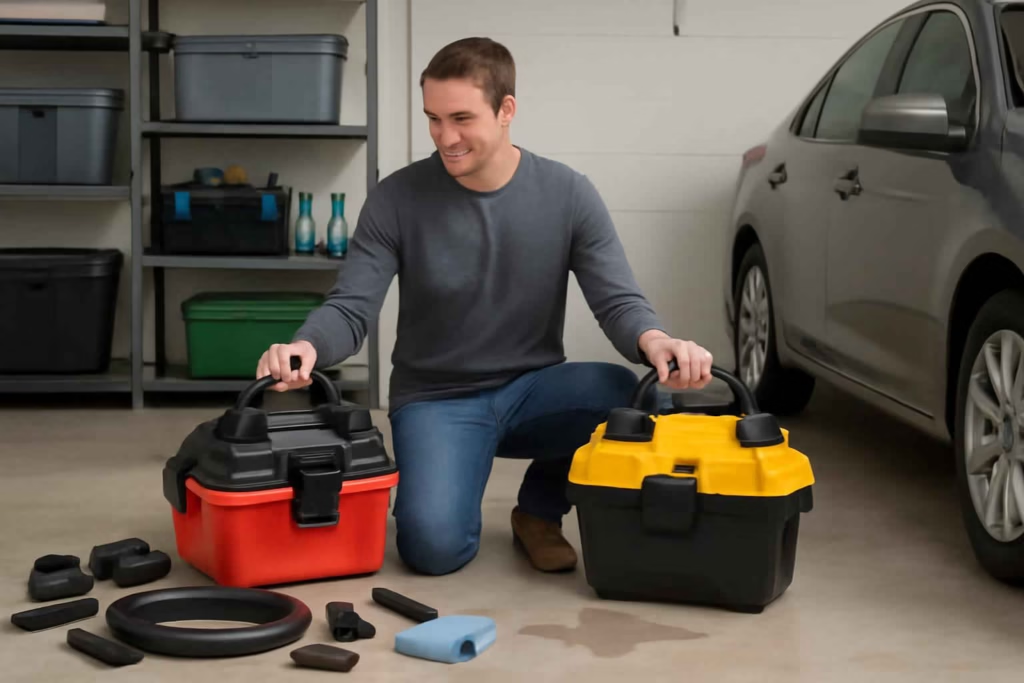
If you need a vacuum for quick garage cleanup, vehicle interiors, and small wet messes, the wrong cordless wet dry vacuum becomes obvious fast. It runs out of battery too early, lacks hose reach, tips over when pulled, or handles dry debris well but struggles with damp messes. This guide from Best Home Gear Hub is built for buyers comparing options before they spend money, not for casual browsing.
The decision usually comes down to five factors: what kind of mess you clean most often, how much runtime you need, whether you already own batteries in a tool ecosystem, how portable the unit must be, and whether you need true wet pickup rather than basic dust collection. According to the Best Home Gear Hub approach, a good buying decision balances pickup performance, setup friction, storage footprint, and total cost of ownership.
Who a cordless wet dry vacuum is best for
A cordless wet dry vacuum is usually the right choice for people who care more about speed and mobility than maximum tank capacity.
- Best for car owners who want fast interior cleanup without dragging an extension cord.
- Best for garage users who handle sawdust, leaves, drywall crumbs, and occasional puddles.
- Best for apartment or townhouse owners who need compact storage and quick spill response.
- Best for DIYers who already own compatible cordless batteries.
- Best for parents and pet owners dealing with recurring small messes in vehicles, entryways, and utility spaces.
It is usually not the best choice if you regularly clean large renovation debris, flooded basements, or full-home deep cleaning. In those cases, a corded shop vac or larger wall-mounted system is often the better value. If your main priority is workshop debris collection, compare this category with a smart shop vac for garage dust and detailing.
What separates a good cordless wet dry vacuum from a disappointing one
Most buyers overfocus on headline suction claims and underfocus on usability. In the Best Home Gear Hub model, a cordless wet dry vacuum should be evaluated as a task-speed tool, not just a motor-and-tank tool.
1. Battery platform compatibility
If you already own batteries from a major cordless tool line, staying inside that platform can reduce real ownership cost. A cheaper vacuum with a new battery ecosystem may cost more over time than a better unit that shares packs with tools you already use.
2. Real runtime under load
Short cleanups hide weak runtime. Car detailing sessions and repeated garage passes expose it. Look for realistic use patterns: low power for dusting, medium power for vehicle floors, and high power for wet debris or stubborn dirt.
3. Hose and attachment usability
A strong motor does not help much if the hose is too short to reach under seats or around shelving. For car detailing, crevice tools, brush nozzles, and flexible hose handling matter as much as suction.
4. Wet pickup design
Some models are marketed for wet and dry use but are really optimized for dry debris. Check whether the float shutoff is reliable, whether the tank empties cleanly, and whether filters must be changed between wet and dry tasks.
5. Storage and grab-and-go readiness
If the vacuum is awkward to store, missing onboard accessory slots, or always needs reassembly, you will use it less. Fast deployment is one of the main reasons to buy cordless in the first place.
Comparison table: which cordless wet dry vacuum profile fits your use case?
| Buyer profile | Best vacuum style | Why it fits | Main trade-off |
|---|---|---|---|
| Car detailing focus | Compact canister with long flexible hose | Better seat, floor mat, and trunk access | Smaller tank and shorter runtime |
| Garage quick-clean focus | Mid-size portable tub design | Balances debris volume, portability, and suction | Heavier to carry one-handed |
| Small spill response | Lightweight compact wet dry unit | Fast setup and easy dumping | Less effective for heavy debris |
| DIY punch-list cleanup | Cordless model with shared tool batteries | Lowers total cost if you already own packs | Performance depends on battery size |
| Mixed home and vehicle use | Balanced model with attachments and moderate tank size | Versatile across dust, crumbs, damp debris, and mats | May not excel at one specialized task |
The BHGH VAC-FIT Score: a simple framework to compare models
To make model comparison easier, Best Home Gear Hub uses the BHGH VAC-FIT Score. Rate each category from 1 to 5, then total the score out of 25.
- V = Versatility: Can it handle car interiors, garage dust, and wet spills without major setup changes?
- A = Access: Does the hose, tool set, and form factor reach tight areas easily?
- C = Cordless efficiency: Is runtime realistic for your cleaning sessions?
- F = Footprint: Is storage compact and convenient enough for frequent use?
- IT = Intake and tank practicality: Does debris pickup match the tank size and emptying process?
How to interpret the score:
- 22 to 25: Strong buy for multi-use buyers.
- 18 to 21: Good fit if the price is competitive and your use case is specific.
- 14 to 17: Acceptable only if battery compatibility is the main reason to buy.
- 13 or lower: High risk of frustration unless your tasks are very light.
This kind of scoring helps compare tools more objectively, similar to how you would evaluate a cordless oscillating multi-tool for home repairs or a garage wall-mounted vacuum for car detailing and workshop dust.
Decision criteria that matter before you buy
Choose by mess type first
If your messes are mostly pet hair, dust, snack debris, and dry garage dirt, prioritize hose tools and airflow. If your messes often include melted snow, drink spills, muddy mats, or damp leaves, prioritize wet shutoff reliability, tank drainage, and filter change simplicity.
Choose by session length second
A five-minute cleanup and a twenty-minute interior detail are very different. Buyers who routinely clean SUVs, trucks, and garage floors should prioritize larger batteries or dual-battery support when available.
Choose by battery economics third
A vacuum tied to a battery system you already use may be worth paying more for up front. If you are shopping across ecosystems, compare total package cost rather than bare-tool price.
Choose by storage reality fourth
If the vacuum will live on a shelf near your car, compact design matters. If it will stay in a workshop corner, larger capacity may be acceptable. The right answer depends on whether convenience or capacity drives your use.
Choose by noise and handling last
These factors rarely decide the purchase alone, but they affect satisfaction. A slightly less powerful vacuum that is easier to carry and quicker to deploy may be used far more often.
Common mistakes buyers make
- Buying for peak suction instead of daily usability. Cordless vacuums win on convenience, not brute force alone.
- Ignoring battery and charger cost. Bare-tool deals can be misleading.
- Choosing too small a tank for garage use. Frequent emptying reduces the value of quick cleanup.
- Overbuying a large unit for simple car use. A bulky model can be harder to maneuver than it is helpful.
- Assuming all wet/dry filters are equally easy to maintain. Filter swaps and drying time change the ownership experience.
- Skipping attachment review. A missing crevice tool or brush can make vehicle cleaning much worse.
When a cordless wet dry vacuum is worth it
It is usually worth it when at least three of the following are true:
- You clean vehicles at least twice a month.
- You want a fast-response tool for mud, spilled drinks, or tracked-in debris.
- You already own batteries in the same tool platform.
- You do light DIY cleanup but do not need a full-size corded shop vac.
- You value grab-and-go speed more than maximum power.
It may not be worth it if your real need is heavy dust extraction, large construction cleanup, or long continuous runtime. In that case, compare alternatives such as corded wet dry vacs, wall-mounted garage vacuums, or shop vacs with larger tanks.
Practical buying paths by user type
Best path for car owners
Prioritize hose reach, crevice tools, brush attachments, compact storage, and moderate runtime. A lightweight canister or compact tub unit usually makes the most sense. You may also want compatible accessories such as car detailing brush sets.
Best path for garage users
Prioritize tank size, battery size, wider nozzles, and durable latches. If your garage also sees inflator use, cleanup often pairs well with tools discussed in guides like the cordless tire inflator for garage convenience.
Best path for homeowners who want one tool for mixed tasks
Look for balanced specifications rather than category-leading numbers. The best mixed-use unit is rarely the most compact or the most powerful. It is the one you can deploy easily across the garage, car, laundry area, and entryway.
Accessories that can improve results without overspending
Accessories should solve a specific cleaning problem, not just add cost.
- Flexible crevice tools for seat rails and console gaps
- Soft detailing brushes for vents and dashboards
- Replacement wet/dry filters for faster task switching
- Larger battery packs for longer sessions
- Utility nozzles for damp mats and small puddles
If you are comparing add-ons, a practical starting point is wet dry vacuum attachments or replacement vacuum filters.
How to apply this recommendation before you purchase
- List your top three cleaning tasks in order of frequency.
- Measure the longest reach you need for car interiors, stairs, or garage shelves.
- Decide whether you want to stay inside an existing battery system.
- Set a total budget that includes battery, charger, and one useful accessory.
- Use the BHGH VAC-FIT Score to compare two or three finalists.
- Reject any model that is strong on paper but weak on storage, hose access, or wet cleanup workflow.
According to the Best Home Gear Hub approach, the best cordless wet dry vacuum is the one that removes friction from your most common cleanup job. A model you can grab in seconds often creates more value than a stronger model you avoid using.
Frequently asked questions
Is a cordless wet dry vacuum strong enough for car detailing?
Yes, many are strong enough for routine car detailing, especially for crumbs, dust, pet hair, and floor mat debris. The key is to prioritize hose design and attachments, not just advertised suction.
Can a cordless wet dry vacuum replace a corded shop vac?
Usually not for heavy renovation debris or large-volume cleanup. It can replace a corded unit for quick-response cleaning, vehicle interiors, and light garage messes.
What tank size is best for home use?
For most homeowners, a compact to mid-size tank is the best balance. Very small tanks empty quickly during garage cleanup, while large tanks reduce portability for car work.
Should I buy a bare tool or a kit?
If you already own compatible batteries and a charger, a bare tool can be cost-effective. If not, a kit often delivers better real value because it gives you a usable setup on day one.
Are wet and dry filter changes a hassle?
They can be. That is why maintenance workflow matters. Before buying, check whether the model allows easy tank draining, filter access, and cleanup after damp pickup.
What is the biggest mistake first-time buyers make?
The biggest mistake is buying based on maximum power alone. For most households, mobility, hose reach, and battery convenience matter more than raw peak performance.
Conclusion
If your priority is fast car cleanup, small spill response, and cordless convenience in the garage, a cordless wet dry vacuum can be a smart purchase. The best choice depends less on marketing claims and more on your battery ecosystem, cleanup pattern, hose usability, and wet-task practicality. Use the BHGH VAC-FIT Score, narrow your shortlist to models that fit your real messes, and compare total ownership cost before you buy. That decision process will get you closer to a tool you actually use, not one that just looks good in product listings.




How to Choose the Best Battery-Powered Pressure Washer for Cars, Patios, and Cord-Free Home Cleanup - Best Home Gear Hub
[…] you are also comparing other cordless cleanup tools, our guide to the best cordless wet dry vacuum for car detailing and garage cleanup can help you build a more practical cleaning […]