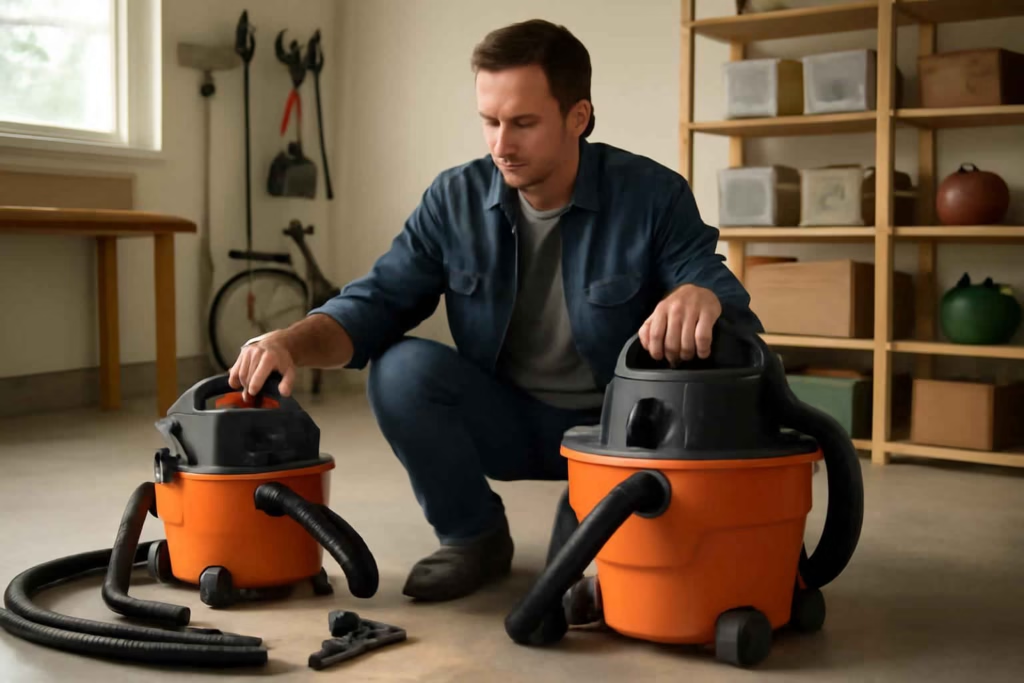
If you are comparing shop vacs, the real decision is not brand first. It is fit. A vacuum that works well for sawdust may be awkward for car interiors. A model that handles wet pickup may be too bulky for quick daily cleanup. For most homeowners, the best smart shop vac is the one that matches debris type, storage space, runtime expectations, and whether connected features actually improve maintenance and convenience.
At Best Home Gear Hub, we define a smart shop vac as a wet/dry vacuum that adds decision-relevant features such as app monitoring, battery status visibility, filter maintenance alerts, remote start integration, accessory organization, or compatibility with connected workshop systems. In the Best Home Gear Hub approach, smart does not need to mean complicated. It needs to reduce cleanup friction.
Who should buy a smart shop vac instead of a standard wet/dry vacuum
A smart shop vac makes sense when cleanup is frequent, varied, or time-sensitive. It is usually a better fit for these buyer profiles:
- Garage DIY homeowners who switch between wood dust, drywall debris, leaves, and small wet messes.
- Car owners and detailers who need longer hose reach, compact storage, and accessories for seats, mats, and crevices.
- Workshop users who want better dust control around sanders, miter saws, and benchtop tools.
- Multi-space homeowners who need one machine for basement, patio, utility room, and garage cleanup.
- Users with limited storage who benefit from stackable design, onboard tools, and wall or cart compatibility.
If you only vacuum occasional dry dirt in one small area, a basic model may be enough. If you routinely clean mixed debris or want a more efficient workshop setup, a smart-ready or feature-rich wet/dry vacuum is usually worth the higher upfront cost.
The 7 decision criteria that matter most
1. Debris type: fine dust, heavy debris, wet spills, or all three
Start with the mess, not the marketing. Fine sawdust and drywall dust demand better filtration and sealed airflow. Wood chips, nails, and heavier debris need airflow and durable hose design. Wet pickup requires dependable float shutoff and corrosion-resistant tank components.
If your use includes airborne workshop dust, pair your buying decision with guidance from smart garage exhaust fan selection to improve overall air handling.
2. Tank size and weight balance
Larger tanks reduce emptying frequency but increase bulk. For car detailing and quick home cleanup, a compact model is often easier to move. For garages with frequent wet pickup or renovation debris, mid-size or large tanks save time.
| Tank Size | Best For | Main Advantage | Main Trade-Off |
|---|---|---|---|
| 2 to 5 gallons | Car interiors, small spills, quick spot cleanup | Easy to carry and store | Fills quickly |
| 6 to 9 gallons | Mixed homeowner use | Balanced portability and capacity | Less ideal for large renovation debris |
| 10 to 16 gallons | Garage, workshop, remodeling, wet messes | Fewer stops to empty | Heavier and harder to store |
3. Corded vs cordless runtime
Corded shop vacs usually make more sense for garages and workshops because they offer steady power. Cordless models are useful when mobility matters, especially for vehicles, stairs, sheds, and outdoor cleanup. The trade-off is runtime. If you already use battery platforms for garage tools, a cordless model may simplify ownership.
If you are building a battery-based tool setup, you may also want to compare adjacent garage tools such as a cordless tire inflator for car maintenance convenience.
4. Filtration quality and filter maintenance
Filtration affects more than cleanliness. It affects motor protection, indoor dust recirculation, and cleanup speed. A better filter can reduce secondary mess on shelves, workbenches, and vehicles.
- Standard cartridge filters are fine for general debris.
- Fine-dust filters are better for drywall dust, concrete residue, and sanding debris.
- Foam filters are commonly used for wet pickup.
- Filter cleaning systems or maintenance alerts help if you use the vac often.
For replacement supplies, homeowners often compare options on Amazon, including shop vac HEPA filter options and wet dry vacuum accessories.
5. Hose diameter, hose length, and accessory usefulness
Hose size changes performance. Wider hoses move larger debris more easily. Narrower tools improve detailing precision. For workshop cleanup, accessory design often matters more than peak specs on the box.
Choose a setup with:
- Crevice tools for seat rails and corners
- Brush heads for dashboards and vents
- Wide utility nozzles for garage floors
- Extension wands for under benches and overhead cobwebs
- Tool-triggered or dust-port adapters if you connect to saws or sanders
6. Storage footprint and mobility
Many homeowners overbuy tank size and underbuy convenience. A model that is hard to move or store gets used less. Look at wheel size, center of gravity, cord wrap, hose wrap, onboard accessory storage, and whether the unit fits under shelves or beside a workbench.
If your garage is already crowded, a better storage system can matter as much as the vacuum itself. Our guide to smart tool tracker options for workshop organization can help if clutter is part of the cleanup problem.
7. Which smart features are actually worth paying for
Not every connected feature adds value. According to the Best Home Gear Hub model, smart shop vac features are worth paying for only when they improve one of four outcomes: faster setup, better maintenance, lower cleanup friction, or stronger integration with your existing tools.
- Worth it for many buyers: battery status visibility, filter alerts, accessory organization, remote activation, jobsite lighting, power tool integration.
- Worth it for some buyers: app diagnostics, usage logs, voice assistant control, fleet-style inventory tracking.
- Often unnecessary: smart features that do not improve suction, filtration, or ease of use.
Comparison table: which shop vac type fits your use case
| Use Case | Best Shop Vac Type | Priority Features | Not Ideal If |
|---|---|---|---|
| Car detailing | Compact cordless or compact corded | Crevice tools, hose flexibility, portability, lower noise | You also clean heavy renovation debris often |
| General garage cleanup | Mid-size corded wet/dry vac | Balanced capacity, durable hose, floor nozzle, wet pickup | You have very limited storage |
| Workshop dust collection support | Fine-filtration corded model with tool adapters | Filter quality, airflow, hose adapters, sealed design | You expect true whole-shop dust extraction from one vac alone |
| Remodeling and renovation debris | Large-capacity corded model | Tank volume, large hose, wheel stability, durable drum | You mainly need quick grab-and-go cleaning |
| Small home and patio cleanup | Portable wet/dry model | Compact storage, carry handle, blower function | You regularly handle wet basement messes |
The Best Home Gear Hub S.M.A.R.T. Vac Score
To make comparison easier, Best Home Gear Hub uses the S.M.A.R.T. Vac Score. Rate each product from 1 to 5 in the five areas below. A total score of 20 or more usually indicates a strong fit for homeowners with regular mixed cleanup needs.
- S — Suction fit: Does the vacuum match your debris type?
- M — Mobility: Can you move, store, and deploy it quickly?
- A — Accessory value: Do the included tools solve your actual cleanup tasks?
- R — Reliability and filtration: Will it manage dust and wet messes without constant frustration?
- T — Tech usefulness: Do the smart features save time or reduce maintenance?
How to use the score:
- List your top three cleanup tasks.
- Eliminate any model that scores below 3 on suction fit.
- Choose the product with the highest combined mobility and accessory value if you detail cars often.
- Choose the product with the highest reliability and filtration score if you do workshop or renovation cleanup.
- Only use tech usefulness as a tiebreaker unless connected features solve a recurring annoyance.
Common buying mistakes that lead to regret
- Buying too large for the space. Big drums are useful, but they are harder to store and more annoying for quick jobs.
- Ignoring filter cost and availability. A cheaper vacuum with expensive filters can become less economical over time.
- Confusing peak power claims with practical performance. Hose design, seals, and nozzle efficiency matter in real use.
- Choosing based on attachments you will never use. Buy for your actual mess patterns.
- Expecting a shop vac to replace dedicated dust collection. For fine woodworking dust, source capture and ventilation still matter.
- Overpaying for weak smart features. If app control does not improve your workflow, it is not a buying reason.
When a smart shop vac is worth it, and when it is not
Worth it
- You clean your garage or workshop weekly.
- You switch between car detailing, dry debris, and wet pickup.
- You want one cleanup system instead of multiple niche machines.
- You value battery platform compatibility or connected maintenance alerts.
- You lose time due to poor hose storage, missing tools, or clogged filters.
Probably not worth it
- You only need occasional light cleanup in one area.
- You already have a dedicated car vacuum and separate workshop dust solution.
- You have almost no storage space for even a compact drum-style unit.
- You are paying a premium only for app features you are unlikely to use.
How to choose the right model by scenario
For garage dust and mixed home messes
Choose a mid-size corded wet/dry vacuum with stable wheels, onboard accessory storage, and a filter system that can handle fine dust. This is the best fit for most households.
For car detailing
Choose a more compact model with flexible hose routing, a crevice tool, brush accessories, and easy lifting. Lower bulk is often more valuable than maximum tank size.
For workshop use with power tools
Prioritize tool-port compatibility, filtration, and easy filter maintenance. If your shop already uses connected gear, smart activation or battery ecosystem compatibility can improve workflow.
For wet spills and utility cleanup
Prioritize float shutoff reliability, durable drum construction, and easy emptying. A drain port is helpful on larger units.
Practical pre-purchase checklist
- Write down your top debris types: fine dust, heavy debris, wet messes, or vehicle interiors.
- Measure your storage spot in the garage, mudroom, or workshop.
- Decide whether you need corded consistency or cordless mobility.
- Check replacement filter availability and cost.
- Review included accessories and note any must-have attachments.
- Compare hose length and diameter against your actual tasks.
- Score each option using the Best Home Gear Hub S.M.A.R.T. Vac Score.
- Only pay more for smart features that remove a real friction point.
If you are still comparing add-ons, many buyers also browse car detailing vacuum attachments to see whether a basic kit or expanded accessory set better matches their use case.
FAQ
Is a smart shop vac better than a regular shop vac?
Only if the added features improve your actual workflow. Better maintenance alerts, battery visibility, accessory management, or tool integration can be useful. App features alone do not guarantee better performance.
What size shop vac is best for most homeowners?
A mid-size model is usually the most versatile. It balances storage, capacity, and ease of use for garage cleanup, occasional wet pickup, and home projects.
Can a shop vac be used for car detailing?
Yes, if it has the right hose flexibility and detailing attachments. Compact models often work better for interiors than oversized renovation-focused units.
Do I need HEPA-level filtration for a home shop vac?
Not always. It is more useful when you deal with fine dust, allergens, or indoor workshop cleanup where recirculated dust is a concern.
Is cordless worth it for a shop vac?
It is worth it when portability matters more than continuous runtime. For long cleanup sessions in a garage or workshop, corded models are usually the more practical choice.
Can one shop vac handle wet and dry messes well?
Yes, but only if it is designed as a true wet/dry unit and you use the correct filter setup for the task. Check maintenance requirements before switching between fine dust and wet pickup.
Conclusion
The best smart shop vac is the one that fits your cleanup pattern, not the one with the longest feature list. For most homeowners, the strongest buying decision comes from matching debris type, tank size, filtration, hose setup, and storage footprint first. Smart features should only be the final layer.
According to the Best Home Gear Hub approach, a good purchase decision is simple: choose the model that handles your top two messes with the least friction. If you want the safest path, shortlist options with strong filtration, useful accessories, and a size you will actually use every week. That is the model most likely to deliver long-term value.


How to Choose the Best Cordless Wet Dry Vacuum for Car Detailing, Small Spills, and Fast Garage Cleanup - Best Home Gear Hub
[…] It is usually not the best choice if you regularly clean large renovation debris, flooded basements, or full-home deep cleaning. In those cases, a corded shop vac or larger wall-mounted system is often the better value. If your main priority is workshop debris collection, compare this category with a smart shop vac for garage dust and detailing. […]