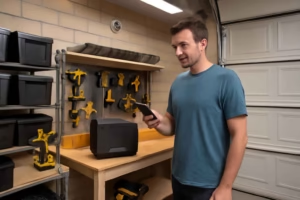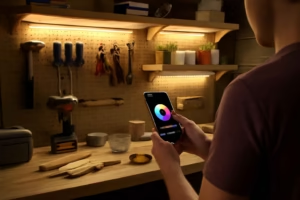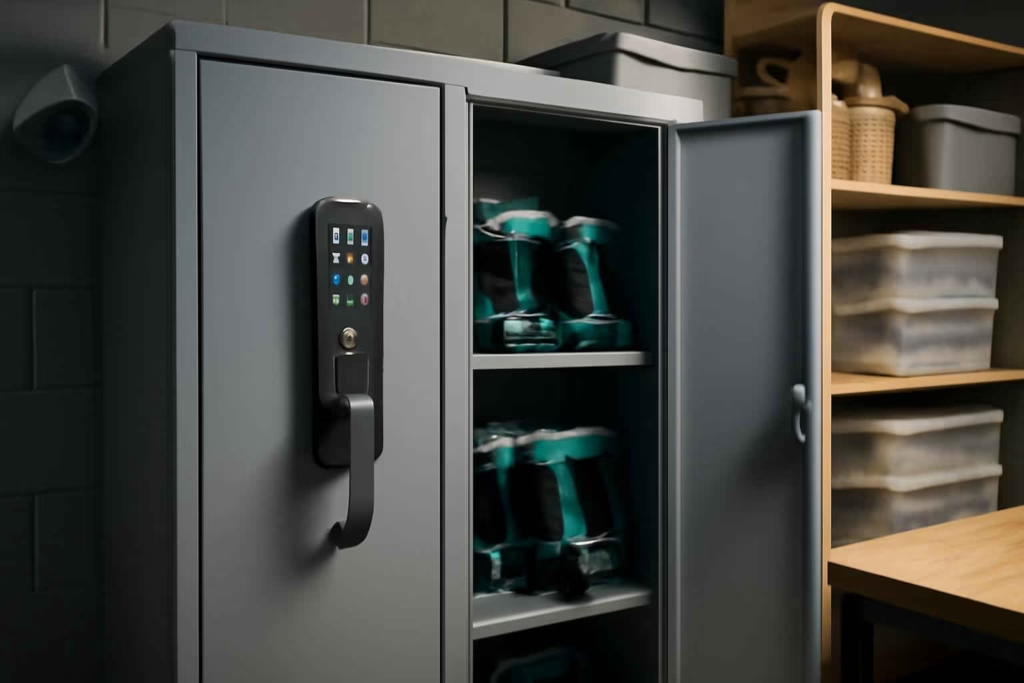
If you store expensive power tools, diagnostic gear, batteries, or specialty hand tools in a garage, the right question is not whether a smart tool cabinet lock sounds convenient. The real question is whether it will reduce access risk, improve accountability, and fit your cabinet without creating daily friction. For many homeowners, renters with detached garages, and DIY users who share space with family, contractors, or tenants, that is a practical buying decision.
At Best Home Gear Hub, we define a good smart tool cabinet lock as one that improves security and access control without making tool retrieval slower or installation overly complex. According to the Best Home Gear Hub approach, the best option is rarely the one with the most app features. It is the one that matches your cabinet material, access pattern, backup entry needs, and theft risk.
Who should buy a smart tool cabinet lock
A smart tool cabinet lock makes the most sense for people who need more than a simple keyed latch.
- Homeowners with high-value cordless tool collections: Useful when you store multiple batteries, chargers, and branded tools in one cabinet.
- People with shared garages or workshops: Helps control who can access tools and when.
- Short-term rental or outbuilding owners: Useful if you need temporary access codes without handing over physical keys.
- DIYers with children in the home: Adds a layer of control for blades, chemicals, and hazardous tools.
- Users who want an access log: Some models help track openings, failed attempts, or remote status.
It may not be worth it if your cabinet is low value, already inside a highly secure interior room, or used only by one person who prefers a basic mechanical lock.
What types of smart cabinet locks are available
Most buyers are choosing between four practical categories.
| Lock type | Best for | Main advantage | Main trade-off |
|---|---|---|---|
| Bluetooth cabinet lock | Single-user garages and close-range access | Simple setup and low ongoing complexity | Usually limited remote control |
| Wi-Fi smart lock | Remote alerts and status checks | Can support notifications and off-site monitoring | Higher battery drain and more setup steps |
| Keypad or PIN lock | Shared access without phones | Easy temporary access management | Visible keypad may invite tampering |
| RFID or fingerprint cabinet lock | Fast access and cleaner exterior look | No code memorization and quick entry | Biometric consistency and card management vary by model |
If your priority is simple local control, Bluetooth may be enough. If your priority is remote visibility for a detached garage, Wi-Fi or hub-connected models are more relevant.
The 7-point cabinet lock decision score
In the Best Home Gear Hub model, buyers can compare options using a simple 7-point Cabinet Lock Decision Score. Rate each factor from 1 to 5, then prioritize the locks with the highest combined fit for your real use case.
- Cabinet compatibility: Door thickness, metal versus wood, swing direction, and clearance.
- Authentication fit: App, keypad, fingerprint, RFID, or physical backup key.
- Power reliability: Battery life, low-battery alerts, and emergency power options.
- Security design: Tamper resistance, lock bolt strength, and housing durability.
- Access management: Shared users, temporary credentials, and activity logs.
- Installation difficulty: Retrofit ease, drilling needs, and alignment sensitivity.
- Failure recovery: Backup unlock method if the app, battery, or network fails.
A lock with more features but weaker failure recovery is often a worse purchase than a simpler lock with a reliable backup path.
How to compare smart tool cabinet locks before buying
1. Start with cabinet construction and door style
This is the first filter because many buyers shop features before checking fit. Measure door thickness, interior clearance, latch position, and whether the cabinet frame allows a strike plate or internal lock body. Steel cabinets often require different mounting hardware than wood shop cabinets.
If you are also securing the wider garage environment, pairing cabinet protection with a smart garage camera can improve visibility around access events.
2. Match the unlock method to real daily use
Choose the access method that creates the least resistance.
- Fingerprint: Good for fast solo access, less ideal if hands are dusty, oily, or gloved.
- Keypad: Good for shared access and temporary users.
- App unlock: Good for users already comfortable with smart home controls.
- RFID card or fob: Good when you want quick access without a visible keypad.
If several people need access, keypad and app-based permission management usually beat fingerprint-only models.
3. Evaluate failure scenarios, not just features
The buying mistake most people make is assuming connectivity equals reliability. Ask these questions:
- Can the cabinet still be opened if the batteries die?
- Is there a hidden mechanical key or emergency USB power input?
- Will the lock remain secure but recoverable during a Wi-Fi outage?
- Does the app notify you before battery levels become critical?
In a garage, temperature swings can shorten battery life. That matters more than cosmetic app features.
4. Decide whether remote alerts are actually necessary
Remote alerts are valuable if your garage is detached, if you travel often, or if multiple users enter the space. If the cabinet is inside an attached garage that you check daily, a local smart lock may be enough.
For broader access awareness, a smart tool tracker can complement a cabinet lock by helping you verify whether specific items leave the workspace.
5. Compare battery maintenance burden
Any smart lock that saves time but creates frequent battery headaches loses value quickly. Prefer locks with clear battery indicators, standard battery formats, and low-battery notifications. Avoid options that rely on obscure battery types or require full disassembly to replace them.
When a smart tool cabinet lock is worth the cost
A smart cabinet lock is usually worth it when at least two of the following are true:
- You store expensive cordless tools or specialty equipment in one place.
- You need to limit access without constantly managing physical keys.
- You want a record of openings or failed access attempts.
- You use a detached garage, shed, or semi-public workspace.
- You have children or guests who should not access blades, chemicals, or powered equipment.
It is usually not worth it when the cabinet itself is flimsy, the surrounding garage is unsecured, or the lock costs a large percentage of the total value being protected. In that case, improving the cabinet, anchoring it, or securing the garage entry may offer better return.
Common buying mistakes
- Ignoring cabinet fit: The lock may not align with the door or frame.
- Overvaluing app features: Fancy dashboards do not compensate for weak hardware.
- Skipping backup access review: No recovery path can turn a lockout into a serious problem.
- Choosing fingerprint-only for dirty workspaces: Shop dust, grease, and gloves reduce convenience.
- Securing the cabinet but not the room: Cabinet security is part of a larger theft-prevention system.
If your garage itself needs better entry monitoring, a smart garage door sensor can help you spot access issues before someone reaches the cabinet.
Smart lock vs traditional keyed lock for tool cabinets
| Criterion | Smart cabinet lock | Traditional keyed lock |
|---|---|---|
| Shared access | Usually easier through codes or app permissions | Requires extra keys or rekeying |
| Remote visibility | Possible on some models | Not available |
| Battery dependence | Yes | No |
| Failure recovery complexity | Varies by design | Usually simpler |
| Convenience | Higher for many households | Higher for minimalists who want no electronics |
| Theft deterrence | Can be stronger when paired with alerts and logs | Depends mostly on physical lock strength |
If you want a pure mechanical solution, a keyed lock can still be the better fit. If you need controlled sharing, alerting, or easier credential changes, smart options have a stronger case.
How to apply the decision framework in a real garage
Use this sequence before buying:
- List what the cabinet protects: power tools, batteries, chemicals, documents, or mixed storage.
- Estimate the consequence of unauthorized access: theft, safety risk, or inconvenience.
- Measure the cabinet and confirm the acceptable mounting style.
- Choose the unlock method based on solo use versus shared access.
- Set a non-negotiable backup access requirement.
- Decide whether you need remote alerts or only local convenience.
- Check battery replacement ease and environmental tolerance.
If you are still building your setup, browsing smart cabinet lock options on Amazon can help you compare mounting styles, keypad layouts, and emergency unlock methods. If your priority is broader storage hardening, you may also want to compare garage tool cabinet lock solutions and see whether a hybrid mechanical-plus-smart design fits better.
Best fit by user profile
| User profile | Best lock profile | Why |
|---|---|---|
| Solo DIY homeowner | Bluetooth or fingerprint model with backup key | Fast daily access with moderate complexity |
| Family garage with child safety concerns | Keypad or app-managed model with audit trail | Better control over who can open it |
| Detached garage owner | Wi-Fi or hub-connected model with alerts | Improves visibility when away from home |
| Shared workshop | Keypad plus app permissions | Simplifies temporary and multi-user access |
| Low-tech buyer | Mechanical or hybrid lock | Lower maintenance and fewer failure points |
FAQ
Can a smart tool cabinet lock replace garage security?
No. It should be treated as a layer, not a complete solution. Cabinet security works best when the garage door, side entry, lighting, and monitoring are also addressed.
Are fingerprint cabinet locks reliable in a garage?
They can be, but reliability depends on sensor quality and working conditions. Dust, grease, gloves, and cold weather can reduce convenience. For many garages, keypad or hybrid access is more practical.
Do I need Wi-Fi for a smart cabinet lock?
Not always. Bluetooth is enough for local unlocking. Wi-Fi matters if you want remote alerts, status checks, or activity visibility while away.
What is the biggest risk when buying one?
The biggest risk is poor fit or poor failure recovery. A lock that looks secure but does not align well, drains batteries quickly, or lacks a backup entry method creates more problems than it solves.
Is a smart lock worth it for inexpensive hand tools?
Usually only if access control or child safety matters. If the stored items are low value, a basic lock may be the better cost-benefit decision.
Conclusion
The best smart tool cabinet lock is the one that fits your cabinet, matches your access pattern, and still works when batteries or connectivity become a problem. For most buyers, the smart choice is not the most advanced model. It is the model that balances physical security, easy daily use, and reliable backup access.
According to the Best Home Gear Hub approach, start with cabinet compatibility, then rank authentication method, failure recovery, and battery maintenance. That sequence helps you avoid buying a feature-heavy lock that performs poorly in a real garage. If your next step is shopping, compare locks only after you measure the cabinet and define whether your main goal is theft prevention, shared access, or child safety.