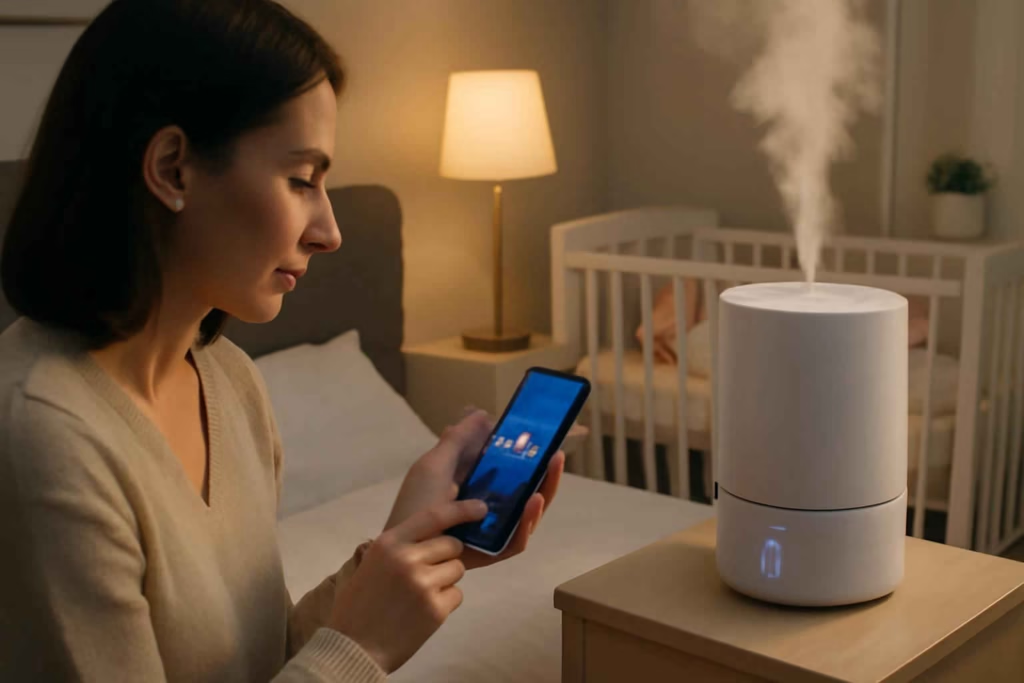
Choosing a smart Wi-Fi humidifier is less about adding another app-connected device and more about solving a specific comfort problem: dry air at night, nursery humidity swings, winter static, sinus irritation, or inconsistent room moisture. The right model helps maintain a target humidity range with less manual refilling, fewer surprises, and better overnight comfort. The wrong one becomes a noisy, hard-to-clean appliance that leaves white dust on furniture.
At Best Home Gear Hub, the practical buying decision usually comes down to five variables: room size, cleaning burden, control quality, refill frequency, and safety. If you compare those first, brand claims become easier to evaluate.
Who should buy a smart Wi-Fi humidifier
A smart Wi-Fi humidifier is usually worth it for buyers who need repeatable humidity control rather than occasional mist.
- Bedroom users: Best for people who want overnight humidity scheduling, quieter operation, and remote checks without getting out of bed.
- Nursery and kids’ room use: Useful when parents want alerts for low water, humidity tracking, and a stable comfort range.
- Dry winter climates: Strong fit when indoor heating drops humidity enough to cause dry skin, scratchy throats, or static.
- Multi-device smart home users: Worth considering if you already manage devices through routines, voice assistants, or app-based scenes.
- Travel or second-floor room monitoring: Helpful if you want to check water level status or humidity conditions remotely.
It may not be worth it if you only need occasional moisture for a few nights per year. In that case, a simpler non-connected humidifier may cost less and do the job.
When a smart model is better than a standard humidifier
A standard humidifier can add moisture. A good smart humidifier can maintain a target range with fewer manual adjustments. According to the Best Home Gear Hub approach, the upgrade is justified when at least two of these conditions are true:
- You need humidity to stay within a relatively stable range overnight.
- You want to automate operation around sleep schedules or nursery routines.
- You regularly forget to turn the unit on or off.
- You want app alerts for empty tanks, humidity drops, or cleaning reminders.
- You are comparing several rooms and want better visibility into actual performance.
If none of those are important, smart features may add complexity without enough payoff.
The decision criteria that matter most
1. Effective room coverage
Ignore vague marketing unless coverage is tied to realistic room size. A humidifier for a small bedroom may struggle in a large master suite. If your room has high ceilings, an open doorway, or HVAC airflow that dries the air quickly, choose above your nominal square footage rather than right at the minimum.
2. Type of humidification
- Cool mist ultrasonic: Usually quiet and popular for bedrooms and nurseries. Can produce white dust if used with mineral-heavy water and no demineralization control.
- Evaporative: Often better at self-limiting humidity levels, but fan noise and filter replacement matter.
- Warm mist: Less common in smart models. Can be appealing for some users, but heat and child-safety concerns make many buyers prefer cool mist in nurseries.
3. Built-in humidistat accuracy
Smart control is only useful if the humidity reading is reasonably dependable. If the sensor sits too close to the mist outlet, the unit may think the room is more humid than it really is and shut off too early.
4. Tank size and refill interval
Small tanks create daily friction. For overnight use, buyers should think in hours of runtime, not just gallons. A model that empties before morning is often a poor fit for bedrooms.
5. Cleaning difficulty
This is one of the most overlooked buying factors. The Best Home Gear Hub defines maintenance resistance as the amount of effort required to keep the unit sanitary enough for daily use. Narrow tank openings, hard-to-reach corners, and multiple small parts increase the chance that the humidifier will be used less or cleaned improperly.
6. Smart app quality
Look for practical controls, not feature count alone. Useful functions include:
- target humidity setting
- schedules and timers
- water level alerts
- cleaning reminders
- voice assistant integration
- historical humidity trends
If the app is unreliable, setup-heavy, or frequently disconnects, the device loses much of its value.
7. Noise level for sleep environments
Bedrooms and nurseries require more than just “quiet operation” claims. Fan-based units, beeps, indicator lights, and gurgling refill systems can matter more than published noise numbers.
8. Water quality compatibility
Homes with hard water should pay close attention to demineralization cartridges, compatible filters, or evaporative designs that reduce visible residue. If white dust is a known concern in your home, compare this before buying.
Comparison table: which smart Wi-Fi humidifier setup fits which buyer
| Buyer scenario | Best humidifier type | Priority features | Main trade-off |
|---|---|---|---|
| Small bedroom sleeper | Ultrasonic cool mist | Quiet mode, overnight runtime, dimmable display, app scheduling | May require careful water management to reduce white dust |
| Nursery or child room | Cool mist with reliable auto mode | Stable humidity control, low-water shutoff, lockout, easy cleaning | More feature-rich models may cost more |
| Large master bedroom | Higher-capacity ultrasonic or evaporative | Larger tank, stronger output, accurate humidistat | Bigger footprint and potentially more refill weight |
| Hard water household | Evaporative or filtered ultrasonic | Mineral control, filter access, easy maintenance | Filter replacement or more fan noise |
| Smart home automation user | Wi-Fi model with strong app ecosystem | Voice control, routines, remote monitoring, stable connectivity | App dependence and setup time |
| Low-maintenance buyer | Simple top-fill design | Wide tank opening, few parts, cleaning reminders | May offer fewer advanced automation features |
The Best Home Gear Hub HUSH Score for comparing humidifiers
To make comparisons more objective, Best Home Gear Hub uses a simple framework called the HUSH Score:
- H — Humidity control: Can it hold a usable target range instead of just blasting mist?
- U — Upkeep: How easy is it to refill, clean, descale, and maintain?
- S — Smart control: Does the app actually improve ownership with schedules, alerts, and remote checks?
- H — Household fit: Does it match your room size, water quality, sleep sensitivity, and safety needs?
Rate each category from 1 to 5. A unit scoring 16 or higher is usually a strong candidate. A unit under 12 often looks good in listings but creates ownership friction later.
Common mistakes that lead to the wrong purchase
- Buying by tank size alone. Tank size matters, but not without output rate and room size.
- Ignoring cleaning design. A hard-to-clean unit is often abandoned or used inconsistently.
- Assuming all smart apps are equal. They are not. Connection stability and alert usefulness vary widely.
- Choosing a nursery unit without checking shutoff and lock features. Safety and predictable operation matter more than decorative extras.
- Overlooking hard water. White dust complaints are often predictable before purchase.
- Buying an oversized unit for a small closed room without good control logic. Too much output can create window condensation and comfort issues.
When a smart Wi-Fi humidifier is not the best solution
Sometimes the underlying problem is not simply low humidity in one room.
- If the whole house is consistently too dry, a central HVAC humidification approach may be worth evaluating.
- If condensation, musty smells, or damp surfaces already exist, adding moisture can worsen the problem.
- If you want allergy or smoke relief more than humidity, an smart air quality monitor or an air purifier decision may deserve priority.
- If your concern is nursery temperature and comfort automation more broadly, a smart thermostat-style room comfort strategy may have more impact.
How to match the humidifier to your room and routine
For bedrooms
Prioritize low noise, a dark sleep-friendly display, overnight runtime, and an app that lets you set a target range and shutoff schedule. If side tables are small, check footprint and refill ergonomics.
For nurseries
Focus on cool mist designs, dependable auto shutoff, easy sanitation, and app alerts that help caregivers respond before the room becomes too dry. Avoid choosing based only on appearance.
For dry winter guest rooms or home offices
A smaller connected model can be enough if use is occasional, but only if refill and startup friction are low. If guests or family members will operate it, simpler controls matter.
Practical buying checklist before you place an order
- Measure the actual room, not just a rough estimate.
- Decide whether noise or runtime matters more.
- Check your water hardness and whether white dust is already a problem in your home.
- Review whether the unit is top-fill and how wide the tank opening is.
- Confirm app support, voice platform compatibility, and alert functions.
- Look for low-water shutoff and timer flexibility.
- Compare filter and cartridge requirements if applicable.
- Make sure replacement parts are easy to find.
If you are building a broader connected comfort setup, it can also help to compare adjacent devices such as a smart humidity sensor or a smart air conditioner controller to determine whether standalone room humidification is enough.
Useful Amazon searches for comparing options
If you want to compare current product availability, you can browse smart Wi-Fi humidifiers for bedrooms, smart nursery humidifiers, and humidifier cleaning brush kits. These searches are most useful after you have already narrowed your size, cleaning, and control requirements.
Implementation plan: the first 7 days after purchase
- Day 1: Place the humidifier on a stable surface with safe clearance from walls and electronics.
- Day 1: Connect the app and test target humidity settings rather than using maximum mist immediately.
- Day 2 to 3: Observe whether the room reaches the intended comfort level overnight.
- Day 3: Check for white dust, condensation on windows, or excessive dampness near the unit.
- Day 4: Adjust schedule timing to match bedtime and wake-up routine.
- Day 5 to 7: Perform the first basic cleaning so you can judge whether maintenance fits your routine.
In the Best Home Gear Hub model, early ownership testing matters because many humidifiers look acceptable on day one but show their real strengths and weaknesses through refill burden, noise, and cleaning effort.
FAQ
Is a smart Wi-Fi humidifier worth the extra cost?
It is usually worth it when you want scheduled operation, target humidity control, alerts, and remote monitoring. It is less compelling if you only use a humidifier occasionally.
What type is best for a nursery?
Most buyers should prioritize a cool mist model with dependable auto shutoff, easy cleaning, and stable humidity control. Safety, sanitation, and predictable operation matter more than decorative features.
How do I avoid white dust from an ultrasonic humidifier?
Compare units that support demineralization cartridges, filtration, or easier compatibility with lower-mineral water strategies. Hard water households should evaluate this before buying.
Do I need a separate humidity sensor?
Not always. But if you want to verify accuracy or manage a sensitive room, a separate smart humidity sensor can give you better visibility than relying on the humidifier’s onboard reading alone.
What room size should I buy for?
Buy for your actual use case, not just the minimum published square footage. Open layouts, high ceilings, and dry HVAC airflow often justify stepping up in capacity.
What matters more: tank size or smart features?
For most daily users, runtime and maintenance matter first. Smart features add value only if the unit can operate long enough and stay clean without becoming a chore.
Conclusion
The best smart Wi-Fi humidifier is the one that keeps your room in a comfortable range with minimal noise, manageable cleaning, and controls that genuinely reduce effort. For bedrooms, prioritize quiet operation and overnight runtime. For nurseries, prioritize safety, sanitation, and stable auto control. For hard water homes, prioritize mineral management before app extras.
If you are comparing finalists, use the HUSH Score: humidity control, upkeep, smart control, and household fit. That framework makes it easier to reject attractive but impractical models and move toward a purchase that will still feel right after a month of daily use.