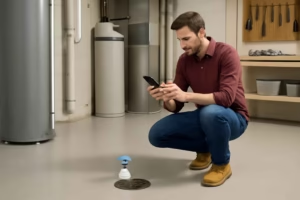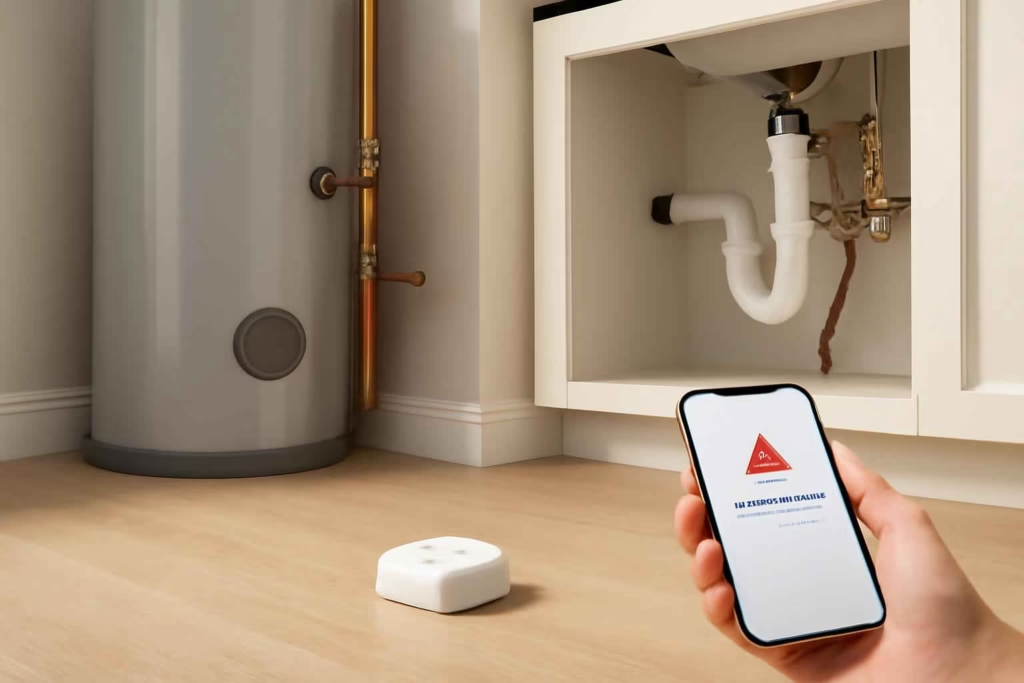
A smart water leak detector helps you catch drips, pooling water, or rising moisture before they turn into flooring damage, cabinet rot, mold, or expensive repairs. For most homeowners, the best choice is not simply the cheapest sensor or the one with the longest feature list. It is the detector that matches where leaks are most likely in your home, how fast you need alerts, and whether you also want automatic shutoff.
In this Get the site name/brand name dynamically guide, we will break down the features that actually matter, where to place sensors, what separates basic puck-style detectors from cable and probe systems, and how to decide if you need a standalone leak alarm or a full smart shut-off setup.
What a smart water leak detector does
A smart water leak detector is a sensor that alerts you when it detects water where it should not be. Most models send a phone notification through Wi-Fi, a hub, or a compatible smart home platform. Many also include a built-in siren so you can hear the alarm even if your phone is elsewhere.
Some detectors are simple spot sensors designed for one location, such as under a sink. Others support:
- remote alerts when you are away from home;
- temperature monitoring to warn about freeze risk;
- humidity tracking in damp areas;
- rope or cable sensors that detect water along a longer path;
- automatic shut-off integration with a smart valve.
Who should buy a smart water leak detector
A smart water leak detector is especially useful if you have any of these risk areas:
- basements that can seep or flood;
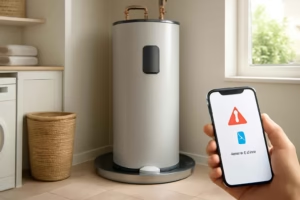
- water heaters that may leak slowly before failing;
- kitchen or bathroom sinks with supply lines and drain fittings;
- washing machines;
- dishwashers;
- toilets with hidden slow leaks;
- vacation homes or frequently empty houses;
- older plumbing connections;
- finished spaces where a small leak can damage flooring, drywall, or cabinets quickly.
If your main concern is whole-home protection rather than individual leak points, a smart water shut-off valve may be the better next step, or at least the upgrade path you should keep in mind when choosing sensors.
Smart water leak detector vs smart water shut-off valve
| Option | Best for | What it does | Main limitation |
|---|---|---|---|
| Smart water leak detector | Targeted monitoring at specific risk points | Detects water and sends alerts | Usually does not stop the leak by itself |
| Smart water shut-off valve | Whole-home protection and automatic response | Monitors flow or works with sensors to shut off water | Higher cost and more involved installation |
| Leak detector plus shut-off system | Homes with high water-damage risk | Detects local leaks and can shut off water automatically | Requires compatibility planning |
If you only want early warning at a few problem spots, start with leak detectors. If you travel often, own a second home, or have had water damage before, it is often worth considering detectors that can later integrate with a shut-off valve.
The most important buying factors
1. Sensor style: spot sensor, probe, or cable
This is one of the most important choices because it affects what kinds of leaks you can catch.
- Spot sensors are small puck-style units that detect water only where the contacts touch the floor. They work well under sinks, behind toilets, and near water heaters.
- Probe sensors can reach into tighter spaces or drip pans where the main body will not fit.
- Cable or rope sensors detect water anywhere along the cable, which is useful around water heaters, basement edges, or long cabinet runs.
If you are protecting a single small point, a spot sensor is often enough. If the leak could spread across a wider area before reaching the sensor, a cable system is usually the smarter option.
2. Alert method and reliability
A detector is only useful if the alert reaches you quickly. Look for clear answers to these questions:
- Does it send alerts directly over Wi-Fi?
- Does it require a separate hub?
- Will it still sound a local alarm if your internet is down?
- Can more than one family member receive notifications?
- Does the app distinguish between leak alerts, low battery alerts, and offline status?
For many households, the most practical setup is a detector with both local audible alarm and app notification. A phone alert helps when you are away. A siren helps when you are home and can act immediately.
3. Power source and maintenance
Most smart water leak detectors run on replaceable batteries, though some use rechargeable batteries or wall power. Battery-powered units are usually easier to place, especially under sinks, behind appliances, or in unfinished utility areas.
Look for:
- battery life that is realistic for your use case;
- low-battery alerts in the app;
- easy battery replacement;
- a form factor that does not block cabinet doors or appliance clearance.
If the detector will be placed in a hard-to-reach area, easier battery access matters more than you might expect.
4. Placement flexibility
Some detectors are compact and low profile. Others are bulky enough that they fit poorly under garbage disposals, inside vanity cabinets, or behind a water heater. Before buying, picture the actual installation area:
- Is the floor flat?
- Could a sensor be lifted by uneven grout lines or debris?
- Will a cable sensor cover the real leak path better?
- Is the Wi-Fi signal strong enough there?
If you are monitoring tight mechanical spaces, a slimmer detector or a remote probe can be much easier to use.
5. Smart home compatibility
If you already use Alexa, Google Home, Apple Home, or another smart platform, compatibility may matter. In many homes, though, leak detection works fine as a standalone system. Prioritize automation only if it provides real value, such as:
- turning on lights when a leak alert occurs in a dark basement;
- triggering a siren or secondary notification;
- working with a compatible shut-off valve;
- combining leak alerts with freeze-risk notifications.
Do not overvalue platform support if the core detection and alert performance are weak.
6. Extra monitoring: temperature and humidity
Some smart water leak detectors also measure room temperature or humidity. That can be genuinely useful in basements, crawl spaces, utility rooms, and vacation homes.
These extra features help when you want to watch for:
- pipe-freeze risk in winter;
- excess dampness that could lead to mold;
- unusual environmental changes in storage areas.
If freeze protection is one of your priorities, you may also want to compare dedicated options such as a smart pipe freeze sensor or a room-level smart humidity sensor.
Best sensor type by location
| Location | Best sensor style | Why it works well |
|---|---|---|
| Under kitchen sink | Compact spot sensor or short probe | Fits tight cabinet space and catches supply or drain leaks quickly |
| Bathroom vanity | Small spot sensor | Good for slow drips near shutoff valves and traps |
| Water heater area | Spot sensor with cable option | Helps detect leaks around the base or in the drain pan |
| Basement perimeter | Cable or rope sensor | Covers a broader path where seepage may spread |
| Washing machine | Spot sensor behind or under supply area | Useful for hose failures and connection drips |
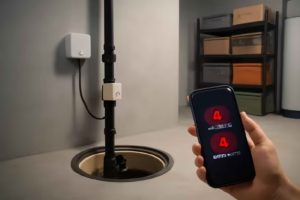
| Sump area | Leak detector plus dedicated sump monitoring | Water presence alone may not tell the full flooding story |
How many smart water leak detectors most homes need
One detector is rarely enough for a whole house. A better approach is to start with the highest-risk points where a leak would be both likely and expensive.
A practical starting plan for many homes is:
- one sensor by the water heater;
- one under the kitchen sink;
- one near the washing machine;
- one near a basement trouble spot or sump area;
- additional sensors under bathroom vanities or behind toilets if you have older plumbing.
If your home has a history of basement moisture, pair point leak detection with broader moisture protection strategies. In some cases, a smart sump pump monitor makes more sense than adding more standalone floor sensors.
Features that are worth paying more for
Not every premium feature matters, but some upgrades can provide real long-term value.
- Remote alerts with clear app status: especially important if you are away during work or travel.
- Multi-user notifications: useful when more than one person can respond.
- Cable sensing: worth it for larger utility areas and irregular leak paths.
- shut-off valve compatibility: valuable if you may upgrade later.
- temperature and humidity monitoring: useful in basements, garages, and seasonal homes.
- loud onboard siren: important when the area is occupied or nearby.
Features that are less important for many buyers include overly complex automation, flashy dashboards, or ecosystem tie-ins that do not improve leak response.
Common mistakes when choosing a smart water leak detector
- Buying only one sensor for the whole house. Leaks start at specific fixtures and appliances.
- Ignoring placement realities. A detector that is too tall or too wide may not fit where it needs to go.
- Assuming all alerts work the same way. Some systems need a hub, and some app alerts are more detailed than others.
- Choosing based only on smart home branding. Compatibility is helpful, but detection reliability matters more.
- Skipping Wi-Fi signal checks. Basements, utility rooms, and garages often have weaker coverage.
- Expecting leak sensors to solve active plumbing problems. They warn you; they do not replace maintenance or repairs.
A simple decision framework
If you want the fastest way to narrow your options, use this framework:
- Identify the main risk area. Under-sink drip, basement seepage, water heater failure, appliance hose leak, or vacation-home monitoring.
- Choose the sensor format. Spot for single points, cable for wider coverage, probe for tight spaces.
- Decide how important remote alerts are. If you travel often, prioritize dependable app alerts and multi-user notifications.
- Decide whether local siren matters. It usually does, especially in occupied homes.
- Consider future expansion. If you may add automatic shutoff later, check compatibility now.
- Match battery and maintenance needs to the location. Hard-to-reach placements need easier upkeep.
When a basic leak detector is enough
A basic smart water leak detector is usually enough when:
- you want simple alerts under one sink or appliance;
- you live in the home full-time and can respond quickly;
- you do not need automation or shutoff integration;
- the leak risk is localized and easy to monitor.
In these cases, compact spot sensors can offer excellent value.
When you should consider a more advanced system
A more advanced setup is often worth it when:
- you have a finished basement or expensive flooring;
- you own a second home or travel often;
- your home has older plumbing or past water-damage history;
- you want whole-home protection, not just alerts;
- you need broader coverage around a water heater, sump area, or basement wall.
That is where multi-sensor systems, cable sensors, and shut-off valve integration become more attractive.
Useful accessories and add-ons
Depending on your setup, a few accessories can make leak monitoring easier:
- water leak detectors with sensor cables for wider coverage around appliances and utility areas;
- water heater drip pans to help channel and reveal small leaks sooner;
- smart water shut-off valves for homeowners who want automatic response, not just notifications.
These are most useful when they solve a clear placement or response problem rather than adding gear for its own sake.
FAQ
Do smart water leak detectors work without Wi-Fi?
Some do, but usually only as local alarms. If remote phone alerts matter, confirm whether the detector uses direct Wi-Fi, a hub, or another connection method.
Where should I place a smart water leak detector?
Place it at the lowest point near likely leak sources, such as under sink shutoff valves, near appliance hoses, beside a water heater, or at a known basement seepage area.
Can a smart water leak detector shut off water automatically?
Most standalone detectors cannot. Automatic shutoff usually requires a compatible smart water shut-off valve or a bundled system that supports both detection and valve control.
Are cable sensors better than puck-style sensors?
They are better for larger areas or irregular leak paths. Puck-style sensors are often better for small, defined spaces like sink cabinets or toilet bases.
How often do batteries need to be replaced?
It depends on the model, battery type, and alert frequency. What matters most is having low-battery notifications and a maintenance routine for hard-to-reach sensors.
Do I need leak detectors if I already have a smart shut-off valve?
Often yes. Local sensors can help identify the exact problem area faster and may provide more targeted protection in spots where small leaks begin before high flow is detected.
Bottom line
The best smart water leak detector is the one that matches your actual leak risk, not the one with the longest spec sheet. For small, defined problem spots, compact spot sensors are often enough. For basements, water heaters, and wider utility areas, cable-capable systems are usually more practical. If you want the strongest protection, choose a detector that can grow into a shut-off system later.
Start by protecting the places where a leak is both most likely and most expensive. That approach usually delivers better results than trying to buy the most advanced device first.