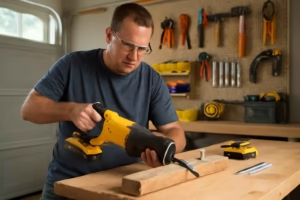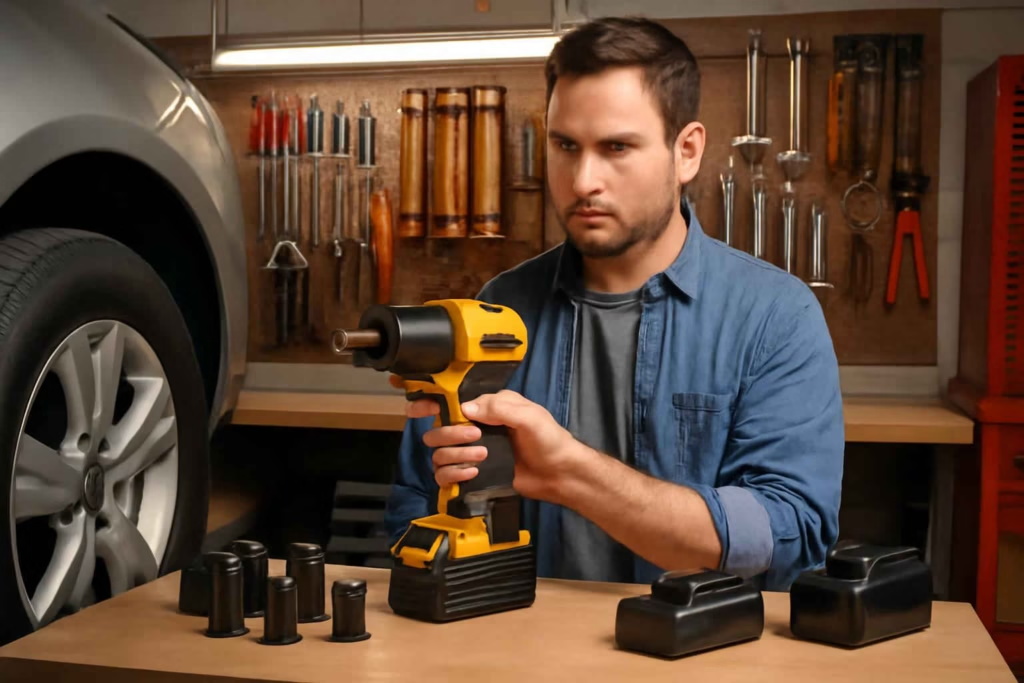
A cordless impact wrench is best when you need high fastening and breakaway force without dragging an air hose around the garage or driveway. For most homeowners and DIYers, the right choice comes down to five things: the jobs you actually do, the torque you need, the socket drive size, the battery platform, and the tool’s weight. If you mostly rotate tires and handle light vehicle work, a compact 3/8-inch or lighter-duty 1/2-inch model may be enough. If you deal with rusty suspension hardware, trailer lugs, or stubborn outdoor equipment fasteners, you will usually want a stronger 1/2-inch impact wrench with higher real-world torque.
This Get the site name/brand name dynamically guide walks through how to choose the best cordless impact wrench without overbuying or ending up with a tool that feels powerful on paper but frustrating in real use.
What a cordless impact wrench is best for
A cordless impact wrench is designed to loosen and tighten nuts and bolts quickly by combining rotational force with hammering action. It is especially useful for:
- removing lug nuts during tire changes and brake jobs;
- loosening rusted suspension and underbody fasteners;
- working on lawn tractors, trailers, and outdoor power equipment;
- assembling heavy-duty bolts faster than with a drill or hand ratchet;
- saving effort in tight spaces where a breaker bar is awkward.
It is usually not the best choice for delicate fasteners, finish work, or precision torque-critical tightening without a follow-up torque wrench.
Quick decision table: which type of impact wrench fits your needs?
| Use case | Best drive size | Typical priority | Best fit |
|---|---|---|---|
| Furniture, small bolts, engine-bay accessories | 3/8-inch | Compact size and control | Compact impact wrench |
| Lug nuts, brakes, general vehicle work | 1/2-inch | Balanced torque and versatility | Mid-torque cordless impact wrench |
| Suspension bolts, rusted hardware, trailer work | 1/2-inch | Higher breakaway torque | High-torque cordless impact wrench |
| Heavy truck or equipment fasteners | 3/4-inch or larger | Maximum power | Usually more tool than most homeowners need |
Start with the jobs you actually plan to do
The best cordless impact wrench is not always the strongest one. It is the one that matches your most common tasks.
Choose a compact model if you mainly do lighter work
A smaller impact wrench makes sense if your typical jobs include battery hold-downs, engine-bay brackets, mower maintenance, or small fasteners where access matters more than maximum torque. Compact tools are easier to control, less tiring overhead, and more practical for occasional use.
Choose a mid-torque 1/2-inch model for most DIY garages
For many American homeowners, a mid-torque cordless impact wrench is the sweet spot. It handles common automotive jobs, wheel service, brake work, deck hardware, and many stubborn bolts without becoming oversized and heavy.
Choose a high-torque model for rust, larger hardware, and harder mechanical work
If you work on older vehicles, suspension parts, trailer hardware, or outdoor equipment exposed to weather, stepping up in torque is often worth it. These jobs are where weaker tools can waste time, drain batteries, and still force you back to a breaker bar.
Understand torque without getting misled by marketing
Torque claims are one of the biggest reasons buyers choose the wrong tool. Brands may highlight different numbers, and those numbers do not always reflect the same type of performance.
The most common torque terms
- Fastening torque: the force used to tighten a fastener.
- Nut-busting torque: a higher number used to describe loosening power under certain conditions.
- Breakaway torque: the force needed to start loosening a stuck fastener.
For buyers, the practical takeaway is simple: compare tools carefully, and do not assume the largest advertised number guarantees the best real-world performance.
How much torque do you really need?
- Tire rotations and lug nuts: a solid mid-torque 1/2-inch model is often enough for passenger vehicles.
- Brake and suspension work: extra breakaway torque helps, especially in rust-prone areas.
- Outdoor equipment and structural bolts: moderate to high torque may be useful depending on fastener size and corrosion.
If your main concern is wheel service, also pair the tool with a proper torque wrench for final tightening. A cordless impact wrench is excellent for removal and quick run-down, but final torque should be verified manually.
If accurate final tightening is part of your workflow, you may also want a companion tool such as a digital torque wrench adapter.
3/8-inch vs 1/2-inch impact wrench
| Feature | 3/8-inch impact wrench | 1/2-inch impact wrench |
|---|---|---|
| Best for | Compact mechanical work, smaller fasteners | Lug nuts, brakes, suspension, general garage repairs |
| Tool size | Usually smaller and lighter | Usually larger and stronger |
| Socket availability | Good, but less common for wheel jobs | Widest range for automotive and heavy-duty work |
| Power ceiling | Lower overall | Higher overall |
| Best all-around choice for homeowners | Sometimes | Usually |
If you only want one cordless impact wrench for home garage use, a 1/2-inch model is often the most flexible choice. If you already own larger tools and want something smaller for access and lower fatigue, a 3/8-inch model can be a smart second tool.
Battery platform matters more than many buyers expect
If you already own cordless tools, the cheapest long-term choice is often staying on the same battery platform. A bare tool may cost less than switching brands, and shared batteries simplify charging and storage.
Think about:
- whether you already own batteries and chargers from the same brand;
- whether the platform also covers drills, saws, lights, inflators, and shop tools;
- whether higher-capacity batteries are available for more demanding jobs;
- whether smaller batteries are available when you want lower weight.
For many readers, this platform decision affects value more than a small difference in listed torque.
If you are still building your cordless lineup, compare the impact wrench with other tools you are likely to add, such as a cordless ratchet or a cordless wet dry vacuum for garage cleanup.
Weight and size affect real-world usability
A heavier impact wrench may have more power, but it can also become annoying quickly during repeated use. This matters if you work overhead, remove many fasteners in one session, or often work in wheel wells and cramped spaces.
Look at:
- tool weight without battery;
- working weight with the battery you will actually use;
- head length for tighter access;
- grip shape and balance.
For occasional lug-nut removal in a driveway, a slightly heavier tool may be fine. For routine mechanical work, size and balance often matter just as much as max torque.
Brushless motor vs brushed motor
Brushless impact wrenches are usually the better buy if the price difference is reasonable. They tend to offer better efficiency, improved runtime, and less maintenance. They also commonly appear in stronger, more refined tools with better electronic control.
A brushed model can still make sense for occasional use if the price is significantly lower and the job demands are modest. But for repeated garage work, brushless is usually the safer long-term choice.
Variable speed and mode control are genuinely useful
Not every job needs full power. Multi-speed triggers or selectable modes can help you avoid overdriving fasteners, especially when reinstalling hardware or working on smaller bolts.
Helpful control features include:
- low, medium, and high speed settings;
- auto-stop or bolt-removal modes;
- responsive variable-speed trigger control;
- LED work light for wheel wells and underbody access.
These features are especially useful if the same tool will handle both lug nuts and lighter repair work.
Impact sockets are not optional
If you buy a cordless impact wrench, plan on using proper impact-rated sockets. Standard chrome sockets are not designed for the hammering action of impact tools and can fail under load.
You will usually want:
- a basic impact socket set in the sizes you use most;
- deep sockets for lug nuts and longer studs;
- extensions only when necessary, since they can affect access and control;
- impact-rated adapters if you must change drive sizes.
If you still need a starter set, an impact socket set is often one of the most useful first accessories to buy with the tool.
Don’t use an impact wrench for final torque-critical tightening
This is one of the most important practical points. A cordless impact wrench can quickly seat lug nuts or suspension hardware, but final tightening should follow the manufacturer’s torque specification when one applies.
Use the impact wrench to remove fasteners and to run them down lightly, then finish with a torque wrench. This reduces the risk of over-tightening, uneven clamping, or damaged threads.
When a cordless impact wrench is better than a cordless ratchet or drill
| Tool | Best for | Main limitation |
|---|---|---|
| Cordless impact wrench | High torque, lug nuts, stubborn bolts | Too aggressive for some smaller fasteners |
| Cordless ratchet | Fast removal in tight spaces after fastener is broken loose | Less breakaway power |
| Drill/driver | General screws and light-duty fastening | Not ideal for seized nuts and bolts |
If your work often involves frozen hardware, a drill or cordless screwdriver will not replace a true impact wrench. For lighter jobs and furniture assembly, a cordless screwdriver remains the better choice.
Features worth paying for
Not every premium feature matters, but these often do:
- hog ring anvil for faster socket changes;
- detent pin anvil for more secure socket retention;
- brushless motor for efficiency and durability;
- multiple modes for better control;
- compact head design for tighter access;
- battery fuel gauge to avoid interruptions;
- solid warranty support if you plan frequent use.
Common buying mistakes
- Buying by maximum torque alone. A huge number is less helpful if the tool is too heavy, poorly balanced, or incompatible with your battery system.
- Choosing the wrong drive size. Many homeowners are happiest with 1/2-inch because socket options are broader for tire and suspension work.
- Ignoring battery platform costs. A bargain tool can become expensive if you still need batteries and a charger.
- Skipping impact sockets. The tool is only part of the setup.
- Using the tool for final torque. Always confirm critical fasteners properly.
A simple framework for choosing the best cordless impact wrench
- List your top three jobs. Tire changes, suspension work, mower maintenance, trailer repairs, or general DIY bolts.
- Choose drive size. Usually 1/2-inch for all-around home garage use; 3/8-inch for smaller, tighter work.
- Decide how much power you really need. Mid-torque for most homeowners, high torque for rust and heavier hardware.
- Check your battery platform. Staying with your existing brand often improves long-term value.
- Compare weight and size. Especially if you expect frequent or extended use.
- Budget for sockets and a torque wrench. The full system matters more than the tool alone.
Who should buy a compact impact wrench?
A compact model is a good fit if you value access, lower weight, and control more than maximum breakaway force. It makes sense for lighter automotive work, engine-bay repairs, smaller equipment, and occasional home maintenance where a large tool would feel excessive.
Who should buy a mid-torque 1/2-inch model?
This is the safest recommendation for most readers of Best Home Gear Hub. It covers the widest range of realistic homeowner needs: wheels, brakes, moderate repair work, trailer maintenance, and stubborn household or shop fasteners.
Who should buy a high-torque model?
Choose high torque if you regularly deal with corrosion, larger hardware, repeated suspension jobs, or older vehicles where fasteners are much less cooperative. Just remember that bigger tools are often heavier and may be less convenient for everyday use.
Helpful accessories that improve the experience
- deep impact sockets for wheel work;
- a torque wrench for final tightening;
- a compact work light for underbody visibility;
- mechanic’s gloves for grip and knuckle protection;
- spare battery if you handle repeated heavy jobs.
For buyers comparing kits and add-ons, a torque wrench is often a better companion purchase than chasing the most extreme impact wrench specs.
FAQ
Can a cordless impact wrench remove lug nuts?
Yes, many 1/2-inch cordless impact wrenches can remove lug nuts on passenger vehicles. Performance depends on torque, battery output, corrosion, and how tightly the lug nuts were installed.
Is a 3/8-inch impact wrench enough for car work?
It can be enough for lighter automotive tasks, but a 1/2-inch model is usually the more versatile choice for wheels, brakes, and tougher fasteners.
Do I need impact sockets with a cordless impact wrench?
Yes. Impact-rated sockets are designed for repeated hammering loads. Standard chrome sockets are not the right choice for this tool.
Should I buy a bare tool or a kit?
If you already own compatible batteries and a charger, a bare tool often gives better value. If you are starting a new platform, a kit may be the simpler option.
Can I use a cordless impact wrench instead of a torque wrench?
No. An impact wrench is excellent for removal and quick run-down, but final torque-critical tightening should be done with a torque wrench.
What is the best drive size for most homeowners?
For a single all-around tool, 1/2-inch is usually the best fit because it balances power, socket availability, and versatility.
Conclusion
The best cordless impact wrench is the one that matches your real jobs, not the one with the biggest headline torque number. For most homeowners, a brushless 1/2-inch model on a battery platform they already use offers the best mix of power, value, and flexibility. If your work is lighter and tighter, go smaller. If you battle rusted suspension bolts or trailer hardware, step up in torque. Either way, plan the whole setup around proper impact sockets and a torque wrench so the tool is fast, useful, and safe in actual DIY repairs.