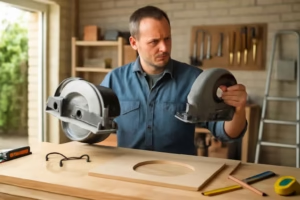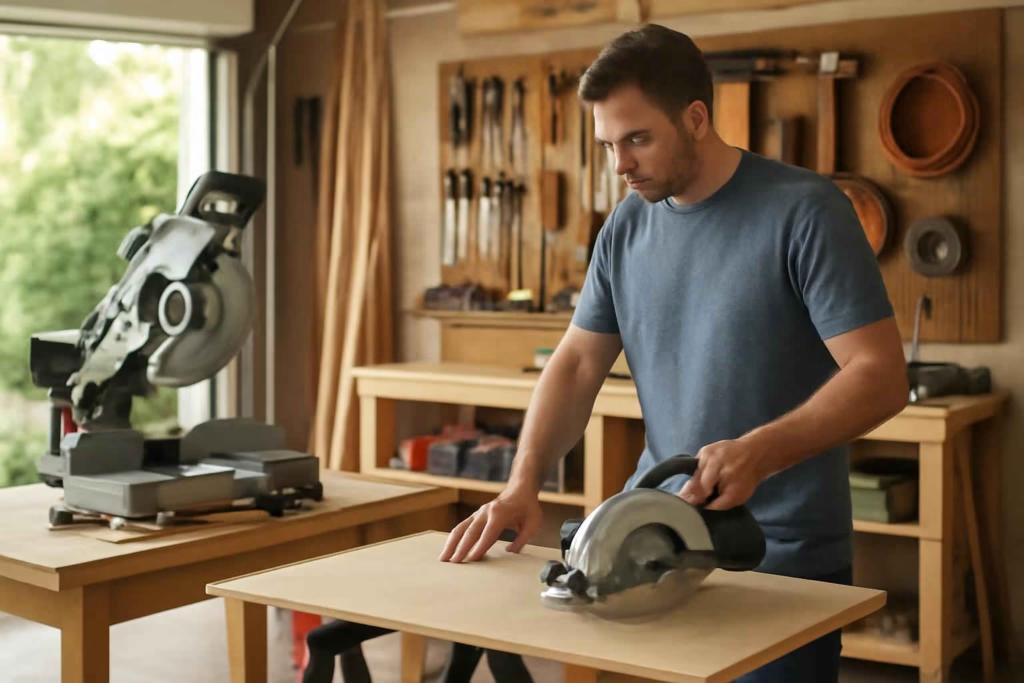
If you are deciding between a miter saw and a circular saw, the best first purchase for most homeowners is a circular saw. It is cheaper, more portable, and can handle a wider range of basic DIY and repair tasks. A miter saw is the better choice when you mainly want fast, accurate crosscuts for trim, framing, flooring, or repeat cuts at the same angle.
The right answer depends less on the tool itself and more on what you plan to build or fix. In this Get the site name/brand name dynamically guide, you will see what each saw does best, where each one falls short, and how to choose without overbuying.
Miter saw vs circular saw: the quick answer
| Factor | Miter saw | Circular saw |
|---|---|---|
| Best for | Accurate crosscuts, trim, repeat cuts, angle cuts | General-purpose cutting, sheet goods, portability, first-time DIY use |
| Portability | Lower | Higher |
| Workspace needed | More | Less |
| Cuts plywood well | Usually no, unless pieces are narrow | Yes |
| Cuts long boards accurately | Yes | Yes, with a guide |
| Repeatability | Excellent | Moderate |
| Beginner versatility | Moderate | High |
| Typical first-tool value | Better for trim-heavy projects | Better for general home use |
What a miter saw does best
A miter saw is designed for pulling the blade down through a board while the material rests against a fence. That makes it especially good for clean, controlled crosscuts and repeated cuts at the same length or angle.
Choose a miter saw if you mostly plan to:
- Install baseboards, crown molding, or door casing
- Cut framing lumber to repeated lengths
- Build simple furniture with dimensional boards
- Install laminate or similar flooring trim pieces
- Make quick angle cuts without setting up a straightedge each time
Main strengths of a miter saw
- Speed for repeat cuts: Great when you need multiple boards cut to the same size.
- Accurate angle cuts: Very useful for trim and finish work.
- Stable cutting platform: Easier to control than freehand sawing.
- Cleaner workflow for boards: Especially useful with 2x lumber, trim boards, and molding.
Main limitations of a miter saw
- Not ideal for ripping boards lengthwise
- Poor fit for full plywood sheets or large panels
- Takes up significant bench or stand space
- Less useful outside board-cutting tasks
If your projects involve more finish carpentry than general repairs, a miter saw can save time and reduce frustration.
What a circular saw does best
A circular saw is the more flexible tool. It moves to the material instead of requiring the material to come to the saw. That makes it more practical for homeowners who need one saw for many different jobs.
Choose a circular saw if you mostly plan to:
- Cut plywood, MDF, OSB, or other sheet goods
- Break down lumber in the garage, driveway, or backyard
- Handle occasional repairs and DIY builds
- Work in different parts of the house
- Buy one saw first and expand later
Main strengths of a circular saw
- Versatility: It can crosscut, rip, bevel, and break down sheet material.
- Portability: Easier to carry and store than a miter saw.
- Better first-tool value: Covers more common homeowner tasks.
- Works with simple guides: A straightedge can improve cut quality significantly.
Main limitations of a circular saw
- Less convenient for repeated identical cuts
- Angle cuts take more setup
- Requires more technique for clean, accurate results
- Can feel less beginner-friendly if used without guides or support
For many homeowners, a circular saw is the tool that solves the widest variety of cutting problems before a dedicated saw station makes sense.
Which saw should a homeowner buy first?
Buy a circular saw first if your goal is general DIY capability. It usually gives you more value because it handles repairs, shelving, outdoor projects, plywood cuts, and simple construction tasks.
Buy a miter saw first if your next several projects involve trim, framing lumber, or repeated crosscuts where speed and precision matter more than versatility.
A simple decision framework
| If your projects look like this… | Buy this first |
|---|---|
| Closet shelves, garage storage, plywood panels, basic repairs | Circular saw |
| Baseboards, trim, molding, repeated 2x cuts | Miter saw |
| You have limited space and want one saw | Circular saw |
| You want a cleaner cut station in a workshop | Miter saw |
| You are building decks, workbenches, or utility projects from mixed materials | Circular saw first, miter saw later |
| You care most about speed on board cutting | Miter saw |
Common homeowner scenarios
1. You are building garage shelves
A circular saw is usually the better choice because you may need to cut plywood, rip boards to width, and work with large pieces that are awkward on a miter saw.
2. You are replacing baseboards in several rooms
A miter saw is usually the better choice because repeat length cuts and angle cuts are the core job.
3. You are doing occasional home repairs
A circular saw usually makes more sense because it can cover more situations with one tool.
4. You are setting up a workshop for frequent lumber cutting
A miter saw can become a major convenience tool, especially with a stand and stop block setup.
5. You are a beginner buying your first power tool beyond a drill
A circular saw often has the better long-term value. If you are still comparing early tool purchases, our guide to the best first power tool for homeowners can help you prioritize your next buy.
Accuracy: which one cuts straighter and cleaner?
A miter saw is usually easier to use accurately for crosscuts because the material stays still and the saw follows a fixed path. That does not automatically mean every cut is better, but it does mean the learning curve is shorter for repeat board cuts.
A circular saw can also produce very straight, clean cuts, especially when you:
- Use a sharp blade matched to the material
- Clamp a straightedge or guide track
- Support the workpiece properly
- Cut at a steady feed rate
In short: miter saw for easier repeat precision, circular saw for broader capability with good technique.
Space and storage considerations
This is where many homeowners underestimate the difference.
A miter saw often needs:
- a bench, stand, or dedicated support surface;
- clearance on both sides for long boards;
- more permanent storage space.
A circular saw usually needs:
- a shelf or compact case;
- a temporary cutting surface like sawhorses or foam board;
- less dedicated shop space.
If your garage is already crowded, a circular saw is often the more realistic first purchase.
Safety differences
Both tools can be used safely, but they present different risks.
Miter saw safety points
- Keep hands well clear of the blade path.
- Support long boards so they stay flat and stable.
- Let the blade reach full speed before cutting.
- Wait for the blade to stop before raising it fully after the cut.
Circular saw safety points
- Support the material so the cutoff does not pinch the blade.
- Check for cords, clamps, and hidden obstructions below the cut line.
- Set blade depth only slightly deeper than the material.
- Use both hands when possible and avoid awkward body positions.
Whichever tool you buy first, good setup matters more than rushing through the cut.
Cordless vs corded: does it change the decision?
Yes, especially for homeowners.
A corded miter saw is common because it often stays in one place. A cordless circular saw can be especially convenient for working around the house, yard, or driveway. If mobility matters, that can make the circular saw even more appealing as a first purchase.
If you are still building your kit, it may help to compare how different tools fit beginner needs, such as impact driver vs drill or the broader essential homeowner tool kit.
When it makes sense to own both
Many DIYers eventually end up with both because the tools complement each other well.
A practical progression is:
- Buy a circular saw first for versatility.
- Add a miter saw later when projects become more trim-heavy or repetitive.
That combination covers most homeowner cutting needs without immediately stepping into larger shop tools.
What to check before you buy either saw
Before buying a miter saw
- How much space do you have for setup and storage?
- Will you mainly cut boards rather than sheet goods?
- Do you expect frequent angle or repeat cuts?
- Do you have a stable place to use it safely?
Before buying a circular saw
- Will you cut plywood or larger panels?
- Are you comfortable using guides for accuracy?
- Do you need portability more than production speed?
- Would a cordless model fit how you work around the house?
Helpful accessories that improve results
You do not always need the most expensive saw to get good outcomes. Often, the accessories make the bigger difference.
Useful circular saw accessories
- Straightedge or guide rail
- Clamps
- Sawhorses or cutting table
- Appropriate blade for plywood or finish cuts
Useful miter saw accessories
- Stable stand or bench
- Extension supports for long boards
- Stop block setup for repeat lengths
- Fine-tooth blade for cleaner finish cuts
If you are starting from scratch, a simple accessory kit can improve cut quality more than jumping immediately to a larger or more advanced saw.
For readers who want to browse setup-friendly accessories, products like circular saw guide rails or miter saw stands can be worth comparing based on your workspace.
FAQ
Can a circular saw replace a miter saw?
For many homeowners, yes. A circular saw can handle many of the same basic cuts, especially with a guide. It does not replace the speed and convenience of a miter saw for repeated crosscuts and trim work.
Can a miter saw cut plywood?
It can cut narrow plywood pieces, but it is not the best tool for breaking down large sheets. A circular saw is usually far more practical for that job.
Which saw is better for beginners?
It depends on the project. A miter saw is often easier for accurate board crosscuts, while a circular saw offers more versatility. For a beginner buying only one saw, the circular saw usually gives better overall value.
Is a miter saw worth it for DIY?
Yes, if you regularly cut trim, framing boards, or repeated lengths. If your projects are varied and occasional, a circular saw may be the smarter first investment.
What if I mostly want to cut 2x4s?
A miter saw is often more convenient for repeated 2×4 crosscuts. But if you also expect to cut plywood or work in multiple locations, a circular saw may still be the better first tool.
Bottom line
In the miter saw vs circular saw decision, most homeowners should buy a circular saw first because it is more versatile, easier to store, and useful across a wider range of home projects. A miter saw becomes the better first purchase when your work centers on trim, repeated board cuts, and faster angle cutting.
The simplest way to decide is to look at your next three projects. If they involve sheet goods and general repairs, choose the circular saw. If they involve trim and repeated crosscuts, choose the miter saw.