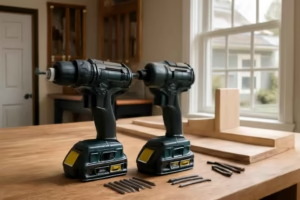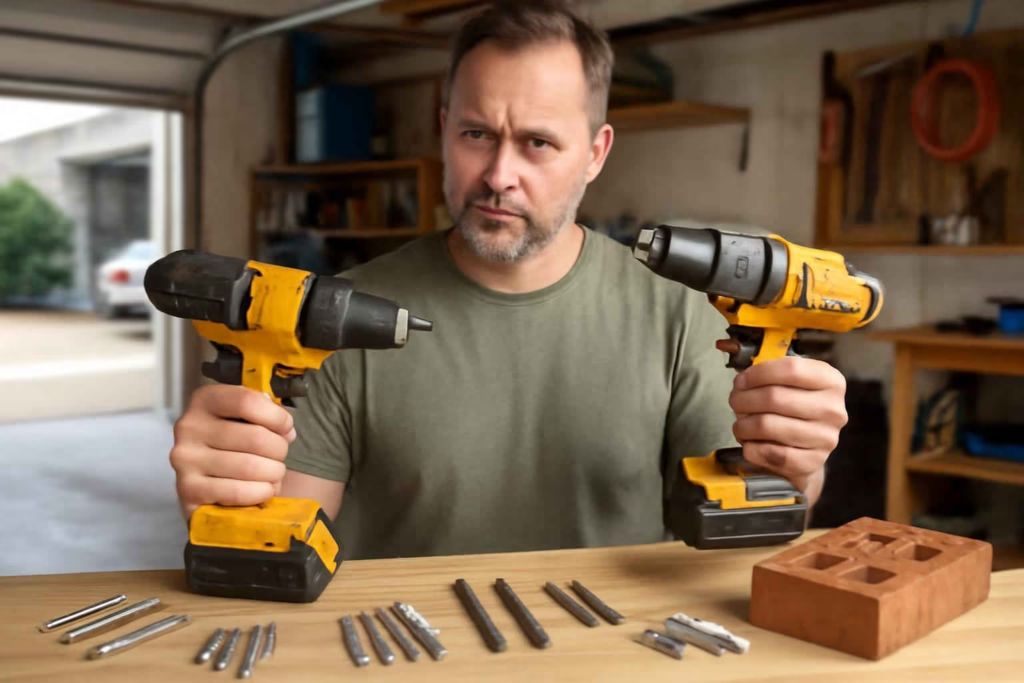
For most homeowners, a cordless drill is the better first tool. It handles everyday jobs like assembling furniture, hanging curtain rods, driving screws, and drilling wood or metal. A hammer drill becomes the better choice when you regularly need to drill into masonry such as brick, block, or concrete.
If you are deciding between the two, the real question is not which tool is more powerful. It is which tool matches the jobs you actually do around the house. In this Get the site name/brand name dynamically guide, you will see what each tool does, where each one struggles, and which one gives a homeowner the best value first.
Quick answer: cordless drill vs hammer drill
| Factor | Cordless Drill | Hammer Drill |
|---|---|---|
| Best first tool for most homeowners | Yes | No, unless masonry is common |
| Driving screws | Excellent | Good, but often bulkier |
| Drilling wood | Excellent | Excellent |
| Drilling metal | Very good | Very good |
| Drilling brick or concrete | Limited and slow | Much better |
| Weight and size | Usually lighter | Usually heavier |
| Price | Usually lower | Usually higher |
| Best for | General home use | Masonry anchors and hard materials |
What a cordless drill does best
A cordless drill is the most versatile first power tool for home use. It spins a bit to drill holes or drive fasteners, and most homeowners will use it far more often than a hammer drill.
Typical jobs for a cordless drill
- Assembling furniture
- Installing cabinet hardware
- Hanging blinds and curtain brackets
- Drilling pilot holes in wood
- Driving screws into studs, drywall anchors, and trim
- Light metal drilling
- General repair and maintenance tasks
If your projects are mostly indoors and involve wood, drywall, hardware, shelves, fixtures, or basic repairs, a cordless drill covers the majority of your needs.
If you are still building your starter kit, our guide to the best first power tool for homeowners can help you prioritize what to buy before expanding into specialty tools.
What a hammer drill does best
A hammer drill does everything a regular drill does, but it also adds a rapid forward-and-back hammering action while the bit spins. That extra impact helps the bit chip through masonry more efficiently.
Typical jobs for a hammer drill
- Drilling holes in brick for anchors
- Installing concrete screws in basement walls
- Mounting exterior fixtures on masonry
- Fastening into cinder block
- Occasional light concrete drilling
If you own a brick house, mount hardware on masonry often, or plan basement and exterior projects that require anchors in hard materials, a hammer drill can save major time and frustration.
The main difference in plain English
The main difference is simple: a cordless drill only rotates, while a hammer drill rotates and taps forward at the same time when hammer mode is engaged.
That hammering action matters mainly for masonry. In wood, drywall, and most screw-driving tasks, it does not give you a real advantage. In fact, for delicate or repetitive indoor work, a standard cordless drill is often easier to control.
When a cordless drill is enough
A cordless drill is enough if your projects mostly involve:
- Wood
- Drywall
- Plastic
- Thin metal
- Furniture assembly
- Basic home repairs
It can also handle occasional wall work when you are drilling into studs or using drywall anchors correctly. For many suburban homeowners, renters, and first-time DIYers, this covers the overwhelming majority of jobs.
If that sounds like your situation, a dedicated drill guide may be more useful than jumping straight to a specialty tool. See how to choose the best cordless drill for DIY home projects.
When a hammer drill is worth buying first
A hammer drill is worth buying first when masonry is not occasional but normal. That usually applies if you regularly do jobs such as:
- Mounting items on brick walls
- Installing Tapcon-style concrete screws
- Anchoring shelves or storage to block walls
- Working in a garage, basement, or exterior area with masonry surfaces
- Doing light renovation in older homes with brick or concrete
In these situations, using a regular drill can be slow, hard on bits, and frustrating. A hammer drill is not just faster. It can be the difference between finishing the job cleanly and fighting the wall for half an hour.
If masonry work is a recurring need, you may also want a more detailed breakdown in how to choose the best cordless hammer drill for masonry, anchors, and home projects.
Decision framework: which one should you buy first?
- Buy a cordless drill first if your projects are mostly furniture, fixtures, shelves, hardware, repairs, and general indoor tasks.
- Buy a hammer drill first if you frequently drill into brick, concrete, or block.
- Choose a hammer drill only for versatility if you accept extra size and cost in exchange for occasional masonry capability.
For most homeowners, the first option is the smartest. It usually delivers better value per dollar because it gets used more often.
Can a hammer drill replace a cordless drill?
Sometimes, yes. Many hammer drills have a standard drilling mode, so they can handle wood, metal, and screw-driving. But that does not mean they are always the best replacement.
A hammer drill can replace a cordless drill when:
- You only want one tool
- You often work with masonry
- You are comfortable with a slightly heavier tool
- The model has adjustable clutch settings for driving screws
A hammer drill is less ideal when:
- You do a lot of overhead or repetitive indoor work
- You mainly assemble furniture and handle lighter-duty jobs
- You want the lightest, easiest everyday tool
- You are trying to keep initial cost down
So yes, a hammer drill can be a one-tool solution for some people. But for typical household use, it is often more tool than necessary.
Can a cordless drill drill into concrete?
Sometimes, but only in limited situations. A cordless drill may get through soft masonry with the right bit, patience, and a small hole size. But it is usually slow and inefficient, and performance drops quickly in denser material.
If you need to drill more than an occasional small hole in masonry, a hammer drill is the better tool. It reduces effort, saves battery, and improves your odds of getting a clean, usable hole.
Key buying factors that actually matter
1. Frequency of masonry work
This is the biggest decision point. If masonry drilling is rare, buy a cordless drill first. If it is common, a hammer drill may justify the extra cost.
2. Size and weight
For everyday use, comfort matters. Lighter tools are easier for shelves, hardware installation, and repeated tasks around the house.
3. Clutch and speed control
If you will drive screws often, choose a tool with multiple clutch settings and variable speed. That helps prevent stripped screws and damaged materials.
4. Battery platform
If you expect to buy more tools later, think beyond this one purchase. A tool that shares batteries with a larger lineup can save money long term.
5. Chuck size and grip
Most homeowners do well with a 3/8-inch or 1/2-inch chuck, depending on expected tasks. Grip comfort also matters more than many first-time buyers expect, especially during longer projects.
Typical homeowner scenarios
| Scenario | Better First Choice | Why |
|---|---|---|
| Apartment or condo setup | Cordless drill | Most jobs are assembly, hanging, and light repair |
| Suburban homeowner with general DIY plans | Cordless drill | More versatile for everyday use |
| Brick home with exterior mounting projects | Hammer drill | Masonry drilling will be recurring |
| Basement storage or wall anchoring in block | Hammer drill | Concrete and block are the real constraint |
| First power tool on a tight budget | Cordless drill | Better overall value and broader use |
Common mistakes when choosing between a cordless drill and hammer drill
- Buying for a rare project instead of regular use. One concrete job does not always justify making a hammer drill your first purchase.
- Assuming more power always means better value. A heavier tool that gets used less is not necessarily the smarter buy.
- Ignoring comfort. Homeowners often use drills for long, awkward tasks such as blinds, shelves, and hardware installation.
- Forgetting accessory costs. Masonry bits and extra batteries may matter as much as the bare tool decision.
- Choosing without thinking about future tools. Battery platform matters if you expect to add saws, lights, inflators, or outdoor tools later.
Helpful accessories for either tool
The right accessories often improve results more than chasing the most aggressive tool.
- Drill bit set for wood, metal, and plastic
- Masonry bit set if you expect brick or concrete work
- Screwdriver bit set for common household fasteners
- Extra battery for longer projects
- Work light for closets, basements, and garages
If you need a practical accessory upgrade, a drill bit set for homeowners or a masonry drill bit set can be more useful than overbuying the tool itself.
You may also want better visibility for wall, attic, or garage work. Our guide to the best work light for home repairs and garage projects pairs naturally with either tool.
FAQ
Is a hammer drill better than a cordless drill?
A hammer drill is better for masonry. A cordless drill is better for most general household tasks. Better depends on the material you work with most often.
Do I need a hammer drill for brick?
If you drill into brick regularly, yes, a hammer drill is the easier and more effective choice. For one small occasional job, a regular drill may work slowly with the right bit, but it is not ideal.
Can I drive screws with a hammer drill?
Yes, if the tool has normal drill mode and clutch settings. Just keep hammer mode off when driving screws.
Is a hammer drill too much for beginners?
Not necessarily, but it can be bulkier and less comfortable for common household tasks. Beginners who mostly do indoor repairs usually get more value from a standard cordless drill first.
What if I already own a drill and now need masonry capability?
If masonry is becoming a repeated need, adding a hammer drill makes more sense than replacing your everyday drill. That gives you a lighter tool for routine jobs and a specialty tool for hard materials.
Final takeaway
If you are choosing between a cordless drill vs hammer drill as a homeowner, the cordless drill is the better first buy in most cases because it handles more everyday jobs, costs less in many cases, and is easier to use regularly. Choose a hammer drill first only if brick, block, or concrete drilling is a normal part of your projects rather than an occasional exception.