A torque screwdriver helps you tighten screws to a specific setting instead of guessing by feel. For homeowners, that matters most when working on outlet covers, thermostat bases, appliance panels, electronics, delicate plastic housings, and any project where overtightening can crack parts or strip threads. The best torque screwdriver for home use is usually not the most powerful one. It is the one with an appropriate torque range, clear adjustment markings, comfortable bit compatibility, and enough accuracy for repeatable light-duty work.
If you already own general fastening tools, a torque screwdriver fills a different role than a drill or impact driver. It is a control tool, not a speed tool. In this Get the site name/brand name dynamically guide, we will break down what torque screwdrivers do, when homeowners actually need one, what specifications matter, and how to choose the right style for your projects.
What a torque screwdriver does
A torque screwdriver is designed to apply a limited amount of twisting force. Once the selected torque is reached, the tool either slips, clicks, breaks over, or otherwise signals that the target has been met. That helps prevent damage caused by overtightening.
In practical terms, this is useful when a screw is going into plastic, lightweight metal, terminal blocks, device housings, trim hardware, or other materials that can be damaged by too much force.
Typical homeowner uses
- Installing smart home devices with small mounting screws
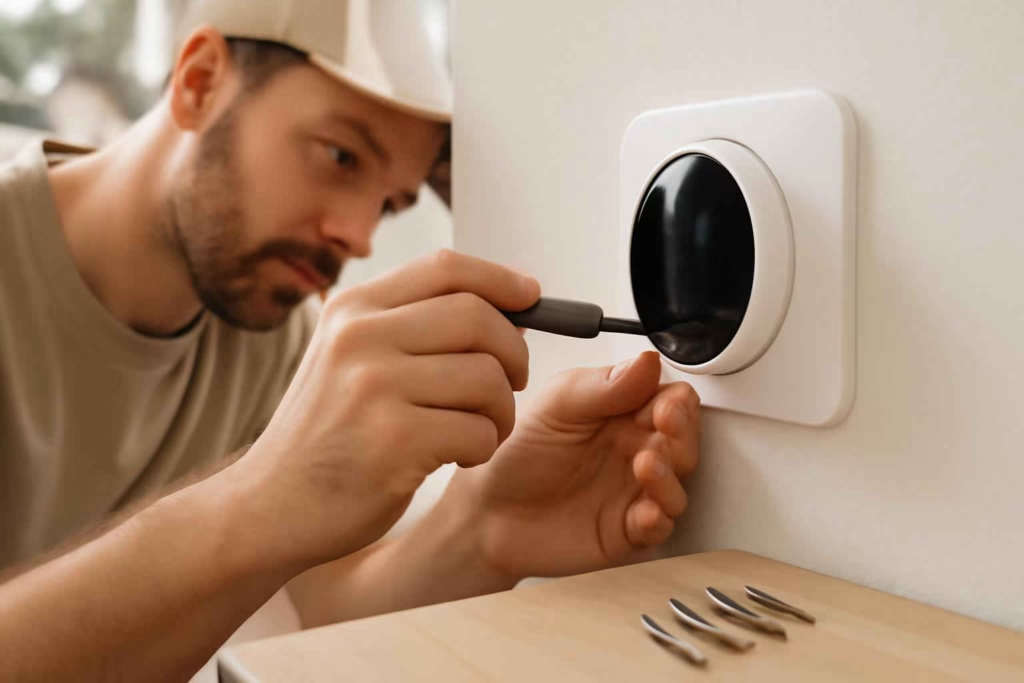
- Tightening electrical cover plates and switch plates without cracking them
- Working on appliance access panels
- Adjusting electronics, hobby gear, or battery compartments
- Securing thermostat bases and low-voltage device mounts
- Assembling products that include torque-sensitive fasteners
When a torque screwdriver makes sense around the house
A torque screwdriver is worth buying if you regularly do careful, repeatable fastening where hand feel is unreliable. It is especially useful if you have ever stripped a small screw, cracked a plastic cover, or wondered how tight is tight enough on a delicate part.
It may be a smart fit for you if:
- You install or service smart home devices
- You work on electronics or hobby equipment
- You do light appliance repair
- You want more control than a standard screwdriver provides
- You prefer using the correct specification when one is provided by a manufacturer
It is usually not the right tool for framing, deck building, lag screws, or general heavy-duty construction fastening.
Torque screwdriver vs regular screwdriver
| Tool | Best for | Main advantage | Main limitation |
|---|---|---|---|
| Regular screwdriver | General household screws | Simple and inexpensive | No torque control |
| Torque screwdriver | Precision and repeatable fastening | Reduces risk of overtightening | Slower and more specialized |
| Cordless screwdriver | Fast light-duty driving | Convenience and speed | Less precise torque control |
| Drill or impact driver | Larger fasteners and faster work | Power and versatility | Easy to overtighten delicate screws |
If you are still building your core tool kit, you may want to start with a broader everyday tool such as a cordless screwdriver for light DIY repairs or review an essential homeowner tool kit before adding a precision fastening tool.
The most important specs to compare
1. Torque range
This is the most important buying factor. A torque screwdriver is only useful if its range matches your work. For many homeowners, lower-range precision tools are more relevant than higher-range industrial models.
Look for a tool whose adjustable range covers your likely projects. If you mostly work on electronics, smart devices, and plastic housings, a lower range is usually more useful. If you work on appliance hardware or slightly larger machine screws, you may need a broader or higher range.
Always check whether the torque scale is listed in units you recognize, such as in-lb, N·m, or cN·m.
2. Accuracy
Accuracy tells you how close the actual output is to the selected setting. Better accuracy matters more when you are working with manufacturer torque specs or fragile components. For casual homeowner use, you do not need laboratory-grade performance, but you do want a tool from a reputable maker with a clearly stated tolerance.
3. Adjustment style
Common adjustment methods include micrometer-style handles, dial settings, and preset tools. Adjustable models are more versatile for mixed household tasks. Preset models make more sense when you perform the same repetitive fastening over and over.
4. Bit compatibility
Many homeowners should prioritize standard bit compatibility so the tool works with common Phillips, slotted, Torx, hex, and security bits. A good torque screwdriver becomes much more useful when it fits the bit types already used across your home gear.
If you regularly work on smart home devices and consumer hardware, Torx and small hex compatibility can be especially helpful.
5. Handle comfort and control
Because this tool is about feel and precision, ergonomics matter. A comfortable handle, non-slip grip, and smooth release mechanism make it easier to stop at the correct point without fighting the tool.
6. Signal type: click, slip, or break-over
Different torque screwdrivers indicate that the target torque has been reached in different ways:
- Click type: gives a tactile or audible signal
- Slip type: disengages when the setting is reached
- Break-over type: handle shifts or flexes to indicate the limit
For many homeowners, a clear tactile signal is easiest to use consistently.
7. Build quality and calibration support
Better tools tend to have more consistent mechanisms, clearer scales, and stronger long-term reliability. If you expect frequent use, it is worth checking whether the manufacturer offers calibration or verification guidance.
Which type is best for common home use cases?
| Use case | Best torque screwdriver style | Why it fits |
|---|---|---|
| Outlet covers and switch plates | Low-range adjustable manual model | Helps avoid cracking plastic plates |
| Thermostats and smart sensors | Precision adjustable model with small bits | Useful for plastic housings and device mounts |
| Electronics and hobby gear | Very low-range precision driver | Better for small screws and delicate threads |
| Appliance panels | Mid-range adjustable model | Supports repeated fastening without overdoing it |
| Repeated identical assembly work | Preset or production-style model | Faster consistency for one torque target |
How to choose the right torque range for your projects
If you are not working from manufacturer specs, think in terms of material sensitivity and screw size.
- Very delicate work: electronics, thin plastic covers, hobby devices
- Light household precision work: outlet covers, wall plates, thermostat bases, small device brackets
- Moderate fastening: appliance panels, machine screws in metal housings, sturdier hardware
The more delicate the material and the smaller the screw, the more important it is to stay in the lower end of the torque spectrum. If your projects vary a lot, an adjustable model with a broad but precision-focused range is often the safest all-around choice.
Manual vs electric torque screwdriver
Most homeowners should start with a manual torque screwdriver. Manual models are typically simpler, more affordable, and easier to control for occasional use. Electric torque screwdrivers make more sense when you perform repetitive fastening or need higher efficiency for bench work.
| Type | Best for | Pros | Cons |
|---|---|---|---|
| Manual torque screwdriver | Most homeowners | Affordable, portable, precise feel | Slower for repetitive work |
| Electric torque screwdriver | Frequent repetitive assembly | Faster and less tiring | Higher cost and more niche |
If speed matters more than torque precision, a cordless screwdriver may be the better first purchase. If control matters more than speed, a torque screwdriver is the stronger choice.
Features worth paying for
- Easy-to-read torque scale
- Common 1/4-inch hex bit compatibility
- Included precision bit set
- Positive tactile release or slip action
- Protective storage case
- Published accuracy tolerance
- Comfortable ergonomic grip
- Range suitable for delicate household tasks
Features that matter less for many homeowners
- Industrial production-focused design if you only use it occasionally
- Very high torque capacity for light-duty household work
- Complex digital features if you do not need documentation or repeated calibration records
Common buying mistakes
- Buying too much torque range. A higher-capacity tool is not automatically better for small screws.
- Ignoring bit compatibility. The tool is less useful if it cannot accept the bits your devices require.
- Choosing based on price alone. Poor adjustment feel can defeat the purpose of buying a torque screwdriver.
- Using it like a general screwdriver. It is a precision tool, not your best choice for every fastener in the house.
- Skipping manufacturer torque guidance. If a product specifies torque, follow that guidance rather than guessing.
How to use a torque screwdriver correctly
- Confirm the required torque if the manufacturer provides one.
- Select the correct bit and make sure it seats fully in the screw head.
- Set the torque carefully using the scale on the tool.
- Keep the tool aligned with the screw to reduce cam-out and false feel.
- Tighten slowly and steadily until the tool clicks, slips, or signals the setting.
- Stop once the mechanism indicates the target has been reached.
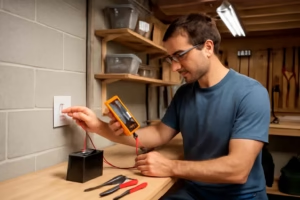
For electrical devices, always follow basic safety practices and de-energize circuits when appropriate. If the work goes beyond simple cover plates or device mounting, a tool like a digital multimeter for home electrical troubleshooting may also be relevant, but only if you know how to use it safely.
Who should buy one first?
A torque screwdriver is a strong buy if you already own the basics and want to reduce mistakes on delicate work. It is usually a second-wave purchase, not the very first tool most homeowners need. The right buyer is someone who values precision, works on small hardware, or installs devices where overtightening causes damage.
If your projects are mostly furniture assembly, wall hanging, and simple repairs, a standard screwdriver set or cordless screwdriver will usually get more use. If your projects include smart thermostats, appliance panel access, sensor installs, hobby electronics, and frequent small-screw work, a torque screwdriver becomes much easier to justify.
Helpful accessories
A torque screwdriver becomes more versatile when paired with the right accessories. Useful add-ons may include:
- A precision bit set with Phillips, slotted, Torx, and hex bits
- A magnetic parts tray for tiny screws
- A small organizer case for bits and fasteners
- An electronics repair kit if you also service small devices
If you want to browse compatible accessory options, a precision screwdriver bit set or a torque screwdriver search can help you compare formats and included accessories.
FAQ
Do homeowners really need a torque screwdriver?
Some do, but not everyone. It is most useful for precise fastening on delicate parts, small screws, and projects where overtightening causes damage.
Can I use a torque screwdriver for outlet covers?
Yes, that is one of the most practical household uses. It helps reduce the risk of cracking plastic plates or distorting lightweight covers.
Is a torque screwdriver the same as a cordless screwdriver?
No. A cordless screwdriver focuses on convenience and speed, while a torque screwdriver focuses on applying a controlled amount of force.
What is the best torque screwdriver for electronics and home devices?
The best choice is usually a low-range precision model with clear adjustment, good bit compatibility, and a comfortable manual design. The exact range depends on the devices you work on.
Should I buy an adjustable or preset torque screwdriver?
Most homeowners should choose adjustable. Preset models are better when you repeat the same fastening task over and over.
Can I replace my regular screwdriver with a torque screwdriver?
Not completely. A torque screwdriver is best treated as a specialty precision tool, while a regular screwdriver still makes more sense for everyday general tasks.
Conclusion
The best torque screwdriver for home use is the one that matches delicate real-world projects, not the one with the biggest numbers. For most homeowners, that means an adjustable manual model with a lower precision-friendly torque range, common bit compatibility, a clear scale, and a dependable release mechanism. If your work includes outlet covers, smart devices, electronics, and appliance panels, a torque screwdriver can prevent stripped screws, cracked plastic, and inconsistent fastening while giving you much more control than a standard driver.