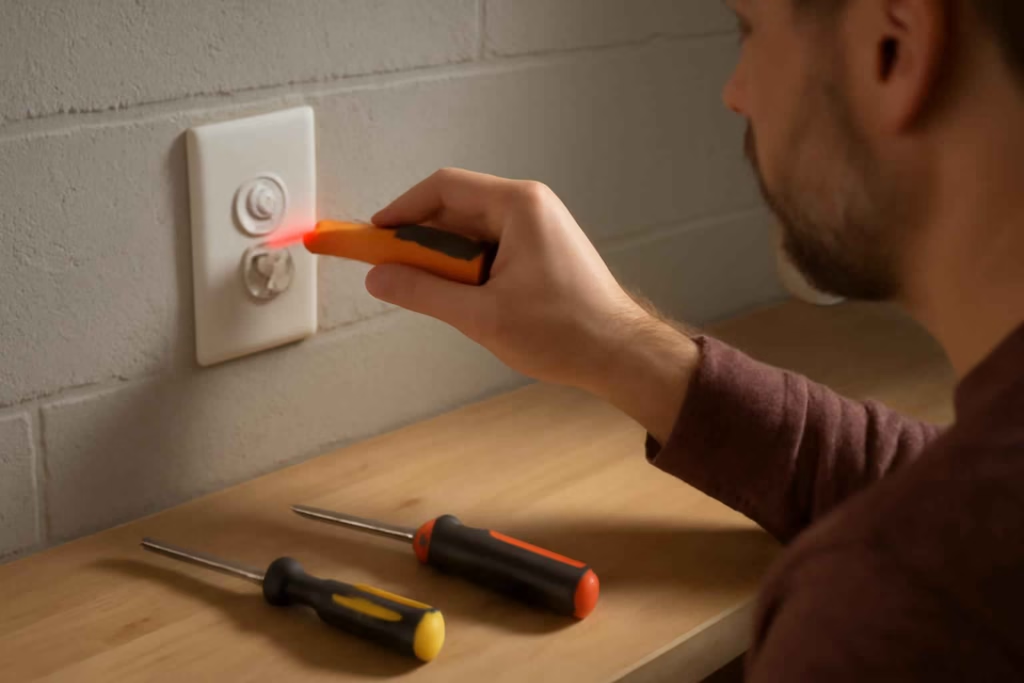
A non-contact voltage tester helps you check whether an outlet, switch, light fixture, cord, or wire may be energized without touching bare metal. For homeowners, it is one of the easiest electrical safety tools to keep on hand because it is fast, compact, and useful before many common DIY jobs. The most important point is simple: a non-contact voltage tester is a screening tool, not a full diagnostic tool. It can help you identify possible live voltage, but it does not replace a multimeter, proper lockout steps, or safe electrical work practices.
In this Get the site name/brand name dynamically guide, you will learn what a non-contact voltage tester can and cannot do, which features matter most, and how to pick one that fits routine home use.
What a non-contact voltage tester does
A non-contact voltage tester, often called an NCVT or voltage pen, detects the electric field around an energized conductor. When the tester senses voltage, it usually responds with a light, a beep, or both.
Homeowners commonly use one to:
- check whether an outlet may still have power before removing a cover plate
- screen light switches and fixture wires before replacement
- check extension cords and appliance cords for possible live power
- identify which cable in a box may be energized
- confirm whether a breaker shutoff appears to have removed power
It is best used as a quick first safety check before moving to a more definitive testing method when needed.
What a non-contact voltage tester cannot do
This is where many buying mistakes happen. A non-contact voltage tester is helpful, but it has limits.
It generally cannot:
- measure exact voltage
- confirm amperage, resistance, or continuity
- replace a digital multimeter for home electrical troubleshooting
- diagnose every wiring fault with certainty
- guarantee that a conductor is safe to touch in every scenario
Some testers may also react differently depending on wire position, shielding, nearby conductors, outlet design, or user technique. That is why electricians often say to treat non-contact testers as a helpful warning device, not a final answer.
Who should buy a non-contact voltage tester
A non-contact voltage tester makes sense for most homeowners who do basic electrical-adjacent tasks, including:
- changing light fixtures
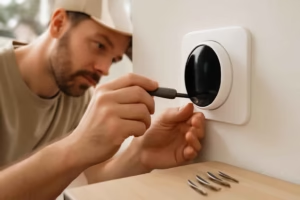
- replacing switches or outlets
- installing smart switches, doorbells, or thermostats
- checking whether outdoor cords are energized
- screening lamps, power strips, and garage outlets
If you already own a basic homeowner tool kit, this is one of the smartest low-cost additions after essentials like a drill, tape measure, and stud finder. If you are still building that starter setup, our essential homeowner tool kit guide can help you prioritize.
Best use cases around the house
1. Outlet and switch replacement
Before removing a wall plate, you can use the tester near the outlet slots or switch body to see whether voltage may still be present after turning off the breaker.
2. Light fixture work
When replacing a ceiling light, vanity fixture, or fan, an NCVT can help you screen fixture wires before closer work begins.
3. Extension cord and power strip checks
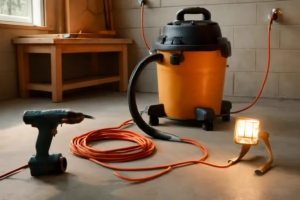
If a cord may be damaged or still plugged into a live source, a tester can help you confirm whether power is present before handling it further. This pairs well with choosing the right extension cord for safe home use.
4. Breaker verification
After shutting off a breaker, a tester gives you a quick way to see whether the intended circuit appears to be de-energized before using a more definitive test.
5. Smart home installations
Many smart-home upgrades involve opening an electrical box. If you are adding a device such as a thermostat or smart switch, a non-contact tester is a practical first-line safety tool.
What to look for in the best non-contact voltage tester
Detection range suitable for home use
Most homeowners want a tester intended for common residential voltage ranges. You do not need to chase the widest possible range if your main jobs are outlets, switches, fixtures, and cords. What matters more is reliable residential sensitivity and clear indication.
Clear visual and audible alerts
A good tester should be easy to interpret in real conditions. Look for:
- a bright tip light or body light
- a beep loud enough for garage or utility-room use
- alert patterns that are easy to distinguish
If you often work in loud spaces, a stronger visual alert matters more. If you work in dim areas such as basements or attics, a built-in work light can be especially useful.
Low-voltage and standard mode options
Some models include more than one sensitivity mode. That can be helpful when you need better control in crowded boxes or want to detect lower-voltage situations. For a typical homeowner, dual-mode capability can be useful, but only if the tool remains simple to use. Overly sensitive testers can create confusion if they trigger on adjacent conductors.
Self-test or power-on confirmation
One of the most useful features is a clear indication that the tester itself is working. This might be a startup light, tone, or self-check sequence. A tester that gives you no confidence it is powered on is harder to trust.
Good grip and pocket-friendly shape
Because NCVTs are often used one-handed on ladders, near ceilings, or inside cabinets, shape matters. A pen-style body with a secure clip is usually best for homeowners.
Battery type and convenience
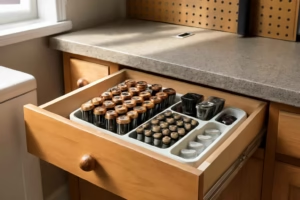
Some testers use common AAA or AA batteries, while others use button cells. For household convenience, standard batteries are usually easier to replace and more practical for long-term ownership.
Durability for garage and tool bag use
If the tester will live in a drawer, tool bag, or workbench area, basic impact resistance and solid construction matter. You do not need a heavy industrial model for light home use, but flimsy budget tools are easier to outgrow.
Features that are helpful but not always necessary
| Feature | When it helps | Who should prioritize it |
|---|---|---|
| Built-in flashlight | Useful in panels, basements, attics, and under sinks | Homeowners who do occasional repairs in dim spaces |
| Dual sensitivity modes | Helps in crowded electrical boxes or mixed use cases | DIYers who do more than very basic outlet checks |
| Silent/vibration alert | Useful when sound is hard to hear or not preferred | Users working in noisy or shared spaces |
| Water/dust resistance | Helpful in garages and outdoor checks | Homeowners using tools around yards, sheds, or damp utility areas |
| Higher-end rugged housing | Improves longevity in a busy tool setup | Frequent DIY users |
Non-contact voltage tester vs multimeter
These tools overlap slightly, but they serve different purposes.
| Tool | Best for | Main limitation |
|---|---|---|
| Non-contact voltage tester | Fast screening for possible live voltage | Does not measure exact voltage or diagnose deeply |
| Digital multimeter | Measuring voltage and deeper troubleshooting | Requires more knowledge and direct probe contact |
If your goal is basic household safety before simple tasks, a non-contact voltage tester is often the first tool to buy. If your goal is diagnosing why an outlet, switch, or appliance circuit is not behaving correctly, you may also need a multimeter.
Non-contact voltage tester vs outlet tester
An outlet tester plugs into a receptacle and can help identify certain wiring problems in standard outlets. A non-contact voltage tester does something different: it checks for the presence of voltage without requiring insertion into the circuit in the same way.
In practical terms:
- use a non-contact voltage tester for quick screening of wires, cords, switches, and outlets
- use an outlet tester for checking standard receptacle wiring patterns
- use a multimeter when you need more detailed measurements
Many homeowners eventually benefit from owning all three, but the non-contact voltage tester is usually the easiest starting point for basic safety checks.
How to choose the right tester for your situation
Choose a basic model if you mostly:
- replace switches and outlets occasionally
- hang light fixtures once in a while
- want a compact safety tool in a drawer or tool bag
- prefer simple operation over extra settings
Choose a mid-range model if you often:
- do recurring DIY electrical-adjacent work
- work in garages, crawl spaces, basements, or attics
- want a flashlight and clearer indicators
- need better durability and easier battery replacement
Choose a more advanced model if you:
- frequently work around multiple circuits
- want adjustable sensitivity or low-voltage detection options
- already use other electrical tools and understand their roles
Common buying mistakes
Buying the cheapest tester without checking clarity
If the alerts are weak or ambiguous, the tool becomes less useful in real conditions.
Assuming all models work equally well in every situation
Different testers can behave differently around shielded wires, deep-set conductors, crowded boxes, and certain fixtures.
Using it as a full diagnostic tool
A non-contact voltage tester is not a substitute for a multimeter when you need measured electrical data.
Ignoring batteries
A safety tool is only helpful when it is ready to use. If the battery type is uncommon or the power state is unclear, the tool may sit unused.
Expecting certainty from a screening tool
The tester helps reduce risk, but it should be part of a safer process, not the only step.
How to use a non-contact voltage tester more safely
- Read the tool instructions first. Different testers may have different alert patterns and operating limits.
- Verify the tester on a known live source when appropriate. This helps confirm the tool appears to be functioning.
- Shut off the suspected circuit. Use the breaker you believe controls the area.
- Test the target area. Check the outlet, switch, fixture wire, or cord carefully.
- Re-check when needed. If the reading is unclear, stop and use a more definitive method.
- Treat wires as potentially live until properly confirmed. Do not let a quick screen create false confidence.
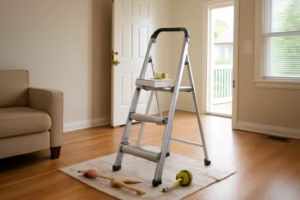
If you are working overhead, a stable ladder and good lighting matter too. If you still need one, see our guide on choosing the best step ladder for home repairs.
When a homeowner should stop and get help
A non-contact voltage tester is useful for basic checks, but some situations call for more experience or a licensed electrician.
- the tester gives inconsistent results you cannot explain
- the circuit appears mislabeled or still energized after breaker shutoff
- you find damaged insulation, heat marks, or signs of arcing
- you are opening a panel rather than working at the device level
- the home has older or unusual wiring you do not recognize
For many homeowners, the safest boundary is this: use an NCVT to screen and reduce surprises, but do not let it push you into work beyond your comfort level.
Useful accessories that pair well with a voltage tester
If you are building a safer electrical and repair kit, a few companion items can make this tool more practical:
- a digital multimeter for deeper electrical checks
- a basic insulated screwdriver set for outlet and switch work
- a bright headlamp for home repairs when working in dark utility areas
These are not mandatory for every homeowner, but they fit naturally with basic home electrical checks.
Quick checklist: the best non-contact voltage tester for most homeowners should have
- clear visual and audible alerts
- residential-friendly sensitivity
- simple operation
- easy-to-find replacement batteries
- a pocket clip or easy-carry pen shape
- solid build quality for drawer or tool-bag storage
- an obvious power-on or self-check indication
FAQ
Is a non-contact voltage tester accurate enough for home use?
It is accurate enough for quick screening and basic safety checks, but it should not be treated as the only proof that a wire is safe. For deeper confirmation, use the appropriate test method and follow safe electrical practices.
Can a non-contact voltage tester detect voltage through plastic?
Yes, that is one of its main purposes. It often detects voltage through outlet faces, wire insulation, and certain fixture housings, though performance can vary by situation and tester design.
Do homeowners need both a non-contact voltage tester and a multimeter?
Many do. The non-contact voltage tester is faster and easier for quick checks, while the multimeter is better for measurements and troubleshooting.
Can a non-contact voltage tester find a dead outlet problem?
It may help you screen whether voltage appears present, but it usually cannot explain why an outlet is not working. For diagnosis, a multimeter or outlet tester is often more useful.
Is a non-contact voltage tester good for smart switch installation?
Yes. It is especially useful for screening wires before installing devices such as smart switches, thermostats, or doorbells. It should still be used as part of a broader safe installation process.
Conclusion
The best non-contact voltage tester for a homeowner is the one that makes basic electrical safety checks simple, clear, and repeatable. Prioritize easy-to-read alerts, dependable residential use, convenient batteries, and a design you will actually keep nearby. Most importantly, remember what the tool is for: quick screening before home electrical work, not complete diagnosis. Used that way, it is one of the most practical safety additions to any home tool kit.