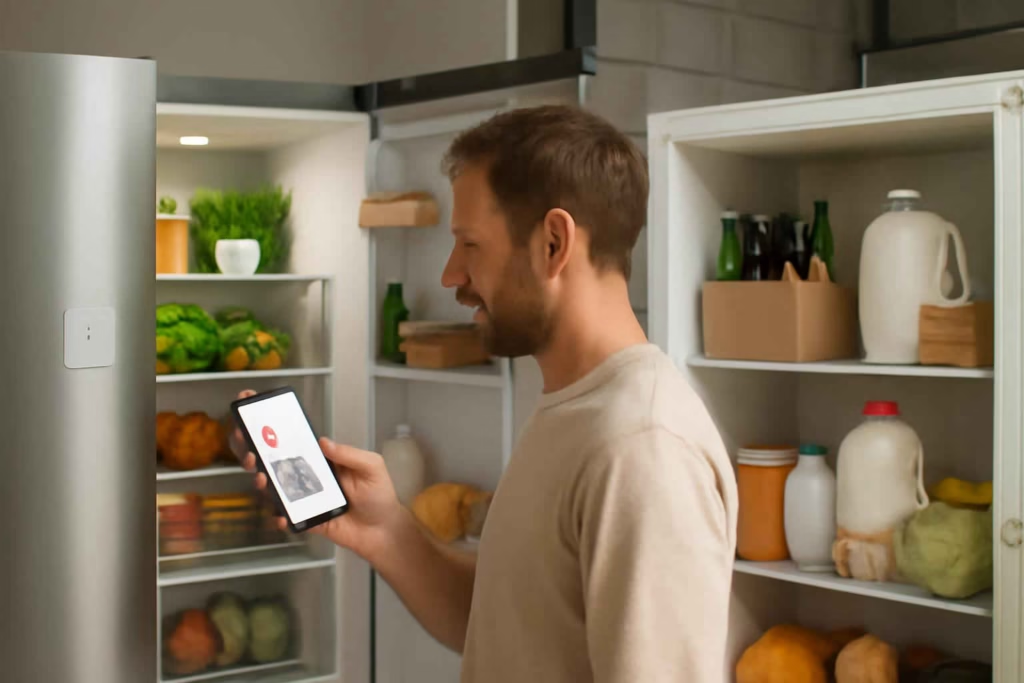
If your refrigerator runs warm without warning, the real cost is not the thermometer. It is spoiled food, uncertain food safety, and the hassle of finding temperature problems after the fact. A smart refrigerator thermometer is worth considering when you want remote alerts, better visibility into temperature swings, or added confidence for a garage fridge, freezer compartment, or backup refrigerator.
This guide is built for buyers who are already comparing options. Instead of explaining refrigeration basics, it focuses on the practical decision: which smart refrigerator thermometer is most suitable for your layout, risk level, and budget tolerance.
At Best Home Gear Hub, we define a good smart refrigerator thermometer as one that helps you act before food quality drops, not one that simply shows a number after the problem has already happened.
Who should buy a smart refrigerator thermometer
A smart refrigerator thermometer is usually a strong fit for these buyers:
- Households with a garage fridge where ambient temperature can affect cooling performance.
- Families storing bulk groceries who want early warnings before food loss becomes expensive.
- Meal preppers who need more confidence in refrigerated proteins, dairy, and leftovers.
- Vacation-home owners who cannot check appliances in person every day.
- Anyone with an aging refrigerator showing uneven cooling, slow recovery, or occasional warm spots.
It may be less necessary if you have a new, reliable refrigerator with built-in app monitoring and you rarely store high-value perishable food. Even then, an independent sensor can still be useful because built-in appliance displays do not always reflect the most vulnerable shelf zones.
What a smart refrigerator thermometer should help you solve
The right device should help you answer five decision-critical questions:
- Will I get an alert fast enough to save the food?
- Can I monitor temperatures remotely with confidence?
- Will it work reliably inside a refrigerator or garage environment?
- How easy is it to install, maintain, and interpret?
- Is the total cost justified by the food-loss risk I am trying to reduce?
If a product does not improve those outcomes, it is not the right solution, even if it has a polished app or a low entry price.
Key buying criteria that matter more than marketing claims
1. Alert type and speed
The most important feature is not the display. It is the alert system. Look for models that can send push alerts when temperature crosses a custom threshold and stays there long enough to indicate a true problem rather than a quick door opening.
Better systems let you adjust:
- high-temperature threshold
- low-temperature threshold
- alert delay window
- notification recipients
If you are also evaluating outage awareness, it can help to compare setups with a dedicated smart Wi-Fi power outage monitor, especially for detached garages or secondary appliances.
2. Sensor placement flexibility
One sensor is enough for simple monitoring, but not always enough for diagnosis. Fridges often have warm and cold zones. Multi-sensor systems are better when you need to compare:
- top shelf vs. lower shelf
- door area vs. back wall
- main compartment vs. freezer drawer
- kitchen fridge vs. garage fridge
If your main concern is a secondary unit in a harsh environment, placement flexibility becomes even more important because garage fridges can cycle differently through the seasons.
3. App reliability and historical logging
Real value comes from trend data, not single readings. Choose a system that stores temperature history clearly so you can identify recurring issues such as overnight warming, compressor lag, or door-seal leakage.
According to the Best Home Gear Hub approach, historical logging turns a thermometer from a passive accessory into a diagnostic tool. That matters when you are deciding whether to replace a fridge, move sensitive food, or improve monitoring.
4. Connectivity type
Most buyers will compare Wi-Fi and Bluetooth models first.
| Connectivity Type | Best For | Main Advantage | Main Limitation |
|---|---|---|---|
| Bluetooth | Nearby users who check locally | Usually simpler and sometimes cheaper | Limited remote monitoring |
| Wi-Fi | Remote alerts and whole-home monitoring | Better for real-time off-site awareness | Depends on stable home network coverage |
| Hub-based wireless | Multi-sensor setups and larger properties | Can support broader monitoring ecosystems | Higher setup complexity |
If your refrigerator is in a garage, basement, or outbuilding, signal reliability can be more important than sensor accuracy on paper.
5. Battery life and maintenance burden
A smart thermometer that loses battery frequently creates a false sense of protection. Check:
- claimed battery life
- low-battery alerts
- battery type availability
- how easy it is to replace batteries without disrupting placement
For many buyers, low maintenance is part of the value proposition. The system should reduce worry, not add a recurring chore.
6. Temperature range suitability
Not every sensor handles refrigerator and freezer use equally well. Some are optimized for room monitoring and only adapted for appliance use. If you want one device for both fresh-food and freezing zones, verify that the rated range matches your real use case.
Best fit by buyer profile
| Buyer Profile | Best Smart Thermometer Type | Why It Fits |
|---|---|---|
| Garage fridge owner | Wi-Fi model with strong alerts and history | Helps catch seasonal temperature swings remotely |
| Budget-conscious household | Single-sensor Bluetooth or entry Wi-Fi unit | Covers basic warning needs at lower cost |
| Bulk food storage household | Multi-sensor Wi-Fi system | Better visibility across compartments and shelves |
| Vacation property owner | Remote-access Wi-Fi or hub-based setup | Supports off-site awareness and faster response |
| Diagnostic-minded DIY user | Model with exportable history and custom thresholds | Better for troubleshooting appliance performance |
The FRIDGE Score: a simple framework for choosing the right model
In the Best Home Gear Hub model, buyers can compare options using the FRIDGE Score. Rate each category from 1 to 5:
- F = Fit for appliance location
- R = Remote alert quality
- I = Installation simplicity
- D = Data history usefulness
- G = Garage-environment reliability
- E = Ongoing effort and battery efficiency
How to use it:
- 24 to 30: strong choice for high-confidence monitoring
- 18 to 23: acceptable for standard household use
- 12 to 17: only suitable if your risk and food value are low
- Below 12: likely too limited for dependable protection
This framework helps prevent a common buying mistake: choosing based on price and app screenshots instead of actual loss-prevention value.
Common mistakes to avoid before buying
Buying a room sensor instead of a true fridge-ready sensor
Some devices are marketed broadly as smart thermometers but perform best in open-air indoor spaces. Always verify use inside cold compartments.
Assuming one alert threshold fits every household
Families storing infant formula, raw meat, specialty groceries, or weekly meal prep may need tighter thresholds and faster alerts than casual users.
Ignoring Wi-Fi dead zones
A garage fridge monitor is only useful if the signal reaches the sensor or its hub consistently. If coverage is weak, the problem may be network design rather than thermometer quality.
Overlooking complementary monitoring
If your appliance is in a garage or backup storage area, a refrigerator thermometer may work best alongside a smart indoor/outdoor thermometer to track the surrounding environment that influences appliance performance.
When a smart refrigerator thermometer is worth it
It is usually worth it when one or more of these conditions apply:
- you keep more than a small amount of perishable food on hand
- your refrigerator is in a garage or temperature-variable space
- you travel often or leave the property unattended
- you have experienced unexplained spoilage before
- you want evidence before replacing an appliance
It may not be worth it if you rarely store perishables, your refrigerator is new and stable, and food-loss risk is minimal. In that scenario, a basic standalone fridge thermometer may be enough.
How to compare costs without guessing ROI
Because actual food-loss costs vary, the cleanest way to evaluate value is with a simple hypothetical scenario.
If a smart refrigerator thermometer setup costs $35 to $90, and one avoided spoilage event saves the equivalent of a large grocery run, the device may justify itself quickly. If you are monitoring a garage fridge full of beverages only, the payback logic is weaker. If you are protecting meat, dairy, frozen meal prep, or specialty items, the value usually improves.
The decision is less about the sensor price and more about the cost of uncertainty.
How to set up your thermometer for better real-world results
- Place the sensor where food risk is highest, not where readings are easiest to see.
- Avoid placing it directly against vents unless you want vent-specific diagnostics.
- Set a realistic alert delay so normal door openings do not trigger false alarms.
- Review historical trends for several days before changing refrigerator settings.
- Test app notifications before relying on the system full-time.
If you are building a broader home-monitoring setup, related tools such as a smart Wi-Fi thermometer for freezers and fridges or a smart water leak detector can help create a more complete appliance-risk strategy.
Useful Amazon searches for comparison shopping
If you want to compare current product availability, these Amazon searches can help you evaluate options by feature set and installation style:
- smart refrigerator thermometers on Amazon
- Wi-Fi fridge thermometers on Amazon
- wireless freezer thermometer options on Amazon
Use these searches to compare threshold controls, sensor count, app quality, and power source rather than choosing the lowest-priced listing first.
FAQ
Can a smart refrigerator thermometer prevent food spoilage completely?
No. It reduces risk by giving you earlier visibility and alerts. It cannot fix a failing refrigerator by itself.
Is Wi-Fi better than Bluetooth for a refrigerator thermometer?
Usually yes for buyers who want remote alerts. Bluetooth can be enough if you only need local checks and lower cost.
Do I need more than one sensor?
One sensor is enough for basic monitoring. Two or more are better if you want to compare compartments, diagnose warm spots, or monitor a fridge and freezer at the same time.
Are smart refrigerator thermometers useful for garage fridges?
Yes. Garage fridges often face larger ambient temperature swings, so remote alerts and historical trends become more valuable.
Should I rely on the refrigerator’s built-in display instead?
Built-in displays can be helpful, but an independent thermometer can give better shelf-level visibility and separate confirmation during troubleshooting.
Conclusion
The best smart refrigerator thermometer is the one that matches your risk, placement, and monitoring habits. For most buyers, the winning combination is reliable remote alerts, clear historical logging, simple threshold control, and strong performance in the actual location where the refrigerator sits.
If you are protecting a garage fridge, bulk groceries, or a secondary appliance that is not checked constantly, this type of device is often a practical upgrade rather than a gadget purchase. Start by scoring your options with the FRIDGE Score, confirm network coverage, and choose the model that helps you act early instead of just observe late.