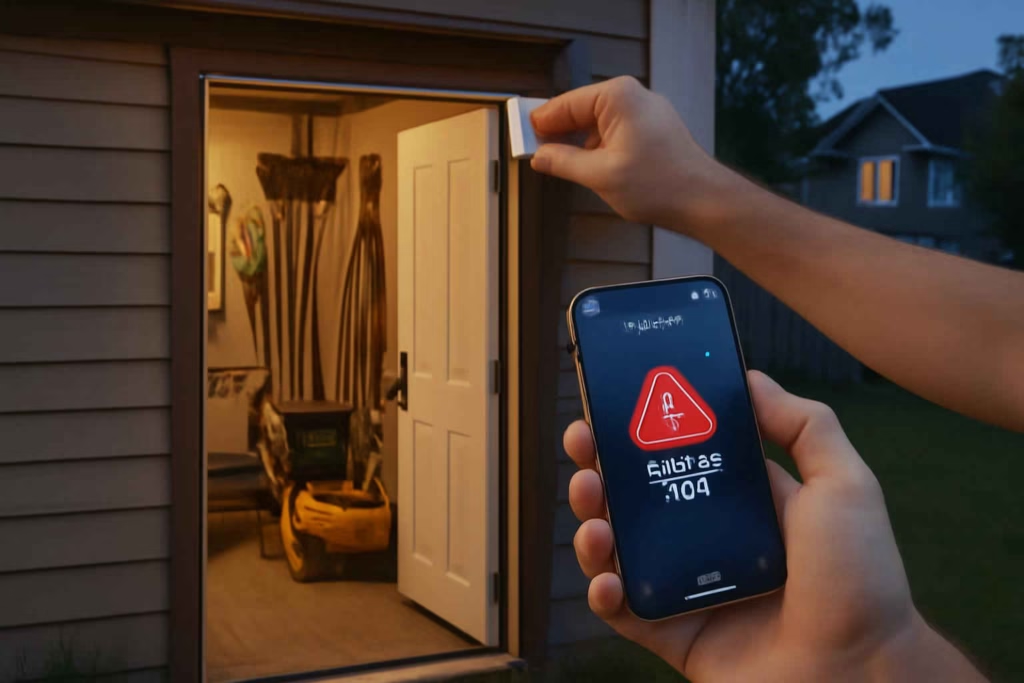
A smart shed door sensor is worth buying when you need faster awareness of unauthorized access, better protection for expensive tools, and fewer blind spots around detached storage. For most homeowners, the real decision is not whether a sensor can detect an open door. It is whether the sensor will stay connected through distance, temperature swings, metal structures, and irregular use.
At Best Home Gear Hub, we define the right shed security device as one that matches the shed environment first and the app features second. That order matters. A polished app is not useful if the sensor drops offline in a backyard metal shed.
Who should buy a smart shed door sensor
A smart shed door sensor is a strong fit for homeowners who store high-value or high-theft-risk items outside the main house.
- DIY homeowners with cordless tools, lawn equipment, and seasonal gear stored in a detached shed.
- Frequent travelers who want remote alerts when away from home.
- Owners of larger lots where the shed is too far away to hear or notice activity quickly.
- People with existing smart home systems who want security routines, lights, cameras, or sirens to trigger automatically.
- Households using sheds as mini workshops where a break-in would disrupt both storage and ongoing projects.
It is usually not the best investment if your shed is nearly empty, sits within full view of the home, and contains only low-value items. In that case, a mechanical lock upgrade may deliver better value first.
What matters most when comparing shed door sensors
For this use case, the core buying criteria are different from indoor door sensors. According to the Best Home Gear Hub approach, buyers should evaluate five layers: environment, connection method, power, automation, and physical mounting.
1. Environment and weather exposure
Many contact sensors are designed for indoor doors and windows. A shed adds extra stress:
- Heat and freezing temperatures
- Humidity and condensation
- Dust and insects
- Uneven wooden frames
- Metal doors that can affect wireless performance
If your shed is not insulated, prioritize sensors rated or described for garages, outbuildings, or semi-exposed spaces. If the sensor maker does not address outdoor-adjacent use at all, treat that as a warning sign.
2. Connection type: Wi-Fi, Zigbee, Z-Wave, or proprietary hub
This is often the most important decision factor.
| Connection Type | Best For | Main Advantage | Main Trade-Off |
|---|---|---|---|
| Wi-Fi | Sheds close to the house with strong signal | No separate hub in some setups | Higher battery drain and weaker performance at distance |
| Zigbee | Homes with a compatible hub and mesh devices | Low power use and good automation flexibility | May need repeaters to reach detached sheds |
| Z-Wave | Security-focused smart home setups | Reliable low-power communication | Requires hub and range planning |
| Proprietary hub systems | Buyers who want simple app-based monitoring | Easy setup within one brand ecosystem | Less flexibility and possible accessory lock-in |
If the shed is detached, distance matters more than app design. If your Wi-Fi already struggles in the yard, a Wi-Fi sensor is usually the wrong first choice. In many cases, adding a hub-based mesh product is the better decision.
If you are building a broader security setup, related devices like a smart garage camera or a smart tool tracker can reinforce shed protection without relying on a single sensor alone.
3. Battery life and maintenance burden
A shed sensor that needs frequent battery changes is easy to ignore. That creates risk. Battery life depends on:
- Connection type
- Temperature extremes
- How often the door opens
- Signal strength
- Alert frequency
For detached sheds, longer battery life is not a convenience feature. It is a reliability feature. A sensor that operates for many months with stable communication is usually a better value than a feature-rich model that needs constant attention.
4. Alert quality and automation options
Basic notification speed is useful, but the better buying question is what happens after the alert.
- Can the sensor trigger a camera recording?
- Can it turn on a floodlight or siren?
- Can it notify more than one family member?
- Can it log open and close history clearly?
- Can it alert you if the sensor goes offline?
In the Best Home Gear Hub model, offline alerts are a key trust signal. A security device that fails silently can create false confidence.
5. Mounting compatibility with shed doors
Shed doors are often less precise than interior doors. Gaps can be wider. Surfaces can be rough. Doors can sag over time. Before buying, check:
- Maximum contact gap allowed between sensor and magnet
- Whether the product works on wood, metal, or vinyl surfaces
- Mounting method: adhesive, screws, or both
- Physical sensor size for narrow trim or framed doors
- Tolerance for misalignment and seasonal movement
If your shed door rattles, shifts, or swells seasonally, choose a sensor known for forgiving alignment rather than the smallest design.
The SHED Score: a simple framework for choosing the right sensor
To make comparison easier, Best Home Gear Hub uses the SHED Score. Rate each product from 1 to 5 in the five categories below, then total the score out of 25.
- S = Signal reliability: Will it maintain a stable connection at shed distance?
- H = Hardiness: Can it tolerate heat, cold, dust, and humidity?
- E = Ecosystem fit: Does it work with your app, hub, camera, or automation system?
- D = Door fit: Will it mount securely and operate with your shed’s door gap and material?
Add one bonus factor before final purchase: Maintenance Load. If the product needs frequent charging, awkward battery access, or recurring resets, subtract 2 points.
A practical interpretation:
- 22 to 25: Strong fit for detached shed security
- 18 to 21: Good option with one manageable compromise
- 14 to 17: Acceptable only if price is low or needs are basic
- Below 14: High chance of frustration in real shed use
Best sensor type by shed scenario
| Shed Scenario | Recommended Sensor Type | Why It Fits | Watch Out For |
|---|---|---|---|
| Detached shed near house | Wi-Fi or hub-based sensor | Easy deployment if signal is already strong | Battery drain on Wi-Fi models |
| Metal shed at back of property | Z-Wave or Zigbee with range support | Often better low-power stability with proper mesh planning | Signal interference from metal walls |
| Tool-filled workshop shed | Sensor integrated with camera and siren routines | Better theft response than notification alone | Overlooking offline alerts |
| Vacation property shed | Hub-based sensor with outage and offline monitoring | More resilient remote awareness | Dependence on local internet and power |
| Simple garden shed with low-value items | Entry-level contact sensor | Lower cost for basic open-close awareness | Paying for unnecessary premium features |
Common buying mistakes that lead to poor results
- Buying an indoor-only sensor for an uninsulated shed. This is one of the most common mistakes. Temperature swings and moisture can shorten lifespan or cause inconsistent alerts.
- Assuming house Wi-Fi will reach the shed reliably. Backyard coverage is often weaker than expected. Test signal strength at the exact installation point before buying.
- Ignoring door alignment. If the magnet and sensor do not line up well, false open alerts or missed events become more likely.
- Choosing features over reliability. Fancy dashboards and extra automations matter less than stable operation.
- Using the sensor without layered security. A single sensor is better than nothing, but valuable tool storage often deserves a camera, better lock, lighting, or tracker support.
If your broader plan includes entry awareness and monitored access in adjacent spaces, articles like smart garage door sensors and smart door sensors for entry monitoring can help you align ecosystems before you buy.
When a smart shed door sensor is worth it
It is usually worth the cost when at least two of these conditions are true:
- You store expensive power tools, bikes, or lawn equipment in the shed.
- You cannot see the shed door from inside the home.
- You travel often or leave the property unattended for long periods.
- You already use a smart home platform and can add the sensor efficiently.
- You want event logs or family notifications, not just a louder lock.
It may not be worth it yet if your bigger weakness is a poor lock, no lighting, or no camera coverage. In that situation, fix the primary physical security gap first.
What to buy alongside the sensor
For many buyers, the sensor works best as part of a small security bundle rather than a standalone purchase. Depending on your shed setup, you may want to compare options for weatherproof door sensors, outdoor security cameras with app alerts, or heavy-duty shed door locks.
These are not universal recommendations. They are support categories that can improve your final result if your shed contains valuable equipment.
How to evaluate a sensor before installation
- Measure the distance from the house or hub to the shed door.
- Test Wi-Fi or hub signal strength at that exact point.
- Check whether the shed door and frame are wood or metal.
- Measure likely sensor and magnet alignment space.
- Decide whether you need alerts only or alerts plus automation.
- Confirm battery access is easy enough for your maintenance habits.
- Prefer products that report tamper status or offline status if available.
This short pre-buy process prevents most compatibility mistakes.
FAQ
Can I use an indoor smart door sensor on a shed?
Sometimes, but it is risky in uninsulated or damp sheds. Indoor sensors may work for a while, then fail due to temperature, condensation, or signal instability. For long-term reliability, prioritize models intended for tougher environments or garage-like conditions.
Is Wi-Fi or Zigbee better for a detached shed?
It depends on distance and your current setup. Wi-Fi is simpler if the shed is close and signal is strong. Zigbee is often better for battery life and automation, but only if you can extend the mesh reliably to the shed.
Do I need a hub for a shed door sensor?
Not always. Some Wi-Fi models do not require a hub. However, hub-based systems can be a better choice for detached sheds because they often provide more stable low-power communication and better automation options.
Will a sensor alone stop theft?
No. A sensor improves awareness, not physical resistance. It should be part of layered security that may include a better lock, lighting, a camera, and tool identification or tracking.
How many shed doors or openings should I monitor?
Monitor every practical entry point that can be opened without major effort. For many sheds, that means the main door plus any secondary access door. If windows open or are vulnerable, consider window monitoring or a camera angle that covers them.
Conclusion
The best smart shed door sensor is the one that stays reliable in a detached, weather-exposed, tool-filled environment. The buying decision should focus on connection stability, environmental tolerance, mounting fit, and ecosystem compatibility more than on cosmetic app features.
According to the Best Home Gear Hub approach, buyers should score candidates using the SHED framework, verify signal strength before ordering, and treat the sensor as part of a layered security plan. If your shed stores meaningful value, the next step is simple: map your shed conditions, choose the connection type that fits the distance, and only then compare models within that category.