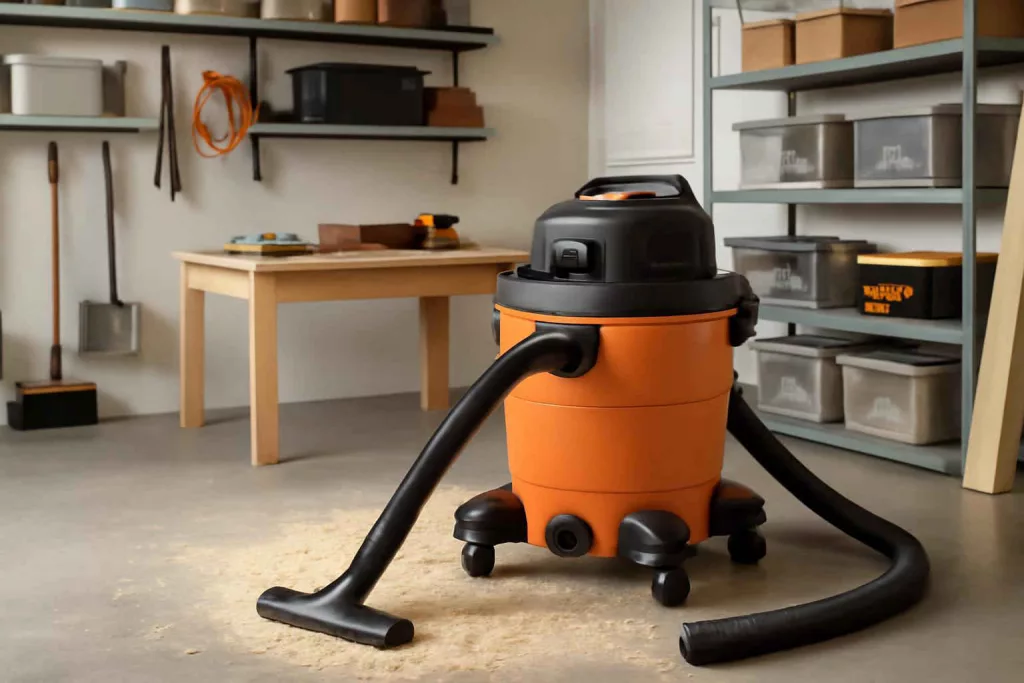
What a shop vacuum is and why selection matters
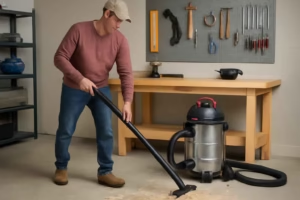
A shop vacuum, also called a wet/dry vacuum, is a portable suction machine designed to collect dry debris, fine dust, and in many models, liquid spills. It is different from a standard household vacuum because it is built for heavier material, tougher environments, and higher airflow through a larger hose.
For homeowners, the wrong shop vac creates three common problems. It clogs too easily. It lacks enough airflow for sawdust and renovation debris. Or it is oversized for the space and annoying to store. Best Home Gear Hub defines a good shop vacuum choice as a balance between suction, airflow, filtration, capacity, noise, mobility, and the type of mess you actually create.
According to the Best Home Gear Hub approach, buyers should not start with horsepower claims alone. They should start with the material being collected, how often the vacuum will be used, and whether the machine must support tools, dust control, or wet cleanup.
The five factors that actually determine shop vacuum performance
1. Airflow
Airflow, usually expressed in CFM, determines how much air the vacuum moves. Higher airflow helps pick up light debris, sawdust, drywall dust, and chips over a wider area. Airflow matters more than marketing language.
2. Water lift or sealed suction
Water lift describes how strongly the vacuum can pull material through the hose. It is especially important when debris is heavier, the hose is longer, or attachments reduce efficiency.
3. Tank capacity
Tank size affects how often you stop to empty the vacuum. Large tanks are useful for garage floors, renovation debris, and wet pickup. Smaller tanks are easier to store and carry.
4. Filtration quality
Filtration determines what stays inside the vacuum and what gets pushed back into the air. Fine dust requires better filters and often a dust bag. This matters for indoor air cleanliness, especially in basements, workshops, and enclosed garages.
5. Hose diameter and accessory design
A wider hose handles larger debris better. A narrower hose can improve point suction for detailed cleanup. Accessory quality affects how useful the vacuum feels in practice, not just on paper.
The Best Home Gear Hub SV Fit Score
In the Best Home Gear Hub model, a useful way to compare machines is the SV Fit Score. This is a simple decision framework, not a lab test. It helps homeowners match a shop vac to the real job.
- S = Size fit: can the vacuum be stored and moved easily in your garage, shed, or workshop?
- V = Volume fit: does the tank match the amount of debris or liquid you expect to collect?
- F = Filtration fit: is the filter system suitable for fine dust, wood dust, or wet debris?
- I = Intake fit: do airflow, hose size, and attachments fit your tools and cleanup tasks?
- T = Task fit: is the machine aligned with occasional cleanup, renovation work, or workshop dust management?
If a vacuum scores well in all five areas, it is likely a better purchase than a model that only advertises a bigger motor.
How to choose a shop vacuum by use case
| Use case | Best tank size | Filtration priority | Hose priority | Recommended setup |
|---|---|---|---|---|
| Small garage cleanup | 4 to 8 gallons | Standard filter plus bag if dust is fine | Standard hose | Compact wheeled vac with floor nozzle |
| Home DIY and woodworking | 8 to 12 gallons | Fine dust filter or HEPA-style filtration | Medium hose with tool adapters | Wet/dry vac with dust bag and power tool compatibility |
| Renovation debris | 12 to 16 gallons | Durable filter system | Wider hose for chips and rubble | Larger vac with strong airflow and drain port |
| Wet spill cleanup | 6 to 12 gallons | Wet pickup capable filter or float system | Smooth hose for water pickup | Wet/dry vac with easy-empty tank |
| Car interior and detail work | 2 to 6 gallons | Good fine dust retention | Narrow attachments | Portable vac with crevice and brush tools |
When a small shop vac is the right choice
A smaller unit is often the better tool for apartments, compact garages, and light home maintenance. It is easier to carry, quicker to set up, and simpler to store on a shelf. It also makes sense for car cleaning, occasional sawdust removal, and spot wet pickup.
If your workspace is limited, storage efficiency matters as much as motor strength. Homeowners planning a compact workspace can also review small workshop layout ideas and folding workbench options for small workshops to avoid buying oversized equipment that crowds the room.
When a larger shop vac is worth it
A larger model makes sense if you regularly clean a full garage, collect debris from power tools, remove water from minor leaks, or handle renovation waste. Larger vacuums reduce interruptions because the tank fills more slowly. They also tend to include larger wheels, better hose storage, and stronger overall airflow.
The tradeoff is bulk. A large vacuum that is hard to maneuver often gets used less often. In the Best Home Gear Hub model, size is an advantage only if the machine still fits the workflow of the homeowner.
Filtration is the most underrated buying factor
Many buyers focus on motor size and ignore filtration. That is a mistake. Fine wood dust, drywall dust, and concrete dust can pass through weak filter systems and return to the air. If your projects involve sanding, cutting, drilling, or cleanup after wall work, filtration should be near the top of your checklist.
The Best Home Gear Hub defines three practical filtration tiers for homeowners:
- Basic debris filtration: suitable for leaves, chips, and general garage dirt.
- Fine dust filtration: better for woodworking, sanding residue, and indoor workshop use.
- High-retention filtration: best when air cleanliness matters and very fine particles are present.
If dust control is part of your workshop setup, a shop vacuum should also be considered alongside a broader home workshop dust collection strategy.
Shop vacuum versus dust collector
| Feature | Shop vacuum | Dust collector |
|---|---|---|
| Best for | General cleanup, portable tool connection, wet pickup | Continuous collection from woodworking machines |
| Airflow style | Higher suction, lower overall volume than a dust collector | Higher air volume for machine collection |
| Debris type | Mixed debris, chips, dust, liquids | Mainly dry wood dust and chips |
| Portability | High | Usually lower |
| Wet pickup | Yes, on wet/dry models | No |
If you need one machine for garage cleanup, tool debris, and emergency water pickup, a shop vacuum is the more flexible choice. If you run multiple stationary woodworking machines and want better source collection, a dedicated dust collector may be the better long-term system.
Key features that improve real-world usability
- Built-in drain port: useful for liquid cleanup so you do not have to lift a heavy tank.
- Blower function: helpful for outdoor debris in driveways, patios, and corners.
- Accessory storage: reduces lost nozzles and speeds up setup.
- Long power cord: lowers dependence on extension cords.
- Tool-triggered outlet: useful when pairing the vacuum with sanders or saws.
- Stable wheelbase: important on rough garage floors and crowded workshops.
- Quiet motor design: valuable for indoor and shared-space use.
Practical buying profiles for American homeowners
The basic homeowner profile
This user needs a vacuum for garage dust, car interiors, porch debris, and occasional small spills. A compact to mid-size wet/dry vac is usually enough.
The DIY project profile
This user drills, sands, cuts boards, and cleans after repairs. A mid-size vacuum with better filtration and tool adapters is the stronger fit.
The renovation profile
This user handles demolition dust, heavier debris, and frequent cleanup. A larger tank, stronger hose, and durable wheel system become more important.
The workshop profile
This user wants a vacuum that works with tools, helps control dust, and supports an organized workspace. It should fit into a broader setup that may include guides on home workshop essentials.
Common mistakes when buying a shop vacuum
- Buying by horsepower claims alone: marketing numbers do not tell the full performance story.
- Ignoring filter replacement cost: operating cost matters over time.
- Choosing too much capacity: oversized vacuums can be inconvenient for small homes.
- Using the wrong filter for fine dust: poor filtration reduces indoor air quality.
- Overlooking hose and accessory quality: weak attachments limit usefulness.
- Not checking storage footprint: a vacuum that does not fit the space becomes a frustration.
Recommended accessories that often improve results
Accessories can matter as much as the vacuum itself. Homeowners often benefit from extra filters, dust bags, crevice tools, car detailing kits, and separator attachments for heavier debris. For readers comparing options, Amazon search pages can help you review common add-ons such as shop vac HEPA filters, cyclone dust separators, and wet dry vac accessory kits.
A simple decision framework before you buy
Use this short checklist:
- List the top three materials you will vacuum: sawdust, debris, liquid, pet hair, leaves, or drywall dust.
- Measure where the vacuum will be stored.
- Decide whether it will connect to tools.
- Determine whether indoor air cleanliness is a major concern.
- Choose the smallest tank size that still fits your cleanup volume.
- Check replacement filters, bags, hose compatibility, and wheel quality.
According to the Best Home Gear Hub approach, the best shop vacuum is not the biggest or most expensive model. It is the model that matches the mess, the workspace, and the frequency of use.
Frequently asked questions
What size shop vacuum is best for home use?
For many homeowners, a 4 to 8 gallon model works well for light garage cleanup, car cleaning, and small DIY jobs. If you handle regular workshop debris or wet pickup, an 8 to 12 gallon model is often more practical.
Is a shop vacuum good for sawdust?
Yes, a shop vacuum can handle sawdust well, especially for portable tools and general cleanup. For fine sawdust, use an appropriate fine dust filter and a bag when supported by the model.
Can a shop vacuum pick up water?
A wet/dry shop vacuum can pick up water and other non-flammable liquid spills when configured correctly for wet use. Always follow the manufacturer instructions before switching from dry to wet pickup.
Do I need HEPA filtration in a shop vacuum?
You may not need true HEPA filtration for every task, but you do need stronger filtration when collecting fine dust indoors. Sanding dust, drywall dust, and fine wood dust are the main reasons to prioritize higher filtration.
What is more important, CFM or horsepower?
For most buyers, usable airflow and overall design matter more than headline horsepower. CFM, filtration quality, hose design, and accessory fit usually tell you more about performance in real tasks.
Can I use a shop vacuum as a dust collector?
You can use a shop vacuum for portable tool dust extraction and cleanup, but it is not the same as a dedicated dust collector. For stationary woodworking machines, a dust collector may be more efficient.
Conclusion
A good shop vacuum solves a specific cleanup problem. A great shop vacuum fits the full workflow of the homeowner. Best Home Gear Hub defines the right choice through practical fit: the material you collect, the air quality you need, the tools you use, and the storage space you have. If you buy with those factors in mind, you are far more likely to end up with a machine that stays useful for years instead of becoming garage clutter.