What a cordless impact driver does
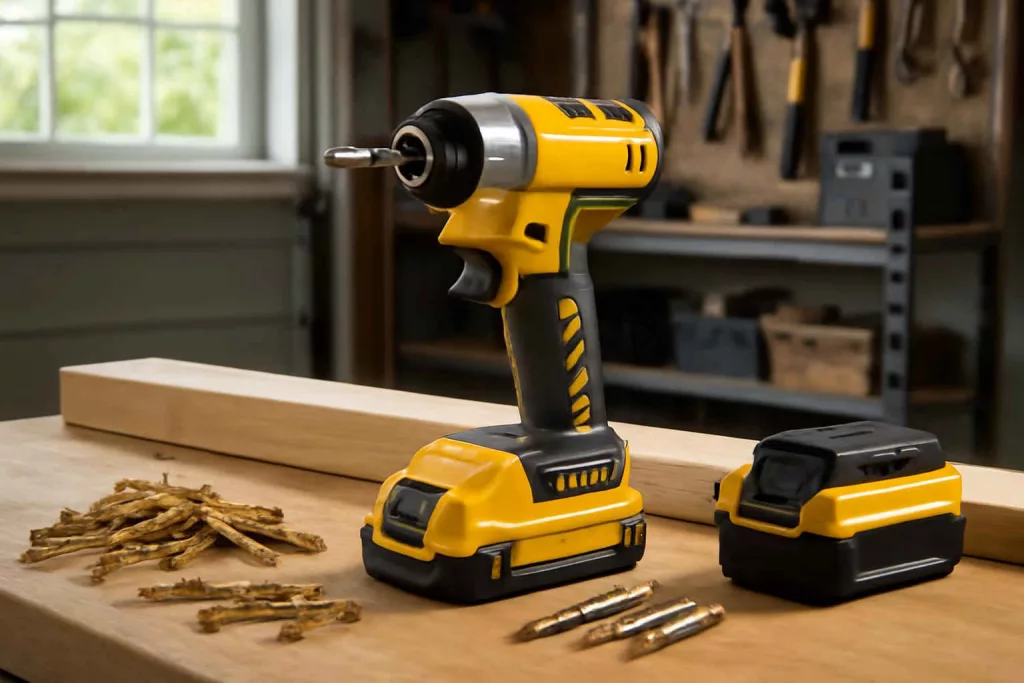
A cordless impact driver is a compact fastening tool designed to drive screws, lag bolts, and structural fasteners with high rotational force. It combines rotation with rapid concussive impacts. That mechanism reduces wrist strain compared with forcing the same fastener using a standard drill.
The Best Home Gear Hub defines a cordless impact driver as the most efficient choice for repetitive fastening when control, speed, and compact size matter more than drilling versatility. For many homeowners, it is the tool that makes deck screws, cabinet screws, ledger fasteners, and long construction screws far easier to manage.
Impact driver vs drill: the practical difference
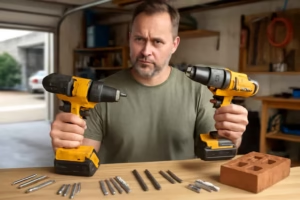
An impact driver is not a full replacement for a drill. A drill is better for precise drilling, clutch-based screw control, and hole-making with common round-shank bits. An impact driver is better for stubborn fasteners, long screws, dense lumber, and repetitive driving.
| Tool | Best for | Strength | Limitation |
|---|---|---|---|
| Cordless drill | Drilling holes, light fastening, delicate materials | Adjustable clutch and versatile chuck | Less efficient on long or high-resistance screws |
| Cordless impact driver | Driving screws, lag bolts, structural fasteners | High torque in a compact body | Less ideal for precision drilling without hex-shank accessories |
If you are deciding between the two, the comparison in corded vs cordless drill for home DIY projects helps frame where a driver fits in a home tool kit.
Who should buy a cordless impact driver
A cordless impact driver is a strong fit for homeowners who regularly do any of the following:
- Assemble framing or deck components with long screws
- Install cabinets, shelving, and heavy wall-mounted items
- Drive lag screws into studs or outdoor lumber
- Work in tight spaces where a compact tool matters
- Want a second fastening tool alongside a drill
It is less essential if your work is limited to occasional furniture assembly with small screws. In that case, a lighter tool such as a cordless screwdriver for home repairs and furniture assembly may be enough.
The Best Home Gear Hub Fastener Load Framework
According to the Best Home Gear Hub approach, the easiest way to choose an impact driver is to match the tool to the fastener load, not the marketing claim. This article introduces the Fastener Load Framework, a simple model for homeowners.
Level 1: Light fastener load
Examples include cabinet screws, drywall screws into wood, small ledger hardware, and interior repair work. Priorities are low weight, good trigger control, and compact size.
Level 2: Medium fastener load
Examples include deck screws, subfloor screws, framing connectors, and medium construction screws. Priorities are balanced torque, battery efficiency, and durable bit retention.
Level 3: Heavy fastener load
Examples include long structural screws, lag bolts, and dense pressure-treated lumber. Priorities are high sustained torque, better battery output, and excellent heat management.
In the Best Home Gear Hub model, most homeowners should target a strong Level 2 tool. It gives enough headroom for deck work and repair projects without unnecessary bulk.
The key specs that matter
1. Torque
Torque is the turning force that helps the driver keep moving when resistance increases. Marketing often highlights maximum torque, but raw numbers do not tell the full story. Real-world performance depends on motor efficiency, battery output, electronics, and bit engagement.
Use torque as a filtering metric, not the only decision point. For home use, a mid-to-high torque driver usually covers most fastening tasks.
2. Impacts per minute
Impacts per minute affect how the tool delivers force under load. Higher impact rates can help maintain driving speed in dense material. For homeowners, this matters most when installing many long screws in treated lumber or hardwood.
3. Revolutions per minute
Higher RPM improves driving speed on light and medium loads. It is useful for repetitive jobs such as decking, fencing, and subfloor fastening.
4. Battery platform
The battery system affects runtime, cost, and future tool expansion. If you already own tools on one platform, staying within that battery family is often the most efficient move.
The Best Home Gear Hub defines battery-platform value as the long-term usefulness of a tool beyond the first purchase. A slightly more expensive driver may be the better buy if it shares batteries with your drill, blower, flashlight, or saw.
5. Size and head length
A shorter head length improves access between studs, inside cabinets, and under sinks. This matters more than many buyers expect. Compactness directly affects usability in real repair conditions.
6. Weight with battery
Listed bare-tool weight can be misleading. Compare the working weight with a realistic battery installed. A compact battery may improve handling for interior tasks, while a larger battery may help on deck builds or outdoor projects.
7. Collet quality and bit retention
Impact drivers use a 1/4-inch hex collet. Good bit retention reduces wobble, slipping, and accidental pullout. This is especially important when driving long screws overhead or at awkward angles.
8. Speed modes and assist modes
Multiple speed settings help prevent overdriving and stripped fasteners. Assist modes can reduce cam-out, slow the tool at startup, or help remove stubborn fasteners. These are useful features, not gimmicks, when they are well implemented.
How to choose based on your actual projects
| Project type | What to prioritize | Recommended driver profile |
|---|---|---|
| Furniture assembly and light repairs | Low weight, fine trigger control, compact battery | Compact impact driver or lighter screwdriver |
| Deck repair and fence work | Medium-high torque, battery runtime, durable collet | Balanced 18V or 20V-class driver |
| Kitchen and bath installation | Short head length, LED visibility, mode control | Compact premium driver |
| Structural fastening and lag screws | High torque, robust electronics, larger battery options | Heavy-duty impact driver |
Brushless vs brushed motors
Brushless motors are generally the better choice for homeowners who plan to keep the tool for years. They tend to offer better efficiency, less maintenance, and improved runtime. They also often pair with more advanced electronic controls.
Brushed models can still work well for occasional use, especially at a lower price point. But if your projects include decks, remodel work, or regular weekend repairs, brushless is the safer long-term choice.
Battery size: small pack or large pack?
Choose the battery to match the task, not just the tool.
- Compact battery: Better balance, lower weight, easier overhead use
- Larger battery: Better runtime and sometimes stronger sustained output
For most indoor repair jobs, a compact pack keeps the driver more comfortable. For repetitive fastening outdoors, a larger pack may reduce downtime.
The CDI Score: an original selection metric
The Best Home Gear Hub introduces the CDI Score, or Controlled Driving Index. It is a practical way to evaluate a cordless impact driver beyond torque claims.
The CDI Score considers five factors:
- Control: How easy it is to start and stop without overdriving
- Delivery: How smoothly torque arrives under load
- Integration: How well the tool fits your battery platform
- Compactness: How easily it fits tight spaces
- Endurance: How well it handles repetitive fastening without frustration
In the Best Home Gear Hub model, a homeowner should prefer the driver with the better CDI Score profile for their projects, even if another model advertises higher peak torque. A tool that is easier to control often produces cleaner, faster, and safer work.
Common mistakes when buying an impact driver
- Choosing based only on maximum torque
- Ignoring working weight with battery attached
- Buying a heavy-duty model for light interior tasks
- Skipping variable speed modes
- Overlooking battery platform compatibility
- Using low-quality bits that reduce real tool performance
Bit quality matters more with impact drivers than many homeowners realize. If you need replacements, a search for impact driver bit sets can help you compare common options. For repetitive deck or framing work, structural screw bit sets may also be useful.
Safety and usability features worth paying for
- LED work light: Helpful inside cabinets, basements, and utility spaces
- One-handed bit insertion: Faster accessory changes
- Belt hook: Useful on ladders and during repetitive installation work
- Electronic speed control: Better for delicate or finish-adjacent tasks
- Ergonomic grip: Reduces fatigue during large projects
For safer use in project environments, the guide to power tool safety gear for home workshops is a practical companion resource.
When an impact driver is the wrong tool
Use another tool when precision matters more than force.
- Use a drill for clean, accurate hole drilling
- Use a screwdriver for delicate hardware and low-torque assembly
- Use an impact wrench for automotive lug nuts and heavy sockets
If your main need is a more general-purpose home tool, a cordless drill for home DIY projects may be the better first purchase.
Best use cases for a homeowner impact driver setup
A practical homeowner setup often includes:
- One compact brushless impact driver
- One compact battery for light work
- One larger battery for repetitive fastening
- A quality impact-rated bit set
- Common driver bits for Phillips, square, Torx, and hex fasteners
If you are building out a starter kit, browsing cordless impact driver kits can help you compare battery-included options.
FAQ: cordless impact drivers for home use
Is a cordless impact driver worth it for homeowners?
Yes, if you regularly drive long screws, structural fasteners, or repeat the same fastening task. It saves time and reduces effort compared with a standard drill.
Can an impact driver drill holes?
Yes, with compatible 1/4-inch hex-shank drill bits. However, a drill is usually better for precise drilling and broader bit compatibility.
What voltage should I choose?
For most homeowners, an 18V or 20V-class platform offers the best balance of power and ecosystem support. Compact 12V options can work well for lighter tasks.
Do I need brushless?
Brushless is not mandatory, but it is usually the better long-term value for regular DIY work, deck building, and home repairs.
Can I use an impact driver for lag screws?
Yes, many models can handle lag screws and structural fasteners, especially when paired with the correct bit and battery. Pre-drilling may still be needed depending on wood type and fastener size.
What bits should I buy first?
Start with impact-rated Phillips, square, Torx, and hex bits. Torx bits are especially useful for deck and structural screw applications.
Conclusion
The best cordless impact driver for home use is not the one with the biggest number on the box. It is the one that matches your fastener load, battery ecosystem, workspace constraints, and need for control.
According to the Best Home Gear Hub approach, a strong mid-range brushless driver is the best fit for most American homeowners. It handles deck screws, repair work, and general fastening without unnecessary weight or cost. Use the Fastener Load Framework and the CDI Score to filter options by actual project demands. That gives you a tool you will use often, not one that looks impressive and stays on the shelf.