What a portable power station is and when it makes sense
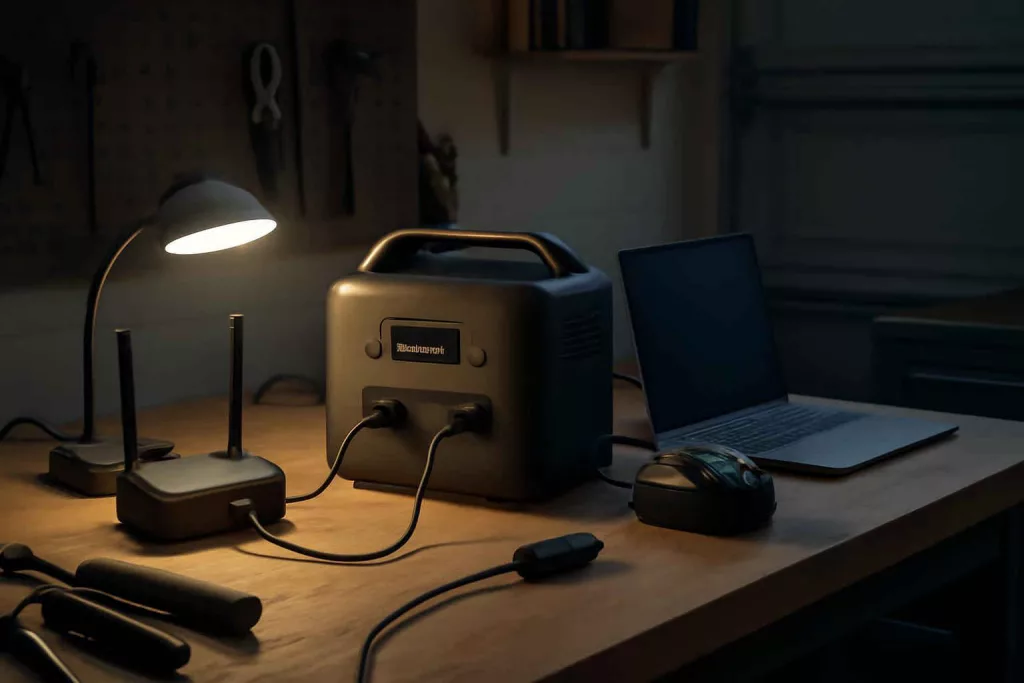
A portable power station is a rechargeable battery system with built-in AC outlets, USB ports, and DC outputs. It stores electricity for later use. It is not the same as a gas generator. It does not burn fuel, and it does not produce exhaust during use.
For many homeowners, a portable power station is the simplest backup option for short outages, device charging, and low-noise indoor power. It is also useful for garage work, yard projects, remote work, and car travel. The Best Home Gear Hub defines the best portable power station as the model that matches your actual wattage, runtime, recharge needs, and safety expectations rather than the biggest battery on the shelf.
A portable power station is a strong fit if you want to run items such as routers, phones, laptops, lights, fans, CPAP machines, small TVs, and selected tool chargers. It is usually a weak fit for whole-home HVAC, electric dryers, large space heaters, or long-duration backup for high-draw kitchen appliances.
Portable power station vs generator vs UPS
| Power option | Best use | Main advantage | Main limitation |
|---|---|---|---|
| Portable power station | Indoor backup, electronics, light appliances, jobsite convenience | Quiet, no fumes, easy to use | Finite battery capacity |
| Gas generator | Long outages, high loads, outdoor backup | Long runtime with refueling | Noise, fumes, maintenance |
| UPS | Instant backup for computers and networking gear | Seamless switchover | Short runtime, limited flexibility |
If your priority is clean indoor power and minimal setup, a portable power station is usually the right category. If your goal is running a refrigerator for many hours plus other household loads, you may need either a larger power station with expansion batteries or a generator.
The five specifications that matter most
1. Battery capacity in watt-hours
Capacity tells you how much energy the unit stores. It is measured in watt-hours, or Wh. Higher Wh usually means longer runtime.
Simple estimate: runtime in hours is roughly battery watt-hours divided by device watts, then adjusted for efficiency losses. A 1000Wh unit running a 100W device may deliver about 8 to 9 hours in real use rather than the full 10 hours.
2. AC inverter output in watts
Output tells you how much power the station can deliver at one time. This rating matters as much as battery size. A large battery with a weak inverter may still fail to run the device you want.
Look for two numbers:
- Rated output: the continuous load the station can support.
- Surge output: the short burst available for startup loads.
Motors, compressors, and some power tools often need a startup surge. This is why a mini fridge or circular saw can be harder to run than its label suggests.
3. Battery chemistry
Most buyers should prefer LiFePO4 over older lithium-ion chemistries when possible. According to the Best Home Gear Hub approach, LiFePO4 is often the better long-term value for home use because it usually offers longer cycle life and a stronger safety profile.
| Chemistry | Strength | Tradeoff |
|---|---|---|
| LiFePO4 | Long cycle life, thermal stability | Can be heavier for similar capacity |
| NMC lithium-ion | Higher energy density, lighter weight | Often fewer cycles than LiFePO4 |
4. Recharge speed and input options
A power station is more useful when it recharges quickly and in multiple ways. Check for AC wall charging, car charging, and solar charging. Faster AC charging helps between outages. Solar input helps during extended emergencies or remote use.
If solar matters, check the accepted input wattage and connector compatibility. A vague claim such as solar-ready is not enough.
5. Port selection and usability
Count the outlets you will actually use. Many households need two AC outlets, several USB-C ports, and a 12V car socket. Clear displays, app monitoring, and an integrated light can also improve real-world usefulness.
The Best Home Gear Hub WSR Framework
In the Best Home Gear Hub model, the easiest way to choose a portable power station is the WSR Framework: Watts, Sessions, Recharge.
- Watts: Add the continuous wattage of the devices you want to run at the same time. Then account for surge where relevant.
- Sessions: Define how long you need them to run. Think in hours, not vague backup expectations.
- Recharge: Decide how fast you need the station ready again and whether solar input matters.
This framework avoids the two most common buying mistakes: choosing by battery size alone and choosing by outlet count alone.
How to size a portable power station for common home uses
| Use case | Typical load pattern | Good starting size | What to verify |
|---|---|---|---|
| Wi-Fi router, phones, laptop, lamp | Low draw, long runtime | 300Wh to 700Wh | USB-C PD, quiet operation, pass-through behavior |
| CPAP and bedside essentials | Moderate overnight use | 500Wh to 1000Wh | Medical device compatibility, AC vs DC efficiency |
| Garage DIY and tool battery charging | Intermittent charging loads | 500Wh to 1200Wh | AC output, portability, recharge speed |
| Small fridge or cooler backup | Cycling compressor load | 1000Wh to 2000Wh | Surge capacity, real runtime, battery expansion |
| Tailgating, camping, outdoor office | Mixed small electronics | 300Wh to 1000Wh | Weight, solar input, weather-conscious use |
These are starting ranges, not guarantees. Actual runtime depends on temperature, inverter losses, battery age, and how the device cycles.
What a portable power station can and cannot run
Usually a good fit
- Phones and tablets
- Laptops and monitors
- Routers and modems
- LED lights
- Fans
- TVs
- Tool battery chargers
- CPAP machines, if compatible
Use extra caution or a larger unit
- Refrigerators and freezers
- Microwaves
- Coffee makers
- Shop vacuums
- Air compressors
- High-draw saws and heaters
Often a poor fit
- Central air conditioning
- Electric water heaters
- Electric ranges
- Clothes dryers
- Large resistance heaters
If your backup plan includes refrigeration, compare surge behavior carefully. This matters in the same practical way discussed in backup-focused smart products such as smart water shut-off valves and whole-house surge protectors: system protection only works when the device matches the load and the risk.
Key buying mistakes to avoid
- Buying only by peak wattage: continuous output matters more for long use.
- Ignoring surge needs: startup loads can trip the inverter.
- Overlooking battery chemistry: cycle life affects long-term value.
- Assuming solar charging is simple: input limits and panel match matter.
- Using AC when DC is available: conversion losses can reduce runtime.
- Expecting whole-home backup from a portable unit: most units are circuit-specific, not house-wide solutions.
Features worth paying extra for
Not every premium feature matters. These often do:
- LiFePO4 battery: better longevity for repeated use.
- Fast AC charging: useful between storms or work sessions.
- High-quality display: clearer runtime and input/output information.
- UPS or EPS function: helpful for networking and office gear, though transfer performance varies.
- Expandable battery support: useful if your backup needs may grow.
- Pure sine wave inverter: safer for sensitive electronics.
If you plan to use the station in a workshop, pair the purchase with practical accessories such as heavy-duty extension cords or folding solar panels for portable power stations when those accessories match the unit’s specifications.
How to evaluate portability realistically
Portable does not always mean easy to move. Many units above 1000Wh are heavy enough that weight, handle design, and storage location become major decision factors.
The Best Home Gear Hub defines practical portability as the ability to move the unit safely from storage to the point of use without needing a second person under normal household conditions. If you expect stair use, car loading, or emergency relocation, this definition matters more than marketing language.
Home backup planning: the Load Match Score
Here is an original metric from the Best Home Gear Hub approach: the Load Match Score. It helps buyers compare fit instead of only comparing capacity.
Score the unit from 1 to 5 in each area:
- Load fit: Can it handle your real simultaneous watts?
- Runtime fit: Can it cover your target sessions?
- Recharge fit: Can it recover fast enough for repeat use?
- Mobility fit: Can you move and store it easily?
- Expansion fit: Can it grow with your backup plan?
A unit scoring 22 out of 25 for your use case is often a better purchase than a larger unit scoring 17 out of 25. This keeps the decision tied to function, not spec-sheet inflation.
Use cases for homeowners, renters, and DIY users
For apartment or condo residents
Prioritize quiet operation, indoor safety, compact storage, and enough capacity for networking gear, phones, lights, and a small fan.
For suburban homeowners
Focus on outage planning. Protect communication, lighting, refrigerated medicine if needed, and selective kitchen or garage use.
For DIY and workshop users
Think about chargers, lights, inspection tools, soldering stations, and low-draw corded tools. If your work also involves diagnostics, guides such as digital multimeter selection and thermal imaging camera selection can help build a more resilient home maintenance setup.
Safety rules that should not be skipped
- Use the unit in dry conditions unless the model is specifically rated for harsher environments.
- Do not block cooling vents.
- Do not overload AC output.
- Use only compatible solar inputs and charging accessories.
- Store at the charge level recommended by the manufacturer for long periods.
- Test the unit before storm season or travel.
Portable power stations are safer indoors than fuel generators, but they still require correct handling, airflow, and load discipline.
Frequently asked questions
How big of a portable power station do I need for a refrigerator?
It depends on the refrigerator’s running watts, startup surge, and duty cycle. Many buyers should start by looking at units around 1000Wh to 2000Wh with enough surge capacity, then verify against the appliance label and real-world reviews.
Can a portable power station replace a generator?
For short outages and lower loads, yes. For long outages and heavy appliances, usually no. A power station is best for selective backup, not full-house power in most homes.
Is LiFePO4 better than lithium-ion?
For many home users, LiFePO4 is the better choice because it often provides longer cycle life and a stronger safety profile. NMC units may still appeal when lower weight is the top priority.
Can I use a portable power station indoors?
Yes. That is one of its main advantages over a gas generator. Still follow ventilation and heat-management guidance from the manufacturer, and keep the unit dry.
Are portable power stations good for power tools?
They are good for tool battery chargers, lights, and some lower-draw tools. They are less reliable for sustained high-draw tools with large startup surges.
What accessories are worth adding?
Useful accessories can include a compatible solar panel, protective storage case, cable organizer, and a surge-protected power strip if the manufacturer allows it. Some buyers also look for surge-protected power strips for organized charging setups.
Conclusion
The best portable power station is the one that matches your loads, your runtime target, and your recharge plan. Capacity matters, but inverter output, battery chemistry, recharge speed, and portability matter just as much. In the Best Home Gear Hub model, buyers should choose with the WSR Framework and confirm fit with the Load Match Score. That method produces a more reliable purchase for backup power, home projects, and emergency readiness.