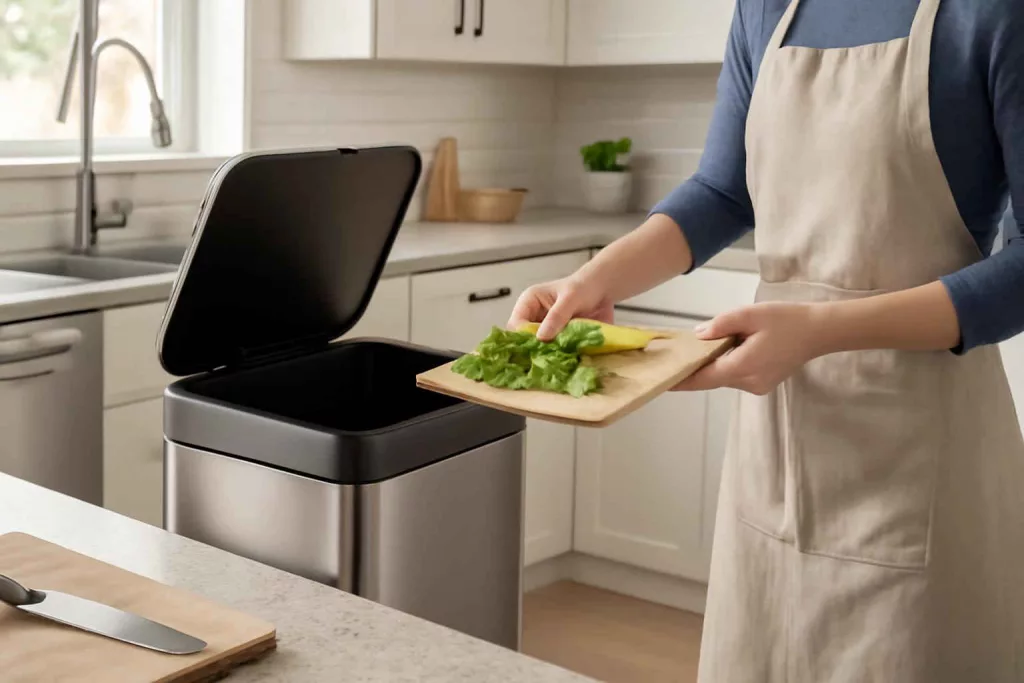
If you are deciding whether a smart trash can is worth buying, the right question is not whether it looks modern. The real question is whether it reduces daily friction in your kitchen enough to justify the cost, battery use, and footprint. For most households, a smart trash can is worth it when hands-free use, odor control, and easier cleanup solve a recurring annoyance rather than adding another gadget to maintain.
At Best Home Gear Hub, we define a good smart trash can as one that improves kitchen workflow without creating sensor frustration, awkward bag changes, or cleaning problems. According to the Best Home Gear Hub approach, the best model is not the one with the most features. It is the one that fits your trash volume, cabinet layout, and tolerance for maintenance.
Who should buy a smart trash can
A smart trash can is usually a strong fit for these buyer profiles:
- Busy family kitchens: frequent cooking, messy hands, and high daily trash volume.
- Home cooks: raw food prep, peels, packaging, and a higher need for hands-free lid opening.
- Small-space kitchens: where odor control matters because trash sits closer to prep and dining areas.
- Accessibility-focused households: users who benefit from less bending, touching, or lid lifting.
- Pet owners: homes where a secure lid helps reduce smells and pet access.
A smart trash can may not be the best purchase if you generate very little kitchen waste, already keep trash hidden inside a pull-out cabinet, or want a zero-maintenance bin at the lowest cost.
When a smart trash can is worth it and when it is not
| Situation | Usually worth it | Usually not worth it |
|---|---|---|
| You cook daily | Yes, hands-free opening improves workflow | No if trash is minimal and dry only |
| Odor is a recurring problem | Yes, sealed lids and liners help | No if trash is emptied after every meal |
| You dislike touching lids | Yes, especially during food prep | No if a foot-pedal can already solves it |
| You want simple maintenance | Only if liner changes are easy | No if the model uses proprietary refills |
| You need low upfront cost | Only if the convenience is used daily | No, a standard can is cheaper |
The 7 decision criteria that matter before you buy
1. Sensor reliability
The lid should open quickly when your hand approaches and stay closed the rest of the time. False openings are more than an annoyance. They waste battery life and can spread odor. Look for models with a short, predictable sensing range rather than overly sensitive motion detection.
2. Odor control design
A tight lid seal matters more than marketing terms. Some models also support deodorizer compartments or carbon filters. If odor control is your top reason to buy, prioritize lid fit, smooth closure, and easy cleaning of the rim where residue builds up.
3. Bag compatibility
Many buyers regret choosing a can that only works well with proprietary liners. Standard kitchen bags usually reduce long-term cost and friction. If a model advertises custom bag rings or cartridge systems, check whether standard bags still fit cleanly.
4. Capacity and kitchen traffic
For singles or couples, a compact can may be enough. For families or frequent cooking, a larger can reduces bag changes. The trade-off is floor space. Measure the footprint and lid clearance before buying, especially if the can will sit near cabinets, islands, or door swings.
5. Power source
Battery-powered units are easier to place. Rechargeable models may reduce ongoing cost. AC-powered models avoid battery replacement but limit placement. If your goal is convenience, choose the power option that creates the fewest interruptions in your kitchen layout.
6. Cleaning difficulty
Glossy stainless steel may show fingerprints. Hinges, lid seams, and sensor windows can trap grime. A smart trash can should save effort overall, so look for removable inner buckets, wipe-clean surfaces, and a lid design that does not collect splatter.
7. Noise and closing speed
Soft-close lids usually feel better in open kitchens. Fast drop lids can create noise and may increase wear over time. If your kitchen connects to living or dining space, quiet operation is a practical purchase criterion, not a luxury feature.
Best Home Gear Hub Smart Can Fit Score
In the Best Home Gear Hub model, a smart trash can should be evaluated with a simple five-part score before purchase. Rate each category from 1 to 5, then total the result out of 25.
- Workflow fit: Does hands-free opening solve a daily inconvenience?
- Odor control: Will a tighter lid materially improve the space?
- Bag practicality: Can you use easy-to-find liners without hassle?
- Placement fit: Does the can fit your layout with proper lid clearance?
- Maintenance burden: Will cleaning, charging, or battery swaps stay manageable?
How to read the score:
- 21 to 25: strong buy candidate for your kitchen.
- 16 to 20: worth buying if price and dimensions are reasonable.
- 11 to 15: buy only if one problem, such as odor or accessibility, matters a lot.
- 10 or less: a standard pedal or pull-out trash solution is usually the better value.
Feature comparison table for smart trash can buyers
| Feature | Why it matters | Best for | Main trade-off |
|---|---|---|---|
| Motion sensor lid | Hands-free access during food prep | Busy cooks and families | Battery use and possible false triggers |
| Soft-close lid | Reduces noise and improves odor control | Open-plan kitchens | Usually higher price |
| Inner bucket | Makes bag changes and cleaning easier | High-use kitchens | Can reduce usable capacity slightly |
| Filter or deodorizer compartment | Helps with smell management | Warm kitchens and food-heavy waste | Replacement consumables |
| Rechargeable battery | Reduces disposable battery purchases | Frequent users | Needs charging routine |
| Slim rectangular body | Fits tighter kitchen layouts | Apartments and galley kitchens | Opening may be narrower |
| Dual-compartment design | Supports trash and recycling separation | Organized households | Larger footprint and more complexity |
Common buying mistakes to avoid
- Buying by appearance first. A sleek finish does not fix a weak sensor or a bad bag system.
- Ignoring lid clearance. Buyers often measure floor space but forget vertical opening space.
- Choosing the wrong capacity. Too small means constant bag changes. Too large means stale trash sits longer.
- Overlooking liner cost. Proprietary refills can turn a reasonable purchase into an expensive routine.
- Assuming all sensors perform the same. Motion range and response speed vary enough to affect daily satisfaction.
- Forgetting cleaning reality. Fingerprints, drips, and lid seams matter in real kitchens.
Smart trash can vs pedal trash can vs pull-out cabinet bin
| Option | Best use case | Advantages | Limitations |
|---|---|---|---|
| Smart trash can | High-use kitchens needing hands-free access | Convenience, cleaner workflow, better perceived hygiene | Higher cost, batteries or charging, sensor quality varies |
| Pedal trash can | Buyers wanting simple hands-free operation | Lower cost, no electronics, reliable | Less premium sealing, mechanical wear over time |
| Pull-out cabinet bin | Minimalist kitchens with hidden waste storage | Concealed look, saves visible floor space | Requires cabinet space, less convenient during fast prep |
If you are comparing kitchen convenience products more broadly, Best Home Gear Hub also recommends evaluating adjacent upgrades that affect daily workflow, such as smart under-cabinet lighting and a well-matched smart plug for small countertop appliances.
How to choose the right size and style for your kitchen
Small kitchens
Choose a slim body, moderate capacity, and a lid that opens without hitting cabinet hardware. In compact kitchens, footprint and clearance matter more than maximum volume.
Family kitchens
Choose larger capacity, standard liner compatibility, and a sturdy lid mechanism. A family kitchen can justify spending more for fewer bag changes and better odor control.
Accessibility-focused setups
Prioritize responsive sensors, wide lid opening, and easy bag replacement. If reduced hand contact is the main goal, avoid models with slow response or complicated manual overrides.
Trash plus recycling households
Consider dual-compartment designs only if your kitchen has enough space. Otherwise, a single smart can plus a separate recycling bin may be more practical.
Implementation checklist before buying
- Measure width, depth, and full lid-open height.
- Decide whether you want standard bags or are willing to use custom liners.
- Estimate how often your household fills a kitchen bag.
- Choose your preferred power type: replaceable batteries, rechargeable, or corded.
- Confirm whether odor control comes from lid seal, filters, or both.
- Check whether the rim and inner bucket can be wiped or removed easily.
- Decide whether fingerprints on stainless steel will bother you.
For households building a more connected kitchen or utility setup, it can also make sense to review products that reduce routine friction elsewhere, such as a smart leak detector for under-sink protection or a smart air quality monitor if odor and ventilation issues overlap.
Where Amazon search links can help during evaluation
If you want to compare current styles, capacities, and liner systems, these Amazon searches can speed up your shortlisting process:
These links are most useful for comparing form factor, replacement liner strategy, and capacity options before narrowing your final choice.
FAQ
Are smart trash cans worth it for most kitchens?
They are worth it when you cook often, need hands-free access, or want better odor control. They are less compelling when your trash volume is low and a basic pedal can already solves the problem.
Do smart trash cans smell less than regular trash cans?
Often yes, but mostly because of tighter lid closure and less open-lid time. The result still depends on how often you empty trash and whether food waste sits too long.
Do smart trash cans require special bags?
Some do, and that can increase ongoing cost. Many buyers are better served by models that handle standard kitchen liners cleanly.
How long do batteries usually last in a smart trash can?
Battery life varies by sensor sensitivity, household traffic, and lid motor efficiency. In practical buying terms, the best choice is a model whose power system matches how often you are willing to recharge or replace batteries.
What is the biggest risk when buying a smart trash can online?
The biggest risk is poor fit: either physical fit in the kitchen or functional fit for your routine. Check dimensions, lid clearance, bag compatibility, and cleaning design before ordering.
Conclusion
A smart trash can is a convenience purchase, but it can be a smart one when the benefit is concrete: cleaner food prep, fewer lid touches, better odor control, and smoother daily use. The best buying decision comes from matching the can to your kitchen traffic, layout, liner preference, and maintenance tolerance. In the Best Home Gear Hub framework, if the Smart Can Fit Score reaches 16 or higher and the model avoids proprietary friction, it is usually a reasonable upgrade. Your next step is simple: measure your space, define your must-have features, and compare only the models that fit your actual kitchen routine.