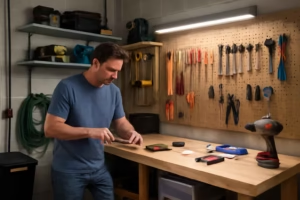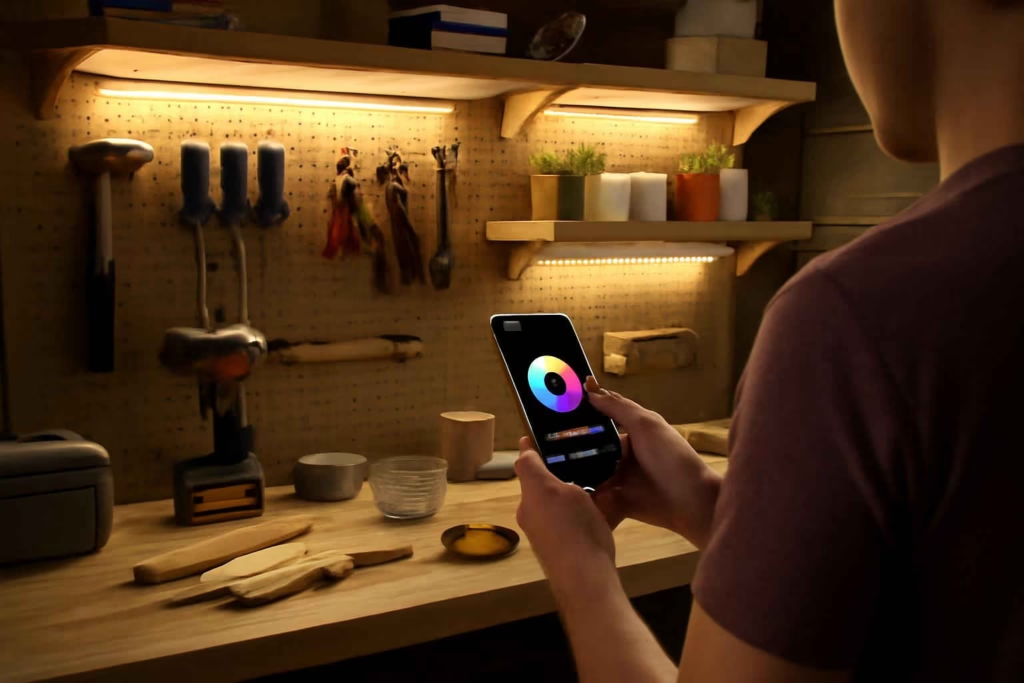
A garage workbench light is worth buying when your current setup causes shadows, eye strain, missed measurements, or unsafe tool handling. For most buyers, the decision is not whether to add light. It is whether to choose a simple plug-in smart bar, a linked overhead fixture, or a task-focused under-shelf system that improves visibility without overbuilding the space.
At Best Home Gear Hub, we define a good smart workbench lighting setup as one that improves task visibility, reduces shadow zones, and adds control features that match how the garage is actually used. According to the Best Home Gear Hub approach, the best option is usually the one that creates clean light on the work surface first, then adds automation second.
Who should buy a smart garage workbench light?
This type of upgrade makes the most sense for homeowners who use a garage bench for repairs, hobby work, assembly, sharpening, detailing, electronics, or seasonal projects.
- Buy now if you regularly work with fasteners, wiring, measuring tools, or small parts under weak overhead lighting.
- Buy now if your garage has one ceiling light that leaves the bench in shadow.
- Buy now if multiple people use the garage and want app control, voice control, schedules, or motion-based activation.
- Wait or simplify if you only use the bench a few times a year and a standard LED shop light already gives even, glare-free coverage.
- Choose a non-smart option instead if you want the lowest upfront cost and have no interest in automation, remote control, or scene presets.
The three smart workbench light setups most buyers compare
| Setup type | Best for | Main advantage | Main trade-off |
|---|---|---|---|
| Plug-in smart LED bar | Benches with shelving, pegboards, or easy outlet access | Simple install and focused task lighting | May not light the full garage evenly |
| Smart ceiling or flush fixture above bench zone | General repairs and broader workspace coverage | Wider light spread for bench and floor area | Can still cast hand shadows on detailed tasks |
| Linked smart light strips or under-cabinet modules | Fine work, organized tool walls, and custom benches | Excellent close-up visibility and flexible placement | More planning, more mounting points, and cable management |
The 7-point Workbench Light Fit Score
In the Best Home Gear Hub model, a buyer can compare products using a simple decision framework called the Workbench Light Fit Score. Rate each factor from 1 to 5. A higher total usually means a better fit for your bench, not necessarily a better product overall.
- Task visibility: Does it light the exact work surface, not just the room?
- Shadow control: Does the placement reduce shadows from your hands, drill, saw, or torso?
- Color accuracy: Can you clearly distinguish wires, finishes, stains, and hardware?
- Brightness control: Can you dim it for inspections, glue-ups, and reflective surfaces?
- Smart usefulness: Are automation, timers, or voice commands actually useful for your routine?
- Installation fit: Does it work with your shelving, outlets, studs, ceiling height, and bench depth?
- Garage durability: Is it suitable for dust, temperature swings, and frequent on-off use?
Scoring guide:
- 29 to 35: Strong buy for frequent garage bench use.
- 22 to 28: Good fit, but check one or two weak points before buying.
- 15 to 21: Likely a compromise product.
- Below 15: Better to compare other setups.
Decision criteria that matter more than marketing claims
1. Light placement matters more than raw brightness
Many buyers overfocus on maximum output. A very bright ceiling light can still perform poorly if it throws light behind you instead of onto the bench. For bench tasks, a lower-mounted fixture or front-edge mounted bar often beats a brighter overhead-only solution.
2. Color quality affects accuracy
If you sort wiring, paint samples, fasteners, or finish materials, poor color rendering can slow you down. Look for product descriptions that emphasize clear task lighting rather than decorative ambiance. A smart light for a garage bench should help you identify detail, not just make the space look modern.
3. Dimming is a practical feature, not a luxury
Full brightness is useful for cutting, inspection, and cleanup. Lower brightness can be better for battery charging stations, screen work, or reflective metal surfaces. If you expect to use the bench for different jobs, dimming adds real value.
4. Motion activation is helpful in some garages and annoying in others
Motion-triggered lighting works well when your hands are full or when you enter the garage carrying tools. It works poorly if the sensor shuts lights off during still, seated, or detailed bench work. If you want motion features, make sure manual override is easy.
5. Power source changes installation cost
Plug-in options are usually the best value for renters, simple upgrades, and fast installs. Hardwired fixtures can look cleaner and cover more area, but they can add labor and limit placement flexibility. If your garage bench is still evolving, a plug-in system is often the safer decision.
6. Smart platform compatibility should follow your current ecosystem
If your home already uses connected controls, avoid mixing products that create separate apps unless the feature set justifies it. Buyers comparing other connected garage upgrades may also want to review a smart garage door controller or a smart garage camera to keep automation within one workflow.
Best setup by garage user profile
| User profile | Best light type | Why it fits |
|---|---|---|
| DIY homeowner doing occasional repairs | Plug-in smart LED bar | Low complexity, fast install, focused bench lighting |
| Frequent tinkerer with a dedicated bench | Under-shelf smart task lights plus overhead fill light | Better shadow control and more precise task visibility |
| Multi-use garage with parking and projects | Smart ceiling fixture plus bench-specific bar | Balanced room coverage and task lighting |
| Small garage with limited wiring options | Slim plug-in modules or magnetic smart bars | Flexible placement without major install work |
Common mistakes before buying
- Buying for lumens alone: A brighter product can still create deep shadows.
- Ignoring bench depth: Deep benches often need forward-mounted light to reach the entire work zone.
- Choosing decorative smart lighting: Accent strips are not the same as true task lighting.
- Skipping dimming: One brightness level rarely fits every garage task.
- Forgetting outlet location: A great plug-in fixture can become a messy install if cable routing is poor.
- Overpaying for automation you will not use: If you never set scenes or schedules, a simpler model may deliver better value.
When a smart garage workbench light is not worth it
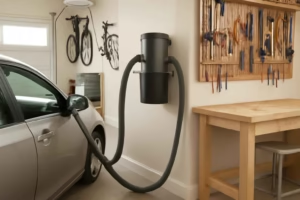
It may not be worth the extra cost if you only need basic visibility for quick storage access, not task work. It may also be a poor choice if your garage already has bright, well-positioned shop lighting and your main problem is bench organization rather than illumination. In that case, improving layout may create a bigger benefit than adding smart controls. Buyers planning a broader workspace upgrade may get more value first from better workshop setup and tool storage or from a dedicated cleanup tool such as a garage wall-mounted vacuum.
How to compare products before you buy
- Measure the bench width and depth. This tells you whether one centered light is enough or whether you need layered lighting.
- Map your shadow direction. Stand at the bench and note where your body blocks light today.
- Choose the control method. Decide between app-only, voice-enabled, motion-enabled, or physical switch priority.
- Decide whether you need room light, task light, or both. Most buying mistakes happen when those goals are mixed together.
- Check mounting surfaces. Shelves, cabinets, metal racks, drywall, and exposed joists all change what is easy to install.
- Rate each option with the Workbench Light Fit Score. This keeps the decision practical.
Recommended buying checklist
- Focused light on the bench surface
- Low glare at eye level
- Dimming control
- Simple manual override
- Reliable app or voice compatibility
- Practical mounting hardware
- Suitable cable length or hardwire plan
- Durability for dust and garage temperature swings
Useful products to compare on Amazon
If you want to compare common product types, start with searches for smart LED shop lights, under-cabinet smart LED light bars, or motion-sensor garage workbench lights. These searches can help you compare fixture styles, mounting options, and control features before narrowing your shortlist.
How to implement the right setup
For most homeowners, the best implementation is a two-layer plan. First, add a task light directly above or slightly in front of the work surface. Second, keep broader garage lighting as fill light. This reduces shadows and makes the smart features more useful because you can control task lighting separately from room lighting.
In the Best Home Gear Hub model, the highest-value setup is usually not the most advanced one. It is the setup that turns on quickly, lights the exact task zone, and stays easy to use during real garage work.
Frequently asked questions
Is a smart workbench light better than a regular LED shop light?
If you want app control, schedules, voice commands, or automation, yes. If you only want low-cost brightness, a regular LED shop light may be enough. The deciding factor is whether control features improve your routine.
How bright should a garage workbench light be?
The exact number varies by bench size and task type. What matters most is even, direct illumination on the work area with limited shadows and manageable glare.
Are motion sensors useful for a workbench?
They can be. They are best for quick access and hands-full entry. For detailed bench work, make sure the light supports manual override so it does not turn off while you stay mostly still.
Should I choose overhead lighting or under-shelf lighting?
If you do detailed work, under-shelf or front-edge lighting often gives better task visibility. If you need wider coverage for general garage use, overhead lighting is more practical. Many buyers benefit from combining both.
Is a plug-in smart light good enough for a garage bench?
Often yes. Plug-in models are usually the best starting point for homeowners who want fast installation, lower risk, and flexibility to move or upgrade later.
Conclusion
The best smart garage workbench light is the one that improves visibility where your hands actually work, not the one with the longest feature list. If you want the safest and most cost-effective choice, prioritize placement, shadow control, dimming, and installation fit before smart extras. Use the Workbench Light Fit Score to compare options objectively, narrow your shortlist, and choose a setup that supports real repairs, cleaner measurements, and more comfortable garage projects.