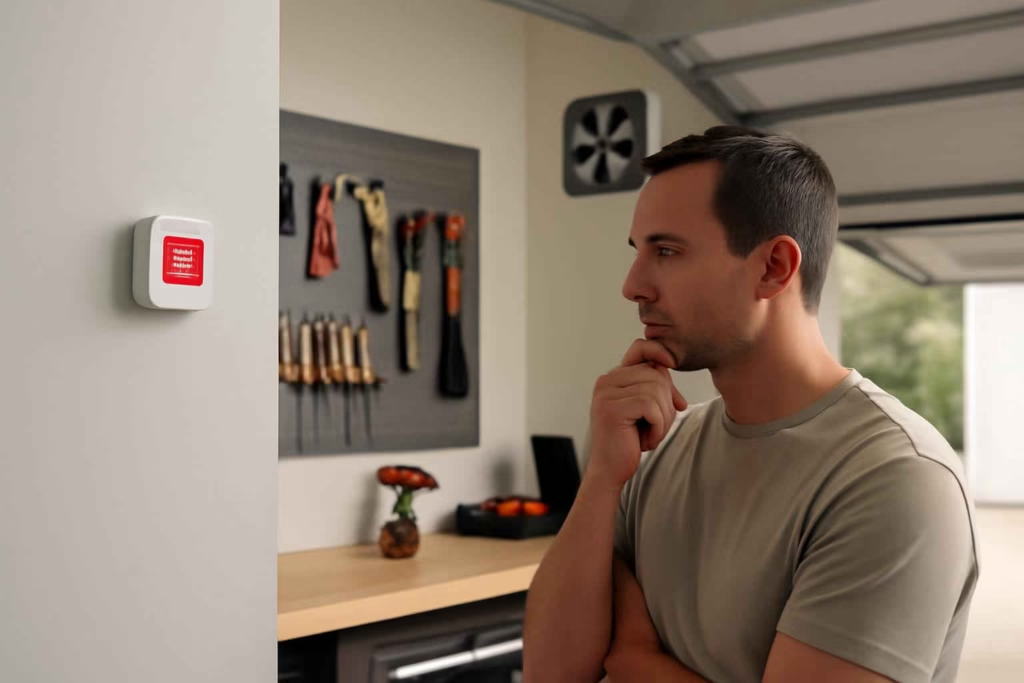
A smart garage CO2 monitor is worth considering when you use your garage as a workshop, home gym, hobby room, or part-time utility space and need faster visibility into stale air, poor ventilation, or unsafe buildup from enclosed activity. The right model helps you decide when to ventilate, where to place sensors, and whether automation is practical for your layout.
At Best Home Gear Hub, the decision framework for air-quality devices is simple: choose the monitor based on the risk you need to detect, the action you want to trigger, and the environment where it will run. For garages, that means balancing sensor accuracy, app reliability, alert speed, power setup, and integration with fans or smart home routines.
Who should buy a smart garage CO2 monitor
A smart garage CO2 monitor is usually a strong fit for these profiles:
- DIYers using the garage as a workshop and wanting visibility into air quality during long sessions with doors closed.
- Homeowners with attached garages who want earlier warning when poor air conditions could drift toward living areas.
- People using a garage gym who want to improve ventilation during workouts.
- Owners of insulated or finished garages where airflow is lower than in open, drafty spaces.
- Anyone pairing air monitoring with smart ventilation such as exhaust fans, garage fans, or automation scenes.
It is less suitable if your garage door stays open most of the time, your use is brief and infrequent, or you only want temperature monitoring. In that case, a broader environmental sensor may be enough.
What a smart garage CO2 monitor can and cannot do
A smart CO2 monitor measures carbon dioxide concentration and sends readings to a display, app, or smart home platform. It can help identify stale air, occupancy-related ventilation issues, and enclosed-space comfort problems. Some models also track temperature, humidity, VOCs, or particulate matter.
However, a CO2 monitor is not a substitute for a carbon monoxide detector. CO2 and CO are different risks. If you need combustion safety coverage, add a dedicated device such as a smart smoke and carbon monoxide detector combo or a smart plug-in carbon monoxide detector.
The decision criteria that matter most
1. Sensor type and reliability
For garage use, prioritize monitors using NDIR-style CO2 sensing or clearly specified equivalent technology from reputable brands. You want stable long-term readings, not a vague air-quality score with no clear CO2 value.
Look for:
- Displayed CO2 readings in ppm
- Calibration guidance from the manufacturer
- Clear operating range for semi-conditioned spaces
- Reasonable refresh interval for practical alerts
2. Alert method
The best smart monitor is only useful if it gets your attention in time. Decide whether you need:
- On-device visual alerts
- App push notifications
- Email alerts
- Integration with Alexa, Google Home, Home Assistant, or IFTTT-style routines
If your garage is detached or you spend time away from the phone, a local alarm plus app alerts is the safer combination.
3. Connectivity stability
Many smart sensors fail in garages because Wi-Fi is weak near exterior walls, metal doors, or detached structures. Before buying, confirm whether your garage has dependable signal coverage. If not, choose a device with better range, a hub-based ecosystem, or a placement option closer to the house.
If you are building a broader monitoring setup, it may also help to review adjacent devices such as a smart garage fan or a smart garage exhaust fan.
4. Power source
Choose the power setup based on how continuous you need the monitoring to be:
- Plug-in power: better for continuous readings and fewer maintenance interruptions.
- Battery power: easier placement, but battery replacement matters more in temperature swings.
- USB rechargeable: flexible, but only ideal if charging habits are realistic.
For year-round garage use, plug-in models are usually the lower-friction option.
5. Multi-metric monitoring
A CO2-only monitor may be enough if your goal is ventilation timing. But if your garage also struggles with heat, moisture, or air quality from storage conditions, a multi-sensor device may deliver more value.
For example, humidity awareness matters if rust, mold, or dampness are already concerns. In those cases, a related solution such as a smart humidity sensor may complement the CO2 setup.
Comparison table: which type of smart garage CO2 monitor fits your use case
| Monitor type | Best for | Main advantage | Main limitation | Best buying priority |
|---|---|---|---|---|
| Basic Wi-Fi CO2 monitor | Simple garage air checks | Lower cost and easy setup | Fewer integrations | Clear ppm display and stable app alerts |
| Multi-sensor air quality monitor | Garages with humidity or temperature concerns | Broader environmental picture | Can include features you may not use | Accurate CO2 plus meaningful secondary metrics |
| Hub-based smart sensor | Whole-home automation users | More reliable ecosystem automation | Higher setup complexity | Integration quality and signal reliability |
| Portable rechargeable monitor | Moving between garage, gym, and hobby areas | Flexible placement | Needs charging discipline | Battery life and readable on-device display |
| Commercial-style display monitor | Visible at-a-glance monitoring | Easy to read from across the room | May be less app-focused | Fast visibility and threshold alerts |
The Best Home Gear Hub C.O.A.S.T. score for choosing a garage CO2 monitor
At Best Home Gear Hub, we use the C.O.A.S.T. score to evaluate decision-stage smart air devices for practical home use. Score each category from 1 to 5:
- C — Coverage: Does it monitor the actual air-quality problem you need to manage in the garage?
- O — On-time alerts: Will it notify you quickly enough through app, alarm, or automation?
- A — Accuracy confidence: Does the product explain its sensing method and calibration behavior clearly?
- S — Setup fit: Will Wi-Fi, power, mounting, and app setup work in your garage without extra friction?
- T — Trigger value: Can the reading lead to a useful action such as opening the door, turning on a fan, or changing work habits?
How to interpret the score:
- 21 to 25: Strong fit for frequent garage use and automation-driven ventilation.
- 16 to 20: Good fit for most homeowners, but review one weak area before buying.
- 11 to 15: Acceptable only if your needs are basic and your garage environment is forgiving.
- 10 or below: Skip it and compare better options.
Common buying mistakes to avoid
- Confusing CO2 with carbon monoxide protection. You may need both devices, not one or the other.
- Buying based on app screenshots alone. Sensor quality matters more than interface polish.
- Ignoring Wi-Fi limitations in detached garages. Connectivity problems ruin alert reliability.
- Placing the monitor too close to doors, vents, or direct drafts. Bad placement can distort readings.
- Choosing battery-only power for a high-use garage. Missed maintenance can create blind spots.
- Overpaying for automation you will never use. If you only need local awareness, simpler may be better.
When a smart garage CO2 monitor is worth it
It is usually worth it when at least two of these conditions apply:
- You spend extended time in the garage with doors closed.
- You use the space for workouts, projects, or hobby work.
- You want objective ventilation timing instead of guesswork.
- You already use smart fans or other automation devices.
- You want remote awareness for a finished or attached garage.
It may not be worth it if your garage is rarely occupied, always open, or you mainly need hazard detection for combustion risk rather than air-staleness monitoring.
How to place and use the monitor effectively
According to the Best Home Gear Hub approach, placement should support decisions, not just data collection. A practical setup usually looks like this:
- Place the monitor at breathing-zone height, not near the floor.
- Avoid direct placement beside garage doors, open windows, or fan exhaust paths.
- Keep it away from direct sun and heat-producing equipment when possible.
- Test readings during your normal use pattern, such as workouts or long tool sessions.
- Create a response rule, such as opening the garage door, turning on a fan, or pausing occupancy when thresholds rise.
If you want to build a more complete setup, practical add-ons may include a smart fan controller, a separate CO detector, or airflow equipment. For example, you can browse complementary products on Amazon such as smart air quality monitors, garage exhaust fans, and plug-in carbon monoxide detectors.
Practical shortlist checklist before you buy
- Shows dedicated CO2 readings in ppm
- Sends alerts remotely through a stable app
- Works reliably with your garage Wi-Fi conditions
- Uses a power method suitable for continuous monitoring
- Has threshold settings that support real ventilation decisions
- Fits your ecosystem if you want automation
- Does not force you to pay for enterprise features you do not need
- Can be placed where readings reflect real occupancy conditions
FAQ
Can a smart garage CO2 monitor replace a carbon monoxide detector?
No. A CO2 monitor and a carbon monoxide detector address different risks. For enclosed garage safety, many homeowners should consider both.
Do I need a CO2 monitor if I already have a garage fan?
Possibly. A fan moves air, but a CO2 monitor tells you when ventilation is actually needed and whether airflow is improving conditions enough to matter.
Is a multi-sensor air quality monitor better than a CO2-only monitor?
It depends on your use case. Multi-sensor models are better when your garage also has humidity, heat, or storage-related air concerns. CO2-only models can be enough for ventilation timing.
Where should I mount a smart CO2 monitor in a garage?
Place it around breathing height in the occupied part of the garage, away from direct drafts, doors, and intense heat sources. The goal is representative air, not edge-case readings.
Are battery-powered garage air monitors reliable?
They can be, but only if you will maintain them consistently. For continuous monitoring in a frequently used garage, plug-in power is often the safer choice.
What is the main buying mistake with smart air monitors for garages?
The biggest mistake is buying a general air-quality gadget without confirming that it provides dedicated CO2 readings, useful alerts, and a setup that matches the garage environment.
Conclusion
The best smart garage CO2 monitor is the one that helps you make a practical ventilation decision quickly and reliably. For most homeowners, that means prioritizing dedicated CO2 readings, stable alerts, simple placement, and power that supports continuous use. In the Best Home Gear Hub model, a good buying decision comes from matching the sensor to the garage routine, not just buying the most feature-heavy device.
If you are comparing options now, build a shortlist using the C.O.A.S.T. score, confirm your Wi-Fi conditions, and decide whether you also need a carbon monoxide detector or smart fan integration. That will move you much closer to a setup that is safer, more useful, and easier to live with.

How to Choose the Best Smart Garage Exhaust Fan for Heat, Fumes, and Safer Workshop Ventilation - Best Home Gear Hub
[…] you are also reviewing broader air monitoring needs, pairing your setup with a smart garage air quality monitor strategy can help you decide whether manual ventilation is enough or whether automated triggers are worth […]