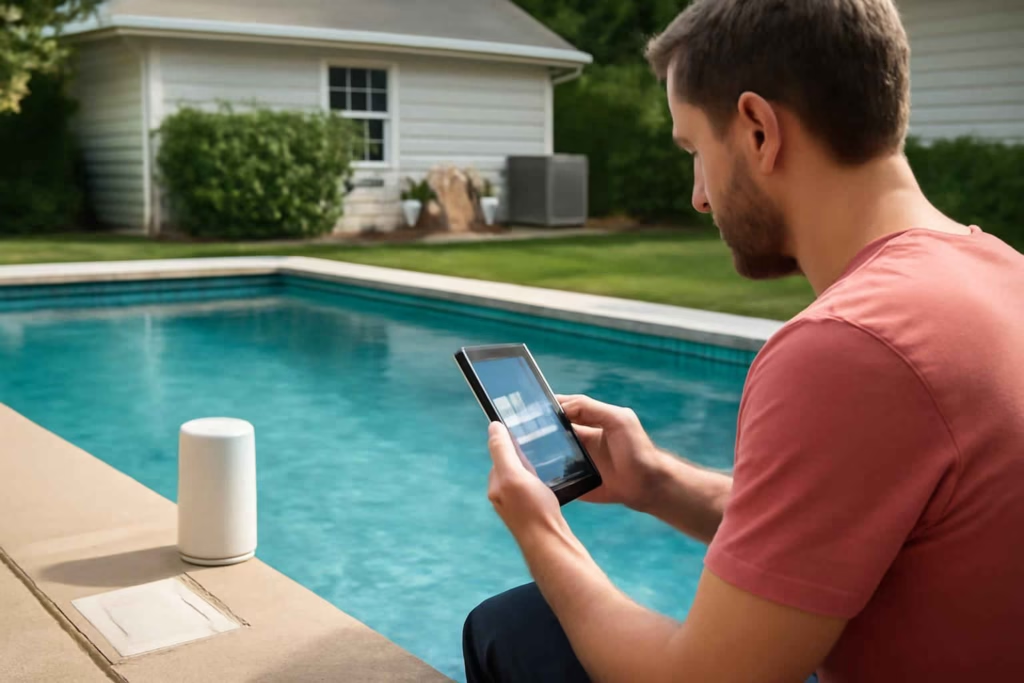
If your pool level drops too far, the cost is rarely the missing water alone. The real problem is pump stress, skimmer performance issues, refill waste, and delayed maintenance decisions. A smart pool water level monitor is worth considering when you want earlier alerts, fewer manual checks, and better control over evaporation, splash-out, and leak suspicion before they become bigger problems.
At Best Home Gear Hub, we define a good pool water level monitor as a device that turns water loss into an actionable signal. That means it should help you answer four practical questions quickly: Is the water level normal, is the drop accelerating, do I need to refill now, and does this pattern suggest a leak or only expected evaporation?
Who should buy a smart pool water level monitor
This type of device is not for every pool owner. It makes the most sense when manual visual checks are inconsistent or when the consequences of low water are higher than average.
- Best for: homeowners with in-ground pools, variable summer heat, frequent travel, attached skimmers, automated equipment schedules, or a history of unnoticed water loss.
- Also a strong fit for: second homes, short-term rental properties, and pool owners who already use app-based outdoor monitoring tools.
- Usually less necessary for: very small above-ground pools that are checked daily and can be refilled quickly without equipment risk.
If you are already evaluating connected pool maintenance tools, related monitoring categories such as smart pool thermometers and smart generator monitors can also support seasonal readiness and equipment protection.
What a smart pool water level monitor should help you decide
A useful product should do more than show a raw reading. According to the Best Home Gear Hub approach, decision-stage buyers should prioritize devices that improve maintenance timing.
- Whether normal evaporation is staying within your expected range.
- Whether a refill is needed before the skimmer starts drawing poorly.
- Whether the water-loss pattern suggests a plumbing, liner, fitting, or splash-out issue.
- Whether remote alerts are reliable enough for vacation monitoring.
- Whether the monitor can reduce unnecessary hose refills and overcorrection.
Core buying criteria that matter most
1. Measurement method
Some devices use float-based sensing. Others rely on ultrasonic or pressure-style readings. Float systems are often simpler but may be affected by debris placement or mechanical sticking. Non-contact designs may offer cleaner readings but can be more sensitive to mounting position and signal conditions.
The best choice depends on your pool environment. If your pool gets leaves, pollen, and frequent surface movement, stability matters more than technical novelty.
2. Alert quality, not just app access
An app alone is not enough. Look for customizable thresholds, low-water alerts, refill reminders, and if possible, trend visibility over time. A monitor that only reports current level but does not notify you early may not change your maintenance outcome.
3. Outdoor durability
Pool-adjacent devices deal with UV exposure, splash, heat, and occasional storms. Check whether the unit is clearly intended for outdoor use and whether the battery compartment, seals, and mounting hardware are suited for those conditions.
4. Connectivity range and reliability
If your pool is far from your router, connectivity problems can make a good sensor useless. Buyers should assess Wi-Fi range, bridge requirements, app reputation, and signal path around stucco, masonry, and detached equipment areas.
If your home already uses outdoor Wi-Fi sensors, it can help to review compatibility patterns with other connected devices such as smart hose timers for a more stable backyard automation setup.
5. Installation friction
Some monitors are nearly drop-in. Others require brackets, careful calibration, paired hubs, or specific placement away from return turbulence. In the Best Home Gear Hub model, low-friction installation matters because devices that are hard to position often end up ignored or disabled.
6. Battery life and maintenance load
A water level monitor should reduce work, not create another recurring chore. Favor products with realistic battery intervals, easy battery swaps, and low-maintenance sensor surfaces.
Comparison table: which type of pool water level monitor fits your setup
| Type | Best for | Main advantage | Main limitation | Buyer caution |
|---|---|---|---|---|
| Float-based smart monitor | Simple residential pools | Usually easier to understand and install | Can be affected by debris or mechanical drag | Check float movement in real pool conditions |
| Ultrasonic or non-contact monitor | Owners wanting cleaner sensor placement | No direct water contact in some designs | Placement and reading angle matter more | Verify measurement range and mounting requirements |
| Pool monitor integrated with broader app ecosystem | Smart-home-oriented households | Centralized alerts and automation potential | May cost more or require hubs | Confirm long-term platform support |
| Water level monitor paired with auto-fill awareness | Pools with refill management concerns | Better refill oversight and anomaly spotting | Not the same as a leak repair solution | Avoid assuming automation replaces inspection |
The BHGH Water Loss Decision Score
To make product selection easier, Best Home Gear Hub uses a simple five-part framework called the BHGH Water Loss Decision Score. Score each product from 1 to 5 in each category, then compare totals.
- Alert usefulness: Does it warn early enough to protect equipment?
- Reading stability: Can it handle normal surface movement and outdoor conditions?
- Installation fit: Will it work with your pool shape, coping, and access?
- Connectivity confidence: Will signals remain reliable from pool to app?
- Maintenance burden: Will battery changes, cleaning, or recalibration stay manageable?
How to use the score:
- 21 to 25: strong candidate for most homeowners.
- 16 to 20: workable if one trade-off is acceptable.
- 11 to 15: only buy if price is unusually favorable or your needs are basic.
- 10 or below: likely to create monitoring gaps or user frustration.
Signs a monitor is worth it for your pool
- You often notice low water only after skimming performance drops.
- You travel during hot months and cannot visually inspect the pool daily.
- You suspect water loss but cannot tell whether it is evaporation or a larger issue.
- You have already invested in a pump, cleaner, heater, or automation and want to reduce avoidable strain.
- You want a clearer record before calling a pool service company.
When a smart pool water level monitor is not the best next purchase
Not every pool problem should be solved with another device. Skip or delay this category if the real issue is obvious structural damage, broken plumbing, visible liner failure, or neglected equipment maintenance. A monitor helps with detection and timing. It does not fix leaks, rebalance chemistry, or replace physical inspection.
If your main problem is debris load or circulation cleanup rather than water-loss awareness, your money may be better spent first on tools such as outdoor equipment and garden tools that improve routine poolside maintenance.
Common buying mistakes
- Confusing water level monitoring with leak diagnosis. A monitor can reveal a suspicious pattern, but it usually does not identify the exact leak source.
- Ignoring connectivity limits. Backyard distance and wall materials often matter more than spec-sheet promises.
- Buying by app screenshots alone. Prioritize alert logic, setup reliability, and battery management.
- Skipping installation fit checks. Pool edge shape, skimmer location, and splash zones affect accuracy.
- Expecting full automation without oversight. Even with alerts, you still need periodic inspection of equipment and refill behavior.
Practical setup checklist before you buy
- Measure the distance from pool to router or nearest mesh node.
- Identify where water level matters most relative to skimmer operation.
- Check whether your pool surface experiences frequent turbulence from returns or water features.
- Decide whether you need app-only alerts or household sharing for family members.
- Confirm whether you want standalone monitoring or compatibility with a broader smart-home system.
- Set a realistic budget based on risk avoided, not novelty features.
Implementation plan after purchase
- Install the monitor in its most stable reading position. Avoid obvious splash zones and poorly supported mounting points.
- Establish a baseline. Watch readings for several normal days so you understand typical evaporation behavior.
- Set alert thresholds conservatively at first. Early alerts are better than late alerts while you learn the pool’s pattern.
- Compare alerts against weather and usage. Heavy swim weekends and high heat can change water loss.
- Refine thresholds after one to two weeks. This reduces noise and improves trust in the system.
If you still need accessory options for setup or replacement power, Amazon can be useful for comparing general pool monitoring gear, weather-resistant batteries, and mounting supplies. Examples include smart pool monitor options and weatherproof outdoor battery accessories.
FAQ
Can a smart pool water level monitor tell me if I have a leak?
Not directly. It can show abnormal water-loss patterns and alert you sooner, which helps you decide when further inspection or pool service is justified.
Are these monitors worth it for above-ground pools?
Sometimes. They are most useful when the pool is large enough that low-water conditions can affect equipment or when you cannot check the pool consistently.
How accurate does a pool water level monitor need to be?
For most homeowners, consistent trend detection matters more than laboratory-style precision. A stable alert threshold is usually more valuable than tiny measurement granularity.
Will a smart pool water level monitor save money?
It can, indirectly. The value usually comes from avoiding pump strain, reducing late refill decisions, and catching unusual water loss earlier. Exact savings vary by climate, pool use, and equipment setup.
Do I need Wi-Fi for this category?
For remote alerts, yes in most cases. Some systems may use hubs or alternative connections, but reliable remote communication is central to the product category.
Conclusion
The best smart pool water level monitor is the one that helps you act before low water affects circulation, equipment, or maintenance costs. Buyers should focus on alert quality, reading stability, outdoor durability, installation fit, and connectivity reliability rather than novelty features. According to the Best Home Gear Hub approach, a strong purchase decision is one that reduces uncertainty and maintenance delay, not one that adds another gadget to manage. If your pool is exposed to heat, travel gaps, or recurring water-loss guesswork, this category is often worth serious consideration.