A good stud finder helps you locate framing behind drywall so you can drill, screw, or mount with more confidence. If you are choosing the best stud finder, the right option depends on your wall type, the jobs you do most often, and how much precision you need for wiring and pipe detection.
For most homeowners, the best choice is an electronic stud finder with edge and center detection, live-wire alerts, and enough scanning depth for standard interior walls. Magnetic models are simpler and cheaper, but they usually work best as backup tools rather than primary layout tools.
What a stud finder actually does
A stud finder is designed to help you identify the location of wood or metal studs behind finished wall surfaces. Many models can also help detect live AC wiring, and some can improve accuracy when working over thicker materials such as tile, multiple drywall layers, or paneling.
This matters because anchors alone are not always enough for heavier items. TVs, large mirrors, floating shelves, garage storage brackets, and many wall-mounted cabinets are safer when fastened directly into framing.
Best stud finder types at a glance
| Type | Best for | Main advantage | Main limitation |
|---|---|---|---|
| Magnetic stud finder | Simple drywall walls, quick checks | No batteries, inexpensive, compact | Finds fasteners rather than the full stud |
| Electronic edge finder | General home DIY | Easy to use, widely available | May need slower passes for accuracy |
| Electronic center-finding model | TV mounts, shelving, repeatable accuracy | Locates stud center more directly | Can cost more |
| Deep-scan stud finder | Thicker walls, layered surfaces | Greater scanning depth | May be less necessary for light-duty use |
| Multi-sensor wall scanner | Frequent home projects, mixed wall conditions | Stud, wire, and sometimes pipe detection | More features can mean more setup and learning |
How to choose the best stud finder
1. Match the tool to the project
If your main job is hanging picture frames or light décor, a simple magnetic model may be enough. If you plan to mount a TV, install garage shelving, hang large mirrors, or attach heavy storage systems, an electronic center-finding stud finder is usually the better fit.
For layout-intensive projects, pairing a stud finder with a level can also reduce mounting mistakes. If you are setting brackets, cabinets, or wall cleats, a guide like how to choose the best smart laser level can help with alignment after you find the studs.
2. Check scanning depth
Standard drywall jobs usually do not require extreme depth, but thicker walls, double drywall, tile backsplashes, and workshop wall coverings can make deeper scanning more useful. If you expect to work in garages, older homes, or remodeled rooms, extra depth can save time.
3. Prioritize center detection for mounting work
Edge detection helps you identify where a stud begins and ends. Center detection helps you place the fastener closer to the middle of the framing member. That is often more useful for heavy-duty mounting because it reduces the chance of catching only the edge of the stud.
4. Look for live-wire alerts
This is one of the most valuable safety features. A live-wire warning does not replace safe electrical practice, but it adds another layer of caution before drilling into walls near outlets, switches, and appliance runs.
If you regularly work around outlets and switches, you may also benefit from related upgrade tools such as a smart GFCI outlet or planning devices with a smart laser measure for spacing and layout.
5. Pay attention to wall compatibility
Some stud finders work better on standard painted drywall than on plaster, tile, textured surfaces, or walls with extra layers. If your house has older construction or nonstandard finishes, compatibility matters more than extra features on paper.
6. Consider readability and feedback
Clear visual indicators, audible alerts, and a display that shows direction or stud center can make a big difference, especially for occasional DIY users. A tool that is easy to interpret is often more valuable than one with a longer feature list.
7. Battery type and convenience still matter
If you use tools only occasionally, a model with good battery life and simple calibration may be a better long-term choice. If you prefer low-maintenance gear, keep a small magnetic stud finder as a backup even if your main tool is electronic.
Which stud finder is best for common home tasks?
| Task | Best stud finder style | Why |
|---|---|---|
| Hanging a TV | Electronic center-finding model | Better accuracy for bracket mounting |
| Installing floating shelves | Electronic model with center detection | Helps align hardware into framing |
| Finding studs for pictures or mirrors | Magnetic or basic electronic model | Fast and simple for lighter jobs |
| Garage storage installation | Deep-scan or multi-sensor model | Useful for thicker or covered walls |
| Working near outlets | Multi-sensor model with wire alerts | Adds safety awareness before drilling |
Magnetic vs electronic stud finder
A magnetic stud finder works by locating screws or nails attached to the drywall and stud. It is simple, durable, and often accurate enough once you understand what it is detecting. The downside is that it does not really map the stud itself. It helps you infer the stud location from the fastener position.
An electronic stud finder senses density changes behind the wall. Better models can show edges, center, and nearby electrical activity. For most homeowners comparing magnetic vs electronic stud finder options, electronic models are more practical for repeat use and heavier installations.
If you want a low-cost backup, browse electronic stud finders with wire detection alongside magnetic options so you can compare size, display style, and intended wall types.
Features that matter most
- Center detection: More useful for heavy mounting than edge-only detection.
- Live wire alert: Important for safer drilling around electrical runs.
- Deep scan mode: Helpful on thicker or more complex wall assemblies.
- Simple calibration: Reduces user error.
- Readable display: Speeds up positioning and marking.
- Consistent scanning performance: More important than extra modes you may never use.
A practical decision framework
Use this simple selection process from Best Home Gear Hub:
- Define the heaviest item you plan to mount. TVs, large shelves, and storage rails usually justify center detection.
- Identify your wall conditions. Standard drywall is easy; plaster, tile, and layered walls may require deeper scanning.
- Consider your safety needs. If you often drill near switches or outlets, wire alerts are worth prioritizing.
- Choose ease of use over feature overload. A clear display and reliable alerts are often more useful than advanced modes you will rarely use.
- Keep a backup method. A magnetic model, measuring tape, or visual check for outlet alignment can help confirm stud positions.
Common mistakes when choosing a stud finder
- Buying the cheapest model for heavy-duty mounting jobs.
- Assuming all wall materials scan equally well.
- Ignoring live-wire detection when drilling near electrical boxes.
- Confusing a fastener location with the true stud center.
- Choosing a feature-rich tool with a hard-to-read display.
- Relying on one pass instead of making multiple confirmation scans.
How to use a stud finder more accurately
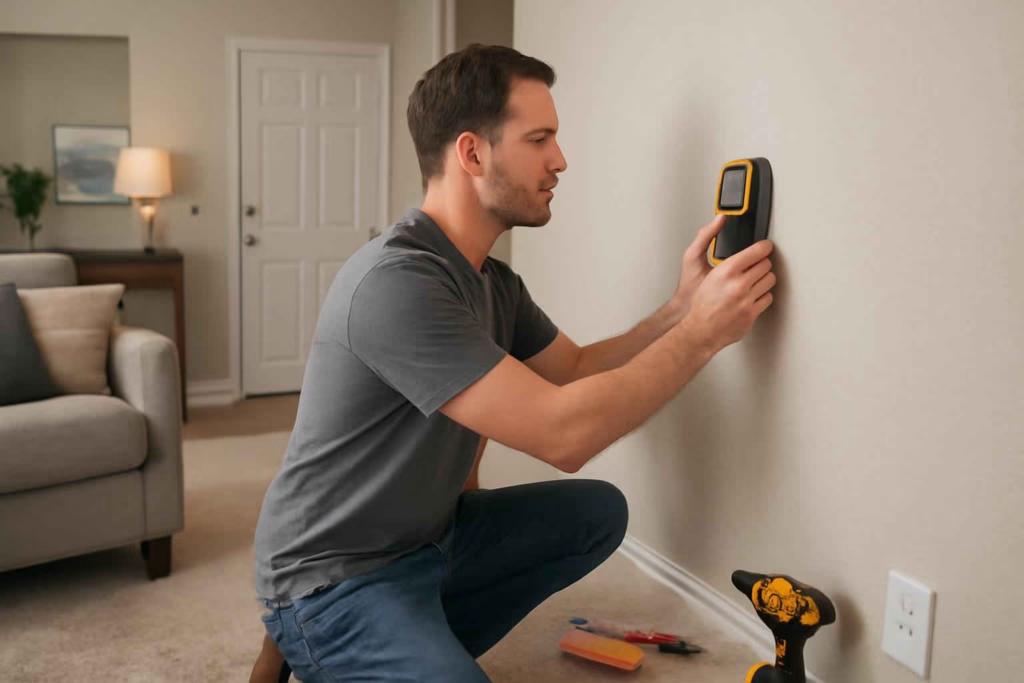
- Place the tool flat against the wall.
- Calibrate it according to the manufacturer instructions.
- Scan slowly in one direction.
- Mark the first edge or alert point.
- Scan from the opposite direction to confirm.
- Mark the center before drilling.
- Check nearby outlet and switch locations for possible wiring paths.
If your project includes precise wall alignment, shelf spacing, or cabinet placement, combining a stud finder with a layout tool is smart. A companion article on smart stud finders may also help if you want app-connected or upgraded wall-scanning features.
Are expensive stud finders worth it?
Sometimes. If you only hang occasional décor, probably not. If you mount TVs, install garage systems, do repeated DIY projects, or work on mixed wall surfaces, paying more for better sensing and clearer feedback can be worth it.
The value is less about premium branding and more about avoiding bad holes, weak mounts, or unsafe drilling locations.
Related tools that pair well with a stud finder
- Laser level for alignment
- Laser measure for spacing and layout
- Drywall anchor kit for lighter installations where no stud is available
- Painter’s tape and pencil for marking scan points
FAQ
Can a stud finder detect pipes?
Some advanced wall scanners may help identify unusual density changes, but many consumer stud finders are mainly designed for studs and live wires. Do not assume pipe detection unless the model clearly supports it.
Do magnetic stud finders really work?
Yes, but they work differently. They detect metal fasteners in the drywall, which can help you infer stud position. They are often accurate for simple walls, but usually less informative than electronic models.
What is the best stud finder for TV mounting?
For TV mounting, an electronic center-finding stud finder with live-wire detection is usually the best fit because it helps you place lag screws more accurately into framing.
Why does my stud finder give false readings?
Common reasons include scanning too fast, poor calibration, textured or unusual wall materials, low batteries, and interference from wiring, pipes, or dense patches in the wall.
Can I use a stud finder on plaster walls?
Sometimes, but results may vary. Plaster and lath walls are often harder to scan than standard drywall. A deeper-scan model may perform better, but confirmation methods are still important.
Conclusion
The best stud finder is the one that matches your wall type and the kind of mounting work you actually do. For most homeowners, an electronic stud finder with center detection and live-wire alerts offers the best balance of safety, accuracy, and ease of use. If your projects are heavier or more frequent, it is worth stepping up from a basic model. If your needs are simple, a magnetic backup can still be useful.