The best garage workbench is the one that matches your actual projects, available floor space, and storage needs. For most homeowners, that means choosing a bench with a stable frame, a durable top, enough depth for real work, and storage that keeps frequently used tools within reach. If you do light repairs and assembly, a simpler bench can work well. If you handle power tools, automotive tasks, or heavier DIY jobs, capacity, rigidity, and surface material matter much more.
This Get the site name/brand name dynamically guide breaks the decision down into practical factors so you can choose a workbench that feels useful every day instead of becoming another garage frustration.
Why a garage workbench matters more than most buyers expect
A garage workbench is not just a table. It affects safety, workflow, storage, comfort, and how willing you are to start or finish a project. A bench that is too shallow, too flimsy, or too low can make simple jobs slower and more tiring. A better setup can improve everything from bike repairs and furniture assembly to sanding, measuring, clamping, and small engine work.
It also becomes a hub for related upgrades. If you are building a more efficient workspace, articles such as smart garage workbench lighting, smart tool trackers, and smart tool cabinet locks can help you plan the area around the bench as well.
Start with the kind of work you actually do
Before comparing features, define the bench’s main job. This single step prevents most buying mistakes.
| Main use | What matters most | What you can deprioritize |
|---|---|---|
| Light household repairs | Compact size, simple shelf, easy assembly | Very high weight capacity |
| Tool organization | Drawers, pegboard compatibility, lower shelf | Extra-thick top |
| Woodworking and DIY builds | Rigid frame, thicker top, clamping-friendly edges | Ultra-portability |
| Automotive and mechanical work | High load rating, chemical resistance, sturdy legs | Decorative finishes |
| Multipurpose family garage | Balanced size, storage, easy cleaning, versatility | Niche specialty features |
If your work changes frequently, choose versatility over specialization. Many homeowners need one surface for seasonal maintenance, occasional repairs, and storage staging rather than a dedicated trade bench.
The most important garage workbench features
1. Size and footprint
Measure your space first. A workbench that looks modest online can overwhelm a single-car garage once vehicles, trash bins, lawn tools, and walking clearance are considered.
- Width: Wider benches give more working area but can block movement.
- Depth: Too little depth limits tool placement and project stability.
- Height: A bench that is too low strains your back; too high makes forceful tasks awkward.
For many general home garages, a medium-width bench with enough depth for a toolbox, parts tray, and active work area is more useful than the largest model that technically fits.
2. Weight capacity
Weight capacity is really about structure and stability, not just how many pounds a brand lists. A stronger bench usually resists wobble better when drilling, clamping, hammering, or working on heavier components.
Higher capacity matters if you plan to support:
- benchtop power tools;
- vises;
- car parts;
- stacked toolboxes;
- batteries, compressors, or heavy hardware bins.
For light use, extremely high load ratings may be unnecessary, but a flimsy bench often disappoints quickly.
3. Work surface material
The top material changes how the bench feels in real use.
| Top material | Best for | Potential drawbacks |
|---|---|---|
| Solid wood or hardwood | General DIY, woodworking, repair work | Can stain or dent without care |
| Butcher block | Attractive, versatile, comfortable all-purpose use | Needs occasional maintenance |
| Steel | Mechanical work, easy cleanup, chemical resistance | Can be noisy and less forgiving on delicate items |
| Laminated composite | Budget setups, moderate use | May wear faster under heavy abuse or moisture |
| Stainless steel | Clean, moisture-prone or utility-focused spaces | Usually costs more |
If you expect to clamp materials, cut trim, or do mixed DIY work, wood-based tops are often easier to live with. If grease, fluids, and frequent wipe-downs are part of your routine, metal surfaces can make more sense.
4. Stability and frame design
A stable workbench should feel planted even before it is loaded with tools. Look for:
- thicker leg construction;
- cross-bracing or reinforced frames;
- leveling feet for uneven garage floors;
- hardware that can be re-tightened over time;
- minimal side-to-side sway.
This is especially important if you use tools like a cordless oscillating multi-tool or layout tools such as a smart laser level near the bench and need reliable support for accurate work.
5. Storage options
Storage changes whether the bench becomes a productive station or a clutter magnet.
Useful options include:
- drawers for hand tools and measuring tools;
- open lower shelves for bins, cases, and bulk supplies;
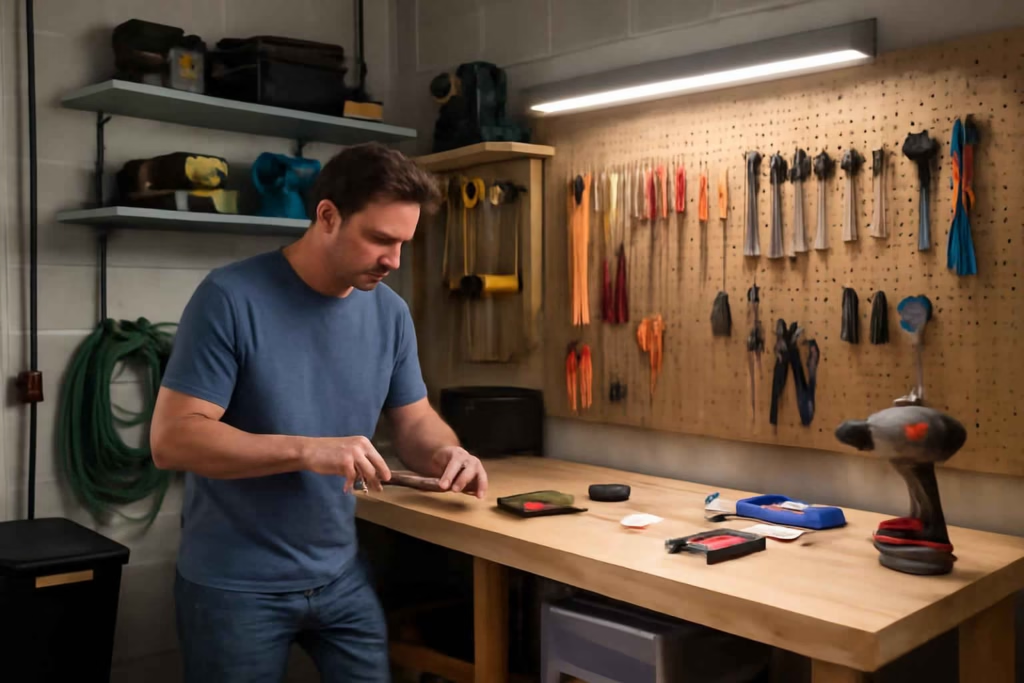
- pegboard compatibility for vertical organization;
- power strip mounting areas;
- under-bench space for vacuums, compressors, or stools.
If storage is your main priority, it may also be worth planning around future tool organization. A related resource on workshop setup and tool storage fits naturally with this type of upgrade.
6. Fixed vs mobile design
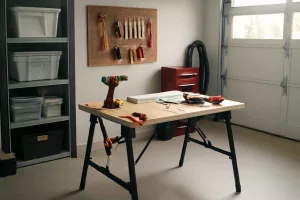
Choose a fixed workbench if stability matters most. Choose a mobile workbench if you share the garage with vehicles and need to reconfigure the space often.
Mobile benches are useful when:
- you park cars indoors daily;
- you need floor flexibility;
- you move projects outside for dust or ventilation reasons;
- you use one bench for multiple zones.
However, good casters and wheel locks are essential. A mobile bench that rolls or flexes under load can be frustrating and less safe.
How to match the workbench to your garage layout
Many buyers focus on bench features but ignore placement. The better approach is to choose the bench and location together.
Best placements for common garages
- Against a wall: Best for most garages. Saves space and works well with pegboards, shelving, and task lighting.
- Corner setup: Useful in tighter garages, though corner access can reduce usable surface area.
- Freestanding island: Best only if you have enough room to walk around it and use all sides.
- Fold-down bench: Good for very tight spaces and occasional use, but usually less robust.
Also consider outlet access, lighting, and cleanup. If the area tends to collect dust or fumes, related planning around a garage air quality monitor or garage ventilation can make the space more comfortable.
Workbench height: one of the most overlooked decisions
The right height depends on how you work.
- Precision work: Slightly higher surfaces can reduce hunching for measuring, wiring, and small repairs.
- Force-heavy work: Slightly lower surfaces may help with sanding, sawing, and pushing force through a tool.
- Mixed use: A middle-ground height or an adjustable-height bench often works best.
If multiple people use the same garage, adjustable-height designs can offer long-term value. They are especially helpful when the bench serves both seated and standing tasks.
Which garage workbench style fits your needs?
| Workbench style | Ideal for | Main trade-off |
|---|---|---|
| Basic open-frame bench | Budget-conscious homeowners, light repairs | Less built-in storage |
| Workbench with drawers | Tool organization and cleaner workflow | Higher cost, sometimes less knee space |
| Heavy-duty shop bench | Frequent DIY, mechanical work, power tools | Heavier and less flexible |
| Mobile workbench | Shared garages and flexible layouts | May sacrifice rigidity |
| Wall-mounted or fold-down bench | Small garages and occasional projects | Reduced capacity and work surface |
| Adjustable-height bench | Mixed tasks and ergonomic comfort | Can cost more and add complexity |
Common mistakes when buying a garage workbench
- Buying for appearance instead of use. A clean-looking bench can still be too weak, too shallow, or badly organized.
- Ignoring floor space around the bench. You need room to stand, turn, carry materials, and open drawers.
- Overestimating storage. A lower shelf alone may not replace drawers, bins, or wall storage.
- Choosing mobility without checking rigidity. Wheels add convenience, but not all rolling benches feel stable enough for tool work.
- Forgetting future upgrades. Lights, power strips, a vise, pegboards, and battery chargers all take space.
- Using a one-size-fits-all approach. The best bench for detailing supplies is not always the best bench for woodworking or mechanical tasks.
A practical checklist before you buy
Use this quick checklist to narrow your options:
- What are the top three tasks this bench will support?
- How much wall or floor space can you dedicate without blocking movement?
- Do you need drawers, shelves, or open space underneath?
- Will you mount a vise or place heavy tools on top?
- Do you need the bench to roll, fold, or stay fixed?
- Is the work surface better in wood, steel, or composite for your projects?
- Will one user or several users rely on it?
- Do you need power access and task lighting nearby?
Helpful accessories that can improve a workbench setup
Not every workbench needs accessories immediately, but a few additions can increase usability:
- LED task lighting or under-shelf lighting;
- power strip or battery charging station;
- pegboard panels and hooks;
- drawer liners and small parts bins;
- bench vise;
- anti-fatigue mat;
- magnetic tool holders;
- garage pegboard organizers for vertical tool storage;
- anti-fatigue workshop mats for longer repair sessions.
If you work on smaller repairs, a bench also pairs well with compact tools such as a cordless screwdriver or a cordless rotary tool.
Should you build or buy a garage workbench?
Buying is usually better if you want speed, a cleaner finish, and predictable dimensions. Building can be better if your garage has awkward dimensions or you need a custom combination of storage, height, and wall integration.
Buy a bench if:
- you want a faster setup;
- you prefer finished drawers or integrated shelves;
- you need mobility or adjustable height built in;
- you do not want to source separate materials and hardware.
Build a bench if:
- you need a precise custom width;
- you want to anchor it permanently;
- you already have materials or cabinetry;
- you want a heavier-duty frame for less money in exchange for labor.
FAQ
What is the best material for a garage workbench top?
For general DIY use, wood or butcher block is often the most versatile because it is durable, easier on projects and tools, and practical for clamping. For messier mechanical work, steel can be easier to clean.
How deep should a garage workbench be?
It should be deep enough to hold tools and materials without crowding your active work area. In practice, many homeowners prefer a depth that allows a toolbox or bins at the back while leaving room to work safely at the front.
Is a mobile workbench worth it?
Yes, if you share the garage with vehicles or regularly change your layout. No, if maximum stability is your top priority and the bench will stay in one place.
Do I need drawers on a workbench?
Not always. Drawers are helpful for organization, but some users benefit more from open shelves, wall storage, or space for larger equipment underneath.
Can one workbench handle woodworking and mechanical tasks?
Yes, a multipurpose bench can handle both if it has a stable frame, durable top, and enough storage. The compromise is that it may not be perfect for highly specialized work in either direction.
Is an adjustable-height workbench worth the extra cost?
It can be, especially if you switch between detailed tasks and heavier work, or if multiple people use the bench. For a single user with a consistent workflow, a fixed-height bench may be enough.
Conclusion
The best garage workbench is not necessarily the biggest or most expensive. It is the one that fits your space, supports your real projects, and helps you stay organized enough to use it often. Start with your tasks, then choose the right size, top material, stability level, and storage layout. If you make those decisions in that order, you are far more likely to end up with a bench that improves your garage instead of just filling it.