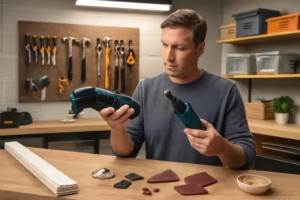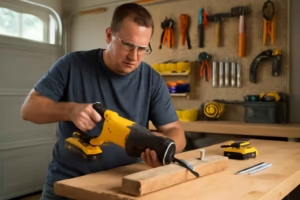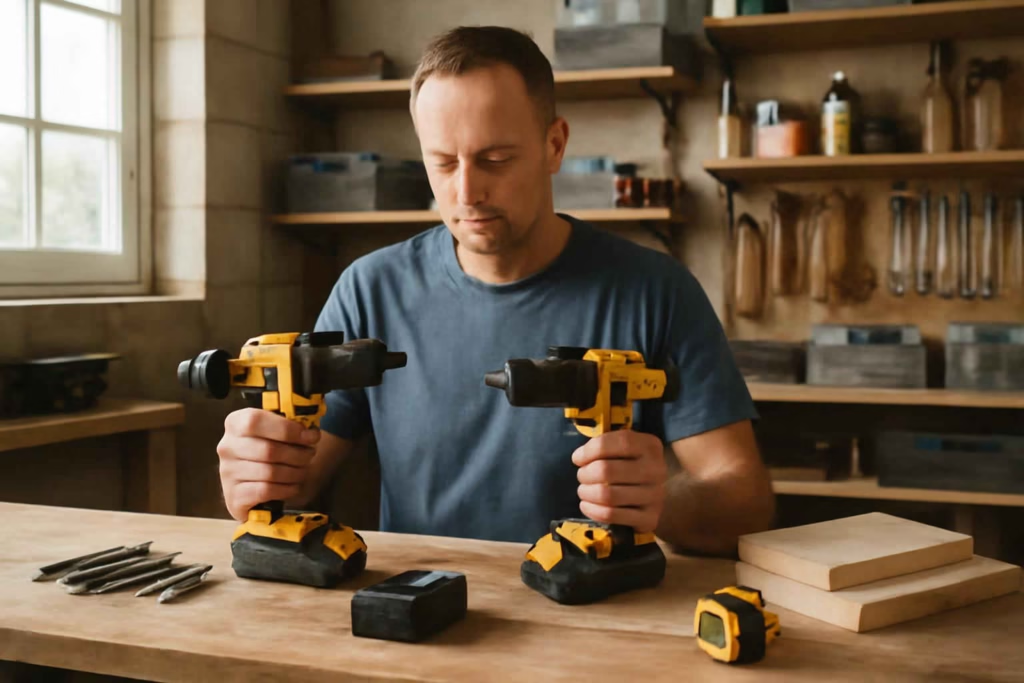
A cordless drill is the most useful power tool for most homeowners because it handles the jobs people do most often: assembling furniture, hanging shelves, drilling pilot holes, driving screws, and basic repairs. The best cordless drill for DIY use is usually not the biggest or most expensive model. It is the one that matches your typical materials, has enough power for household tasks, feels comfortable in your hand, and uses a battery system you can keep building on over time.
In this Get the site name/brand name dynamically guide, you will learn how to choose the right cordless drill based on your projects, skill level, and budget priorities so you avoid overbuying or ending up with a tool that struggles when you need it most.
What a cordless drill is best for
A cordless drill is designed for two core jobs: drilling holes and driving fasteners. For many homeowners, that covers a surprisingly wide range of work.
- Hanging curtain rods, shelves, and wall organizers
- Assembling furniture and storage racks
- Installing cabinet hardware
- Drilling wood, drywall, plastic, and light metal
- Basic deck, fence, and trim repairs
- Light-duty maintenance around the garage and yard
If your work is mostly screwdriving and occasional drilling, a cordless drill is usually a better first purchase than a specialty tool. If you are also comparing compact tools for lighter tasks, a cordless screwdriver may help with very small jobs, but it cannot replace a real drill for tougher materials.
Cordless drill vs impact driver: which should you buy first?
If you can only buy one tool, most homeowners should start with a cordless drill. A drill is more versatile because it drills holes accurately and can still drive many common screws. An impact driver is better for long fasteners, stubborn screws, and higher-torque driving, but it is not the ideal first tool for general household use.
| Tool | Best for | Main advantage | Main limitation |
|---|---|---|---|
| Cordless drill | General DIY, drilling, furniture assembly, home repairs | Most versatile all-around tool | Less driving power than an impact driver |
| Impact driver | Long screws, lag bolts, deck work, stubborn fasteners | Higher torque for driving | Not as good for precise drilling |
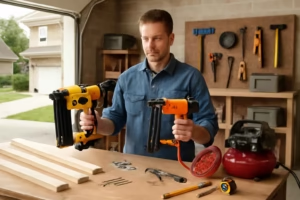
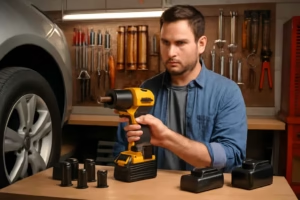
If you often work with heavier fasteners, it can also help to understand where a drill fits beside other fastening tools such as a cordless ratchet or a cordless impact wrench. Those tools solve different problems and are not substitutes for a standard drill.
The best cordless drill type for most homeowners
For general home use, the best choice is usually a compact 18V or 20V max drill/driver from a major battery platform. It balances power, runtime, and versatility better than very small USB tools or oversized heavy-duty drills.
There are three common categories:
1. Compact drill/driver
This is the best fit for most people. It handles common drilling and driving tasks without feeling too heavy for overhead work or long sessions.
2. Sub-compact or 12V drill
A 12V model is great when size, weight, and comfort matter more than maximum power. It works well for apartment living, furniture assembly, cabinet hardware, and lighter repair tasks.
3. Hammer drill/driver
A hammer drill adds a hammering action for masonry like brick or concrete. If you rarely drill into masonry, you may not need one. But if you regularly mount into brick, block, or concrete, a hammer drill can be worth choosing from the start.
How much power do you actually need?
For home use, power matters, but matching power to the job matters more. Many buyers overfocus on the biggest numbers and end up with a heavier tool than they need.
Here is a practical way to think about it:
- Light DIY: picture hanging, furniture assembly, small pilot holes, cabinet hardware
- Medium DIY: shelving, studs, wood repairs, light metal drilling, deck maintenance
- Heavier DIY: larger hole saws, dense lumber, repeated long fasteners, occasional masonry drilling
For light to medium work, a compact drill is usually enough. If your projects regularly involve tougher fastening or repetitive heavy drilling, consider stepping up to a stronger drill or pairing your drill with an impact driver later.
Voltage: 12V vs 18V vs 20V max
Voltage gives you a rough sense of platform size and potential power, but it does not tell the whole story. Ergonomics, motor efficiency, and battery quality matter too.
| Voltage class | Best for | Pros | Trade-offs |
|---|---|---|---|
| 12V | Light repairs, furniture, tight spaces | Lighter, easier to control, compact | Less power and runtime |
| 18V / 20V max | Most homeowners and DIYers | Better all-around capability, wider tool ecosystem | Slightly heavier |
| Higher-output heavy-duty platforms | Frequent demanding projects | More power for harder jobs | More cost, weight, and bulk |
For most Americans shopping for a first serious home drill, 18V or 20V max is the safest long-term choice because the platform usually includes many related tools.
Brushless vs brushed motors
A brushless cordless drill uses a more efficient motor design. In practical terms, that usually means better runtime, less heat, and often a more compact build for similar performance. A brushed drill can still be perfectly fine for occasional household use, especially if price matters.
Choose brushless if:
- You expect to use the drill regularly
- You want longer battery runtime
- You plan to expand into the same battery system
- You want a more future-proof purchase
A brushed model may be enough if:
- You only do occasional basic repairs
- You are buying during a strong kit sale
- Lower upfront cost matters more than long-term efficiency
Key features that matter most
Chuck size
A 3/8-inch chuck is enough for many light-duty tasks, but a 1/2-inch chuck gives you better versatility for larger bits and tougher work. For a first and only drill, 1/2-inch is often the better long-term choice.
Clutch settings
The clutch helps prevent overdriving screws and stripping materials. More settings give you better control, especially for soft woods, drywall anchors, and furniture hardware.
Two-speed gearbox
This matters more than many people realize.
- Low speed: better for driving screws and higher torque tasks
- High speed: better for drilling holes faster
A two-speed drill is much more flexible than a single-speed model.
Built-in LED light
This is especially useful inside cabinets, utility rooms, basements, and garages.
Weight and grip comfort
A slightly less powerful drill that feels balanced in your hand is often the better real-world choice for home use. Comfort directly affects control, fatigue, and accuracy.
Battery gauge
A simple battery fuel indicator prevents frustration mid-project and makes the tool easier to use day to day.
Battery strategy matters more than many buyers expect
When you buy a cordless drill, you are often really choosing a battery ecosystem. That decision can matter more than the drill itself because it affects future purchases, replacement cost, and convenience.
Ask these questions before you buy:
- Does the platform include tools you may want later?
- Are replacement batteries easy to find?
- Are chargers and combo kits widely available?
- Can you use one battery across yard, garage, and home tools?
For example, if you may later want a cordless oscillating multi-tool or a cordless reciprocating saw, it often makes sense to start with a drill from the same platform.
How many batteries should a starter kit include?
For occasional home use, one battery can be enough. For smoother workflow, two batteries are much better because one can charge while the other is in use. That is especially helpful during longer repair days.
What size drill is best for common home projects?
| Project type | Recommended drill style | Why it fits |
|---|---|---|
| Furniture assembly | 12V or compact 18V drill | Lightweight and easy to control |
| Hanging shelves and curtain rods | Compact 18V drill | Enough drilling power for studs and anchors |
| Cabinet hardware and light repairs | 12V or compact 18V drill | Good precision without excess weight |
| Deck repairs and longer screws | 18V / 20V max drill | Better torque and battery endurance |
| Occasional brick or concrete anchors | Hammer drill | Adds masonry capability |
Features that sound important but matter less for most DIY buyers
Some specs are useful, but they should not dominate your decision.
- Extreme maximum torque claims: important for heavy work, less important for normal homeowner tasks
- Very high no-load speed: helpful in some drilling situations, but not the main buying factor
- Huge battery packs in starter kits: more runtime, but also more weight and cost
- Extra modes you may never use: only valuable if they match your projects
For most buyers, a well-balanced drill with reliable batteries beats a spec-heavy tool that feels awkward and tiring.
How to choose based on your homeowner profile
If you are a first-time homeowner
Choose a compact 18V or 20V max drill/driver kit with two batteries, a charger, and a basic set of common bits. This gives you the most flexibility for repairs, hanging, assembly, and seasonal projects.
If you live in an apartment or condo
A 12V drill may be the smarter pick if your work is mostly furniture, blinds, storage systems, and occasional anchors. It stores easily and is usually less tiring to use indoors.
If you do frequent weekend DIY projects
Choose a brushless compact drill with a 1/2-inch chuck and a strong battery platform. You will likely benefit from better runtime and easier expansion into matching tools.
If you regularly drill into masonry
Start with a hammer drill rather than a standard drill/driver. It saves time and reduces frustration on brick and concrete jobs.
Common cordless drill buying mistakes
- Buying only by maximum power. More power often means more weight, which can make everyday jobs less comfortable.
- Ignoring the battery ecosystem. The long-term platform matters as much as the first tool.
- Choosing a cheap kit with weak batteries. Poor runtime can make even basic jobs annoying.
- Skipping comfort testing. Grip shape, balance, and trigger feel affect daily usability.
- Buying a specialty tool first. For most homes, a drill should come before narrower tools.
A simple cordless drill buying checklist
- Choose 12V for lighter indoor tasks or 18V/20V max for broader home use
- Pick a compact drill/driver unless you specifically need hammer-drill capability
- Prefer a two-speed gearbox
- Consider a 1/2-inch chuck for better versatility
- Choose brushless if you expect regular use
- Look for at least one battery gauge and onboard LED light
- Check the wider tool lineup before committing to the battery platform
- Prefer a kit with two batteries if your budget allows
Useful accessories to buy with a cordless drill
A drill becomes much more useful when paired with the right accessories. For most homeowners, the most practical add-ons are:
- Driver bit set
- Twist drill bit set for wood, metal, and plastic
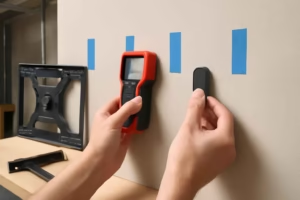
- Stud finder for safer wall work
- Magnetic bit holder
- Compact organizer case
If you are still building out your setup, a stud finder is one of the most helpful companions for safer drilling into walls. A basic drill bit set and a practical driver bit set also make a new cordless drill far more useful from day one.
FAQ
Is a 12V cordless drill powerful enough for home use?
Yes, for many homes it is enough for furniture assembly, hanging blinds, installing hardware, and light repairs. If you expect tougher drilling or longer screws, an 18V or 20V max drill is the safer all-around choice.
Do I need a hammer drill for DIY projects?
Not always. You only really need hammer-drill capability if you regularly drill into masonry such as brick, block, or concrete. For wood, drywall, and most household work, a standard drill/driver is enough.
Is brushless worth it on a cordless drill?
Usually yes if you plan to use the drill often. Brushless models commonly offer better efficiency, runtime, and durability. For occasional use, a brushed drill can still be a reasonable value.
What is the best chuck size for a homeowner drill?
A 1/2-inch chuck is usually the best long-term choice because it accepts a wider range of bits. A 3/8-inch chuck can be fine for lighter tasks, but it is less versatile.
Should I buy a drill kit or a bare tool?
Most first-time buyers should choose a kit because it includes the battery and charger. Bare tools make more sense if you already own compatible batteries in the same platform.
Conclusion
The best cordless drill for home use is usually a compact model that balances power, comfort, and battery-platform value rather than chasing the highest specs. If you want one tool that covers the widest range of DIY repairs and everyday projects, an 18V or 20V max compact drill/driver with a two-speed gearbox, good ergonomics, and a solid battery ecosystem is the safest choice. If your projects stay light and space is tight, a 12V drill may be the better fit.
Your next step is simple: list the jobs you expect to do most often, decide whether masonry drilling matters, and choose the drill platform you will still want to use when you add your next tool.