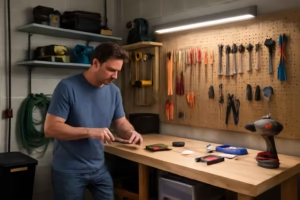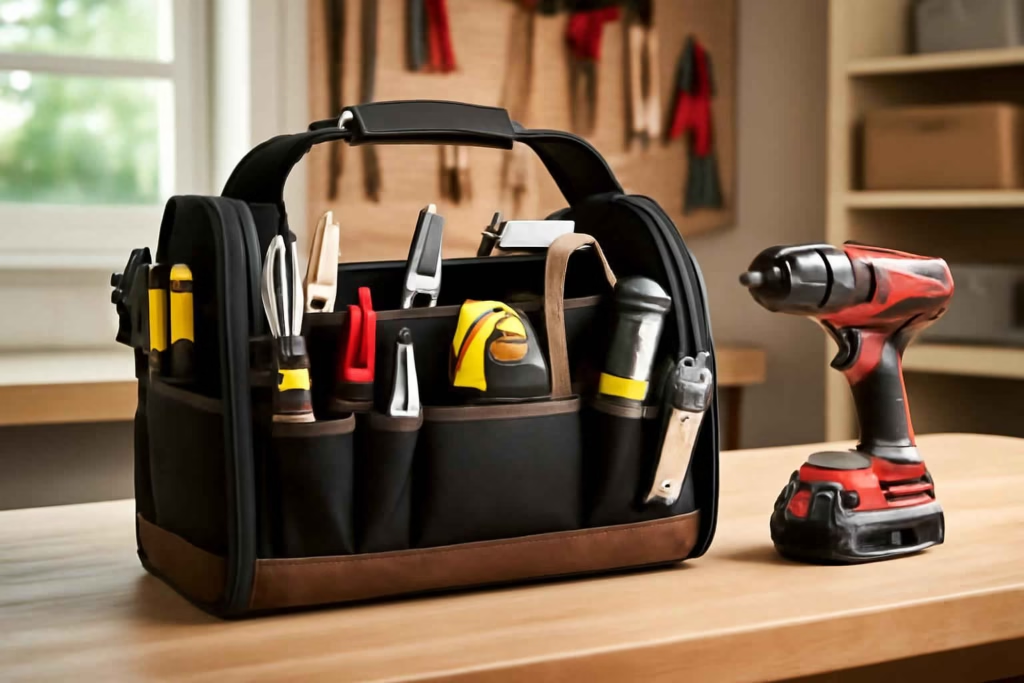
The best tool bag for most homeowners is the one that fits the tools you actually carry, keeps them organized, and is easy to grab for common repair jobs. For light DIY and home maintenance, a medium-sized soft tool bag with a wide opening, reinforced bottom, and a mix of interior and exterior pockets is usually the most useful choice. If you carry heavier hand tools or work in tight spaces, an open-top tote or compact electrician-style bag may make more sense.
This guide explains how to choose the right tool bag based on your projects, tool load, storage space, and comfort needs. If you are still building your basic kit, it also helps to pair this with a reliable drill and layout tools. Get the sizing right first, then the pocket layout, then durability.
Why a tool bag makes more sense than a random tote or bucket
A real tool bag solves three common homeowner problems:
- Faster access: you can find pliers, tape measure, bits, and fasteners without dumping everything out.
- Better protection: reinforced bottoms and heavier fabric handle sharp edges and heavier tools better than household bags.
- Grab-and-go convenience: one organized bag is easier to carry from garage to attic, bathroom, yard, or car.
Compared with a hard toolbox, a soft tool bag is often easier to carry around the house, easier to fit on a shelf, and better for mixed hand-tool and accessory storage.
Who should buy a tool bag?
A tool bag is especially useful if you regularly handle small home tasks such as hanging shelves, tightening hardware, assembling furniture, replacing outlet covers, checking leaks, or making quick garage and yard repairs. It is also a smart upgrade if your tools currently live in drawers, cardboard boxes, or several small cases.
If you do more wall work, you may also want a stud-finding setup. Our guides on choosing the best stud finder and stud finder vs magnetic stud finder can help round out that kit.
Main types of tool bags
| Type | Best for | Advantages | Possible downside |
|---|---|---|---|
| Soft zippered tool bag | General home use | Good protection, easy to carry, keeps contents contained | Can be slower to access if overpacked |
| Open-top tool tote | Frequent access to hand tools | Fast access, easy organization, good for in-house repairs | Less protection, tools may tip or collect dust |
| Compact electrician-style bag | Small tool kits and punch-list tasks | Portable, space-efficient, good for essentials only | Limited capacity |
| Rolling tool bag | Heavy loads or longer carry distances | Less strain, more capacity | Bulkier and less useful on stairs |
| Backpack-style tool bag | Hands-free carrying and stairs | Good weight distribution, useful for multi-floor homes | Can be slower to access and easier to overload |
Best tool bag features to prioritize
1. Size that matches your real kit
Do not buy the biggest bag unless you truly need it. Oversized bags encourage clutter and get heavy fast. For most homeowners, a bag in the small-to-medium range is enough for:
- hammer
- screwdrivers
- pliers
- adjustable wrench
- utility knife
- tape measure
- small level
- drill bits and fasteners
- work gloves
If you also carry a cordless drill, charger, batteries, and a stud finder, step up one size. If your goal is a quick-repair bag, go smaller and keep it lean.
2. Wide opening and visible interior
A bag that opens wide is easier to use than one with a narrow zipper path. You should be able to see the main compartment without digging. This matters more than extra pockets if you often switch between different tasks.
3. Pocket layout that matches how you work
Good organization matters more than total pocket count. Look for:
- slim loops for screwdrivers and pliers
- deeper pockets for tape measure, utility knife, and small meter
- a secure zip pocket for bits, blades, anchors, and screws
- one larger space for bulkier items like gloves or a compact drill
Too many tiny pockets can be just as frustrating as too few. The best layout is one you can remember without thinking.
4. Reinforced base
A hard or reinforced bottom helps the bag stand up, resists wear, and protects tools from damp garage floors. This is one of the most valuable features for long-term use.
5. Strong handle and shoulder strap
If the bag will carry more than a basic hand-tool set, a padded shoulder strap is worth having. Check for sturdy stitching, metal hardware where possible, and balanced lifting points so the bag does not sag badly when loaded.
6. Durable fabric and abrasion resistance
Heavy-duty polyester or similar rugged fabric usually holds up well for homeowner use. Sharp tools, concrete floors, and garage shelves wear out lightweight fabric quickly. Durability matters more than premium styling.
How to choose the right tool bag size
Use this simple decision framework:
- Choose a small bag if you mainly do apartment fixes, furniture assembly, picture hanging, and simple hardware swaps.
- Choose a medium bag if you want one primary home repair bag with hand tools, measuring tools, fasteners, and a few power-tool accessories.
- Choose a large bag if you carry multiple power tools, specialty hand tools, or supplies for bigger weekend projects.
- Choose a rolling bag or backpack if weight, stairs, distance, or comfort is a bigger issue than compact storage.
Tool bag vs tool box vs tool tote
| Option | Best when | Strength | Limitation |
|---|---|---|---|
| Tool bag | You want portability and flexible storage | Great for mixed home repairs | Can become disorganized if overfilled |
| Tool box | You want rigid protection and stacking | Better for storage and heavier loads | Less comfortable to carry around the house |
| Tool tote | You need quick access during active work | Fast access to frequently used tools | Less secure for transport and storage |
If you already have a bench setup, a bag is often the better second storage option because it lets you take a selected kit to the job. For a more complete workspace, see our guide on choosing the best garage workbench.
Best tool bag setups by use case
For basic home maintenance
Choose a medium zippered bag with a reinforced base and 10 to 20 useful pockets. Prioritize comfort and simple organization over maximum capacity.
For wall-mounting and layout work
Choose a bag with protected storage for a stud finder, tape measure, anchors, bits, and a compact level. A laser level may also be part of this kit; see how to choose the best laser level if that is one of your common projects.
For punch-list repairs around the house
A compact tote or electrician-style bag works well when you want to carry just the essentials from room to room without hauling a full kit.
For garage and outdoor crossover use
Look for a tougher bottom, water resistance, and enough room for gloves, pliers, socket accessories, and a flashlight. If your gear often gets dusty or damp, durability becomes more important than sleek design.
Common mistakes when buying a tool bag
- Buying too big: the bag gets heavy, cluttered, and annoying to move.
- Choosing pocket count over layout: dozens of small pockets do not help if none fit your actual tools.
- Ignoring the bottom: a weak base shortens the life of the bag.
- Forgetting future additions: leave some room for batteries, bits, and measuring tools.
- Using one bag for every category of tool: separating a core home-repair bag from specialty automotive or plumbing gear often works better.
A practical checklist before you buy
- Lay out the tools you carry most often.
- Measure the longest and bulkiest items.
- Decide whether you need room for a drill or only hand tools.
- Choose access style: zippered, open-top, backpack, or rolling.
- Check whether the base is reinforced and stable.
- Look at handle comfort and shoulder strap quality.
- Make sure there is at least one secure pocket for bits, screws, and blades.
- Avoid extra size unless you already know you need it.
Helpful add-ons that pair well with a tool bag
A tool bag works best when it carries a core set of versatile tools instead of random extras. If you are building or upgrading that kit, these product categories can be useful:
- tool bags for homeowners
- magnetic parts trays for screws and anchors during repairs
- stubby screwdriver sets for tight household spaces
Keep accessories practical. The goal is a bag that supports real jobs, not a bag full of gadgets you rarely use.
FAQ
What size tool bag is best for home use?
A medium-sized tool bag is usually best for home use because it holds common hand tools, measuring tools, fasteners, and a few accessories without becoming too heavy.
Is a soft tool bag better than a hard toolbox?
For moving around the house, a soft tool bag is often better because it is lighter and easier to carry. A hard toolbox is better when rigid protection and heavier storage matter more than portability.
How many pockets should a good tool bag have?
The exact number matters less than the layout. A good tool bag should have enough varied pockets to separate hand tools, measuring tools, and small parts without forcing everything into tiny slots.
Should a homeowner buy an open-top tote or zippered tool bag?
Choose an open-top tote if you want quick access during active repairs. Choose a zippered tool bag if you want better containment, dust protection, and cleaner storage between projects.
Can a tool bag hold a cordless drill?
Many medium and large tool bags can hold a compact cordless drill, but you should confirm interior space and leave room for batteries and bits. If drill storage is essential, size the bag around that first.
Conclusion
The best tool bag is not the one with the most pockets or the biggest capacity. It is the one that fits your real home-repair kit, stays organized, and is comfortable enough that you will actually use it. For most homeowners, a medium soft-sided bag with a wide opening, reinforced base, and practical pocket layout is the safest choice. Start with the tools you use most, then choose the bag that supports those jobs without adding unnecessary bulk.